Understanding the aqueous chemistry of cations in solution is central to modeling ion transport, complexation, and reactivity. Calcium, for example, plays a critical role in biological and environmental systems; however, a fundamental understanding of its coordination in dilute, aqueous solution is lacking. There is still debate regarding the number of water molecules in its first solvation shell. Moreover, studies of Ca2+ coordination in aqueous complexes with ligands other than water are rare. Herein, we apply Ca K-edge x-ray absorption near-edge structure (XANES) and extended x-ray absorption fine structure (EXAFS) spectroscopy combined with ab initio molecular dynamics and time-dependent density functional theory to investigate the coordination environment of aqueous Ca2+. On the one hand, EXAFS spectroscopy is sensitive to bond distances; however, the determination of coordination numbers can be imprecise. XANES spectroscopy, on the other hand, is sensitive to molecular symmetry and therefore to coordination number. We first confirmed that calcium is coordinated, on average, by seven water molecules in dilute aqueous solution. We then extended this approach to examine the coordination environment of aqueous Ca2+ ethylenediaminetetraacetic acid (EDTA) complexes. Notably, a water molecule was present in the first coordination shell of Ca2+, in addition to four O atoms and two N atoms from EDTA4−, such that Ca2+ achieved sevenfold coordination. We conclude that Ca2+ tends to adopt low-symmetry, 7-coordinate complexes in aqueous solution, even in the presence of a hexadentate chelator. Our work lays the groundwork needed to understand Ca coordination in numerous biological and environmental systems.
Abstract Proton-coupled electron transfer (PCET) is foundational to catalysis, bioenergetics, and energy conversion, yet directly observing the interplay between electronic redistribution, protonation, and solvent reorganization remains challenging. We combine femtosecond optical spectroscopy, ultrafast N K-edge X-ray absorption spectroscopy, and time-resolved X-ray solution scattering to capture the steps of a sequential PCET reaction in water with atomic-site specificity. Using a ruthenium polypyridyl model complex, we resolve the electron redistribution upon photoinduced metal-to-ligand charge transfer and subsequent ( ~ 460 ps) protonation at a ligand nitrogen, as well as the concomitant rearrangement of the first-solvation-shell. Combined with advanced electronic structure and molecular dynamics simulations, our measurements reveal a marked localization of the excited-state electron density at the protonated N site, together with a switch from N···HO to NH···O hydrogen-bonds. These results establish a multimodal X-ray framework for mechanistic insight into PCET and its control in catalysis, artificial photosynthesis, and biological energy flow.
We developed an advanced computational framework to accelerate the study of the impact of post-translational modifications on protein structures and interactions (PTM-Psi) using asynchronous, loosely coupled workflows on the Azure Quantum Elements Cloud platform. We seamlessly integrate emerging cloud computing assets that further expand the scope and capability of PTM-Psi Python package by refactoring it into a cloud-compatible library. We employed a "workflow of workflows" approach, wherein a parent workflow spawns one or more child workflows, managing them, and acting on their results. This approach enabled us to optimize resource allocation according to each workflow's needs and allowed us to use the cloud heterogeneous architecture for the computational investigation of a combinatorial explosion of thiol protein PTMs on an exemplary protein megacomplex critical to the Calvin-Benson cycle of light-dependent sugar production in cyanobacteria. With PTM-Psi on the cloud, we transformed the pipeline for the thiol PTM analysis to achieve high throughput by leveraging the strengths of the cloud service. PTM-Psi on the cloud reduces operational complexity and lowers entry barriers to data interpretation with structural modeling for a redox proteomics mass spectrometry specialist.
Proton-coupled electron transfer (PCET) is foundational to catalysis, bioenergetics, and energy conversion, yet capturing and disentangling the coupled motions of electrons, protons, and solvent has remained a major experimental challenge. We combine femtosecond optical spectroscopy, site-specific ultrafast soft X-ray absorption spectroscopy, and time-resolved X-ray scattering with advanced calculations to disentangle the elementary steps of PCET in solution. Using a ruthenium polypyridyl model complex, we directly resolve photoinduced electron redistribution, ligand-site protonation within 100 ps, and the accompanying solvent reorganization. This unified multi-modal approach provides an orbital-level, atomistic picture of PCET, showing how electronic, nuclear, and solvation degrees of freedom can be separated experimentally. Our results establish a general X-ray framework for understanding and ultimately controlling PCET in catalysis, artificial photosynthesis, and biological energy flow.
The solvation structure of an Np4+ ion in an aqueous, noncomplexing and nonoxidizing environment of trifluoromethanesulfonic (triflic) acid was investigated with X-ray absorption spectroscopy (XAS) combined with ab initio molecular dynamics (AIMD) and time-dependent density functional theory (TDDFT) calculations. Np LIII-edge X-ray absorption near-edge structure (XANES) and extended X-ray absorption fine structure (EXAFS) data were collected for Np4+ in 1, 3, and 7 M triflic acid using a laboratory-scale spectrometer and separately at a synchrotron facility, producing data sets in excellent agreement. TDDFT calculations revealed a weak pre-edge feature not previously reported for Np LIII-edge XANES. AIMD modeling results showed differences in the hydration shell of the Np4+ ion at different concentrations of triflic acid; these results are supported by the experiment. EXAFS fit models to the experiment resulted in similar coordination of Np4+ in noncomplexing aqueous media as reported in the literature for 1 M perchloric acid but, together with calculations, revealed more than one distance between Np and O atoms in 7 M triflic acid. These results imply monodentate coordination with sulfonate groups in 7 M triflic acid and suggest the possibility of proto-neptunyl species in relatively low-concentration Np4+ acid solutions.
The control of electron transfer pathways in transition metal complexes is crucial for developing next-generation molecular devices and photocatalysts. Herein, the electronic structure and charge delocalization mechanisms in trinuclear trans-[(NC)5Fe III $^{\text{III}}$ (μ-CN)Ru II $^{\text{II}}$ (L)4(μ-NC)Fe III $^{\text{III}}$ (CN)5]4- complexes (L = pyridine, 4-methoxypyridine) using complementary X-ray spectroscopic techniques at the Ru L3-edge are investigated. By combining 2p3d and 2p4d resonant inelastic X-ray scattering spectroscopy with quantum mechanics/molecular mechanics simulations and time-dependent density functional theory-based X-ray calculations, the modulation of the X-ray spectral features as a function of the ligand architecture and solvent environment are probed. Analysis of the experimental data reveals that ligand field interactions systematically tune charge distribution across the metal-cyanide backbone. A novel pre-edge feature arising from Fe-Ru d-d coupling that directly correlates with the near IR metal-to-metal charge transfer transition energies is identified. These findings aid in establishing the design principles for developing multimetallic complexes with tailored electronic coupling.
Potassium (K) is an essential nutrient for plant growth, and despite its abundance in soil, most of the K is structurally bound in minerals, limiting its bioavailability and making this soil K reservoir largely inaccessible to plants. Microbial biochemical weathering has been shown to be a promising pathway to sustainably increase plant available K. However, the mechanisms underpinning microbial K uptake, transformation, storage, and sharing are poorly resolved. To better understand the controls on microbial K transformations, we performed K K-edge x-ray absorption near-edge structure (XANES) spectroscopy on K-organic salts, including acetate, citrate, nitrate, oxalate, and tartrate, which are frequently observed as low molecular weight organic acids secreted by soil microbes, as well as humic acid, which acts as a proxy for higher molecular weight organic acids. The organic salts display feature-rich K XANES spectra, each demonstrating numerous unique features spanning ∼13 eV range across the absorption edge. In contrast, the spectra for humic acid have one broad, wide feature across the same energy range. We used a combination of time-dependent density functional theory and the Bethe–Salpeter equation based approach within the OCEAN code to simulate the experimental spectra for K-nitrate (KNO3) and K-citrate [K3(C6H5O7)·H2O] to identify the electronic transitions that give rise to some of the outlying and unique spectral features in the organic salts. KNO3 has both the lowest and highest lying energy features, and K3(C6H5O7)·H2O is produced by several soil microbes and is effective at mineral weathering. Our results analyze the K-organic salt bonding in detail to elucidate why the spectral shapes differ and indicate that the K K-edge XANES spectra are associated with the entire ligand despite similar first-shell bonding environments around the K center. The improved understanding of K bonding environments with organic ligands and their use for interpretation of the K-XANES spectra provides an important toolkit to understand how K is transformed by microbial processes and made bioavailable for plant uptake.
Matrix-assisted laser desorption/ionization mass spectrometry imaging (MALDI-MSI) can provide spatially resolved molecular information about a sample. Recently, a postionization approach (MALDI-2) has been commercially integrated with MALDI-MSI, allowing for bettered sensitivity and consequent improved spatial resolution. While advantages of MALDI-2 have previously been established, we demonstrate here statistically increased in-source fragmentation (ISF) results from postionization with a commercial instrument. Via lipid standard analyses, known MALDI ISF pathways (e.g., loss of trimethylamine) were statistically increased in MALDI-2 compared to MALDI-1 (65-172% increase in fragmentation). Gas phase molecular modeling with density functional theory estimated that the most-weighted virtual orbitals to excite within lipids involve ester and phosphate bonds. Protonated lipid excitation energies are furthermore red-shifted compared to those of other adduct types [e.g., 254 nm for protonated PC(16:0/18:1)] and approach the MALDI-2 laser energy (266 nm). Analysis of rat brain homogenate detected statistically more positive-ion mode peaks with MALDI-2 (1090) than that with MALDI-1 (719), where Kernel density estimations showed that the majority of this enhancement occurs with low m/z ions (i.e., m/z 75-500). Taken together with the lipid standard data, these observations may indicate ISF due to postionization. While artifact contributions from matrix blanks were also noted, both experimental and computational data sets suggest that the overall extent of ISF is statistically increased in MALDI-2 compared to MALDI-1.
Mineral-associated soil organic matter (SOM) is critical for stabilizing organic carbon and mitigating climate change. However, mineral-SOM interactions at the molecular scale, particularly synergetic adsorption through organic-organic interaction on the mineral surface known as organic multilayering, remain poorly understood. This study investigates the impact of organic multilayering on mineral-SOM interactions, by integrating macroscale experiments and molecular-scale simulations that assess the individual and sequential adsorption of major SOM compounds-lauric acid (lipid), pentaglycine (amino acid), trehalose (carbohydrate), and lignin onto soil minerals. Ferrihydrite, Al-hydroxide, and calcite are exposed to SOM compounds to determine adsorption affinities and binding energies. Results show that lauric acid has 20-40 times higher Kd than pentaglycine, following the order Kd(ferrihydrite) > Kd(Al-hydroxide) ≫ Kd(calcite). Molecular-scale simulations confirm that lauric acid has a higher binding energy (30.8 kcal/mol) on ferrihydrite than pentaglycine (6.0 kcal/mol), attributed to lipid hydrophobicity. The lower binding energy of pentaglycine results from its hydrophilic amide groups, facilitating partitioning into water. Sequential experiments examine how the first layer of lipid or amino acid affects the adsorption of carbohydrate/lignin, which show little or no individual adsorption affinities. Macroscale results reveal that lipid and amino acid adsorption induce ferrihydrite particle repulsion increasing reactive surface area and enhancing carbohydrate/lignin adsorption independently and synergistically through organic multilayering. Molecular-scale results reveal that amino acid adsorbed on ferrihydrite interacts more readily with lignin macroaggregates (preformed in solution) than with individual lignin units, indicating organic multilayering via H-bonding. These findings reveal the molecular mechanisms of SOM-mineral interactions, crucial for enhancing soil carbon stabilization.
Linear cyanide-bridged polymetallic complexes, which undergo photoinduced metal-to-metal charge transfer, represent prototypical systems for studying long-range electron-transfer reactions and understanding the role played by specific solute-solvent interactions in modulating the excited-state dynamics. To tackle this problem, while achieving a statistically meaningful description of the solvent and of its relaxation, one needs a computational approach capable of handling large polynuclear transition-metal complexes, both in their ground and excited states, as well as the ability to follow their dynamics in several environments up to nanosecond time scales. Here, we present a mixed quantum classical approach, which combines large-scale molecular dynamics (MD) simulations based on an accurate quantum mechanically derived force field (QMD-FF) and self-consistent QMD polarized point charges, with IR and UV-vis spectral calculations to model the solvation dynamics and optical properties of a cyano-bridged trinuclear mixed-valence compound (trans-[(NC)(5)Fe-III(mu-CN)Ru-II(pyridine)(4)(mu-NC)Fe-III(CN)(5)](4-)). We demonstrate the reliability of the QMD-FF/MD approach in sampling the solute conformational space and capturing the local solute-solvent interactions by comparing the results with higher-level quantum mechanics/molecular mechanics (QM/MM) MD reference data. The IR spectra calculated along the classical MD trajectories in different solvents correctly predict the red shift of the CN stretching band in the aprotic medium (acetonitrile) and the subtle differences measured in water and methanol, respectively. By explicitly including the solvent molecules around the cyanide ligands and calculating the thermal averaged absorption spectra using time-dependent density functional theory calculations within the Tamm-Dancoff approximation, the experimental solvatochromic shift is quantitatively reproduced going from water to methanol, while it is overestimated for acetonitrile. This discrepancy can likely be traced back to the lack of important dispersion interactions between the solvent cyano groups and the pyridine substituents in our micro solvation model. The proposed protocol is applied to the ground state in water, methanol, and acetonitrile and can be flexibly generalized to study excited-state nonequilibrium solvation dynamics.
The Molecular Dynamics technique Collective variable hyperdynamics (CVHD) interfaced with density functional tight-binding at the GFN1-xTB and GFN2-xTB levels of electronic structure theory has been applied to the H+GAG positively charged peptide system to explore the fragmentation of this simple tripeptide under relatively low temperature/energy conditions. Unlike conventional chemical dynamics simulations which can only be performed up to hundreds of picoseconds when coupled with semi-empirical Hamiltonians, CVHD is able to capture the long-time dynamics of multiple proton hopping, the formation of reversible ring structures, and ester rearrangement of the H+GAG system prior to fragmentation. The CVHD method applied to H+GAG is also able to uncover alternative fragmentation pathways not considered previously such as glycine fragmentation on the N-terminal side of the charged peptide and new cyclic cationic species. These findings in the H+GAG case have implications for other peptide systems.
In beam-based ionization methods, the substrate plays an important role on the desorption mechanism of molecules from surfaces. Both the specific orientation that a molecule adopts at a surface and the strength of the molecule-surface interaction can greatly influence desorption processes, which in turn will affect the ion yield and the degree of in-source fragmentation of a molecule. In the beam-based method of secondary ion mass spectrometry (SIMS), in-source fragmentation can be significant and molecule specific due to the hard ionization method of using a primary ion beam for molecule desorption. To investigate the role of the substrate on orientation and in-source fragmentation, we have used atomistic simulations-molecular dynamics in combination with density functional theory calculations-to explore the desorption of a sphingolipid (palmitoylsphingomyelin) from a model surface (gold). We then compare SIMS data from this model system to our modeling findings. Using this approach, we found that the combined adsorption and binding energy of certain bonds associated with the headgroup fragments (C3H8N+, C5H12N+, C5H14NO+, and C5H15PNO4+) was a good predictor for fragment intensities (as indicated by relative ion yields). This is the first example where atomistic simulations have been applied in beam-based ionization of lipids, and it presents a new approach to study biointerfacial lipid ordering effects on SIMS imaging.
Aqueous organic redox flow batteries offer an environmentally benign, tunable, and safe route to large-scale energy storage. The energy density is one of the key performance parameters of organic redox flow batteries, which critically depends on the solubility of the redox-active molecule in water. Prediction of aqueous solubility remains a challenge in chemistry. Recently, machine learning models have been developed for molecular properties prediction in chemistry and material science. The fidelity of a machine learning model critically depends on the diversity, accuracy, and abundancy of the training datasets. We build a comprehensive open access organic molecular database "Solubility of Organic Molecules in Aqueous Solution" (SOMAS) containing about 12,000 molecules that covers wider chemical and solubility regimes suitable for aqueous organic redox flow battery development efforts. In addition to experimental solubility, we also provide eight distinctive quantum descriptors including optimized geometry derived from high-throughput density functional theory calculations along with six molecular descriptors for each molecule. SOMAS builds a critical foundation for future efforts in artificial intelligence-based solubility prediction models.
Quantifying charge delocalization associated with short-lived photoexcited states of molecular complexes in solution remains experimentally challenging, requiring local element specific femtosecond experimental probes of time-evolving electron transfer. In this study, we quantify the evolving valence hole charge distribution in the photoexcited charge transfer state of a prototypical mixed valence bimetallic iron-ruthenium complex, [(CN)5FeIICNRuIII(NH3)5]-, in water by combining femtosecond X-ray spectroscopy measurements with time-dependent density functional theory calculations of the excited-state dynamics. We estimate the valence hole charge that accumulated at the Fe atom to be 0.6 ± 0.2, resulting from excited-state metal-to-metal charge transfer, on an ∼60 fs time scale. Our combined experimental and computational approach provides a spectroscopic ruler for quantifying excited-state valency in solvated complexes.
The conductor-like screening model for real solvents (COSMO-RS) is an emerging tool for predicting the thermodynamic properties of small molecules, such as activity coefficients, vapor pressure, and solubility in mixed solvents. We have evaluated the validity and performance of the COSMO-RS model in predicting aqueous solubility using a high-fidelity experimental data set containing 1852 small organic molecules. Our analysis indicates that overreliance on distributions of the screening charge densities on the outer surface of the molecule, known as the σ-profile, leads to frequent overestimation or underestimation, rendering the predicted aqueous solubility of organic molecules unreliable. Despite our efforts to refine the inherent parameters of the COSMO-RS model using a comprehensive experimental data set, the prediction accuracy remained limited (R2 ∼ 0.5). We analyzed the correlation between prediction accuracy and common molecular descriptors, such as dipole moment, molar mass, symmetry of charges, and types of charge centers. A notable challenge of COSMO-RS prediction arises from the electronegative atoms, which likely generate uneven charge distributions in the σ-profile, leading to overtly strong hydrogen bond corrections and thereby causing overestimation of aqueous solubilities.
Soil organic matter (SOM) persistence in aridic soils is primarily attributed to SOM stabilization through Ca-complex-ation. In addition, SOM stabilization by calcite, a common mineral in aridic environments, was recently attributed to adsorption and occlusion on calcite voids. We present a systematic study that investigates SOM compounds interaction, individually or as part of a mixture, with calcite using molecular level dynamics and kinetic batch sorption experiments. Four SOM compounds, representing major classes in dissolved SOM, e.g., fatty acids, amino acids, carbohydrates, and lignin, were used in this study. In the single compound system, adsorption to calcite is compound specific as follows: fatty acid >> amino acid congruent to lignin and no adsorption of carbohydrate. Fatty acid selective adsorption is attributed to its carboxyl group strong affinity for Ca-coordinated sites of calcite. Amino acid weaker adsorption is attributed to the combined effects of carboxylate and ammonium multifunctionalities, resulting in frequent liquid partitioning of amino acid. Meanwhile, findings suggest that lignin may deprotonate and subsequently adsorb to calcite. In the competing mixed compounds system, fatty acid adsorbs to calcite similarly to the single system, while carbohydrate yet again does not adsorb. The amino acid and lignin behavior however is driven by calcite dissolution and Ca(aq) release. Evidence suggests the formation of aqueous Ca-organo associations, Ca-complexes, or Ca mixed cross-linkages, which surprisingly are not bound to mineral Ca-surface sites. Although Ca-organo associations are not adsorbed, they have limited mobilities, which dictate their spatial distribution in a water scarce soil system, such as an aridic environment.
 Niri Govind合作论文数Pacific Northwest National Laboratory37
 Nancy M. Washton合作论文数Environm Mol Sci Lab, Pacific Northwest Natl Lab26
 Mark E. Bowden合作论文数Environmental Molecular Sciences Division, Pacific Northwest National Laboratory14
 Ravi Kukkadapu合作论文数Environmental Molecular Sciences Laboratory, Pacific Northwest National Laboratory;Environmental Molecular Sciences Division, Pacific Northwest National Laboratory11
 William Kew合作论文数Environm Mol Sci Lab, Pacific Northwest Natl Lab10
 Odeta Qafoku合作论文数Environmental Dynamics and Simulation, Pacific Northwest National Laboratory10
 Munira Khalil合作论文数Department of Chemistry, College of Arts & Sciences, University of Washington9
 Emily A. Carter合作论文数Department of Mechanical and Aerospace Engineering, School of Engineering and Applied Science, Princeton University;Princeton Plasma Physics Laboratory, Princeton University8Tatiana G. Levitskaia合作论文数8Brian O'callahan合作论文数7Murugesan Vijayakumar合作论文数7
 Biasin Elisa合作论文数7
 Patrick N Reardon合作论文数7
 Donghai Mei (梅东海)合作论文数School of Chemical Engineering and Technology, Tiangong University7
 Nancy Hess合作论文数Environmental Molecular Sciences Division, Pacific Northwest National Laboratory;Environmental Molecular Sciences Laboratory7Sara Taylor合作论文数6Jay Bardhan合作论文数6
 Sarah Leichty合作论文数6
 Libor Kovarik合作论文数Physical Sciences Division, Pacific Northwest National Laboratory6
 Chacon Stephany S合作论文数6
 Yu Zhang合作论文数6
 Karol Kowalski合作论文数Pacific Northwest National Laboratory6
 Markus Kleber合作论文数Department of Environmental Chemistry, College of Agricultural Sciences, Oregon State University6
 Shaul Mukamel合作论文数Department of Chemistry, School of Physical Sciences, University of California, Irvine6
 David W. Hoyt合作论文数Environmental Molecular Sciences Laboratory, Pacific Northwest National Laboratory6
 Nikolla P. Qafoku合作论文数Department of Civil & Environmental Engineering, University of Washington6Zachary W Fox合作论文数5Karl O. Albrecht合作论文数Chem & Biol Proc, Pacific Northwest Natl Lab5
 Jae Hyuk Lee合作论文数Pohang Accelerator Laboratory, Pohang, Republic of Korea.5Kathmann Shawn M合作论文数5
 Janos Szanyi合作论文数Pacific Northwest National Laboratory5Cordones Amy A合作论文数5
 Karl Mueller合作论文数Pacific Northwest National Laboratory5
 Hong Kiryong合作论文数5
 Robert W. Schoenlein合作论文数SLAC National Accelerator Laboratory, Stanford University5
 Gilles Doumy合作论文数Argonne National Laboratory5Michael A. Lilga合作论文数5
 Matthieu Chollet合作论文数SLAC National Accelerator Laboratory5
 Roger Rousseau合作论文数Oak Ridge National Laboratory5
 Richard T. Hallen合作论文数5
 Anne Marie March合作论文数Chemical Sciences and Engineering Division, Argonne National Laboratory5Dimosthenis Sokaras合作论文数4
 Marco Reinhard合作论文数SLAC Natl Accelerator Lab, Stanford PULSE Inst, Menlo Pk, CA 94025 USA4
 Wei Wang (汪伟)合作论文数Ningbo College of Materials Engineering, University of Chinese Academy of Sciences;Ningbo Institute of Materials Technology and Engineering, Chinese Academy of Sciences4Chamas Ali合作论文数4
 Charles H F Peden合作论文数4
 Thomas Kroll合作论文数IFW Dresden4
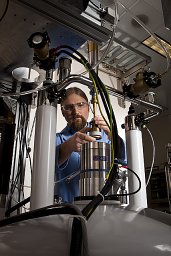 Eric D. Walter合作论文数Department of Chemistry and Biochemistry;Uni Versity of California;Department of Chemistry and Biochemistry, Uni Versity of California4Kee Sung Han合作论文数Daegu Center, Korea Basic Science Institute4




