Though many Paleolithic assemblages bear the name, the Tayacian has never been well defined. In fact, its rather non-descript character is a large part of its definition and, while not technically the type site for the Tayacian, the cave site of Fontéchevade with its thick deposits of Tayacian and detailed publication has served as an important reference for this industry. Here we report on our recent re-excavation of the site and study of the existing collections. Based on this work it is clear that the Tayacian of Fontéchevade is largely a result of taphonomic factors of mainly natural origin that brought together unworked, fractured flints from the cave walls, rolled worked and unworked flints from the overlying plateau, gravels from the overlying plateau that were interpreted as hammerstones, and infrequent occurrences of stone artifacts that may in fact have been manufactured in place or at least deposited there by hominins. As a result we suggest that the term Tayacian should no longer be used to describe lithic assemblages and that archaeologists need to continue to be careful linking archaeological assemblages to shared paerns of behavior that might be interpreted as Paleolithic cultures. INTRODUCTION T Tayacian was first recognized early in the 20th century by the French archaeologist Denis Peyrony at the site of La Micoque (Peryony 1938), located in the Department of the Dordogne in SW France (Figure 1). Not long aerwards, later excavations at another site 80 km to the northwest, in the Charente, yielded an even larger assemblage of this type, which was more fully documented by the excavator (Henri-Martin 1957). It was for this reason that this laer site, Fontéchevade, ultimately become the reference site for the Tayacian. Based on recent excavations at this site by the present authors, however, there are multiple lines of evidence that, taken together, strongly suggest that the assemblage present in this cave is largely of natural, rather than anthropogenic, origin. The presentation of these results, in the context of the history of the Tayacian and the cave of Fontéchevade itself, represents one of the two main foci of this paper. The second focus is on the larger implications of those results. First, there are implications for the status of the Tayacian as an actual industrial variant with behavioral significance. On the one hand, it has always been the case that the Tayacian appeared so heterogeneous as to throw doubt on its reality. In addition, many Tayacian assemblages seemingly owed at least part of their appearance to naturally occurring factors rather than to human intent. Our work at Fontéchevade, arguably the most important Tayacian site, supports this conclusion. This would mean that the term Tayacian should no longer be used as an industrial variant. On an even higher level, the very fact that the Tayacian had, for such a long time, been considered as a Paleolithic culture, complete with an association of a distinct hominin type—the highly debated “pre-Sapiens” remains found there (Vallois 1958)—raises the larger question of how such a concept can and should be applied to early Paleolithic assemblage groups. Paleolithic archaeologists almost never define what they mean by the word “culture,” (but see Guilmet 1977; Gowle 1984; 1996; Holloway 1969; 1981; Isaac 1976; also see Marks et al. 2001 for a partial review). This makes it very difficult to document paerns in how the term has been used. However, archaeologists seem to mean one of three different things when they use the word. The real difPaleoAnthropology 2006: 1−21. Copyright © 2006 Paleoanthropology Society. All rights reserved. HAROLD L. DIBBLE Department of Anthropology, University Museum, 3260 South Street, University of Pennsylvania, Philadelphia, PA 19104, USA SHANNON J.P. MCPHERRON Max Planck Institute for Evolutionary Anthropology, Deutscher Platz 6, D-04103 Leipzig, GERMANY PHILIP CHASE University of Pennsylvania Museum, 3260 South Street, University of Pennsylvania, Philadelphia, PA 19104, USA WILLIAM R. FARRAND Museum of Anthropology, University of Michigan, 4009 Ruthven Museums, Ann Arbor, MI 48109-1079, USA ANDRÉ DEBÉNATH Université de Perpignan, Via Domitia, 52, Avenue Paul Alduy, 66 860 Perpignan Cedex, France, and 8 route de La Rochefoucauld, 16220 Montbron, FRANCE
The site of La Quina Amont, located in the Charente region, is one of the most important sites in southwestern France for studying major changes in human behaviors from the Middle Paleolithic (MP) to the Early Upper Paleolithic (EUP). Extensively excavated over the past 50 years, numerous dating studies have been focused on the Upper Paleolithic deposits using radiocarbon on bone collagen and thermoluminescence (TL) on heated flints; however, the Mousterian levels remain undated due to the scarcity of suitable materials. Our investigations aimed to provide for the first time a chronological framework for the site using luminescence dating methods on different minerals contained in the sediments. Coarse grains of quartz were dated using the optically stimulated luminescence (OSL) technique, and polymineral fine grains were dated using both infrared (IRSL) and post-infrared (pIR-IRSL) stimulated luminescence signals. OSL, IRSL and pIR-IRSL results were combined with available TL and radiocarbon data sets to propose a chronology for the site. The agreement between these methods provides key insights into the sedimentological processes involved in the site formation and into the chronology of the human occupations. In particular, it shows that the sequence spans almost ∼20,000 years (20 ka). Moreover, the new chronological framework suggests that the makers of the Quina lithic technocomplex (LTC), who were reindeer hunters, inhabited the site from the end of marine isotope stage (MIS) 4 to the beginning of MIS 3. We also show that Levallois and Discoidal industries occurred successively under temperate paleoclimatic conditions, during MIS 3 but not after ∼40 ka. Finally, we compare the Quina LTC dataset with other sites in southern France in order to shed light upon the variability in Mousterian industries of this region.
Coastal adaptations and the exploitation of marine resources are important topics in the study of the human evolution as certain other human behaviors may be linked to them: large group size, low mobility, complex technology and wide-ranging gifting or exchange. It is therefore essential to characterize the socio-economic organization of Aterian hunter–gatherers in coastal landscapes. The example of Unit 8 of El Mnasra Cave provides some initial insights into the economic organization of Aterian groups living on the Atlantic coastal landscapes of Morocco through a combination of zooarchaeological and stone tool industry data. The lithic industries include tanged tools, which in fact encompass a mosaic of tools (points, scrapers, unmodified edges, etc.) having a long use-life and high mobility. The lithic industries also present a fragmented reduction system associated with a large range of mainly local raw materials. The lithic assemblages are thus very flexible and include multifunctional-tools. Aterian hunter–gatherers consumed a broad range of terrestrial resources (small, medium and large ungulates, tortoises) as well as coastal ones (mollusks). The artifacts (faunal remains, lithic and osseous industries, hearths, ornaments in Nassarius sp. shells pigments) reflect diverse activities, showing that El Mnasra Unit 8 is not a single-activity site. The low density of archaeological artifacts, the small number of faunal species exploited by humans and the fragmented lithic reduction system indicate brief occupations.
Neanderthal femoral shaft of BD 5 (MIS 5e), representing a young adult female, and CDV-Tour 1 (MIS 3), an adult male, are both from the site of La Chaise-de-Vouthon, Charente, but are separated by about 80,000 years. In order to identify possible evolutionary morpho-structural changes during this time span, we present a comparative analysis of their internal and external structure. In addition to the morphological characteristics and changes in their external diameters at midshaft and subtrochanteric levels, we quantified, from their microtomographic record (μCT), the cross-sectional geometric properties of these specimens at 50 %, 65 % and 80 % of the biomechanical femoral length and analyzed the morphometric maps of the topographical distribution of cortical bone. Despite differences likely related to sexual dimorphism, both shaft of La Chaise share among themselves but also with all European Neanderthals femurs considered in this study, the typical structural features of this taxon. Indeed, at least compared to the quantitative parameters measured and specimens available for this type of analysis, during the time period MIS 5-3 we did not notice any obvious changes in the endostructural arrangement and in the biomechanical properties of the Neanderthal femoral shaft. Les diaphyses fémorales néandertaliennes BD 5 (MIS 5e), représentant un jeune adulte de sexe féminin, et CDV-Tour 1 (MIS 3), un sujet adulte de sexe masculin, proviennent tous les deux du site de La Chaise-de-Vouthon, en Charente, mais sont séparées d’environ 80 000 ans. Dans le but de mettre en évidence d’éventuels changements évolutifs de nature morpho-structurelle au cours de ce laps de temps, nous présentons ici l’analyse comparative de leur structure externe et interne. En plus des caractéristiques morphologiques et des variations des diamètres externes au niveau mi-diaphysaire et de la section sous-trochantérienne, nous avons quantifié, à partir de leur registre microtomographique (μCT), les propriétés géométriques de sections de ces spécimens à 50 %, 65 % et 80 % de la longueur biomécanique et réalisé la cartographie morphométrique de la distribution topographique du tissu cortical. Malgré des différences vraisemblablement liées au dimorphisme sexuel, les deux diaphyses de La Chaise partagent, entre elles, mais aussi avec l’ensemble des fémurs néandertaliens européens considérés dans cette étude, les caractéristiques structurales typiques de ce taxon. En effet, au moins par rapport aux paramètres quantitatifs mesurés et aux spécimens disponibles à ce jour pour ce type d’analyses, au cours de la période chronologique MIS 5-3 nous n’avons pas remarqué de changements évidents dans l’agencement endostructural et dans les propriétés biomécaniques de la diaphyse fémorale néandertalienne.
This book presents the major tool types of European Lower and Middle Paleolithic. Building on the typelist of the late Francois Bordes, with many forms that have been recognized since, it presents working definitions of the types with illustrations and discussions of the variability inherent to lithic typologies. The authors combine classic typological views with current notions of lithic typological variation. This handbook represents not only an important reference source for gaining a practical understanding of how Lower and Middle Paleolithic typology is applied but of the nature of lithic variability in other kinds of assemblages as well.
L’obtention de trois dates AMS sur collagene humain de l’individu H3 decouvert en 1996 dans la couche 2 d’El Harhoura 2 est l’occasion de faire le bilan sur nos connaissances de cette phase d’occupation. A partir des donnees des fouilles anciennes et recentes, le contexte stratigraphique et culturel de l’individu H3 est discute. L’âge estime, d’environ 12 ka, permet de replacer cet individu dans le contexte chronologique plus large du Paleolithique superieur de la region de Temara et du Maroc.
des diaphyses fémorales néandertaliennes BD 5 (MIS 5e) et CDV-Tour 1 (MIS 3) de La Chaisede-Vouthon, Charente, FranceComparative structural analysis of the Neanderthal femoral shafts BD 5 (MIS 5e) and CDV-Tour 1 (MIS 3) from La Chaise-de-Vouthon, Charente, France
Les diaphyses fémorales néandertaliennes BD 5 (MIS 5e), représentant un jeune adulte de sexe féminin, et CDV-Tour 1 (MIS 3), un sujet adulte de sexe masculin, proviennent tous les deux du site de La Chaise-de-Vouthon, en Charente, mais sont séparées d'environ 80 000 ans. Dans le but de mettre en évidence d'éventuels changements évolutifs de nature morpho-structurelle au cours de ce laps de temps, nous présentons ici l'analyse comparative de leur structure externe et interne. En plus des caractéristiques morphologiques et des variations des diamètres externes au niveau mi-diaphysaire et de la section sous-trochantérienne, nous avons quantifié, à partir de leur registre microtomographique (µCT), les propriétés géométriques de sections de ces spécimens à 50 %, 65 % et 80 % de la longueur biomécanique et réalisé la cartographie morphométrique de la distribution topographique du tissu cortical. Malgré des différences vraisemblablement liées au dimorphisme sexuel, les deux diaphyses de La Chaise partagent, entre elles, mais aussi avec l'ensemble des fémurs néandertaliens européens considérés dans cette étude, les caractéristiques structurales typiques de ce taxon. En effet, au moins par rapport aux paramètres quantitatifs mesurés et aux spécimens disponibles à ce jour pour ce type d'analyses, au cours de la période chronologique MIS 5-3 nous n'avons pas remarqué de changements évidents dans l'agencement endostructural et dans les propriétés biomécaniques de la diaphyse fémorale néandertalienne.
La 6e Rencontre des Quaternaristes Marocains (RQM6) s’est tenue dans la salle des conferences de la Chambre du Commerce a Tanger, du 15 au 17 novembre 2011. Elle avait pour theme : « Geosciences, environnement et patrimoine de part et d’autre du detroit de Gibraltar ». Les participants ont ete accueillis par les professeurs A. El Moussaoui, A. Azmani et B. El Moumni, respectivement vice-president de l’Universite Abdelmalek Essaadi de Tanger, doyen de la faculte des sciences et techniques de T...
We describe a human partial femoral shaft discovered during speleological exploration of the "grotte de la Tour", near the prehistoric site of La Chaise-de-Vouthon (Charente, France). The context of discovery is compatible with a hyena den deposit; the associated mammal assemblage suggests a preliminary chronological attribution to MIS 3. Combined information from its outer morphology, cross-sectional geometric properties, and from the high-resolution 3D imaging and quantitative analysis of its inner structural organization shows that this specimen (CDV-Tour 1) is from an adult Neanderthal individual, more likely a male. (C) 2012 Academie des sciences. Published by Elsevier Masson SAS. All rights reserved.
COMBINED ESR-U/TH DATING ON FOSSIL TEETH FROM EL MNASRA AND EL HARHOURA 2 CAVES, RABAT-TEMARA AREA. CHRONOLOGICAL IMPLICATIONS ON THE HUMAN SETTLEMENT OF NORTHWESTERN PART OF MOROCCO DURING THE UPPER PLEISTOCENEThe region of Temara-Rabat yields several archaeological and palaeontological sites of an utmost importance for the prehistory of Morocco and more generally for Northern Africa. During the seventies, the discovery of Palaeolithic human remains associated with Aterian and Upper Palaeolithic artefacts, at Dar es Soltane, El Harhoura I and Contrebandiers, have emphasized the interest of the sites in this area. Two caves have been well-studied and are still under excavation: El Mnasra since 1990 and El Harhoura 2 since 2001. The combined ESR-U/Th method applied to fossil herbivorous teeth allows a chronostratigraphical view thanks to guide marks precising the palaeoenvironmental frame in which humans lived during the Palaeolithic period in Morocco. All dated layers are attributed to the Aterian culture. The analyses were performed on bovid fossil teeth unearthed from layers 8, 5 and 4a at El Harhoura 2, and from layers 7, 6a and 6 at El Mnasra. The preliminary results range between 92 and 44 ka for El Haroura2, and between 89 and 66 ka for El Mnasra. These results suggest that caves of Temara region began to be frequented by modern humans from marine isotope stage 5 until 40 ka. The sedimentary record continued later, as evidenced by remains of occupations during Upper Paleolithic and Neolithic found in stratigraphic position.
Optically stimulated luminescence (OSL) measurements were made on individual, sand-sized grains of quartz from Middle Palaeolithic deposits at two cave sites (El Harhoura 2 and El Mnasra) on the Atlantic coast of Morocco. We were able to calculate OSL ages for 32 of the 33 samples collected from the Middle Palaeolithic deposits, including the earliest and latest Aterian levels at both sites. These ages reveal periods of occupation between about 110 and 95 ka (thousands of years ago), and at similar to 75 ka. A late Middle Palaeolithic occupation of El Harhoura 2 is also recorded at similar to 55 ka. Our single-grain OSL chronologies largely support previous age estimates from El Mnasra and other sites along the Atlantic coast of Morocco, but are generally more precise, reproducible and stratigraphically more coherent (i.e., fewer age reversals). We compare the single-grain ages for El Harhoura 2 and El Mnasra with those obtained from single- and multi-grain OSL dating of Middle Palaeolithic deposits in the nearby sites of Contrebandiers and Dar es-Soltan 1 and 2, and with records of past regional environments preserved in sediment cores collected from off the coast of northwest Africa. A conspicuous feature of the new chronologies is the close correspondence between the three identified episodes of human occupation and periods of wetter climate and expanded grassland habitat. Owing to the precision of the single-grain OSL ages, we are able to discern gaps in occupation during Marine Isotope Stages 5 and 4, which may represent drier periods with reduced vegetation cover. We propose that these climatic conditions can be correlated with events in the North Atlantic Ocean that exert a major control on abrupt, millennial-scale fluctuations between wet and dry periods in northwest and central North Africa. (C) 2011 Elsevier Ltd. All rights reserved.
La région de Témara, près de Rabat, abrite plusieurs sites archéologiques et paléontologiques d'une importance majeure pour la Préhistoire du Maroc et du nord de l'Afrique. Les découvertes de restes humains paléolithiques associés à des industries atériennes et du Paléolithique supérieur à Dar es Soltane 2, El Harhoura 1 et aux Contrebandiers, dans les années 1970, ont renforcé l'intérêt des sites de la région de Témara. Deux grottes ont fait l'objet de nombreuses recherches et sont en cours de fouilles : El Mnasra depuis 1990 et El Harhoura 2 depuis 2001. L'application de la méthode de datation ESR-U/Th sur l'émail dentaire permet de fournir des points de repères géochronologiques et de discuter du cadre paléoenvironnemental dans lequel vivait l'Homme paléolithique au Maroc. Les datations ont été réalisées sur des dents fossiles de bovidés prélevées dans des couches attribuées au Paléolithique moyen (Atérien). Pour la grotte d'El Harhoura 2, les âges proposés s'échelonnent entre 92 et 44 ka, et pour la grotte d'El Mnasra, les résultats suggèrent une occupation comprise entre 66 et 89 ka pour les couches 6 et 7. Ces résultats suggèrent que les grottes de la région de Témara ont commencé à être fréquentées par l'Homme moderne dès le stade isotopique marin 5, et ce jusqu'à environ 40 ka.L'enregistrement sédimentaire s'est poursuivi ultérieurement, comme en témoignent les vestiges d'occupations au Paléolithique supérieur et au Néolithique retrouvés en stratigraphie.
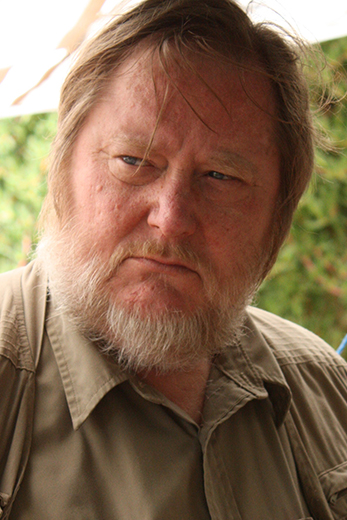 Harold Lewis Dibble合作论文数Department of Anthropology, University of Pennsylvania34
 Philip G. Chase合作论文数24
 Shannon Mcpherron合作论文数Department of Human Origins, Max Planck Institute for Evolutionary Anthropology22
 Roland Nespoulet合作论文数14
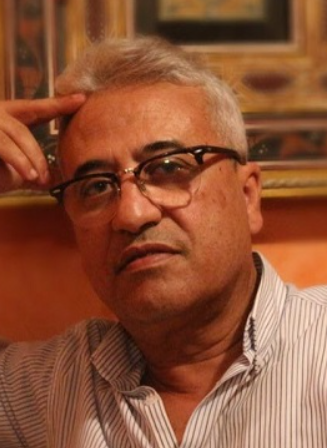 Mohamed Abdeljalil El Hajraoui合作论文数Institut National des Sciences de l'Archéologie et du Patrimoine12
 Oujaa Aicha合作论文数11
 Larbi Boudad合作论文数Laboratoire des formations superficielles, faculté des sciences et techniques, BP 509, Boutalamine, Errachidia, Maroc9
 Jean-Paul Raynal合作论文数9
 Jeanpaul Lacombe合作论文数7
 Emmanuelle Stoetzel合作论文数7Jean-Pierre Daugas合作论文数6Emilie Campmas合作论文数6
 Patrick Michel合作论文数Observatoire de la Côte d'Azur/French National Centre for Scientific Research6Fethi Amani合作论文数6Nouha Janati-Idrissi合作论文数5Addeljalil El Hajraoui合作论文数5
 Christophe Falgueres合作论文数5Jean-François Tournepiche合作论文数5Abdelwahed Ben Ncer合作论文数4
 Dominique Genty合作论文数Laboratoire des Sciences du Climat et de l’Environnement (LSCE),, CNRS/CEA4Kamal El Hammouti合作论文数4
 Jean-Jacques Bahain合作论文数Muséum National d'Histoire Naturelle4Lahcen Bejjit合作论文数Electronique des milieux condensés, Université de Provence4Mabs Gilmour合作论文数4Laurent Puymerail合作论文数4Isabelle Couchoud合作论文数4PG Chase合作论文数3Michel Lenoir合作论文数3sabah niftah合作论文数3
 Brooks Ellwood合作论文数University of Texas at Arlington;Department of Geology & Geophysics, College of Science, Louisiana State University3
 Jean-Marie Le Tensorer合作论文数3William R. Farrand合作论文数3Tristan Garcia合作论文数3
 Silvana Condemi合作论文数Laboratoire d’Anthropologie bioculturelle, Université de la Méditerranée3Jeanclaude Miskovsky合作论文数3Abdelaziz El Idrissi合作论文数3
 D. Blamart合作论文数3Aj Jelinek合作论文数2l tixier合作论文数2anna mary backer合作论文数2matthew h nitecki合作论文数2Michel Guilbaud合作论文数2de Soto Jose Gomez合作论文数2M. Haddad合作论文数2
 Zenobia Jacobs合作论文数School of Earth of Environmental Sciences, University of Wollongong;Centre for Archaeological Science, University of Wollongong2
 Shannon P. Mcpherron合作论文数max planck society2
 Pierre Pichet合作论文数2
 Jean-Philip Brugal合作论文数UMR CNRS 6636, Maison Méditerranéenne des Sciences de l'Homme2
 Serge Occhietti合作论文数2




