Recent advancements in video models have shown tremendous progress, particularly in long video understanding. However, current benchmarks predominantly feature western-centric data and English as the dominant language, introducing significant biases in evaluation. To address this, we introduce CURVE, a challenging benchmark for multicultural and multilingual video reasoning. CURVE comprises high-quality, entirely human-generated annotations from diverse, region-specific cultural videos across 18 global locales. Unlike prior work that relies on automatic translations, CURVE provides complex questions, answers, and multi-step reasoning steps, all crafted in native languages. Making progress on CURVE requires a deeply situated understanding of visual cultural context. Furthermore, we leverage CURVE's reasoning traces to construct evidence-based graphs and propose a novel iterative strategy using these graphs to identify fine-grained errors in reasoning. Our evaluations reveal that SoTA Video-LLMs struggle significantly, performing substantially below human-level accuracy, with errors primarily stemming from the visual perception of cultural elements. We will release CURVE to foster the development of more equitable and capable multimodal foundation models.
Multi-spectral imagery is a valuable input signal for Remote Sensing applications, such as land-use and land-cover classification and environmental monitoring. However, generalist Large Multi-modal Models (LMMs) are typically trained on RGB images, limiting their applicability to the RGB domain. At the same time, training multi-spectral multi-modal models is expensive and produces uniquely specialized models. To address this, we propose a novel training-free approach that introduces multi-spectral data within the inference pipeline of standard RGB-only LMMs, allowing large gains in performance. Our approach leverages the LMMs' understanding of the visual space by adapting non-RGB inputs to that space and injecting domain-specific information and Chain-of-Thought reasoning as instructions. We demonstrate this with the Gemini 2.5 model and observe strong Zero-Shot performance gains on popular Remote Sensing benchmarks. These results highlight the potential for geospatial professionals to leverage powerful generalist models for specialized sensor inputs, benefiting from rich reasoning capabilities grounded in specialized data.
We propose Context-Adaptive Multi-Prompt Embedding, a novel approach to enrich semantic representations in vision-language contrastive learning. Unlike standard CLIP-style models that rely on a single text embedding, our method introduces multiple structured prompts, each containing a distinct adaptive token that captures diverse semantic aspects of the input text. We leverage a pretrained LLM as the text encoder within the CLIP framework, processing all prompts jointly in a single forward pass. The resulting prompt embeddings are combined into a unified text representation, enabling semantically richer alignment with visual features. To further promote semantic diversity and representation quality, we incorporate a diversity regularization loss and a negation-aware loss, encouraging specialization across prompts and improving contrastive discrimination. Our method achieves consistent improvements on both image-text and video-text retrieval benchmarks.
Multi-spectral imagery plays a crucial role in diverse Remote Sensing applications including land-use classification, environmental monitoring and urban planning. These images are widely adopted because their additional spectral bands correlate strongly with physical materials on the ground, such as ice, water, and vegetation. This allows for more accurate identification, and their public availability from missions, such as Sentinel-2 and Landsat, only adds to their value. Currently, the automatic analysis of such data is predominantly managed through machine learning models specifically trained for multi-spectral input, which are costly to train and support. Furthermore, although providing a lot of utility for Remote Sensing, such additional inputs cannot be used with powerful generalist large multimodal models, which are capable of solving many visual problems, but are not able to understand specialized multi-spectral signals. To address this, we propose a training-free approach which introduces new multi-spectral data in a Zero-Shot-only mode, as inputs to generalist multimodal models, trained on RGB-only inputs. Our approach leverages the multimodal models' understanding of the visual space, and proposes to adapt to inputs to that space, and to inject domain-specific information as instructions into the model. We exemplify this idea with the Gemini2.5 model and observe strong Zero-Shot performance gains of the approach on popular Remote Sensing benchmarks for land cover and land use classification and demonstrate the easy adaptability of Gemini2.5 to new inputs. These results highlight the potential for geospatial professionals, working with non-standard specialized inputs, to easily leverage powerful multimodal models, such as Gemini2.5, to accelerate their work, benefiting from their rich reasoning and contextual capabilities, grounded in the specialized sensor data.
We introduce VideoComp, a benchmark and learning framework for advancing video-text compositionality understanding, aimed at improving vision-language models (VLMs) in fine-grained temporal alignment. Unlike existing benchmarks focused on static image-text compositionality or isolated single-event videos, our benchmark targets alignment in continuous multi-event videos. Leveraging video-text datasets with temporally localized event captions (e.g. ActivityNet-Captions, YouCook2), we construct two compositional benchmarks, ActivityNet-Comp and YouCook2-Comp. We create challenging negative samples with subtle temporal disruptions such as reordering, action word replacement, partial captioning, and combined disruptions. These benchmarks comprehensively test models' compositional sensitivity across extended, cohesive video-text sequences. To improve model performance, we propose a hierarchical pairwise preference loss that strengthens alignment with temporally accurate pairs and gradually penalizes increasingly disrupted ones, encouraging fine-grained compositional learning. To mitigate the limited availability of densely annotated video data, we introduce a pretraining strategy that concatenates short video-caption pairs to simulate multi-event sequences. We evaluate video-text foundational models and large multimodal models (LMMs) on our benchmark, identifying both strengths and areas for improvement in compositionality. Overall, our work provides a comprehensive framework for evaluating and enhancing model capabilities in achieving fine-grained, temporally coherent video-text alignment.
Dense video captioning is a challenging video understanding task which aims to simultaneously segment the video into a sequence of meaningful consecutive events and to generate detailed captions to accurately describe each event. Existing methods often encounter difficulties when working with the long videos associated with dense video captioning, due to the computational complexity and memory limitations. Furthermore, traditional approaches require the entire video as input, in order to produce an answer, which precludes online processing of the video. We address these challenges by time-scaling State-Space Models (SSMs) to even longer sequences than before. Our approach, State-Space Models with Transfer State, combines both the long-sequence and recurrent properties of SSMs and addresses the main limitation of SSMs which are otherwise not able to sustain their state for very long contexts, effectively scaling SSMs further in time. The proposed model is particularly suitable for generating captions on-the-fly, in an online or streaming manner, without having to wait for the full video to be processed, which is more beneficial in practice. When applied to dense video captioning, our approach scales well with video lengths and uses 7x fewer FLOPs.
3D panoptic segmentation is a challenging perception task, especially in autonomous driving. It aims to predict both semantic and instance annotations for 3D points in a scene. Although prior 3D panoptic segmentation approaches have achieved great performance on closed-set benchmarks, generalizing these approaches to unseen things and unseen stuff categories remains an open problem. For unseen object categories, 2D open-vocabulary segmentation has achieved promising results that solely rely on frozen CLIP backbones and ensembling multiple classification outputs. However, we find that simply extending these 2D models to 3D does not guarantee good performance due to poor per-mask classification quality, especially for novel stuff categories. In this paper, we propose the first method to tackle 3D open-vocabulary panoptic segmentation. Our model takes advantage of the fusion between learnable LiDAR features and dense frozen vision CLIP features, using a single classification head to make predictions for both base and novel classes. To further improve the classification performance on novel classes and leverage the CLIP model, we propose two novel loss functions: object-level distillation loss and voxel-level distillation loss. Our experiments on the nuScenes and SemanticKITTI datasets show that our method outperforms the strong baseline by a large margin.
The development of language models have moved from encoder-decoder to decoder-only designs. In addition, we observe that the two most popular multimodal tasks, the generative and contrastive tasks, are nontrivial to accommodate in one architecture, and further need adaptations for downstream tasks. We propose a novel paradigm of training with a decoder-only model for multimodal tasks, which is surprisingly effective in jointly learning of these disparate vision-language tasks. This is done with a simple model, called MaMMUT. It consists of a single vision encoder and a text decoder, and is able to accommodate contrastive and generative learning by a novel two-pass approach on the text decoder. We demonstrate that joint learning of these diverse objectives is simple, effective, and maximizes the weight-sharing of the model across these tasks. Furthermore, the same architecture enables straightforward extensions to open-vocabulary object detection and video-language tasks. The model tackles a diverse range of tasks, while being modest in capacity. Our model achieves the state of the art on image-text and text-image retrieval, video question answering and open-vocabulary detection tasks, outperforming much larger and more extensively trained foundational models. It shows very competitive results on VQA and Video Captioning, especially considering its capacity. Ablations confirm the flexibility and advantages of our approach.
We present a new open-vocabulary detection approach based on detection-oriented image-text pretraining to bridge the gap between image-level pretraining and open-vocabulary object detection. At the pretraining phase, we replace the commonly used classification architecture with the detector architecture, which better serves the region-level recognition needs of detection by enabling the detector heads to learn from noisy image-text pairs. Using only standard contrastive loss and no pseudo-labeling, our approach is a simple yet effective extension of the contrastive learning method to learn emergent object-semantic cues. In addition, we propose a shifted-window learning approach upon window attention to make the backbone representation more robust, translation-invariant, and less biased by the window pattern. On the popular LVIS open-vocabulary detection benchmark, our approach sets a new state of the art of 40.4 mask AP$_r$ using the common ViT-L backbone, significantly outperforming the best existing approach by +6.5 mask AP$_r$ at system level. On the COCO benchmark, we achieve very competitive 40.8 novel AP without pseudo labeling or weak supervision. In addition, we evaluate our approach on the transfer detection setup, where ours outperforms the baseline significantly. Visualization reveals emerging object locality from the pretraining recipes compared to the baseline. Code and models will be publicly released.
We present a new open-vocabulary detection approach based on region-centric image-language pretraining to bridge the gap between image-level pretraining and open-vocabulary object detection. At the pretraining phase, we incorporate the detector architecture on top of the classification backbone, which better serves the region-level recognition needs of detection by enabling the detector heads to learn from large-scale image-text pairs. Using only standard contrastive loss and no pseudo-labeling, our approach is a simple yet effective extension of the contrastive learning method to learn emergent object-semantic cues. In addition, we propose a shifted-window learning approach upon window attention to make the backbone representation more robust, translation-invariant, and less biased by the window pattern. On the popular LVIS open-vocabulary detection benchmark, our approach sets a new state of the art of 37.6 mask APr using the common ViT-L backbone and public LAION dataset, and 40.5 mask APr using the DataComp-1B dataset, significantly outperforming the best existing approach by +3.7 mask APr at system level. On the COCO benchmark, we achieve very competitive 39.6 novel AP without pseudo labeling or weak supervision. In addition, we evaluate our approach on the transfer detection setup, where it demonstrates notable improvement over the baseline. Visualization reveals emerging object locality from the pretraining recipes compared to the baseline.
One of the main challenges of multimodal learning is the need to combine heterogeneous modalities (e.g., video, audio, text). For example, video and audio are obtained at much higher rates than text and are roughly aligned in time. They are often not synchronized with text, which comes as a global context, e.g. a title or description. Furthermore, video and audio inputs are of much larger volumes, and grow as the video length increases, which naturally requires more compute dedicated to these modalities and makes modeling of long-range dependencies harder. We here decouple the multimodal modeling, dividing it into separate, focused autoregressive models, processing the inputs according to the characteristics of the modalities. We propose a multimodal model consisting of an autoregressive component for the time-synchronized modalities (audio and video), and an autoregressive component for modalities which are not necessarily aligned in time but are still sequential. To address the long-sequences of the video-audio inputs, we propose to further partition the video and audio sequences in consecutive snippets and autoregressively process their representations. To that end, we propose a Combiner mechanism, which models the audio-video information jointly within a timeframe. The Combiner learns to extract audio and video features from raw spatio-temporal signals, and then learns to fuse these features producing compact but expressive representations per snippet. Our approach achieves the state-of-the-art on well established multimodal benchmarks, outperforming much larger models. It effectively addresses the high computational demand of media inputs by both learning compact representations, controlling the sequence length of the audio-video feature representations, and modeling their dependencies in time.
We present the training recipe and results of scaling up PaLI-X, a multilingual vision and language model, both in terms of size of the components and the breadth of its training task mixture. Our model achieves new levels of performance on a wide-range of varied and complex tasks, including multiple image-based captioning and question-answering tasks, image-based document understanding and few-shot (in-context) learning, as well as object detection, video question answering, and video captioning. PaLI-X advances the state-of-the-art on most vision-and-language benchmarks considered (25+ of them). Finally, we observe emerging capabilities, such as complex counting and multilingual object detection, tasks that are not explicitly in the training mix.
One of the main challenges of multimodal learning is the need to combine heterogeneous modalities (e.g., video, audio, text). For example, video and audio are obtained at much higher rates than text and are roughly aligned in time. They are often not synchronized with text, which comes as a global context, e.g., a title, or a description. Furthermore, video and audio inputs are of much larger volumes, and grow as the video length increases, which naturally requires more compute dedicated to these modalities and makes modeling of long-range dependencies harder. We here decouple the multimodal modeling, dividing it into separate, focused autoregressive models, processing the inputs according to the characteristics of the modalities. We propose a multimodal model, called Mirasol3B, consisting of an autoregressive component for the time-synchronized modalities (audio and video), and an autoregressive component for the context modalities which are not necessarily aligned in time but are still sequential. To address the long-sequences of the video-audio inputs, we propose to further partition the video and audio sequences in consecutive snippets and autoregressively process their representations. To that end, we propose a Combiner mechanism, which models the audio-video information jointly within a timeframe. The Combiner learns to extract audio and video features from raw spatio-temporal signals, and then learns to fuse these features producing compact but expressive representations per snippet. Our approach achieves the state-of-the-art on well established multimodal benchmarks, outperforming much larger models. It effectively addresses the high computational demand of media inputs by both learning compact representations, controlling the sequence length of the audio-video feature representations, and modeling their dependencies in time.
Generating automatic dense captions for videos that accurately describe their contents remains a challenging area of research. Most current models require processing the entire video at once. Instead, we propose an efficient, online approach which outputs frequent, detailed and temporally aligned captions, without access to future frames. Our model uses a novel autoregressive factorized decoding architecture, which models the sequence of visual features for each time segment, outputting localized descriptions and efficiently leverages the context from the previous video segments. This allows the model to output frequent, detailed captions to more comprehensively describe the video, according to its actual local content, rather than mimic the training data. Second, we propose an optimization for efficient training and inference, which enables scaling to longer videos. Our approach shows excellent performance compared to both offline and online methods, and uses 20% less compute. The annotations produced are much more comprehensive and frequent, and can further be utilized in automatic video tagging and in large-scale video data harvesting.
Building joint representations across images and text is an essential step for tasks such as Visual Question Answering and Video Question Answering. In this work, we find that the representations must not only jointly capture features from both modalities but should also be diverse for better generalization performance. To this end, we propose joint vision-language representation learning by diversifying the tokenization learning process, enabling tokens that are sufficiently disentangled from each other to be learned from both modalities. We observe that our approach outperforms the baseline models in a majority of settings and is competitive with state-of-the-art methods.
Vision-Language pretraining aims to learn universal cross-modal representations and to create models with broad capabilities. In this paper, we propose a novel dynamic pretraining resampling for a variety of pretraining tasks. Unlike recent large-scale vision-language approaches, we show that a set of diverse self- and weakly-supervised pretraining tasks dynamically sampled according to task difficulty provides strong performance. Further, the approach is sample-efficient, using much less data and compute to address a range of downstream tasks. We show that a single 330M pretrained model using only smaller and publicly accessible datasets, achieves competitive or SOTA performance on three diverse groups of tasks: visual question answering, text-based image localization by referring expressions, and video question answering. The code will be released.
We present Contrastive Feature Masking Vision Transformer (CFM-ViT) - an image-text pretraining methodology that achieves simultaneous learning of image- and region-level representation for open-vocabulary object detection (OVD). Our approach combines the masked autoencoder (MAE) objective into the contrastive learning objective to improve the representation for localization tasks. Unlike standard MAE, we perform reconstruction in the joint image-text embedding space, rather than the pixel space as is customary with the classical MAE method, which causes the model to better learn region-level semantics. Moreover, we introduce Positional Embedding Dropout (PED) to address scale variation between image-text pretraining and detection finetuning by randomly dropping out the positional embeddings during pretraining. PED improves detection performance and enables the use of a frozen ViT backbone as a region classifier, preventing the forgetting of open-vocabulary knowledge during detection finetuning. On LVIS open-vocabulary detection benchmark, CFM-ViT achieves a state-of-the-art 33.9 APr, surpassing the best approach by 7.6 points and achieves better zero-shot detection transfer. Finally, CFM-ViT acquires strong image-level representation, outperforming the state of the art on 8 out of 12 metrics on zero-shot image-text retrieval benchmarks.
We present Region-aware Open-vocabulary Vision Transformers (RO-ViT) -- a contrastive image-text pretraining recipe to bridge the gap between image-level pretraining and open-vocabulary object detection. At the pretraining phase, we propose to randomly crop and resize regions of positional embeddings instead of using the whole image positional embeddings. This better matches the use of positional embeddings at region-level in the detection finetuning phase. In addition, we replace the common softmax cross entropy loss in contrastive learning with focal loss to better learn the informative yet difficult examples. Finally, we leverage recent advances in novel object proposals to improve open-vocabulary detection finetuning. We evaluate our full model on the LVIS and COCO open-vocabulary detection benchmarks and zero-shot transfer. RO-ViT achieves a state-of-the-art 32.1 APr on LVIS, surpassing the best existing approach by +5.8 points in addition to competitive zero-shot transfer detection. Surprisingly, RO-ViT improves the image-level representation as well and achieves the state of the art on 9 out of 12 metrics on COCO and Flickr image-text retrieval benchmarks, outperforming competitive approaches with larger models.
Image-language learning has made unprecedented progress in visual understanding. These developments have come at high costs, as contemporary vision-language models require large model scales and amounts of data. We here propose a much easier recipe for image-language learning, which produces effective models, outperforming bigger and more expensive ones, often trained on orders of magnitude larger datasets. Our key finding is the joint learning of a compact vision and language representation, which adaptively and iteratively fuses the multi-modal features. This results in a more effective image-language learning, greatly lowering the FLOPs by combining and reducing the number of tokens for both text and images, e.g. a 33\% reduction in FLOPs is achieved, compared to baseline fusion techniques used by popular image-language models, while improving performance. This also allows the model to scale without a large increase in FLOPs or memory. In addition, we propose adaptive pre-training data sampling which improves the data efficiency. The proposed approach achieves competitive performance compared to much larger models, and does so with significantly less data and FLOPs. With only 40M training examples and with 39 GFLOPs our lightweight model outperforms many times larger state-of-the-art models of 2-20x more FLOPs and using bigger datasets some of which with close to 1B training examples.
 A. J. Piergiovanni合作论文数Google35
 Michael S. Ryoo合作论文数Department of Computer Science, Stony Brook University;Salesforce AI Research24
 Weicheng (Eric) Kuo合作论文数Google Brain19
 Larry Matthies合作论文数Jet Propulsion Laboratory, California Institute of Technology17
 Dahun Kim合作论文数Google DeepMind15
 Daniel M. Helmick合作论文数Jet Propulsion Laboratory;University of Minnesota;Dept . of Computer Science and Engineering;Jet Propulsion Laboratory, University of Minnesota11
 Reza Mahjourian合作论文数Waymo10
 Rico Jonschkowski合作论文数Inceptive7
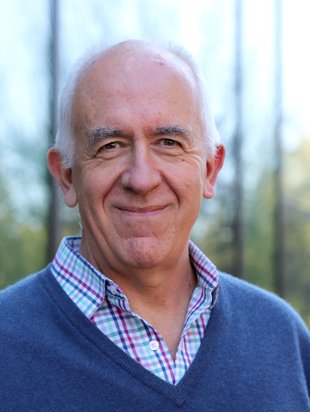 Pietro Perona合作论文数Department of Computing & Mathematical Sciences, Division of Engineering and Applied Science, California Institute of Technology7
 Soren Pirk合作论文数Visual Computing and Artificial Intelligence lab, Department of Computer Science, Kiel University7
 Vincent Casser合作论文数Waymo6
 Ariel Gordon合作论文数Google AI6
 Tsung-Yi Lin合作论文数NVIDIA6
 Vincent Vanhoucke合作论文数Waymo6
 Irfan Essa合作论文数School of Interactive Computing, College of Computing, Georgia Institute of Technology;Interdisciplinary Research Center for Machine Learning, Georgia Institute of Technology;Google Inc.5
 Gustavo Carneiro合作论文数Centre for Vision, Speech and Signal Processing, School of Computer Science and Electronic Engineering, University of Surrey5
 Martin Wicke合作论文数Google Research5
 Alexander Toshev合作论文数Apple ML Research5
 Michael Brown合作论文数4Isaac Noble合作论文数4
 Michael Danielczuk合作论文数The AUTOLAB, UC Berkeley4
 Ken Goldberg合作论文数Industrial Engineering and Operations Research Department, College of Engineering, University of California, Berkeley;University of California, San Francisco4
 Wei Li合作论文数Google Brain;Microsoft3Juhana Kangaspunta合作论文数Robotics at Google3Suhani Vora合作论文数Google Research3
 Ankita Pasad合作论文数Toyota Technol Inst Chicago3
 Jeffrey Ichnowski合作论文数University of California Berkeley3
 Steven Hickson合作论文数Georgia Inst Technol3
 Anurag Arnab合作论文数Google DeepMind3
 Mostafa Dehghani合作论文数Google DeepMind3
 Eric Mjolsness合作论文数Department of Computer Science, University of California Irvine;Department of Mathematics, University of California, Irvine;California Institute of Technology3
 Yao Lu合作论文数Physical Intelligence3
 Abhijit S. Ogale合作论文数Center for Automation Research;University of Maryland;Center for Automation Research, University of Maryland3
 Rahul Sukthankar合作论文数Google DeepMind3
 Benyang Tang合作论文数Jet Propulsion Laboratory, Pasadena, CA, USA3
 Michael J. Turmon合作论文数Jet Propulsion Laboratory3
 Alex Krizhevsky合作论文数Dessa3
 Shenghuo Zhu (朱胜火)合作论文数Aibee Inc.3
 Karteek Alahari合作论文数Inria3
 Jose M. Alvarez合作论文数NVIDIA3
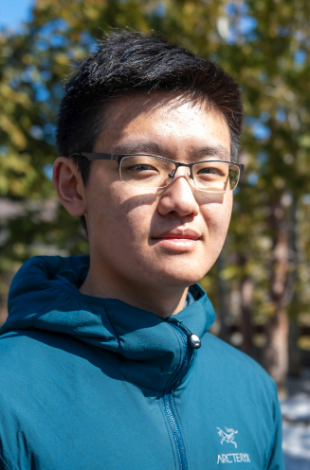 Letian (Max) Fu合作论文数Google DeepMind2
 Chung Min Kim合作论文数University of California, Berkeley2Victor Gomes合作论文数2Hanno Ackermann合作论文数2Antonio Agudo合作论文数2Paul Aljabar合作论文数2Arunava Banerjee合作论文数2Vasileios Belagiannis合作论文数2
 Anthony Brohan合作论文数Google Deepmind2