Object-centric representations are a promising path toward more systematic generalization by providing flexible abstractions upon which compositional world models can be built. Recent work on simple 2D and 3D datasets has shown that models with object-centric inductive biases can learn to segment and represent meaningful objects from the statistical structure of the data alone without the need for any supervision. However, such fully-unsupervised methods still fail to scale to diverse realistic data, despite the use of increasingly complex inductive biases such as priors for the size of objects or the 3D geometry of the scene. In this paper, we instead take a weakly-supervised approach and focus on how 1) using the temporal dynamics of video data in the form of optical flow and 2) conditioning the model on simple object location cues can be used to enable segmenting and tracking objects in significantly more realistic synthetic data. We introduce a sequential extension to Slot Attention which we train to predict optical flow for realistic looking synthetic scenes and show that conditioning the initial state of this model on a small set of hints, such as center of mass of objects in the first frame, is sufficient to significantly improve instance segmentation. These benefits generalize beyond the training distribution to novel objects, novel backgrounds, and to longer video sequences. We also find that such initial-state-conditioning can be used during inference as a flexible interface to query the model for specific objects or parts of objects, which could pave the way for a range of weakly-supervised approaches and allow more effective interaction with trained models.
One of the most challenging aspects of real-world reinforcement learning (RL) is the multitude of unpredictable and ever-changing distractions that could divert an agent from what was tasked to do in its training environment. While an agent could learn from reward signals to ignore them, the complexity of the real-world can make rewards hard to acquire, or, at best, extremely sparse. A recent class of self-supervised methods have shown promise that reward-free adaptation under challenging distractions is possible. However, previous work focused on a short one-episode adaptation setting. In this letter, we consider a long-term adaptation setup that is more akin to the specifics of the real-world and propose a metric space perspective on self-supervised adaptation. We empirically describe the processes that take place in the embedding space during this adaptation process, reveal some of its undesirable effects on performance and show how they can be eliminated. Moreover, we theoretically study how actor-based and actor-free agents can further generalise to the target environment by manipulating the Lipschitz constant of the actor and critic functions.
Robots have to face challenging perceptual settings, including changes in viewpoint, lighting, and background. Current simulated reinforcement learning (RL) benchmarks such as DM Control provide visual input without such complexity, which limits the transfer of well-performing methods to the real world. In this paper, we extend DM Control with three kinds of visual distractions (variations in background, color, and camera pose) to produce a new challenging benchmark for vision-based control, and we analyze state of the art RL algorithms in these settings. Our experiments show that current RL methods for vision-based control perform poorly under distractions, and that their performance decreases with increasing distraction complexity, showing that new methods are needed to cope with the visual complexities of the real world. We also find that combinations of multiple distraction types are more difficult than a mere combination of their individual effects.
General-purpose robotic systems must master a large repertoire of diverse skills. While reinforcement learning provides a powerful framework for acquiring individual behaviors, the time needed to acquire each skill makes the prospect of a generalist robot trained with RL daunting. In this paper, we study how a large-scale collective robotic learning system can acquire a repertoire of behaviors simultaneously, sharing exploration, experience, and representations across tasks. In this framework, new tasks can be continuously instantiated from previously learned tasks improving overall performance and capabilities of the system. To instantiate this system, we develop a scalable and intuitive framework for specifying new tasks through user-provided examples of desired outcomes, devise a multi-robot collective learning system for data collection that simultaneously collects experience for multiple tasks, and develop a scalable and generalizable multi-task deep reinforcement learning method, which we call MT-Opt. We demonstrate how MT-Opt can learn a wide range of skills, including semantic picking (i.e., picking an object from a particular category), placing into various fixtures (e.g., placing a food item onto a plate), covering, aligning, and rearranging. We train and evaluate our system on a set of 12 real-world tasks with data collected from 7 robots, and demonstrate the performance of our system both in terms of its ability to generalize to structurally similar new tasks, and acquire distinct new tasks more quickly by leveraging past experience. We recommend viewing the videos at https://karolhausman.github.io/mt-opt/.
General-purpose robotic systems must master a large repertoire of diverse skills to be useful in a range of daily tasks. While reinforcement learning provides a powerful framework for acquiring individual behaviors, the time needed to acquire each skill makes the prospect of a generalist robot trained with RL daunting. In this paper, we study how a large-scale collective robotic learning system can acquire a repertoire of behaviors simultaneously, sharing exploration, experience, and representations across tasks. In this framework new tasks can be continuously instantiated from previously learned tasks improving overall performance and capabilities of the system. To instantiate this system, we develop a scalable and intuitive framework for specifying new tasks through user-provided examples of desired outcomes, devise a multi-robot collective learning system for data collection that simultaneously collects experience for multiple tasks, and develop a scalable and generalizable multi-task deep reinforcement learning method, which we call MT-Opt. We demonstrate how MT-Opt can learn a wide range of skills, including semantic picking (i.e., picking an object from a particular category), placing into various fixtures (e.g., placing a food item onto a plate), covering, aligning, and rearranging. We train and evaluate our system on a set of 12 real-world tasks with data collected from 7 robots, and demonstrate the performance of our system both in terms of its ability to generalize to structurally similar new tasks, and acquire distinct new tasks more quickly by leveraging past experience. We recommend viewing the videos at https://karolhausman.github.io/mt-opt/
A common strategy to video understanding is to incorporate spatial and motion information by fusing features derived from RGB frames and optical flow. In this work, we introduce a new way to leverage semantic segmentation as an intermediate representation for video understanding and use it in a way that requires no additional labeling. Second, we propose a general framework which learns the intermediate representations (optical flow and semantic segmentation) jointly with the final video understanding task and allows the adaptation of the representations to the end goal. Despite the use of intermediate representations within the network, during inference, no additional data beyond RGB sequences is needed, enabling efficient recognition with a single network. Finally, we present a way to find the optimal learning configuration by searching the best loss weighting via evolution. We obtain more powerful visual representations for videos which lead to performance gains over the state-of-the-art.
We present SMURF, a method for unsupervised learning of optical flow that improves state of the art on all benchmarks by 36% to 40% (over the prior best method UFlow) and even outperforms several supervised approaches such as PWC-Net and FlowNet2. Our method integrates architecture improvements from supervised optical flow, i.e. the RAFT model, with new ideas for unsupervised learning that include a sequence-aware self-supervision loss, a technique for handling out-of-frame motion, and an approach for learning effectively from multi-frame video data while still only requiring two frames for inference.
Estimating the 3D pose of desktop objects is crucial for applications such as robotic manipulation. Many existing approaches to this problem require a depth map of the object for both training and prediction, which restricts them to opaque, lambertian objects that produce good returns in an RGBD sensor. In this paper we forgo using a depth sensor in favor of raw stereo input. We address two problems: first, we establish an easy method for capturing and labeling 3D keypoints on desktop objects with an RGB camera; and second, we develop a deep neural network, called KeyPose, that learns to accurately predict object poses using 3D keypoints, from stereo input, and works even for transparent objects. To evaluate the performance of our method, we create a dataset of 15 clear objects in five classes, with 48K 3D-keypoint labeled images. We train both instance and category models, and show generalization to new textures, poses, and objects. KeyPose surpasses state-of-the-art performance in 3D pose estimation on this dataset by factors of 1.5 to 3.5, even in cases where the competing method is provided with ground-truth depth. Stereo input is essential for this performance as it improves results compared to using monocular input by a factor of 2. We will release a public version of the data capture and labeling pipeline, the transparent object database, and the KeyPose models and evaluation code. Project website: https://sites.google.com/corp/view/keypose.
Resampling is a key component of sample-based recursive state estimation in particle filters. Recent work explores differentiable particle filters for end-to-end learning. However, resampling remains a challenge in these works, as it is inherently non-differentiable. We address this challenge by replacing traditional resampling with a learned neural network resampler. We present a novel network architecture, the particle transformer, and train it for particle resampling using a likelihood-based loss function over sets of particles. Incorporated into a differentiable particle filter, our model can be end-to-end optimized jointly with the other particle filter components via gradient descent. Our results show that our learned resampler outperforms traditional resampling techniques on synthetic data and in a simulated robot localization task.
Mapping and localization, preferably from a small number of observations, are fundamental tasks in robotics. We address these tasks by combining spatial structure (differentiable mapping) and end-to-end learning in a novel neural network architecture: the Differentiable Mapping Network (DMN). The DMN constructs a spatially structured view-embedding map and uses it for subsequent visual localization with a particle filter. Since the DMN architecture is end-to-end differentiable, we can jointly learn the map representation and localization using gradient descent. We apply the DMN to sparse visual localization, where a robot needs to localize in a new environment with respect to a small number of images from known viewpoints. We evaluate the DMN using simulated environments and a challenging real-world Street View dataset. We find that the DMN learns effective map representations for visual localization. The benefit of spatial structure increases with larger environments, more viewpoints for mapping, and when training data is scarce. Project website: https://sites.google.com/view/differentiable-mapping.
Contrastive, self-supervised learning of object representations recently emerged as an attractive alternative to reconstruction-based training. Prior approaches focus on contrasting individual object representations (slots) against one another. However, a fundamental problem with this approach is that the overall contrastive loss is the same for (i) representing a different object in each slot, as it is for (ii) (re-)representing the same object in all slots. Thus, this objective does not inherently push towards the emergence of object-centric representations in the slots. We address this problem by introducing a global, set-based contrastive loss: instead of contrasting individual slot representations against one another, we aggregate the representations and contrast the joined sets against one another. Additionally, we introduce attention-based encoders to this contrastive setup which simplifies training and provides interpretable object masks. Our results on two synthetic video datasets suggest that this approach compares favorably against previous contrastive methods in terms of reconstruction, future prediction and object separation performance.
We systematically compare and analyze a set of key components in unsupervised optical flow to identify which photometric loss, occlusion handling, and smoothness regularization is most effective. Alongside this investigation we construct a number of novel improvements to unsupervised flow models, such as cost volume normalization, stopping the gradient at the occlusion mask, encouraging smoothness before upsampling the flow field, and continual self-supervision with image resizing. By combining the results of our investigation with our improved model components, we are able to present a new unsupervised flow technique that significantly outperforms the previous unsupervised state-of-the-art and performs on par with supervised FlowNet2 on the KITTI 2015 dataset, while also being significantly simpler than related approaches.
We present a novel method for simultaneous learning of depth, egomotion, object motion, and camera intrinsics from monocular videos, using only consistency across neighboring video frames as supervision signal. Similarly to prior work, our method learns by applying differentiable warping to frames and comparing the result to adjacent ones, but it provides several improvements: We address occlusions geometrically and differentiably, directly using the depth maps as predicted during training. We introduce randomized layer normalization, a novel powerful regularizer, and we account for object motion relative to the scene. To the best of our knowledge, our work is the first to learn the camera intrinsic parameters, including lens distortion, from video in an unsupervised manner, thereby allowing us to extract accurate depth and motion from arbitrary videos of unknown origin at scale. We evaluate our results on the Cityscapes, KITTI and EuRoC datasets, establishing new state of the art on depth prediction and odometry, and demonstrate qualitatively that depth prediction can be learned from a collection of YouTube videos.
We present a novel approach to weakly supervised object detection. Instead of annotated images, our method only requires two short videos to learn to detect a new object: 1) a video of a moving object and 2) one or more "negative" videos of the scene without the object. The key idea of our algorithm is to train the object detector to produce physically plausible object motion when applied to the first video and to not detect anything in the second video. With this approach, our method learns to locate objects without any object location annotations. Once the model is trained, it performs object detection on single images. We evaluate our method in three robotics settings that afford learning objects from motion: observing moving objects, watching demonstrations of object manipulation, and physically interacting with objects (see a video summary at this https URL).
This paper introduces NEMO, an approach to unsupervised object detection that uses motion---instead of image labels---as a cue to learn object detection. To discriminate between motion of the target object and other changes in the image, it relies on negative examples that show the scene without the object. The required data can be collected very easily by recording two short videos, a positive one showing the object in motion and a negative one showing the scene without the object. Without any additional form of pretraining or supervision and despite of occlusions, distractions, camera motion, and adverse lighting, those videos are sufficient to learn object detectors that can be applied to new videos and even generalize to unseen scenes and camera angles. In a baseline comparison, unsupervised object detection outperforms off-the shelf template matching and tracking approaches that are given an initial bounding box of the object. The learned object representations are also shown to be accurate enough to capture the relevant information from manipulation task demonstrations, which makes them applicable to learning from demonstration in robotics. An example of object detection that was learned from 3 minutes of video can be found here: http://y2u.be/u_jyz9_ETz4
To efficiently operate in previously unseen environments, robots must be able to build a map–an internal representation of the environment–even from a small number of observations. But how should that map be represented and which information should be stored in it, to enable downstream tasks, for example localization? Classic approaches use a fixed map representation with strong spatial structure, such as voxels or point clouds, which makes them applicable to wide range of robotic tasks. Data-driven approaches, on the other hand, are able to learn rich and robust representations by optimizing them directly for a downstream task. Eslami et al., for example, learn to construct representations of simulated environments from a few images that allow them to generate images from novel viewpoints. The challenge for learning in complex environments is choosing suitable priors that enable generalization while having only limited amount of data for training. A desirable approach would combine the best of both worlds: retain the spatial structure of the classic approaches, but also leverage the power of deep neural networks to learn a flexible and effective map representation for the downstream task. In this paper we explore how structure and learning can be combined in the context of a sparse visual localization task.
We introduce Recurrent State Representation Learning (RSRL) to tackle the problem of state representation learning in robotics for partially observable environments. To learn low-dimensional state representations, we combine a Long Short Term Memory network with robotic priors. RSRL introduces new priors with landmarks and combines them with existing robotics priors from the literature to train the representations. To evaluate the quality of the learned state representation, we introduce validation networks that help us better visualize and quantitatively analyze the learned state representations. We show that the learned representations are low-dimensional, locally consistent, and can approximate the underlying true state for robot localization in simulated 3D maze environments. We use the learned representations for reinforcement learning and show that we achieve similar performance as training with the true state. The learned representations are robust to landmark misclassification errors.
We present differentiable particle filters (DPFs): a differentiable implementation of the particle filter algorithm with learnable motion and measurement models. Since DPFs are end-to-end differentiable, we can efficiently train their models by optimizing end-to-end state estimation performance, rather than proxy objectives such as model accuracy. DPFs encode the structure of recursive state estimation with prediction and measurement update that operate on a probability distribution over states. This structure represents an algorithmic prior that improves learning performance in state estimation problems while enabling explainability of the learned model. Our experiments on simulated and real data show substantial benefits from end-to- end learning with algorithmic priors, e.g. reducing error rates by ~80%. Our experiments also show that, unlike long short-term memory networks, DPFs learn localization in a policy-agnostic way and thus greatly improve generalization. Source code is available at this https URL .
Intelligent robots must be able to learn; they must be able to adapt their behavior based on experience. But generalization from past experience is only possible based on assumptions or prior knowledge (priors for short) about how the world works. I study the role of these priors for learning perception. Although priors play a central role in machine learning, they are often hidden in the details of learning algorithms. By making these priors explicit, we can see that currently used priors describe the world from the perspective of a passive disinterested observer. Such generic AI priors are useful because they apply to perception scenarios where there is no robot, such as image classification. These priors are still useful for learning robotic perception, but they miss an important aspect of the problem: the robot. Robots are neither disinterested nor passive. They are trying to achieve tasks by interacting with the world around them, which adds structure to the problem and affords new kinds of priors, which I call robotic priors. The questions are: What are the right robotic priors and how can they be used to enable learning? I investigate these questions in three different perception problems based on raw visual input: 1. learning object segmentation for picking up objects in the Amazon picking challenge, 2. learning state estimation for localization and tracking, and 3. unsupervised learning of state representations that facilitate reinforcement learning. To solve these problems, I propose three sources of prior knowledge—1. the robot’s task, 2. robotic algorithms, and 3. physics—and develop ways to encode these priors for the corresponding learning problems. Some of these priors are best encoded as hard constraints that restrict the space of hypotheses considered during learning. Other priors are more suitable to be encoded as preferences for certain hypotheses in the form of learning objectives. My experiments across these problems consistently show that robotic-specific prior knowledge leads to more efficient learning and improved generalization. Based on these results, I propose to take a prior-centric perspective on machine learning, from which follows that we need robotics-specific machine learning methods that incorporate appropriate priors.
In the original publication of the article, the incorrect author photo was displayed in biography section.
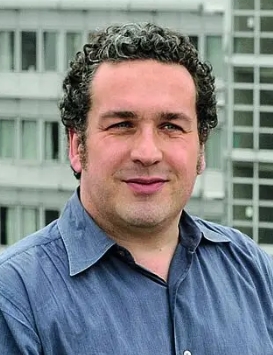 Oliver Brock合作论文数Robotics and Biology Laboratory, Technische Universitat Berlin12
 Anelia Angelova合作论文数Google DeepMind7
 Höfer Sebastian合作论文数Robotics and Biology Laboratory, Technische Universität Berlin Berlin5
 Austin C Stone合作论文数Google DeepMind4
 Kurt Konolige合作论文数[X] Robotics (Alphabet)3
 Karol Hausman合作论文数Physical Intelligence3
 Thomas Kipf合作论文数Google DeepMind2
 Divyam Rastogi合作论文数2
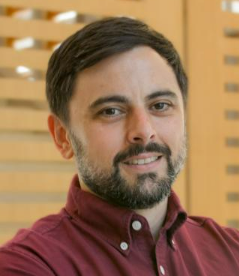 Roberto Martín-Martín合作论文数Department of Computer Science, College of Natural Sciences, The University of Texas at Austin2
 Sergey Levine合作论文数Department of Electrical Engineering and Computer Sciences, University of California, Berkeley2
 Péter Karkus合作论文数Faculty of Electrical Engineering and Informatics, Budapest University of Technology and Economics2
 Chelsea Finn合作论文数Department of Computer Science and Electrical Engineering, Stanford University;Physical Intelligence2
 Dmitry Kalashnikov合作论文数Google DeepMind2
 Martin Riedmiller合作论文数Google DeepMind2Roland Hafner合作论文数Google DeepMind2
 Jonathan Scholz合作论文数Deepmind2
 Ariel Gordon合作论文数Google AI2
 Klaus Greff合作论文数Swiss AI Lab, IDSIA2
 Alexey Dosovitskiy合作论文数Recursive2
 Clemens Eppner合作论文数Seattle Robotics Lab, NVIDIA Research2
 Yevgen Chebotar合作论文数NVIDIA2
 Georg Heigold合作论文数Google1Sindy Löwe合作论文数1
 Michael S. Ryoo合作论文数Department of Computer Science, Stony Brook University;Salesforce AI Research1
 Antonin Raffin合作论文数German Aerospace Center (DLR), Institute of Robotics and Mechatronics, Wessling, 82234, Germany1Juhana Kangaspunta合作论文数Robotics at Google1
 Gamaleldin F. Elsayed合作论文数1
 Marco Morik合作论文数Institut für Softwaretechnik und Theoretische Informatik, TU Berlin1Benjamin Swanson合作论文数1Hanhan Li合作论文数University of California, Berkeley1
 Vincent Wall合作论文数Robotics and Biology Laboratory, Technische Universität Berlin1
 Oscar Ramirez合作论文数national university of colombia1
 Sara Sabour合作论文数Google1
 Arne Sieverling合作论文数1
 A. J. Piergiovanni合作论文数Google1
 Freek Stulp合作论文数Department of Cognitive Robotics, German Aerospace Center (DLR)1
 Raúl Rojas合作论文数Institut fur Informatik, Freie Universitat at Berlin1
 Jon Barron合作论文数Google DeepMind1
 Gabriel Dulac-Arnold合作论文数Google DeepMind;Air Street Capital;Blacksheep AI Labs1
 Daniel Maurer合作论文数Institute for Applied and Numerical Mathematics, Karlsruhe Institute of Technology1Austin Stone合作论文数1
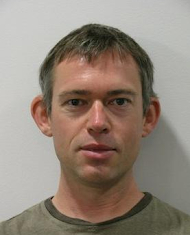 Kevin P Murphy合作论文数Google DeepMind1
 Aravindh Mahendran合作论文数Google Research1
 Cristian Bodnar合作论文数Department of Computer Science, University of Cambridge1
 Vincent Vanhoucke合作论文数Waymo1Michael Zhu合作论文数1
 Alper Ayvaci合作论文数University of California, Los Angeles1Fabian Wiesel合作论文数1




