The traveling salesman problem (TSP) is a well studied NP-hard optimization problem. We present a novel heuristic to find approximate solutions for the case of the TSP with Euclidean metric. Our pair-center algorithm runs in quasi-linear time and on linear space. In practical experiments on a variety of well known benchmarks the algorithm shows linearithmic (i.e., degrees(n ( n log n ) ) runtime. The solutions found by the pair-center algorithm are very good on smaller problem instances, and better than those generated by any other heuristic with at most quadratic runtime. Eventually, the average gap of the pair-center algorithm on all benchmark instances with less than 1001 points is 0.94% and for all instances with more than 1000 points up to 100 million points is 4.57%.
Stereology is the tridimensional interpretation of bidimensional sections of a structure, widely used in fields such as mineralogy, medicine, and biology. This paper proposes a general software to do stereological analysis, called STERapp, with a friendly graphical interface to enable expert supervision. It includes a module to estimate fish fecundity (number of mature oocytes in the ovary), which has been used by experts in fish biology in two Spanish marine research centers since 2020 to estimate the fecundity of five fish species with different reproductive strategies and oocytes characteristics. This module encloses advanced computer vision and machine learning techniques to automatically recognize and classify the cells in histological images of fish gonads. The automatic recognition algorithm achieved a sensitivity of 55.6%, a specificity of 64.8%, and an average precision of 43.1%. The accuracies achieved for oocyte classification were 84.5% for the maturity stages and 78.5% for the classification regarding presence/absence of the nucleus. This facilitates the analysis and saves experts' time. Hence, the SUS questionnaire reported a mean score of 81.9, which means that the system was perceived from good to excellent to develop stereological analysis for the estimation of fish fecundity.
This chapter provides an overview of the software engineering process for the development of onboard software for small satellites. Such a process should be guided by clearly specified requirements that are testable and traceable. Two important decisions that must be drawn in a CubeSat satellite project to achieve high-quality software are which software architecture to use and which design methodology to employ. In a CubeSat project one can observe a shift from hardware cost to software cost, as in many cases off the shelf products for hardware components can be used, however, the controlling software that implements all system requirements usually remains to be developed and tested. Simulation and fault analysis are valuable tools from the software engineering point of view that help the mission to succeed. Every part of the software that is not tested rigorously tends to put the entire mission into risk.
We present a generic improvement for parallelizable iterative thinning algorithms. The improvement achieves a significant better approximation of the medial axis. The values of a previously computed distance map guide the thinning algorithms when to remove a point. We define precise metrics that allows us to make unbiased comparisons among algorithms and to quantify their properties. With the new method, the skeletons are more centered and the reconstruction is more precise, i.e., they characterize the shapes in a more representative way without altering other properties of the underlying thinning algorithm. A surprising result is the fact that some older classical thinning algorithms (and a modification of these as available in the Image) software suite) now achieve better skeletons with a smaller number of iterations than more recent algorithms. (C) 2019 Elsevier B.V. All rights reserved.
The kinetic energy of a force-free granular gas decays monotonously due to inelastic collisions of the particles. For a homogeneous granular gas of identical particles, the corresponding decay of granular temperature is quantified by Haff's law. Here, we report that for a granular gas of aggregating particles, the granular temperature does not necessarily decay but may even increase. Surprisingly, the increase of temperature is accompanied by the continuous loss of total gas energy. This stunning effect arises from a subtle interplay between decaying kinetic energy and gradual reduction of the number of degrees of freedom associated with the particles' dynamics. We derive a set of kinetic equations of Smoluchowski type for the concentrations of aggregates of different sizes and their energies. We find scaling solutions to these equations and a condition for the aggregation mechanism predicting growth of temperature. Numerical direct simulation Monte Carlo results confirm the theoretical predictions.
This paper presents Iber+, a new parallel code based on the numerical model Iber for two-dimensional (2D) flood inundation modelling. The new implementation, which is coded in C++ and takes advantage of the parallelization functionalities both on CPUs (central processing units) and GPUs (graphics processing units), was validated using different benchmark cases and compared, in terms of numerical output and computational efficiency, with other well-known hydraulic software packages. Depending on the complexity of the specific test case, the new parallel implementation can achieve speedups up to two orders of magnitude when compared with the standard version. The speedup is especially remarkable for the GPU parallelization that uses Nvidia CUDA (compute unified device architecture). The efficiency is as good as the one provided by some of the most popular hydraulic models. We also present the application of Iber+ to model an extreme flash flood that took place in the Spanish Pyrenees in October 2012. The new implementation was used to simulate 24 h of real time in roughly eight minutes of computing time, while the standard version needed more than 15 h. This huge improvement in computational efficiency opens up the possibility of using the code for real-time forecasting of flood events in early-warning systems, in order to help decision making under hazardous events that need a fast intervention to deploy countermeasures.
Floods are one of the most dangerous extreme events that can affect people and properties. These events have intensified worldwide over the last decades due to climate change. Therefore, the capability to predict and analyse, in a quick and accurate way, the effects of these floods is of crucial importance to avoid or minimize the hazards associated to them. This task can be accomplished by means of numerical tools as Iber. Iber is a 2-D numerical model, developed by GEAMA (Universidade da Coruña) and Flumen (Universitat Politècnica de Catalunya), that uses the finite volume technique to solve the 2-D Shallow Water Equations in order to obtain the water depth and velocity components of the flow under different scenarios. To assess the capabilities of Iber a series of test cases have been reproduced following the document “Benchmarking the latest generation of 2D hydraulic modelling packages” published by the non-departmental public body Environment Agency of the U.K. Government. The results show that Iber is a suitable tool to reproduce accurately different flooding scenarios. A new implementation of the model has been developed by EPHYSLAB. This implementation takes advantage of the modern hardware capabilities and provides significant speedups over the original code. The new possibilities offered by a faster code will be studied.
To estimate productivity of a fish stock, the precise determination of fish fecundity is essential. The stereological method accurately estimates fecundity from histological images of a fish gonad. For that purpose, a hexagonal grid is overlaid on the histological image and the number of grid points associated to each oocyte (reproductive cells) category and the number of oocytes in each category is counted. This process is done manually often using off-the-shelf software, but it is very time-consuming, requires specialized technicians, and does not allow to review the calculations. In this paper, we describe and evaluate the software Govocitos, which offers an easy and automatic way to estimate fecundity using the stereological method. Govocitos contains a module to automatically detects the matured oocytes in the slice (nearly 80% of oocytes are correctly detected) and a module to automatically classify the oocytes according to the presence/absence of nucleus (with 84% of accuracy) and to three development stages (with 87% of accuracy). It also provides a user friendly GUI that allows the experts to modify the outlines and classifications of oocytes, to calculate diameters, areas and roundness, to build diameter frequency histograms, to count the points and objects inside the grid, to estimate partial and potential fecundity and to export the data to files and into a database. In addition, Govocitos provides the possibility of varying grid characteristics, it can be trained to work with different species and it allows to check and supervise the calculations whenever needed including in a later point in time. Govocitos is a free software that can be downloaded from http://lia.ei.uvigo.es/daeira/software/govocitos or http://citius.usc.es/w/govocitos.
An algorithm for the exact calculation of the overlap volume of a sphere and a tetrahedron, wedge, or hexahedron is described. The method can be used to determine the exact local solid fractions for a system of spherical, non-overlapping particles contained in a complex mesh, a question of significant relevance for the numerical solution of many fluid-solid interaction problems. While challenging due to the limited machine precision, a numerically robust version of the calculation maintaining high computational efficiency is devised. The method is evaluated with respect to the numerical precision and computational cost. It is shown that the exact calculation is only limited by the machine precision and can be applied to a wide range of size ratios, contrary to previously published methods. Eliminating this constraint enables the usage of meshes with higher resolution near the system boundaries for coupled CFD–DEM simulations. The numerical robustness is further illustrated by applying the method to highly deformed mesh elements. The full source code of the reference implementation is made available under an open-source license.
Smart environments are an important field of study and have suffered from an important evolution in the last decade. Smart technology makes an intensive use of wireless technology as the way of communicating all the elements of the system, including sensors. This paper tries to show how the use of satellites and radio waves may provide smart characteristics to environments that lack the common wireless technologies usually utilized. A system using Agent Oriented Software Engineering and based on that technology has been constructed and shows the suitability and advantages of the proposal.
Govocitos is a multi-platform application designed to integrate all processes to estimate the fecundity of fish, a fundamental issue for the management of sustainable fisheries. Govocitos incorporates supervised and unsupervised algorithms to extract oocytes and their features in digitized histological images. Oocytes are classified automatically into the classes used traditionally in studies of reproductive ecology. A database gives support to allow for reproducible data management and to share results among different laboratories. The output of Govocitos has been evaluated through extensive validation procedures and found to be precise and accurate. Govocitos is open source software running on Linux and Windows platforms.
Event-driven particle dynamics is a fast and precise method to simulate particulate systems of all scales. In this work it is demonstrated that, despite the high accuracy of the method, the finite machine precision leads to simulations entering invalid states where the dynamics are undefined. A general event-detection algorithm is proposed which handles these situations in a stable and efficient manner. This requires a definition of the dynamics of invalid states and leads to improved algorithms for event-detection in hard-sphere systems.
We investigate the impact of a granular jet on a finite target by means of particle simulations. The resulting hydrodynamic fields are compared with theoretical predictions for the corresponding flow of an incompressible and rotation-free fluid. The degree of coincidence between the field obtained from the discrete granular system and the idealized continuous fluid flow depends on the characteristics of the granular system, such as granularity, packing fraction, inelasticity of collisions, friction and target size. In certain limits we observe a granular-continuum transition under which the geometric and dynamic properties of the particle jet and the fluid jet become almost identical.
The common scab is a skin disease of the potato tubers that decreases the quality of the product and influences significantly the price. We present an objective and non-destructive method to detect the common scab on potato tubers using an experimental hyperspectral imaging system. A supervised pattern recognition experiment has been performed in order to select the best subset of bands and classification algorithm for the problem. Support Vector Machines (SVM) and Random Forest classifiers have been used. We map the amount of common scab in a potato tuber by classifying each pixel in its hyperspectral cube. The result is the percentage of the surface affected by common scab. Our system achieves a 97.1% of accuracy with the SVM classifier.
We present a new method to detect the presence of the hollow heart, an internal disorder of the potato tubers, using hyperspectral imaging technology in the infrared region. A set of 468 hyperspectral cubes of images has been acquired from Agria variety potatoes, that have been cut later to check the presence of a hollow heart. We developed several experiments to recognize hollow heart potatoes using different Artificial Intelligence and Image Processing techniques. The results show that Support Vector Machines (SVM) achieve an accuracy of 89.1% of correct classification. This is an automatic and non-destructive approach, and it could be integrated into other machine vision developments.
The study of biology and population dynamics of fish species requires the estimation of fecundity parameters in individual fish in many fisheries laboratories. The traditional procedure used in fisheries research is to classify and count the oocytes manually on a subsample of known weight of the ovary, and to measure few oocytes under a binocular microscope. With an adequate interactive tool, this process might be done on a computer. However, in both cases the task is very time consuming, with the obvious consequence that fecundity studies are not conducted routinely. In this work we develop a computer vision system for the classification of oocytes using texture features in histological images. The system is structured in three stages: 1) extraction of the oocyte from the original image; 2) calculation of a texture feature vector for each oocyte; and 3) classification of the oocytes using this feature vector. A statistical evaluation of the proposed system is presented and discussed.
We present a benchmarking framework to design multi spectral systems working in the NIR range for multiple purposes. This framework is composed of a hyperspectral imaging hardware and an ad-hoc software that performs pattern recognition experiments (image acquisition, segmentation, feature extraction, feature selection, classification and evaluation steps) comparing different algorithms in every step. For each experiment, we obtain a solution using a generic hyper spectral system, but we also obtain enough data to design a specific multi-spectral system in order to decrease the overall execution time. This improvement is based in the feature se lection step, that provides the most relevant wavelengths for the problem. The framework has been tested for detecting internal and external features in potatoes, determining the origin of honey, and studying fecundity parameters in hen eggs.
This paper describes a computer vision system designed to automatically read the displays of digital instrumentation. The system is used in calibration sessions where many measurements have to be made and where we are interested in getting the whole numerical series downloaded on a host computer. Before our system was running, a human operator had to inspect the instruments at the right times (required by the calibration procedure) and to write down all the results. Note that we are speaking of very simple and sometimes old instruments that usually do not provide a digital interface or a removable memory (and if they do, we do not have a standard interface accepted by all the manufacturers). Results show the benefits of this system, obtaining a success rate higher than 99% in display recognition
Potato quality control has improved in the last years thanks to automation techniques like machine vision, mainly making the classification task between different quality degrees faster, safer and less subjective. We present a system that classifies potatoes depending on their external defects and diseases. Firstly, some image processing techniques are used to segment and analyze the potatoes. Then, a classifier is used to decide the group the potato belongs to. For the feature selection task, we have designed an ad-hoc genetic algorithm which maximizes the classification percentage. This approach is used to perform an optimization in the search of the better feature combination. The system shows to be effective in real operation simulations (working with unwashed potatoes covered with dust and sand,), what seems to be a good starting point in the development of the system.
 Thorsten Poschel合作论文数Humboldt-Universitat zu Berlin;Institut fur Physik;Institut fur Physik, Humboldt-Universitat zu Berlin11
 Angel Dacal-Nieto合作论文数Computer Science Department, Universidade de Vigo9
 Esteban Vazquez-Fernandez合作论文数GRADIANT, Galician R&D Center in Advanced Telecommunications9
 Pilar Carrión合作论文数8
 Fernando Aguado Agelet合作论文数Universit ¨ ,8Eva Cernadas合作论文数Titular de Universidade
Departamento de Informatica
Area de Linguaxes e Sistemas Informaticos7
Fernando Aguado Agelet合作论文数Universit ¨ ,8Eva Cernadas合作论文数Titular de Universidade
Departamento de Informatica
Area de Linguaxes e Sistemas Informaticos7 Higinio Gonzalez合作论文数Departamento de Fı́sica Aplicada, Universidad de Vigo6Fernando Martín合作论文数5
 Jorg Keller合作论文数Fernuniv, Fac Math & Comp Sci, D-58084 Hagen, Germany4
 Manuel Fernández Delgado合作论文数Facultad de Física, Universidad de Santiago de Compostela4
 José M. Hernando合作论文数4
 Wolfgang J. Paul合作论文数Institut für Rechnerarchitektur und Parallelrechner, Universität des Saarlandes4M Fernandez-Delgado合作论文数3T. Grün A. Formell合作论文数3
 Fernando Perez Fontan合作论文数3Encarnación González-Rufino合作论文数3
 Rosario Dominguez-Petit合作论文数Instituto Mediterraneo de Estudios Avanzados3
 Nikolai V. Brilliantov合作论文数Humboldt-Universitat zu Berlin;Institut fur Physik;Institut fur Physik, Humboldt-Universitat zu Berlin3j m h rabanos合作论文数2S. Rábade-Uberos合作论文数2Raphael A. Bauer合作论文数2J. González-Cao合作论文数2
 Severin Strobl合作论文数2Isasi, F.合作论文数2
 O. García-Feal合作论文数2
 Burghardt Wittig合作论文数MolBio2Math - Molecular Biology & Biomathematics2
 Cornelius Frommel合作论文数2
 Philip E. Bourne合作论文数School of Engineering and Applied Science, University of Virginia;School of Data Science, University of Virginia2Víctor Álvarez-Valado合作论文数2Valentin Ziegler合作论文数2
 Soledad Torres-Guijarro合作论文数Laboratorio Oficial de Metroloxía de Galicia (LOMG),, Parque Tecnolóxico de Galicia2
 José M. Domínguez合作论文数Department of Ingenieria Molecular, Instituto Mexicano del Petróleo2
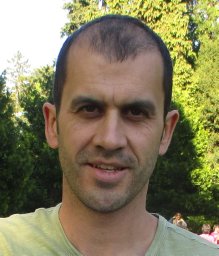 Luis Cea合作论文数Civil Engineering School, University of A Coruña2
 Lino J. Alvarez-Vazquez合作论文数ETSI Telecomunicación, Universidad de Vigo2
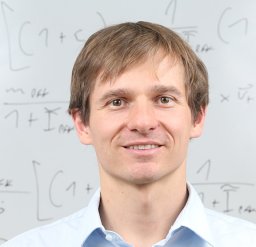 Patric Mueller合作论文数Institute for Multiscale Simulation;Universitat Erlangen-Nurnberg;Institute for Multiscale Simulation, Universitat Erlangen-Nurnberg2Christoph Gille合作论文数2
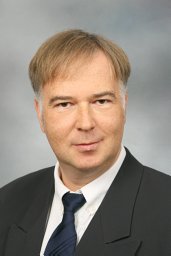 Robert Preissner合作论文数Institute for Physiology, Charité Universitätsmedizin Berlin;Berlin Institute of Health2Andrean Goede合作论文数Institute of Biochemistry, Charité Universitätsmedizin Berlin2
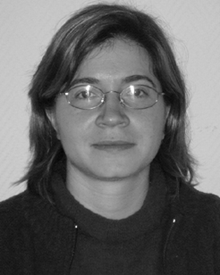 María Rodríguez-Damián合作论文数2
 Fran Saborido-Rey合作论文数Instituto de Investigaciones;Federal Research Centre for Fisheries Institute for Sea Fisheries Palmaille;Instituto de Investigaciones, Federal Research Centre for Fisheries Institute for Sea Fisheries Palmaille2
 Aysam Guerler合作论文数Frie Universität Berlin;Department of Chemistry and Biochemistry;Department of Chemistry and Biochemistry, Frie Universität Berlin2Christian Gill合作论文数2F. Aguado-Agelet合作论文数1Thomas Walle合作论文数1Francisco J. Rodríguez-Martínez合作论文数1silvia m muller合作论文数1Kerstin Müller合作论文数1
 Almoutaz Mbaidin合作论文数1




