Strathprints is designed to allow users to access the research output of the University of Strathclyde. Unless otherwise explicitly stated on the manuscript, Copyright © and Moral Rights for the papers on this site are retained by the individual authors and/or other copyright owners. Please check the manuscript for details of any other licences that may have been applied. You may not engage in further distribution of the material for any profitmaking activities or any commercial gain. You may freely distribute both the url (https://strathprints.strath.ac.uk/) and the content of this paper for research or private study, educational, or not-for-profit purposes without prior permission or charge.
We perform an unmodeled search for persistent, directional gravitational wave (GW) sources using data from the first and second observing runs of Advanced LIGO. We do not find evidence for any GW signals. We place limits on the broadband GW flux emitted at 25 Hz from point sources with a power law spectrum at F α ; Θ < ð 0 . 05 – 25 Þ × 10 − 8 erg cm − 2 s − 1 Hz − 1 and the (normalized) energy density spectrum in GWs at 25 Hz from extended sources at Ω α ð Θ Þ < ð 0 . 19 – 2 . 89 Þ × 10 − 8 sr − 1 where α is the spectral index of the energy density spectrum. These represent improvements of 2 . 5 – 3 × over previous limits. We also consider point sources emitting GWs at a single frequency, targeting the directions of Sco X-1, SN 1987A, and the Galactic center. The best upper limits on the strain amplitude of a potential source in these three directions range from h 0 < ð 3 . 6 – 4 . 7 Þ × 10 − 25 , 1 . 5 × better than previous limits set with the same analysis method. We also report on a marginally significant outlier at 36.06 Hz. This outlier is not consistent with a persistent gravitational-wave source as its significance diminishes when combining all of the available data.
Measurement of the B -Meson Lifetime S. R. Wagner, ' D. A. Hinshaw, ' R. A. Ong, A. Snyder, G. Abrams, " C. E. Adolphsen, C. Akerlof, J. P. Alexander, ( M. Alvarez, ' D. Amidei, A. R. Baden, J. Ballam, B. C. Barish, T. Barklow, B. A. Barnett, ) J. Bartelt, ) D. Blockus, G. Bonvicini, A. Boyarski, J. Boyer, B. Brabson, ) A. Breakstone, ( ) J. M. Brom, ) F. Bulos, ( P. R. Burchat, D. L. Burke, F. Butler, ) F. Calvino, ') R. J. Cence, ( ) J. Chapman, ) D. Cords, ( D. P. Coupal, H. C. DeStaebler, ( ) D. E. Dorfan, J. M. Dorfan, ( ) P. S. Drell, G. J. Feldman, E. Fernandez, ' R. C. Field, W. T. Ford, ' C. Fordham (2) R. Frey'(6) D. Fujino (2) K. K. Gan, (2) G. Gidal, (4) L. Gladney (2) T. Glanzman, (2) M. S. Gold, G. Goldhaber, A. Green, ) P. Grosse-Wiesmann, ( ) J. Haggerty, G. Hanson, ) R. Harr, ( ) F. A. Harris, ( ) C. M. Hawkes, ( K. Hayes, D. Herrup, C. A. Heusch, T. Himel, ( ) R. J. Hollebeek, ( ) D. Hutchinson, (2) J. Hylen, (s) W. R. Innes, (2) M. Jaffre, ( ) J. A. Jaros, I. Juricic, ( ) J. A. Kadyk, D. Karlen, J. Kent, S. R. Klein, W. Koska, W. Kozanecki, A. J. Lankford, R. R. Larsen, (2) B W. Leclalre(2) 'M E. Levi, (4) A. M. Litke, (5) N. S. L~kyer, (2) V. Luth (2)'J A J Matthews, D. I. Meyer, B. D. Milliken, K. C. Moffeit, L. Miiller, J. Nash, M. E. Nelson, D. Nitz, ( ) H. Ogren, ( K. F. O'Shaughnessy, ( S. I. Parker, ( ) C. Peck, ( M. L. Perl, A. Petersen, M. Petradza, F. C. Porter, P. Rankin, ' B. Richter, K. Riles, P. C. Rowson, D. R. Rust, H. F. W. Sadrozinski, (5) T. Schaad, (' ) T. L. Schalk, ( ) H. Schellman, ( ) W. B. Schmidke, (4) A. S. Schwarz, ( A. Seiden, ( ) P. D. Sheldon, ( ) J. G. Smith, ') E. Soderstrom, D. P. Stoker, ( ) R. Stroynowski, R. Thun, G. H. Trilling, " R. Tschirhart, R. Van Kooten, H. Veltman, P. Voruganti, ) P. Weber, ' A. J. Weinstein, S. Weisz, ( S. L. White, ' E. Wicklund, A. J. Weir, D. R. Wood, D. Y. Wu, and J. M. Yelton ")University of Colorado, Boulder, Colorado 80309 ' 'Stanford Linear Accelerator Center, Stanford University, Stanford, California 94309 ' Indiana University, Bloomington, Indiana 47405 ' 'Lawrence Berkeley Laboratory and Department of Physics, University of California, Berkeley, California 94720 (~'University of California, Santa Cruz, California 95064 (6)University of Michigan, Ann Arbor, Michigan 48109 ("California Institute of Technology, Pasadena, California 91125 Johns Hopkins University, Baltimore, Maryland 2)218 ( )University of Hawaii, Honolulu, Hawaii 96822 Harvard University, Cambridge, Massachusetts 02138 (Received 20 November 1989)
We report the results of a search for ν_μ disappearance by the Main Injector Neutrino Oscillation Search [D. G. Michael et al. (MINOS), Phys. Rev. Lett. 97, 191801 (2006).]. The experiment uses two detectors separated by 734 km to observe a beam of neutrinos created by the Neutrinos at the Main Injector facility at Fermi National Accelerator Laboratory. The data were collected in the first 282 days of beam operations and correspond to an exposure of 1.27×10^(20) protons on target. Based on measurements in the Near Detector, in the absence of neutrino oscillations we expected 336±14 ν_μ charged-current interactions at the Far Detector but observed 215. This deficit of events corresponds to a significance of 5.2 standard deviations. The deficit is energy dependent and is consistent with two-flavor neutrino oscillations according to |Δm^2|=2.74^(+0.44)_(−0.26)×10^(−3) eV^2/c^4 and sin^22θ>0.87 at 68% confidence level.
We have searched for the effective FCNC decays b → sl+l− using an inclusive method. We set upper limits on the branching ratios B(b → se+e−) < 5.7 × 10⁻⁵, B(b → sμ+μ−) < 5.8 × 10⁻⁵, and B(b → seμ) < 2.2 × 10⁻⁵ (at 90 % C.L.). Combining the di-electron and di-muon decay modes we find: B(b → sl+l−) < 4.2 × 10⁻⁵ (at 90 % C.L.).
The Main Injector Neutrino Oscillation Search (MINOS) experiment uses an accelerator-produced neutrino beam to perform precision measurements of the neutrino oscillation parameters in the "atmospheric neutrino" sector associated with muon neutrino disappearance. This long-baseline experiment measures neutrino interactions in Fermilab's NuMI neutrino beam with a near detector at Fermilab and again 735 km downstream with a far detector in the Soudan Underground Laboratory in northern Minnesota. The two detectors are magnetized steel-scintillator tracking calorimeters. They are designed to be as similar as possible in order to ensure that differences in detector response have minimal impact on the comparisons of event rates, energy spectra and topologies that are essential to MINOS measurements of oscillation parameters. The design, construction, calibration and performance of the far and near detectors are described in this paper.
We have observed four new decay modes of the charmed baryon + c using data collected with the CLEO II detector. Three decay modes, + c ! p K 0 , + , and + , are rst observations of nal states with an meson, while the fourth mode, + c ! K 0 K + , requires an s s quark pair to be popped out of the vacuum. The branching ratios relative to + c ! pK ? + are measured to
We report new measurements of the diierential and total branching ratios for inclusive B decay to D 0 , D + and D + and the rst measurement of the same quantities for inclusive B decay to D 0. Here B is the mixture of B d and Bu from (4S) decay. Furthermore, since more than one charm particle (or antiparticle) of the same kind can be produced in B decay, here \inclusive B branching ratio" is used to mean the average number of charm particles and their antiparticles of a certain species produced in B decay. We obtain the following results (the rst error is statistical, the second systematic of this analysis, the third is propagated from other measurements): B(B ! D 0): We also report the rst measurement of the momentum-dependent D 0 polarization and a new measurement of the D + polarization in inclusive B decay. Using these measurements and other CLEO results and making some additional assumptions, we calculate the average number of c and c quarks produced in B decay to be
We report on the observation of the decay ? ! K 0 K 0 ? in 3.11 fb ?1 of data taken with the CLEO II detector at the Cornell Electron Storage Ring. Both K 0 mesons are detected through their decays via K S ! + ?. Preliminary results on the branching fraction and on the resonant sub-structure are presented. In particular, we nd B(? ! K 0 K 0 ?) = 0:083 0:017 0:017 %. We also comment on the sensitivity of the KK invariant mass spectrum to a non-zero tau-neutrino mass.
Using data taken with the CLEO II detector, we have studied the decays (0:074 0:010 0:015)% where the rst errors are statistical and the second errors are the estimate of our systematic uncertainty. We also present a new upper limit B(D 0 ! K 0 S K 0 S 0) < 0:059% at the 90% conndence level and the rst measurement of B(D 0 ! K + K ? 0) = (0:14 0:04)%.
We report results from a direct search for ? ! h ? (h ? = ? or K ?) using 3.1 f b ?1 of data collected with the CLEO II detector. We nd model-dependent upper limits on the branching fractions in the range: B(? !
We have measured the branching ratio for the inclusive radiative penguin process b ! ss. We nd where the rst error is statistical, the second error is the additive systematic error from uncertainty in yield, and the third error is the multiplicative systematic error from uncertainty in eeciency, which includes model dependence .
We found 140 neutrino-induced muons in 854.24 live days in the MINOS far detector. We looked for evidence of neutrino disappearance in this data set by computing the ratio of the number of low momentum muons to the sum of the number of high momentum and unknown momentum muons for both data and Monte Carlo expectation in the absence of neutrino oscillations. The ratio of data and Monte Carlo ratios is consistent with an oscillation signal. A fit to the data for the oscillation parameters excludes the null oscillation hypothesis at the 94% confidence level. We separated the muons by charge sign in both the data and Monte Carlo events and found the ratio of the total number of negative to positive muons in both samples. The ratio of those ratios is a test of CPT conservation. The result is consistent with CPT conservation.
Using data collected with the CLEO II detector at the Cornell Electron Storage Ring, we have studied the decays of tau leptons produced through e + e ? annihilation into nal states containing K 0 S mesons, observed through their decays to + ?. We present branching fractions for decays to ve nal S h ? , where K 0 h ? denotes the sum of the processes involving K 0 ? and K 0 K ? particle combinations. Substructure and mass spectra in these nal states are also addressed.
 Jon Urheim合作论文数109C. Bebek合作论文数101
 Marina Artuso合作论文数Department of Physics, College of Art and Sciences, Syracuse University101S. Schrenk合作论文数100J. Bartelt合作论文数99K. Lingel合作论文数99D. Peterson合作论文数99
 Gerald Eigen合作论文数Department of Physics and Technology, University of Bergen99
 David G. Cassel合作论文数Department of Physics, College of Arts & Sciences, Cornell University99
 Kay Kinoshita合作论文数Department of Physics, University of Cincinnati99D. Coppage合作论文数98M. Chadha合作论文数98
 K. K. Gan合作论文数Department of Physics, College of Arts and Sciences, The Ohio State University98
 Vinod Kumar Jain合作论文数98
 John Yelton合作论文数Department of Physics, College of Liberal Arts and Sciences, University of Florida;Institute for High Energy Physics and Astrophysics, College of Liberal Arts and Sciences, University of Florida98M. Goldberg合作论文数98G. Masek合作论文数97N. Kwak合作论文数97S. W. Gray合作论文数97E. Nordberg合作论文数97Bernard Gittelman合作论文数97
 Klaus Honscheid合作论文数Department of Physics, College of Arts and Sciences, The Ohio State University97R. Ammar合作论文数97M. Sung合作论文数97
 Ron Poling合作论文数School of Physics and Astronomy, College of Science and Engineering, University of Minnesota96
 Thomas E. Browder合作论文数University of Hawaii96
 Horst Severini合作论文数Homer L. Dodge Department of Physics and Astronomy, Dodge Family College of Arts and Sciences, The University of Oklahoma;Oklahoma Center for High Energy Physics95d riley合作论文数95
 Philip S. Baringer合作论文数Department of Physics & Astronomy, College of Liberal Arts & Sciences, University of Kansas95R. Davis合作论文数95
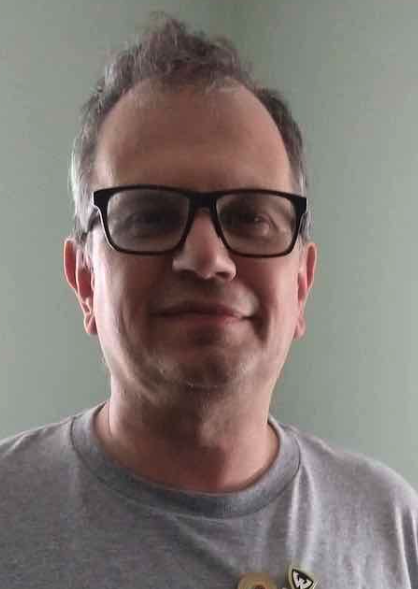 David Cinabro合作论文数College of Liberal Arts and Sciences, Wayne State University;U.S. Department of Energy95M. Selen合作论文数95
 Alice L. Bean合作论文数Department of Physics & Astronomy, College of Liberal Arts & Sciences, University of Kansas94S. Roberts合作论文数94K. Berkelman合作论文数94S. Patton合作论文数93
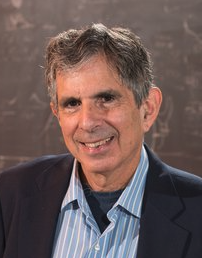 Sheldon Stone合作论文数Department of Physics, College of Arts and Sciences, Syracuse University93N. Hancock合作论文数93
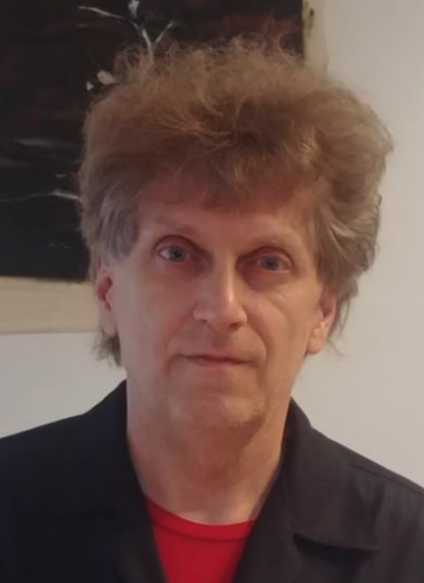 Vladimir Savinov合作论文数Department of Physics & Astronomy, University of Pittsburgh;The Department of Quantum Reality, University of Pittsburgh92Y. Kubota合作论文数92
 Ralf Ehrlich合作论文数AGR92
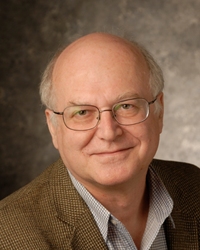 Ryszard Stroynowski合作论文数Department of Physics, Southern Methodist University91R. Balest合作论文数90M. Lohner合作论文数89Rj Morrison合作论文数89
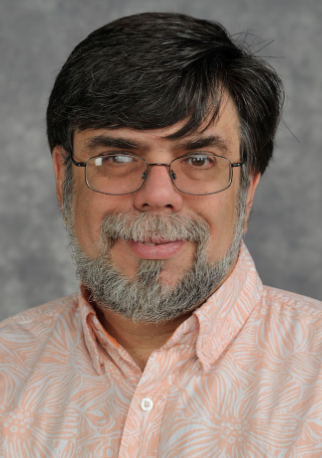 Jorge L. Rodriguez合作论文数Department of Physics, College of Arts, Sciences & Education, Florida International University89
 Joel Ernst合作论文数Division of Experimental Medicine, Department of Medicine, School of Medicine, University of California San Francisco89J. Masui合作论文数88J. Kandaswamy合作论文数88




