Radiation reaction, the force experienced by an accelerated charge due to radiation emission, has long been the subject of extensive theoretical and experimental research. Experimental verification of a quantum, strong-field description of radiation reaction is fundamentally important, and has wide-ranging implications for astrophysics, laser-driven particle acceleration, next-generation particle colliders and inverse-Compton photon sources for medical and industrial applications. However, the difficulty of accessing regimes where strong field and quantum effects dominate inhibited previous efforts to observe quantum radiation reaction in charged particle dynamics with high significance. We report a high significance ( > 5σ) observation of strong-field radiation reaction on electron spectra where quantum effects are substantial. We obtain quantitative, strong evidence favouring the quantum-continuous and quantum-stochastic models over the classical model; the quantum models perform comparably. The lower electron energy losses predicted by the quantum models account for their improved performance. Model comparison was performed using a novel Bayesian framework, which has widespread utility for laser-particle collision experiments, including those utilising conventional accelerators, where some collision parameters cannot be measured directly.
We report on a direct search for elastic photon-photon scattering using x-ray and γ photons from a laser-plasma based experiment. A γ photon beam produced by a laser wakefield accelerator provided a broadband γ spectrum extending to above Image 1. These were collided with a dense x-ray field produced by the emission from a laser heated germanium foil at Image 2, corresponding to an invariant mass of Image 3. In these asymmetric collisions elastic scattering removes one x-ray and one high-energy γ photon and outputs two lower energy γ photons. No changes in the γ photon spectrum were observed as a result of the collisions allowing us to place a 95% upper bound on the cross section of Image 4. Although far from the QED prediction, this represents the lowest upper limit obtained so far for Image 5.
This roadmap presents the state-of-the-art, current challenges and near future developments anticipated in the thriving field of warm dense matter physics. Originating from strongly coupled plasma physics, high pressure physics and high energy density science, the warm dense matter physics community has recently taken a giant leap forward. This is due to spectacular developments in laser technology, diagnostic capabilities, and computer simulation techniques. Only in the last decade has it become possible to perform accurate enough simulations & experiments to truly verify theoretical results as well as to reliably design experiments based on predictions. Consequently, this roadmap discusses recent developments and contemporary challenges that are faced by theoretical methods, and experimental techniques needed to create and diagnose warm dense matter. A large part of this roadmap is dedicated to specific warm dense matter systems and applications in astrophysics, inertial confinement fusion and novel material synthesis.
Recent experiments aiming to measure phenomena predicted by strong-field quantum electrodynamics(SFQED) have done so by colliding relativistic electron beams and high-power lasers. In such experiments, measurements of collision parameters are not always feasible. However, precise knowledge of these parameters is required to accurately test SFQED.Here, we present a novel Bayesian inference procedure that infers collision parameters that could not be measured on-shot. This procedure is applicable to all-optical non-linear Compton scattering experiments investigating radiation reaction. The framework allows multiple diagnostics to be combined self-consistently and facilitates the inclusion of known information pertaining to the collision parameters. Using this Bayesian analysis, the relative validity of the classical, quantum-continuous and quantum-stochastic models of radiation reaction was compared for several test cases,which demonstrates the accuracy and model selection capability of the framework and highlight its robustness if the experimental values of fixed parameters differ from their values in the models.
Objective.We report on the first experimental characterisation of a laser-wakefield accelerator able to deliver, in a single pulse, doses in excess of 1 Gy on timescales of the order of a hundred femtoseconds, reaching unprecedented average dose-rates of up to 1013Gy s-1.Approach.The irradiator is demonstrated to deliver doses tuneable up to 2.2 Gy in a cm2area and with a high degree of longitudinal and transverse uniformity in a single irradiation.Main results.Proof-of-principle irradiation of patient-derived glioblastoma stem-like cells and human skin fibroblast cells show indications of a differential cellular response, when compared to reference irradiations at conventional dose-rates. These include a statistically significant increase in relative biological effectiveness (1.40±0.08at 50% survival for both cell lines) and a significant reduction of the relative radioresistance of tumour cells. Data analysis provides preliminary indications that these effects might not be fully explained by induced oxygen depletion in the cells but may be instead linked to a higher complexity of the damages triggered by the ultra-high density of ionising tracks of femtosecond-scale radiation pulses.Significance.These results demonstrate an integrated platform for systematic radiobiological studies at unprecedented beam durations and dose-rates, a unique infrastructure for translational research in radiobiology at the femtosecond scale.
Understanding dense matter hydrodynamics is critical for predicting plasma behavior in environments relevant to laser-driven inertial confinement fusion. Traditional diagnostic sources face limitations in brightness, spatiotemporal resolution, and in their ability to detect relevant electromagnetic fields. In this work, we present a dual-probe, multi-messenger laser wakefield accelerator platform combining ultrafast X-rays and relativistic electron beams at 1 Hz, to interrogate a free-flowing water target in vacuum, heated by an intense 200 ps laser pulse. This scheme enables high-repetition-rate tracking the evolution of the interaction using both particle types. Betatron X-rays reveal a cylindrically symmetric shock compression morphology assisted by low-density vapor, resembling foam-layer-assisted fusion targets. The synchronized electron beam detects time-evolving electromagnetic fields, uncovering charge separation and ion species differentiation during plasma expansion - phenomena not captured by photons or hydrodynamic simulations. We show that combining both probes provides complementary insights spanning kinetic to hydrodynamic regimes, highlighting the need for hybrid physics models to accurately predict fusion-relevant plasma behavior.
The rapid progress that plasma wakefield accelerators are experiencing is now posing the question as to whether they could be included in the design of the next generation of high-energy electron-positron colliders. However, the typical structure of the accelerating wakefields presents challenging complications for positron acceleration. Research in plasma-based acceleration of positrons has thus far experienced limited experimental progress due to the lack of positron beams suitable to seed a plasma accelerator. Here, we report on the first experimental demonstration of a laser-driven source of ultra-relativistic positrons with sufficient spectral and spatial quality to be injected in a plasma accelerator. Our results indicate, in agreement with numerical simulations, selection and transport of positron beamlets containing $N_{e+}\geq10^5$ positrons in a 5\% bandwidth around 600 MeV, with femtosecond-scale duration and micron-scale normalised emittance. Particle-in-cell simulations show that positron beams of this kind can be efficiently guided and accelerated in a laser-driven plasma accelerator, with favourable scalings to further increase overall charge and energy using PW-scale lasers. The results presented here demonstrate the possibility of performing experimental studies of positron acceleration in a plasma wakefield.
Laser-driven compact particle accelerators can provide ultrashort pulses of broadband X-rays, well suited for undertaking X-ray absorption spectroscopy measurements on a femtosecond timescale. Here the Extended X-ray Absorption Fine Structure (EXAFS) features of the K-edge of a copper sample have been observed over a 250 eV window in a single shot using a laser wakefield accelerator, providing information on both the electronic and ionic structure simultaneously. This capability will allow the investigation of ultrafast processes, and in particular, probing high-energy-density matter and physics far-from-equilibrium where the sample refresh rate is slow and shot number is limited. For example, states that replicate the tremendous pressures and temperatures of planetary bodies or the conditions inside nuclear fusion reactions. Using high-power lasers to pump these samples also has the advantage of being inherently synchronised to the laser-driven X-ray probe. A perspective on the additional strengths of a laboratory-based ultrafast X-ray absorption source is presented. Laser-driven X-rays can provide ultrashort pulses of broadband light, well suited for femtosecond timescale absorption spectroscopy. Here the authors measure the extended X-ray absorption features of a copper sample using a laser wakefield accelerator, in a single shot; important for studying samples driven to extreme and non-equilibrium states.
We report on the first experimental characterization of a laser-wakefield accelerator able to deliver, in a single pulse, doses in excess of [1]Gy on timescales of the order of a hundred femtoseconds, reaching unprecedented average dose-rates up to [10^13]Gy/s. The irradiator is demonstrated to deliver doses tuneable up to [2.2]Gy in a cm^2 area and with a high degree of longitudinal and transverse uniformity in a single irradiation. In this regime, proof-of-principle irradiation of patient-derived glioblastoma stem-like cells and human skin fibroblast cells show indications of a differential cellular response, when compared to reference irradiations at conventional dose-rates. These include a statistically significant increase in relative biological effectiveness (1.40±0.08 at 50% survival for both cell lines) and a significant reduction of the relative radioresistance of tumour cells. Data analysis provides preliminary indications that these effects might not be fully explained by induced oxygen depletion in the cells but may be instead linked to a higher complexity of the damages triggered by the ultra-high density of ionising tracks of femtosecond-scale radiation pulses. These results demonstrate an integrated platform for systematic radiobiological studies at unprecedented beam durations and dose-rates, a unique infrastructure for translational research in radiobiology at the femtosecond scale.
While plasma-based accelerators have the potential to positively impact a broad range of research topics, a route to application will only be possible through improved understanding of their stability. We present experimental results of a laser wakefield accelerator in the nonlinear regime in a helium gas jet target with a density transition produced by a razor blade in the flow. Modifications to the target setup are correlated with variations in the plasma density profile diagnosed via interferometry and the shot-to-shot variations of the density profile for nominally equal conditions are characterized. Through an in-depth sensitivity study using particle-in-cell simulations, the effects of changes in the plasma density profile on the accelerated electron beams are investigated. The results suggest that blade motion is more detrimental to stability than gas pressure fluctuations, and that early focusing of the laser may reduce the deleterious effects of such density fluctuations.
We report on an experimental observation of the streaking of betatron x rays in a curved laser wakefield accelerator. The streaking of the betatron x rays was realized by launching a laser pulse into a plasma with a transverse density gradient. By controlling the plasma density and the density gradient, we realized the steering of the laser driver, electron beam, and betatron x rays simultaneously. Moreover, we observed an energy-angle correlation of the streaked betatron x rays and utilized it in diagnosing the electron acceleration process in a single-shot mode. Our work could also find applications in advanced control of laser beam and particle propagation. More importantly, the angular streaked betatron x ray has an intrinsic spatiotemporal correlation, which makes it a promising tool for single-shot pump-probe applications.
We describe laboratory experiments to generate x-ray photoionized plasmas of relevance to accretion-powered x-ray sources such as neutron star binaries and quasars, with significant improvements over previous work. A key quantity is referenced, namely the photoionization parameter, defined as ξ=4πF/ne where F is the x-ray flux and ne the electron density. This is normally meaningful in an astrophysical steady-state context, but is also commonly used in the literature as a figure of merit for laboratory experiments that are, of necessity, time-dependent. We demonstrate emission-weighted values of ξ>50 erg-cm s−1 using laser-plasma x-ray sources, with higher results at the centre of the plasma which are in the regime of interest for several astrophysical scenarios. Comparisons of laboratory experiments with astrophysical codes are always limited, principally by the many orders of magnitude differences in time and spatial scales, but also other plasma parameters. However useful checks on performance can often be made for a limited range of parameters. For example, we show that our use of a keV line source, rather than the quasi-blackbody radiation fields normally employed in such experiments, has allowed the generation of the ratio of inner-shell to outer-shell photoionization expected from a blackbody source with ∼keV spectral temperature. We compare calculations from our in-house plasma modelling code with those from Cloudy and find moderately good agreement for the time evolution of both electron temperature and average ionisation. However, a comparison of code predictions for a K-β argon X-ray spectrum with experimental data reveals that our Cloudy simulation overestimates the intensities of more highly ionised argon species. This is not totally surprising as the Cloudy model was generated for a single set of plasma conditions, while the experimental data are spatially integrated.
This project funded one graduate student, Mario Balcazar, to perform experiments on high power laser facilities to study the application of X-rays generated by laser wakefield accelerated electrons for advanced radiography, in particular X-ray phase contrast imaging of hydrodynamic shocks/instabilities. The work made use of the DOE’s LaserNetUS facilities. We performed dynamic phase-contrast X-ray imaging of the shock generated by a 200 ps duration laser pulse (E = 1 J, I = 1015 Wcm–2) with a 30 µm diameter liquid target, with unprecedented spatio-temporal resolution. This includes multi-shock generation within the liquid jet and plasma instability formation. Innovative electron-beam radiography was used to probe the laser-plasma interplay finding evidence of bilateral heating of the water followed by strong electric field generation. These measurements help explain some of the discrepancies between simulation and experiment and pave the way to better plasma diagnostic systems in HED and ICF physics experiments. This work was performed in collaboration with researchers from Michigan, LLNL, LBL and Sandia National Laboratories, Queen’s University Belfast and Imperial College.
The data contained in this repository was used in the production of the publication "X-ray absorption spectroscopy using an ultrafast laboratory-scale laser-plasma accelerator source"
A machine learning model was created to predict the electron spectrum generated by a GeV-class laser wakefield accelerator. The model was constructed from variational convolutional neural networks, which mapped the results of secondary laser and plasma diagnostics to the generated electron spectrum. An ensemble of trained networks was used to predict the electron spectrum and to provide an estimation of the uncertainty of that prediction. It is anticipated that this approach will be useful for inferring the electron spectrum prior to undergoing any process that can alter or destroy the beam. In addition, the model provides insight into the scaling of electron beam properties due to stochastic fluctuations in the laser energy and plasma electron density.
A linear Breit-Wheeler module for the code GEANT4 has been developed. This allows signal-to-noise ratio calculations of linear Breit-Wheeler detection experiments to be performed within a single framework. The interaction between two photon sources is modeled by treating one as a static field, then photons from the second source are sampled and tracked through the field. To increase the efficiency of the module, we have used a Gaussian process regression, which can lead to an increase in the calculation rate by a factor of up to 1000. To demonstrate the capabilities of this module, we use it to perform a parameter scan, modeling an experiment based on that recently reported by Kettle et al. [New J. Phys. 23, 115006 (2021)]. We show that colliding 50-fs duration gamma rays, produced through bremsstrahlung emission of a 100 pC, 2-GeV laser wakefield accelerator beam, with a 50-ps x-ray field, generated by a germanium burn-through foil heated to temperatures >150 eV, this experiment is capable of producing > 1 Breit-Wheeler pair per shot.
We have carried out a series of experiments to measure the Cl K-absorption edge for shock-compressed samples of chlorinated parylene. Colliding shocks allowed us to compress samples up to four times the initial density with temperatures up to 10 eV. Red shifts in the edge of about 10 eV have been measured. We have compared the measured shifts to analytical modelling using the Stewart–Pyatt model and adaptions of it, combined with estimates of density and temperature based on hydrodynamic modelling. Modelling of the edge position using density functional theory molecular dynamics (DFT-MD) was also used and it was found that good agreement was only achieved when the DFT simulations assumed conditions of lower temperature and slightly higher density than indicated by hydrodynamic simulations using a tabular equation of state.
Ultrafast high-brightness X-ray pulses have proven invaluable for a broad range of research. Such pulses are typically generated via synchrotron emission from relativistic electron bunches using large-scale facilities. Recently, significantly more compact X-ray sources based on laser-wakefield accelerated (LWFA) electron beams have been demonstrated. In particular, laser-driven sources, where the radiation is generated by transverse oscillations of electrons within the plasma accelerator structure (so-called betatron oscillations) can generate highly-brilliant ultrashort X-ray pulses using a comparably simple setup. Here, we experimentally demonstrate a method to markedly enhance the parameters of LWFA-driven betatron X-ray emission in a proof-of-principle experiment. We show a significant increase in the number of generated photons by specifically manipulating the amplitude of the betatron oscillations by using our novel Transverse Oscillating Bubble Enhanced Betatron Radiation scheme. We realize this through an orchestrated evolution of the temporal laser pulse shape and the accelerating plasma structure. This leads to controlled off-axis injection of electrons that perform large-amplitude collective transverse betatron oscillations, resulting in increased radiation emission. Our concept holds the promise for a method to optimize the X-ray parameters for specific applications, such as time-resolved investigations with spatial and temporal atomic resolution or advanced high-resolution imaging modalities, and the generation of X-ray beams with even higher peak and average brightness.
The dataset and analysis codes for the publication "Characterisation of Laser Wakefield Acceleration Efficiency with Octave Spanning Near-IR Spectrum Measurements". Analysis code is stored as jupyter notebooks.
We describe a laser-plasma platform for photon-photon collision experiments to measure fundamental quantum electrodynamic processes such as the linear Breit-Wheeler process with real photons. The platform has been developed using the Gemini laser facility at the Rutherford Appleton Laboratory. A laser wakefield accelerator and a bremsstrahlung convertor are used to generate a collimated beam of photons with energies of hundreds of MeV, that collide with keV x-ray photons generated by a laser heated plasma target. To detect the pairs generated by the photon-photon collisions, a magnetic transport system has been developed which directs the pairs onto scintillation-based and hybrid silicon pixel single particle detectors. We present commissioning results from an experimental campaign using this laser-plasma platform for photon-photon physics, demonstrating successful generation of both photon sources, characterisation of the magnetic transport system and calibration of the single particle detectors, and discuss the feasibility of this platform for the observation of the Breit-Wheeler process. The design of the platform will also serve as the basis for the investigation of strong-field quantum electrodynamic processes such as the nonlinear Breit-Wheeler and the Trident process, or eventually, photon-photon scattering.
 Stuart P D Mangles合作论文数Department of Physics, Faculty of Natural Sciences, Imperial College London26
 M. J. V. Streeter合作论文数Centre for Light-Matter Interaction, School of Mathematics and Physics, Queen's University Belfast19
 Gianluca Sarri合作论文数Centre for Plasma Physics;University Belfast;Centre for Plasma Physics, Queen ' s University Belfast15
 d riley合作论文数14
 Elias Gerstmayr合作论文数John Adams Inst Accelerator Sci, Imperial Coll London14
 C. Colgan合作论文数John Adams Inst Accelerator Sci, Imperial Coll London13
 Pattathil P. Rajeev合作论文数12
 E. Los合作论文数The John Adams Institute for Accelerator Science, Imperial College London11
 Felicie Albert合作论文数Lawrence Livermore National Laboratory11
 Steven R. White合作论文数Department of Physics and Astronomy, University of California, Irvine11Christopher Spindloe合作论文数Science and Technology Facilities Council, Rutherford Appleton Laboratory11
 Nicolas Bourgeois合作论文数CNRS FRE 3234, Université Paris-Dauphine11Daniel R. Symes合作论文数10
 Ciaran L S Lewis合作论文数School of Mathematics and Physics, Queen's University Belfast;Centre for Plasma Physics, Queen's University Belfast10
 Zulfikar Najmudin合作论文数Department of Physics, Faculty of Natural Sciences, Imperial College London;John-Adams Institute, Imperial College London10
 Alexander Thomas合作论文数Department of Physics, College of Literature, Science, and the Arts, University of Michigan9
 Steven Rose合作论文数Department of Physics, Faculty of Natural Sciences, Imperial College London;Department of Physics, University of Oxford9
 Nuno Lemos合作论文数9R. Watt合作论文数8
 Amina Hussein合作论文数Dept Elect & Comp Engn, Univ Alberta8
 Chris Murphy合作论文数School of Physics, Engineering and Technology, University of York8
 Karl Krushelnick合作论文数Department of Nuclear Engineering & Radiological Sciences, College of Engineering, University of Michigan8
 Matt Zepf合作论文数Helmholtz Institut Jena;Abbe Center of Photonics, University of Jena8
 Tom Dzelzainis合作论文数7S. J. D. Dann合作论文数Physics Department, Lancaster University, Bailrigg, Lancaster LA1 4YB, United Kingdom7
 Katerina Falk合作论文数Los Alamos National Laboratory7
 Olle Lundh合作论文数Department of Physics, Faculty of Science, Lund University7
 M. Smid合作论文数Univ. of Magdeburg7
 Gianluca Gregori合作论文数Department of Physics, University of Oxford7
 Niall Cavanagh合作论文数Queens Univ Belfast6
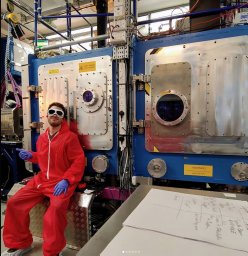 Mario Balcazar合作论文数University of Michigan6
 Jan Vorberger合作论文数Institut fur Physik;Ernst-Moritz-Arndt Universitat Greifswald;Institut fur Physik, Ernst-Moritz-Arndt Universitat Greifswald6
 Nelson Lopes合作论文数Institute of Biological Science, Federal University of Minas Gerais6g nersisyan合作论文数5L. Calvin合作论文数5
 Christopher Arran合作论文数York Plasma Inst, Univ York5S. Cipiccia合作论文数5
 Jason Mark Cole合作论文数5Baggott R A合作论文数5
 Dino Jaroszynski合作论文数University of Strathclyde5Bob Nagler合作论文数SLAC National Accelerator Laboratory5Brendan Dromey合作论文数Department of Physics and Astronomy;Queen ' s University;Department of Physics and Astronomy, Queen ' s University5M. Shahzad合作论文数4I. Gallardo Gonzalez合作论文数4Lumsdon, C.合作论文数4S. Astbury合作论文数4R. Fitzgarrald合作论文数4D. Hollatz合作论文数4
 Guillermo Javier Marrero Samarin合作论文数4




