DarkSide-20k (DS-20k) is a dark matter detection experiment under construction at the Laboratori Nazionali del Gran Sasso (LNGS) in Italy. It utilises similar to 100 t of low radioactivity argon from an underground source (UAr) in its inner detector, with half serving as target in a dual-phase time projection chamber (TPC). The UAr cryogenics system must maintain stable thermodynamic conditions throughout the experiment's lifetime of over 10 years. Continuous removal of impurities and radon from the UAr is essential for maximising signal yield and mitigating background. We are developing an efficient and powerful cryogenics system with a gas purification loop with a target circulation rate of 1000 slpm. Central to its design is a condenser operated with liquid nitrogen which is paired with a gas heat exchanger cascade, delivering a combined cooling power of more than 8 kW. Here we present the design choices in view of the DS-20k requirements, in particular the condenser's working principle and the cooling control, and we show test results obtained with a dedicated benchmarking platform at CERN and LNGS. We find that the thermal efficiency of the recirculation loop, defined in terms of nitrogen consumption per argon flow rate, is 95% and the pressure in the test cryostat can be maintained within +/-(0.1-0.2) mbar. We further detail a 5-day cool-down procedure of the test cryostat, maintaining a cooling rate typically within -2K/h, as required for the DS-20k inner detector. Additionally, we assess the circuit's flow resistance, and the heat transfer capabilities of two heat exchanger geometries for argon phase change, used to provide gas for recirculation. We conclude by discussing how our findings influence the finalisation of the system design, including necessary modifications to meet requirements and ongoing testing activities.
The dual-phase liquid argon time projection chamber is presently one of the leading technologies to search for dark matter particles with masses below 10 GeV c(-2). This was demonstrated by the DarkSide-50 experiment with approximately 50 kg of low-radioactivity liquid argon as target material. The next generation experiment DarkSide-20k, currently under construction, will use 1,000 times more argon and is expected to start operation in 2027. Based on the DarkSide-50 experience, here we assess the DarkSide-20k sensitivity to models predicting light dark matter particles, including Weakly Interacting Massive Particles (WIMPs) and sub-GeV c(-2) particles interacting with electrons in argon atoms. With one year of data, a sensitivity improvement to dark matter interaction cross-sections by at least one order of magnitude with respect to DarkSide-50 is expected for all these models. A sensitivity to WIMP-nucleon interaction cross-sections below 1x10(-42) cm(2) is achievable for WIMP masses above 800 MeV c(-2). With 10 years exposure, the neutrino fog can be reached for WIMP masses around 5 GeV c(-2).
Experiments aimed at direct searches for WIMP dark matter require highly effective reduction of backgrounds and control of any residual radioactive contamination. In particular, neutrons interacting with atomic nuclei represent an important class of backgrounds due to the expected similarity of a WIMP-nucleon interaction, so that such experiments often feature a dedicated neutron detector surrounding the active target volume. In the context of the development of DarkSide-20k detector at INFN Gran Sasso National Laboratory (LNGS), several R D projects were conceived and developed for the creation of a new hybrid material rich in both hydrogen and gadolinium nuclei to be employed as an essential element of the neutron detector. Thanks to its very high cross-section for neutron capture, gadolinium is one of the most widely used elements in neutron detectors, while the hydrogen-rich material is instrumental in efficiently moderating the neutrons. In this paper results from one of the R Ds are presented. In this effort the new hybrid material was obtained as a poly(methyl methacrylate) (PMMA) matrix, loaded with gadolinium oxide in the form of nanoparticles. We describe its realization, including all phases of design, purification, construction, characterization, and determination of mechanical properties of the new material.
The activation of materials due to exposure to cosmic rays may become an important background source for experiments investigating rare event phenomena. DarkSide-20k, currently under construction at the Laboratori Nazionali del Gran Sasso, is a direct detection experiment for galactic dark matter particles, using a two-phase liquid-argon Time Projection Chamber (TPC) filled with 49.7 tonnes (active mass) of Underground Argon (UAr) depleted in 39Ar. Despite the outstanding capability of discriminating gamma/beta background in argon TPCs, this background must be considered because of induced dead time or accidental coincidences mimicking dark-matter signals and it is relevant for low-threshold electron-counting measurements. Here, the cosmogenic activity of relevant long-lived radioisotopes induced in the experiment has been estimated to set requirements and procedures during preparation of the experiment and to check that it is not dominant over primordial radioactivity; particular attention has been paid to the activation of the 120 t of UAr used in DarkSide-20k. Expected exposures above ground and production rates, either measured or calculated, have been considered in detail. From the simulated counting rates in the detector due to cosmogenic isotopes, it is concluded that activation in copper and stainless steel is not problematic. The activity of 39Ar induced during extraction, purification and transport on surface is evaluated to be 2.8% of the activity measured in UAr by DarkSide-50 experiment, which used the same underground source, and thus considered acceptable. Other isotopes in the UAr such as 37Ar and 3H are shown not to be relevant due to short half-life and assumed purification methods.
The specific activity of the β decay of ^39 Ar in atmospheric argon is measured using the DEAP-3600 detector. DEAP-3600, located 2 km underground at SNOLAB, uses a total of (3269 ± 24) kg of liquid argon distilled from the atmosphere to search for dark matter. This detector is well-suited to measure the decay of ^39 Ar owing to its very low background levels. This is achieved in two ways: it uses low background construction materials; and it uses pulse-shape discrimination to differentiate between nuclear recoils and electron recoils. With 167 live-days of data, the measured specific activity at the time of atmospheric extraction is (0.964 ± 0.001 _stat ± 0.024 _sys ) Bq/kg _atmAr , which is consistent with results from other experiments. A cross-check analysis using different event selection criteria and a different statistical method confirms the result.
Dark matter lighter than 10 GeV/c^2 encompasses a promising range of candidates. A conceptual design for a new detector, DarkSide-LowMass, is presented, based on the DarkSide-50 detector and progress toward DarkSide-20k, optimized for a low-threshold electron-counting measurement. Sensitivity to light dark matter is explored for various potential energy thresholds and background rates. These studies show that DarkSide-LowMass can achieve sensitivity to light dark matter down to the solar neutrino floor for GeV-scale masses and significant sensitivity down to 10 MeV/c^2 considering the Migdal effect or interactions with electrons. Requirements for optimizing the detector's sensitivity are explored, as are potential sensitivity gains from modeling and mitigating spurious electron backgrounds that may dominate the signal at the lowest energies.
The Aria cryogenic distillation plant, located in Sardinia, Italy, is a key component of the DarkSide-20k experimental program for WIMP dark matter searches at the INFN Laboratori Nazionali del Gran Sasso, Italy. Aria is designed to purify the argon, extracted from underground wells in Colorado, USA, and used as the DarkSide-20k target material, to detector-grade quality. In this paper, we report the first measurement of argon isotopic separation by distillation with the 26 m tall Aria prototype. We discuss the measurement of the operating parameters of the column and the observation of the simultaneous separation of the three stable argon isotopes: ^36Ar , ^38Ar , and ^40Ar . We also provide a detailed comparison of the experimental results with commercial process simulation software. This measurement of isotopic separation of argon is a significant achievement for the project, building on the success of the initial demonstration of isotopic separation of nitrogen using the same equipment in 2019.
Received 24 December 2021DOI:https://doi.org/10.1103/PhysRevD.105.029901© 2022 American Physical SocietyPhysics Subject Headings (PhySH)Research AreasCosmologyDark matterParticle astrophysicsParticle dark matterPhysical SystemsGalactic halosWeakly interacting massive particlesTechniquesCosmic ray & astroparticle detectorsDark matter detectorsParticles & FieldsGravitation, Cosmology & Astrophysics
Dark matter with Planck-scale mass (≃10^{19} GeV/c^{2}) arises in well-motivated theories and could be produced by several cosmological mechanisms. A search for multiscatter signals from supermassive dark matter was performed with a blind analysis of data collected over a 813 d live time with DEAP-3600, a 3.3 t single-phase liquid argon-based detector at SNOLAB. No candidate signals were observed, leading to the first direct detection constraints on Planck-scale mass dark matter. Leading limits constrain dark matter masses between 8.3×10^{6} and 1.2×10^{19} GeV/c^{2}, and ^{40}Ar-scattering cross sections between 1.0×10^{-23} and 2.4×10^{-18} cm^{2}. These results are interpreted as constraints on composite dark matter models with two different nucleon-to-nuclear cross section scalings.
The DEAP-3600 detector searches for the scintillation signal from dark matter particles scattering on a 3.3 tonne liquid argon target. The largest background comes from 39 Ar beta decays and is suppressed using pulse-shape discrimination (PSD). We use two types of PSD estimator: the prompt-fraction, which considers the fraction of the scintillation signal in a narrow and a wide time window around the event peak, and the log-likelihood-ratio, which compares the observed photon arrival times to a signal and a background model. We furthermore use two algorithms to determine the number of photons detected at a given time: (1) simply dividing the charge of each PMT pulse by the mean single-photoelectron charge, and (2) a likelihood analysis that considers the probability to detect a certain number of photons at a given time, based on a model for the scintillation pulse shape and for afterpulsing in the light detectors. The prompt-fraction performs approximately as well as the log-likelihood-ratio PSD algorithm if the photon detection times are not biased by detector effects. We explain this result using a model for the information carried by scintillation photons as a function of the time when they are detected.
This paper presents the Mechanical Ventilator Milano (MVM), a novel intensive therapy mechanical ventilator designed for rapid, large-scale, low-cost production for the COVID-19 pandemic. Free of moving mechanical parts and requiring only a source of compressed oxygen and medical air to operate, the MVM is designed to support the long-term invasive ventilation often required for COVID-19 patients and operates in pressure-regulated ventilation modes, which minimize the risk of furthering lung trauma. The MVM was extensively tested against ISO standards in the laboratory using a breathing simulator, with good agreement between input and measured breathing parameters and performing correctly in response to fault conditions and stability tests. The MVM has obtained Emergency Use Authorization by U.S. Food and Drug Administration (FDA) for use in healthcare settings during the COVID-19 pandemic and Health Canada Medical Device Authorization for Importation or Sale, under Interim Order for Use in Relation to COVID-19. Following these certifications, mass production is ongoing and distribution is under way in several countries. The MVM was designed, tested, prepared for certification, and mass produced in the space of a few months by a unique collaboration of respiratory healthcare professionals and experimental physicists, working with industrial partners, and is an excellent ventilator candidate for this pandemic anywhere in the world.
AbstractAria is a plant hosting a$${350}\,\hbox {m}$$350mcryogenic isotopic distillation column, the tallest ever built, which is being installed in a mine shaft at Carbosulcis S.p.A., Nuraxi-Figus (SU), Italy. Aria is one of the pillars of the argon dark-matter search experimental program, lead by the Global Argon Dark Matter Collaboration. It was designed to reduce the isotopic abundance of$${^{39}\hbox {Ar}}$$39Arin argon extracted from underground sources, called Underground Argon (UAr), which is used for dark-matter searches. Indeed,$${^{39}\hbox {Ar}}$$39Aris a$$\beta $$β-emitter of cosmogenic origin, whose activity poses background and pile-up concerns in the detectors. In this paper, we discuss the requirements, design, construction, tests, and projected performance of the plant for the isotopic cryogenic distillation of argon. We also present the successful results of the isotopic cryogenic distillation of nitrogen with a prototype plant.
Future liquid-argon DarkSide-20k and Argo detectors, designed for direct dark matter search, will be sensitive also to core-collapse supernova neutrinos, via coherent elastic neutrino-nucleus scattering. This interaction channel is flavor-insensitive with a high-cross section, enabling for a high-statistics neutrino detection with target masses of similar to 50 t and similar to 360 t for DarkSide-20k and Argo respectively. Thanks to the low-energy threshold of similar to 0.5 keV(nr) achievable by exploiting the ionization channel, DarkSide-20k and Argo have the potential to discover supernova bursts throughout our galaxy and up to the Small Magellanic Cloud, respectively, assuming a 11-M-circle dot progenitor star. We report also on the sensitivity to the neutronization burst, whose electron neutrino flux is suppressed by oscillations when detected via charged current and elastic scattering. Finally, the accuracies in the reconstruction of the average and total neutrino energy in the different phases of the supernova burst, as well as its time profile, are also discussed, taking into account the expected background and the detector response.
AbstractDEAP-3600 is a liquid-argon scintillation detector looking for dark matter. Scintillation events in the liquid argon (LAr) are registered by 255 photomultiplier tubes (PMTs), and pulseshape discrimination (PSD) is used to suppress electromagnetic background events. The excellent PSD performance of LAr makes it a viable target for dark matter searches, and the LAr scintillation pulseshape discussed here is the basis of PSD. The observed pulseshape is a combination of LAr scintillation physics with detector effects. We present a model for the pulseshape of electromagnetic background events in the energy region of interest for dark matter searches. The model is composed of (a) LAr scintillation physics, including the so-called intermediate component, (b) the time response of the TPB wavelength shifter, including delayed TPB emission at $${\mathcal {O}}$$O(ms) time-scales, and c) PMT response. TPB is the wavelength shifter of choice in most LAr detectors. We find that approximately 10% of the intensity of the wavelength-shifted light is in a long-lived state of TPB. This causes light from an event to spill into subsequent events to an extent not usually accounted for in the design and data analysis of LAr-based detectors.
DEAP-3600 is a single-phase liquid argon detector aiming to directly detect weakly interacting massive particles (WIMPs), located at SNOLAB (Sudbury, Canada). After analyzing data taken during the first year of operation, a null result was used to place an upper bound on the WIMP-nucleon, spin-independent, isoscalar cross section. This study reinterprets this result within a nonrelativistic effective field theory framework and further examines how various possible substructures in the local dark matter halo may affect these constraints. Such substructures are hinted at by kinematic structures in the local stellar distribution observed by the Gaia satellite and other recent astronomical surveys. These include the Gaia Sausage (or Enceladus), as well as a number of distinct streams identified in recent studies. Limits are presented for the coupling strength of the effective contact interaction operators O-1, O-3, O-5, O-8, and O-11, considering isoscalar, isovector, and xenonphobic scenarios, as well as the specific operators corresponding to millicharge, magnetic dipole, electric dipole, and anapole interactions. The effects of halo substructures on each of these operators are explored as well, showing that the O-5 and O-8 operators are particularly sensitive to the velocity distribution, even at dark matter masses above 100 GeV/c(2).
The Hamamatsu R5912-HQE photomultiplier-tube (PMT) is a novel high-quantum efficiency PMT. It is currently used in the DEAP-3600 dark matter detector and is of significant interest for future dark matter and neutrino experiments where high signal yields are needed. We report on the methods developed for in-situ characterization and monitoring of DEAP's 255 R5912-HQE PMTs. This includes a detailed discussion of typical measured single-photoelectron charge distributions, correlated noise (afterpulsing), dark noise, double, and late pulsing characteristics. The characterization is performed during the detector commissioning phase using laser light injected through a light diffusing sphere and during normal detector operation using LED light injected through optical fibres.
The recent discovery by Advanced LIGO and Advanced Virgo of a gravitational wave signal from a binary neutron star inspiral has enabled tests of general relativity (GR) with this new type of source. This source, for the first time, permits tests of strong-field dynamics of compact binaries in the presence of matter. In this Letter, we place constraints on the dipole radiation and possible deviations from GR in the post-Newtonian coefficients that govern the inspiral regime. Bounds on modified dispersion of gravitational waves are obtained; in combination with information from the observed electromagnetic counterpart we can also constrain effects due to large extra dimensions. Finally, the polarization content of the gravitational wave signal is studied. The results of all tests performed here show good agreement with GR.
DEAP-3600 is a single-phase liquid argon (LAr) direct-detection dark matter experiment, operating 2 km underground at SNOLAB (Sudbury, Canada). The detector consists of 3279 kg of LAr contained in a spherical acrylic vessel. This paper reports on the analysis of a 758 tonne . day exposure taken over a period of 231 live-days during the first year of operation. No candidate signal events are observed in the WIMP-search region of interest, which results in the leading limit on the WIMP-nucleon spin-independent cross section on a LAr target of 3.9 x 10(-45) cm(2) (1.5 x 10(-44) cm(2)) for a 100 GeV/c(2) (1 TeV/c(2)) WIMP mass at 90% C.L. In addition to a detailed background model, this analysis demonstrates the best pulse-shape discrimination in LAr at threshold, employs a Bayesian photoelectron-counting technique to improve the energy resolution and discrimination efficiency, and utilizes two position reconstruction algorithms based on the charge and photon detection time distributions observed in each photomultiplier tube.
The Dark matter Experiment using Argon Pulse-shape discrimination (DEAP) has been designed for a direct detection search for particle dark matter using a single-phase liquid argon target. The projected cross section sensitivity for DEAP-3600 to the spin-independent scattering of Weakly Interacting Massive Particles (WIMPs) on nucleons is 10(-46) cm(2) for a 100 GeV/c(2) WIMP mass with a fiducial exposure of 3 tonne-years. This paper describes the physical properties and construction of the DEAP-3600 detector. (C) 2018 Elsevier B.V. All rights reserved.
 C. Dionisi合作论文数145
 Mariagrazia Alviggi合作论文数Department of Physics, University of Naples Federico II;Laboratory of Particle Physics, University of Naples Federico II142
 Paul de Jong合作论文数Institute of Physics, Faculty of Science, Universiteit van Amsterdam;Nikhef142J. Toth合作论文数CPPM, Aix-Marseille Université, CNRS/IN2P3, Marseille, France142g chiefari合作论文数141Gianpaolo Carlino合作论文数Istituto Nazionale di Fisica Nucleare141A. Aloisio合作论文数141
 Lamberto Luminari合作论文数Istituto Nazionale di Fisica Nucleare141M. Rescigno合作论文数140Giovanni Mirabelli合作论文数140Paolo Bagnaia合作论文数140s patricelli合作论文数139C. Luci合作论文数139
 F. Filthaut (Frank)合作论文数Department of Experimental High Energy Physics, Radboud University139Fl Linde合作论文数137G. J. Bobbink合作论文数137
 Simonetta Gentile合作论文数Scuola Di Psicoterapia Consorzio Fortune;Dipartimentale di Psicologia Clinica, Ospedale Pediatrico Bambino137
 María Teresa Dova合作论文数Physics Department, Faculty of Exact Sciences, National University of La Plata135A. Doria合作论文数134Martin Pohl合作论文数134
 Arno Straessner合作论文数Institute of Nuclear and Particle Physics, Faculty of Physics, Technische Universität Dresden134S. Falciano合作论文数134
 S. Giagu合作论文数INFN Sezione di Roma, Sapienza University132
 Adriaan König合作论文数Institute for Mathematics, Astrophysics and Particle Physics, Radboud University131L. Merola合作论文数131
 Alexei Klimentov合作论文数Physics Department, Brookhaven National Laboratory130
 Martin Karl Wilhelm Pohl合作论文数Deutsches Elektronen-Synchrotron DESY;Institut für Physik und Astronomie, University of Potsdam127
 Muhammad Saleem合作论文数Department of Physics, College of Arts and Sciences, Bellarmine University122
 Keith Riles合作论文数Department of Physics, College of Literature, Science, and the Arts, University of Michigan122Aleandro Nisati合作论文数Istituto Nazionale di Fisica Nucleare121L. Romero合作论文数120Bl Betev合作论文数120M. Lebeau合作论文数120Marcella Diemoz合作论文数INFN Sezione di Roma120
 Gert Viertel合作论文数120
 Harvey B. Newman合作论文数Division of Physics, Mathematics and Astronomy, California Institute of Technology120H. Rykaczewski合作论文数120M. Dittmar合作论文数119
 Panos Razis合作论文数119
 Paul Lecoq合作论文数Multiwave Metacrystal SA;Centre Européen de Recherche en Imagerie Médicale, European Organization for Nuclear Research;Crystal Clear119D. Pandoulas合作论文数119
 Tariq Aziz合作论文数Department of High Energy Physics, Tata Institute of Fundamental Research119A. Kunin合作论文数119Peter Denes合作论文数Lawrence Berkeley National Laboratory119H. Anderhub合作论文数118
 Pierluigi Paolucci合作论文数Istituto Nazionale di Fisica Nucleare;European Organization for Nuclear Research118
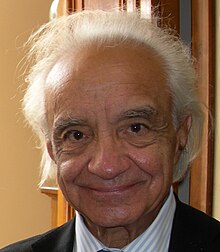 Antonino Zichichi合作论文数University of Bologna118I. Clare合作论文数118A. Gurtu合作论文数118




