We discuss how quantum state tomography of entangled photon pairs can be used in the lab as a natural follow-up to popular Bell inequalities experiments for graduate students and to introduce them to more advanced quantum concepts. In addition, we discuss how the measured density matrix can be used to quantitatively estimate the quantum state quality and optimize the Bell measurement to reach its maximum expected value for an arbitrary two-photon entangled state.
As an early teaching tool in QM, we propose to use a single-photon Mach-Zehnder interferometer. We demonstrate experimentally several properties associated with the concept of single photons in quantum optics and use them to introduce the quantum formalism and postulates in a more intuitive way.
Bell's inequality violation experiments are becoming increasingly popular in the practical teaching of undergraduate and master's degree students. Bell's parameter S is obtained from 16 polarization correlation measurements performed on entangled photons pairs. We first report here a detailed analysis of the uncertainty u(S) of Bell's parameter taking into account coincidence count statistics and errors in polarizers' orientation. We show using both computational modeling and experimental measurement that the actual sequence of the polarizer settings has an unexpected and strong influence on the error budget. This result may also be relevant to measurements in other settings in which errors in parameters may have non-random effects in the measurement.
Single crystal diamond nanotips reveal a new behavior for ultrafast laser-induced electron emission. Under tightly focused femtosecond laser illumination, electron yield shows a saturation with the laser intensity. When the DC bias is sufficient for dark field emission, large optical intensities can switch off the emission occurring between laser pulses during a few hundred μs, because of the low conductance of the diamond tip. We propose a macroscopic model to combine a capacitive effect with the different conduction and emission mechanisms. This study shows that non-metallic photocathodes offer different perspectives from the conventional metallic ones.
We present in the following a quantum optics experiment appropriate for advanced undergraduate students with former experience in quantum optics. It extends classical single photon setups to the time dependent domain. We demonstrate self-heterodyning of heralded single photons using a Mach-Zehnder like interferometer where beamsplitters are replaced by two acousto-optic modulators (AOMs). The single photon beat note is recorded over time at the frequency difference between the RF generators driving the AOMs, which makes it observable directly on a human time scale, i.e., with periods above a fraction of a second. To compare with our observations, we tailor the standard quantum optics formalism for beam splitters to take into account the frequency shifts associated with the AOMs.
Single crystal diamond needles are promising structures as point electron sources. However, the low electrical conductivity of diamond limits their application as high brightness electron sources. Here we study experimentally and numerically the field emission behavior of single crystal diamond needles, in order to better explain the link between the low electrical conduction, the non-homogeneous field distribution in the needle, the evolution of the field enhancement factor and the saturation of the Fowler–Nordheim plot. Field emission current and voltage loss were measured as a function of the applied voltage. Numerical modelling was used to solve conduction, emission and Laplace equations taking into account the real geometry of the field emitter and its environment. The combination of experimental and numerical results shows that the conduction behavior and the field enhancement factor depend on the diamond geometry. Moreover, the Fowler–Nordheim plot saturation is shown to be affected by the electrostatic environment which can limit the range of voltage losses that can appear along the diamond needle and hence limit the field emission current. At the same time, the increase of the emission current at high field, which is sometimes argued to be caused by the breakdown of the field emitter, is here presented as a simple consequence of the conduction properties of the field emitter as it was already shown for silicon field emitters.
Single crystal diamond needles are promising structures as point electron sources. However, the low electrical conductivity of diamond limits their application as high brightness electron sources. Here we study numerically the field emission behavior of single crystal diamond needles in order to better explain the link between their low electrical conduction, and phenomena related to the saturation of the Fowler-Nordheim plot such as the non-homogeneous field distribution in the needle. Comparison with experimental results shows that the conduction behavior depends on the diamond geometry. Moreover, the Fowler-Nordheim plot saturation is shown to be affected by the electrostatic environment.
We report results of experimental investigation of field electron emission from diamond nanoemitters. The measurements were performed with single crystal diamond needles fixed at tungsten tips. The voltage drop along diamond needles during emission was revealed and measured using electron energy spectroscopy. The observed linear dependence of the voltage drop in diamond on voltage applied to the tungsten tip is explained in the frame of a simple macroscopic electrical model combining Poole-Frenkel conduction along the diamond tip and Fowler-Nordheim tunneling at the diamond-vacuum junction. Experimental evidences of electron emission sensitivity to laser illumination are discussed for possible modification of diamond emitter characteristics and voltage drop.
generalization of the Kapitza–Dirac effect enables new ways of controlling free electrons with ultrashort light pulses.
Needle-like single crystal diamond structures were obtained by combination of the plasma enhanced chemical vapor deposition (CVD) and selective oxidation techniques. Field emission currents and total electron energy distributions were measured for individual diamond needles as functions of extraction voltage and the intensity of the femtosecond laser focused on the needle. Moreover, a new set-up based on the coupling of a field ion microscopy (FIM) with an ion energy analyser (ionic lens) is used to measure voltage drops lower than 1%. The needles demonstrate current saturation phenomenon and emission sensitive to laser intensity. The analysis of the voltage drops measured via electron energy analyser and FIM shows that the conduction is governed by Poole-Frenkel transport mechanism at low laser intensity. Based on experimental observations, the laser contribution to conduction mechanisms is discussed.
We present experimental results on laser-induced photoemission from nanotips made of different materials, and we compare photoemission from a metal surface (tungsten) to a dielectric (diamond). Ultrashort laser pulses (15-300 fs) are used to trigger electron emission from nanotips with radii < 100nm under a moderate tip bias. We show how different laser parameters as the repetition rate, the mean energy or the polarization influence the photoemission. We characterize the DC field emission and the photoemission with measurements of the current but also spatial and spectral profile of the electrons.
We study optical field emission from silver nanotips, showing the combined influence of the illumination wavelength and the exact shape of the nanotip on the strong-field response. This is particularly relevant in the case of FIB milled nano tips, where the nanotip fabrication capabilities could become a new ingredient for the study of strong-field physics. The influence of the thermal load on the nanotip and its effect on the emission is studied as well by switching the repetition rate of the laser source from 1 kHz to 62 MHz, showing a clear transition towards the quenching of the strong-field emission.
We present the first demonstration of ultrafast laser-induced field emission from a carbon nanotube based nanotip, and measurement of the energy distribution of the electrons.
We demonstrate the possibility to produce a blazed grating for electron waves using Kapitza-Dirac diffraction on a standing wave created by several harmonics of a fundamental wavelength. We show that an optimized multicolor standing wave can lead to strongly asymmetric diffraction patterns. Using a bichromatic standing wave, we predict a diffraction probability larger than 50% in a specific order. This order can be chosen with the spatial relative phase between the fundamental and second harmonic. Since the Kapitza-Dirac diffraction grating is experimentally more feasible than Bragg diffraction, this could be an interesting alternative to be used in electron interferometry.
We investigate the possibility of using a scattering medium as a highly multimode platform for implementing quantum walks. We demonstrate the manipulation of a single photon propagating through a strongly scattering medium using wavefront-shaping technique. Measurement of the scattering matrix allows the wavefront of the photon to be shaped to compensate the distortions induced by multiple scattering events. The photon can thus be directed coherently to a specific output mode. Using this approach, we show how entanglement of a single photon across different modes can be manipulated despite the enormous wavefront disturbance caused by the scattering medium.
We present the first demonstration of ultrafast laser-induced field emission and measurement of the energy distribution of electrons from a nanotip based on a carbon nanotube (CNT). Our experimental setup extends the studies performed on conventional tungsten or gold tips by using this new innovative tip. The carbon tip consists of concentric carbon layers in the shape of a cone, and has been previously studied as a very good candidate for cold field emission. The first laser-induced field emission from a CNT-based nanotip has been observed and we measured the energy spectrum as well as the polarization dependance of the emission. We also characterize the damage threshold of the tip, when illuminated by a high repetition rate femtosecond laser. These first results are encouraging further studies of electron emission from CNT-based carbon nanotips.
We present an experiment studying the interaction of a strongly focused 25 fs laser pulse with a tungsten nanotip, investigating the different regimes of laser-induced electron emission. We study the dependence of the electron yield with respect to the static electric field applied to the tip. Photoelectron spectra are recorded using a retarding field spectrometer and peaks separated by the photon energy are observed with a 45% contrast. They are a clear signature of above threshold photoemission (ATP), and are confirmed by extensive spectrally resolved studies of the laser power dependence. Understanding these mechanisms opens the route to control experiment in the strong-field regime on nanoscale objects.
We demonstrate the control of entanglement of a single photon between several spatial modes propagating through a strongly scattering medium. Measurement of the scattering matrix allows the wavefront of the photon to be shaped to compensate the distortions induced by multiple scattering events. The photon can thus be directed coherently to a single or multi-mode output. Using this approach we show how entanglement across different modes can be manipulated despite the enormous wavefront disturbance caused by the scattering medium.
We experimentally demonstrate an encryption method for transmission through multimode fibers. The encryption is provided by chaotic mode mixing, and time-reversal symmetry of counter-propagating light ensures that only an authorized party can decrypt the message.
In this work, we use wavefront shaping methods to control non-classical states of light propagating through a multiply scattering medium. We experimentally show guiding of a single-photon into a selected single-mode fiber after propagation through the medium, and demonstrate generation of a one-photon entangled state.
 Nicolas Treps合作论文数Laboratoire Kastler Brossel, Université Pierre et Marie Curie;Sorbonne Université13
 Claude Fabre合作论文数Laboratoire Kastler Brossel, Sorbonne Universite13
 Julien Mauchain合作论文数8Robert Maiwald合作论文数7Golla, A.合作论文数7Béatrice Chatel合作论文数7Ivan Blum合作论文数CNRS, Aix-Marseille University7
 Angela Vella合作论文数6Mario Borz合作论文数5Olivier Torresin合作论文数5
 Martin Fischer合作论文数Department of Chemistry, Trinity College of Arts & Sciences, Duke University5
 Gerd Leuchs合作论文数Institut für Optik, Information und Photonik, Department Physik, Naturwissenschaftliche Fakultät, Friedrich-Alexander-Universität Erlangen-Nürnberg5Agnes Maitre合作论文数5Markus Sondermann合作论文数5Renaud Mathevet合作论文数4Sebastien Massenot合作论文数4Rm Bionta合作论文数4
 Hugo Defienne合作论文数Sch Phys & Astron, Univ Glasgow4
 Marco Barbieri合作论文数Dipartimento di Scienze, Università degli Studi Roma Tre4Pinel, Olivier合作论文数4Marianne Bader合作论文数4Simon Heugel合作论文数3
 F. Scazza合作论文数Consiglio Nazl Ric, Univ Florence3Pu Jian合作论文数3
 Giuseppe Patera合作论文数3
 Alexander N. Obraztsov合作论文数Center for Electrochemical Energy Storage, Lomonosov Moscow State University3
 Germán J. De Valcárcel合作论文数Departament d'Òptica, Universitat de València3
 Jinxia Feng (冯晋霞)合作论文数Quantum Optics Device Group, Institute of Opto‐Electronics, Shanxi University3
 Aurelien Masseboeuf合作论文数INAC3L. Lopez合作论文数2
 Ian Walmsley合作论文数Oxford Quantum Institute, University of Oxford;Department of Physics, University of Oxford;Faculty of Natural Sciences, Imperial College London2
 Sylvain Gigan合作论文数Sorbonne University/Laboratoire Kastler Brossel2
 Renne Medeiros de Araujo合作论文数2A. De La Souchère合作论文数2
 Alessandro S. Villar合作论文数Instituto de F ´ õsica;Universidade de Sao Paulo;Instituto de F ´ õsica, Universidade de Sao Paulo2Alicia Negre合作论文数1renne medeiros合作论文数1M Borz合作论文数1M. Delmas合作论文数School of Physics and Astronomy, Cardiff University1
 Antonino Chiummo合作论文数European Gravitational Observatory1
 Sébastien Weber合作论文数Centre D'élaboration De Matériaux Et D'études Structurales-CNRS1Brian J Smith合作论文数Department of Respiratory Medicine, The Queen Elizabeth Hospital;Bendigo Hospital;Austin Hosp, Melbourne1Florent Houdellier合作论文数CEMES-CNRS, Université de Toulouse, Toulouse, France1
 Laurent Lopez合作论文数1Stéphane Faure合作论文数1
 Patrick moretto-capelle合作论文数1Klaus Mantel合作论文数1
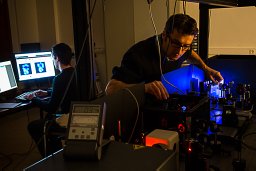 Arnaud Arbouet合作论文数CNRS, Univ Toulouse1
 V. I. Kleshch合作论文数RAS, A.M. Prokhorov General Physics Institute1




