The quantum noise in photocurrent fluctuations usually gives incomplete information about the quantum state of spectral sideband modes of bright light beams involved in the detection. Each frequency component of the noise spectrum corresponds to two sideband modes symmetrically located around the bright optical field. In the case of the usual homodyne detection, it limits the ability to recover discriminated information of each mode involved. We theoretically show that complete reconstruction of the two-mode quantum state can be obtained by using phase-locked (coherent) resonator detection, even for non-Gaussian states. We experimentally demonstrate the technique by measuring a two-mode displaced coherent state.
We measure the complete quantum state for six modes of the electromagnetic field produced by an optical parametric oscillator. The investigation involves the sideband of the intense pump, signal, and idler fields generated by stimulated parametric downconversion inside a triply resonant optical resonator. We develop a theoretical model to successfully interpret the experimental results. The model takes into account the coupling of the field modes to the phonon bath of the nonlinear crystal, clearly showing the roles of different physical effects in shaping the structure of the quantum correlations between the six optical modes.
O seminário descreverá métodos analíticos baseados na espectroscopia no infravermelho próximo (NIR) desenvolvidos pelo grupo de pesquisa da palestrante para análise de combustíveis (diesel, biodiesel e gasolinas). Para tanto, serão consideradas as ferramentas quimiométricas utilizadas para construção dos modelos de calibração multivariada, bem como ferramentas para seleção de variáveis espectrais e transferência de modelos de calibração.
We demonstrate, theoretically and experimentally, the generation of hexapartite modal entanglement by the optical parametric oscillator (OPO) operating above the oscillation threshold. We show that the OPO generates a rich structure of entanglement among sets of six optical sideband modes interacting through the nonlinear crystal. The class of quantum states thus produced can be controlled by a single parameter, the power of the external laser that pumps the system. Our platform allows for the generation of massive entanglement among many optical modes with well defined but vastly different frequencies, potentially bridging nodes of a multicolor quantum network.
We consider the quantum processor based on a chain of trapped ions to propose an architecture wherein the motional degrees of freedom of trapped ions (position and momentum) could be exploited as the computational Hilbert space. We adopt a continuous-variables approach to develop a toolbox of quantum operations to manipulate one or two vibrational modes at a time. Together with the intrinsic non-linearity of the qubit degree of freedom, employed to mediate the interaction between modes, arbitrary manipulation and readout of the ionic wave function could be achieved.
The optical parametric oscillator (OPO) is a non-linear optical device capable of producing an effective interaction among optical modes with different colors. Up to now, it was believed that only three modes would be involved in the interaction. By developing a new theoretical model to analyze the sideband structure of entanglement, we show that in fact six modes are involved in the stimulated parametric interaction. We experimentally investigate how those modes are entangled to one another, in particular showing that the hexapartite entanglement can be thought of as being generated by a combination of two-mode squeezers and beam splitter Hamiltonians acting on six different colors of light.
The introduction of phase coherence in the detection of quantum noise of light yields a pure quantum measurement of spectral modes. We theoretically show that such coherent quantum measurement performed with the technique of resonator detection (RD) is able to access any direction in the two-mode phase space of spectral sidebands under appropriate conditions, thus furnishing a complete measurement of the four-dimensional Wigner function. We obtain a realistic measurement operator for coherent RD by including the effects of imperfect resonator mode matching in our analysis. Moreover, we experimentally demonstrate the realization of phase coherent RD to characterize a two-mode displaced quantum state.
Gaussian quantum states hold special importance in the continuous variable (CV) regime. In quantum information science, the understanding and characterization of central resources such as entanglement may strongly rely on the knowledge of the Gaussian or non-Gaussian character of the quantum state. However, the quantum measurement associated with the spectral photocurrent of light modes consists of a mixture of quadrature observables. Within the framework of two recent papers [Phys. Rev. A 88, 052113 (2013) and Phys. Rev. Lett. 111, 200402 (2013)], we address here how the statistics of the spectral photocurrent relates to the character of the Wigner function describing those modes. We show that a Gaussian state can be misidentified as non-Gaussian and vice-versa, a conclusion that forces the adoption of tacit \textit{a priori} assumptions to perform quantum state reconstruction. We experimentally analyze the light beams generated by the optical parametric oscillator (OPO) operating above threshold to show that the data strongly supports the generation of Gaussian states of the field, validating the use of necessary and sufficient criteria to characterize entanglement in this system.
We show that quantum noise in the spectral domain usually corresponds to a mixed quantum measurement, and cannot attain complete information about the quantum state of spectral modes [PRL 111, 200402 (2013).]
In the spectral domain, the quantum state of the three beams emitted by an above-threshold optical parametric oscillator encompasses six modes. We use resonator detection to characterize hexapartite entanglement.
We revisit the problem of quantum state reconstruction of light beams from the photocurrent quantum noise. As is well known, but often overlooked, two longitudinal field modes contribute to each spectral component of the photocurrent (sideband modes). We show that spectral homodyne detection is intrinsically incapable of providing all the information needed for the full reconstruction of the two-mode spectral quantum state. Such a limitation is overcome by the technique of resonator detection. A detailed theoretical description and comparison of both methods is presented, as well as an experiment to measure the six-mode quantum state of pump-signal-idler beams of an optical parametric oscillator above the oscillation threshold.
Spectral homodyne detection, a widely used technique for measuring quantum properties of light beams, cannot retrieve all the information needed to reconstruct the quantum state of spectral field modes. We show that full quantum state reconstruction can be achieved with the alternative measurement technique of resonator detection. We experimentally demonstrate this difference by engineering a quantum state with features that go undetected by homodyne detection but are clearly revealed by resonator detection.
We demonstrated the direct generation of multipartite continuous-variable entanglement and investigated its robustness against losses. This led to the development of experimental capabilities to fully characterize a six-mode quantum optical state.
The ability to precisely manipulate an isolated quantum system opens new avenues in the simulation of more complicated quantum systems, using the tools of quantum computation. While the paradigm of quantum computation nowadays considers a collection of two-level systems known as qubits, it is also possible to generalize the basic logic quantum units to multi-level or even continuous systems.
We experimentally investigate quantum entanglement among three beams of light produced by the optical parametric oscillator. We aim to understand how entanglement is distributed among the light beams and associated optical sideband field modes.
In recent years we have investigated pump-signal-idler entanglement in the above-threshold optical parametric oscillator. Spectral homodyne-type detection probes two sidebands at a given analysis frequency per beam. Hexapartite entanglement is observed.
Interferometric techniques, combined with electronic signal processing, have provided powerful tools for the precise reconstruction of quantum states of the field. Nevertheless, in most cases the completeness of the measurement relies in strong assumptions about its symmetry. In the present work, I will show how the use of optical cavities as a tool for state reconstruction can provide a complete description of the state, relaxing a priori assumptions and revealing a broad distribution of entanglement among sidebands of different optical beams, as in the case of those generated by an optical parametric oscillator.
Today the interaction of light and matter on the single quantum level is a wide research field. Strong coupling between a single photon and a single atom has already been achieved with optical cavities. Here, we treat strong interaction in free space, i.e. strong interaction whilst maintaining the free space density of states of the electromagnetic field. We pursue the coupling of a properly designed single photon wave packet to a single ion aiming at an excitation probability close to unity. For this purpose a linear dipole transition of an ion localized in the focal point of a deep parabolic mirror is addressed by a collimated laser beam focused onto the ion from nearly the full solid angle. In order to reach the highest possible coupling strength, the incident vectorial light field must be matched to the radiation pattern of the corresponding atomic transition both in the spatial and in the temporal domain. Here the generation of such an incident light mode is presented.
We report on progress towards achieving a full 4pi solid angle strong coupling between a single trapped ion and a light field using a deep parabolic mirror enabling both efficient photon collection and ion excitation.
 Marcelo Martinelli合作论文数Instituto de F ´ õsica;Universidade de Sao Paulo;Instituto de F ´ õsica, Universidade de Sao Paulo37
 Katiuscia N. Cassemiro合作论文数Instituto de Física;Universidade de São Paulo;Instituto de Física, Universidade de São Paulo37
 Paulo Alberto Nussenzveig合作论文数Institute of Advanced Studies, University of Sao Paulo34
 Antonio S. Coelho合作论文数Inst. de Fis., Univ. de Sao Paulo;c;Inst. de Fis., Univ. de Sao Paulo26
 Barbosa Felippe合作论文数Instituto de Física, Universidade de São Paulo.23
 Philipp Schindler合作论文数Quantum Molecules Group, Institut für Experimentalphysik, Universität Innsbruck9
 Rainer Blatt合作论文数Institut fur Experimentalphysik, Universitat Innsbruck;Institute of Quantum Optics and Quantum Information, Austrian Academy of Science9
 Thomas Monz合作论文数Institute for Experimental Physics, University of Innsbruck9M. Riebe合作论文数9M. Chwalla合作论文数9
 Kihwan Kim (金奇奂)合作论文数Institute for Interdisciplinary Information Sciences, Tsinghua University7
 Claude Fabre合作论文数Laboratoire Kastler Brossel, Sorbonne Universite6j benhelm合作论文数5
 Gerhard Kirchmair合作论文数Institut fur Quantenoptik und Quanteninformation5José De Assis Fonseca Faria合作论文数5
 Luis Ortiz-Gutiérrez合作论文数Inst Phys, Johannes Gutenberg Univ Mainz4ph laurent合作论文数4
 Rovera, G.D.合作论文数4
 Gerd Leuchs合作论文数Institut für Optik, Information und Photonik, Department Physik, Naturwissenschaftliche Fakultät, Friedrich-Alexander-Universität Erlangen-Nürnberg4Wolfgang Hänsel合作论文数4
 Christian Roos合作论文数Institute for Experimental Physics, Universität Innsbruck4
 Giorgio Santarelli合作论文数Laboratoire Photonique, Numerique et Nanosciences, CNRS4
 Markus Hennrich合作论文数Max-Planck-Institut fur Quantenoptik4P. Valente合作论文数4
 Jonatas Eduardo S. Cesar合作论文数3Michel Abgrall合作论文数3W. Haensel合作论文数2
 Deitze Otaduy合作论文数2
 L. F. Munoz Martinez合作论文数2Robert Maiwald合作论文数2Golla, A.合作论文数2Benoit Chalopin合作论文数2
 Luciano Soares Cruz合作论文数Instituto de Física “Gleb Wataghin”,, Universidade Estadual de Campinas2Markus Sondermann合作论文数2
 Eneko Gorritxategi合作论文数2Sergio Galvão Coutinho合作论文数1Simon Heugel合作论文数1Mauro Copelli Lopes da Silva合作论文数1Gomes Anderson Stevens Leônidas合作论文数1Anderson Stevens合作论文数1Amaia M. Goitandia合作论文数1Jefferson G. Filgueiras合作论文数1
 Martin Fischer合作论文数Department of Chemistry, Trinity College of Arts & Sciences, Duke University1
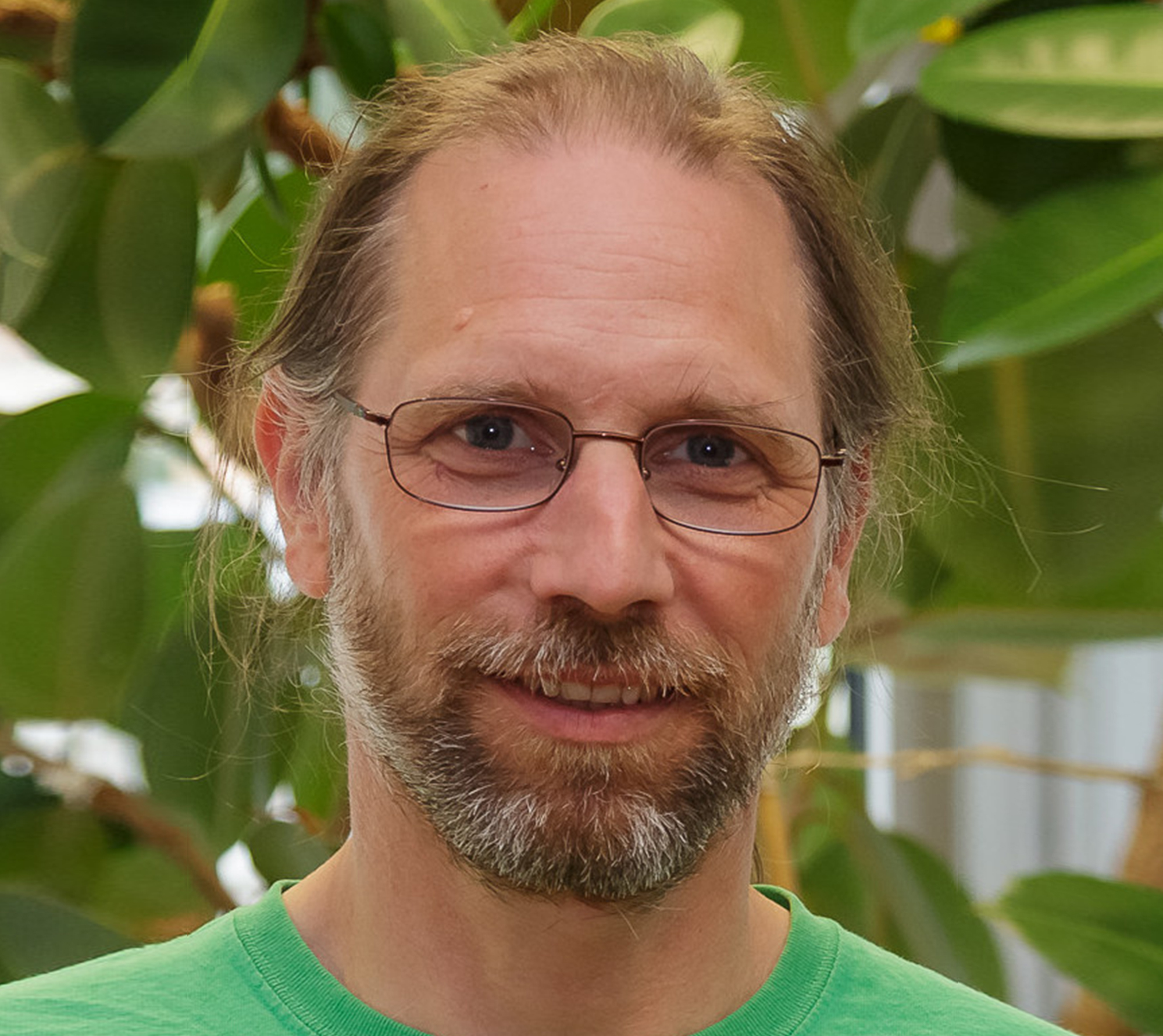 Hartmut Haeffner合作论文数Department of Physics, University of California, Berkeley1Marianne Bader合作论文数1Iban Quintana合作论文数1
 L. A. Fernandez合作论文数Kimika Analitikoa Saila, Euskal Herriko Unibertsitatea1




