A 65nm CMOS 4.78mm2 integrated neuromodulation SoC consumes 417μW from a 1.2V supply while operating 64 acquisition channels with epoch compression at an average firing rate of 50Hz and engaging two stimulators with a pulse width of 250μs/phase, differential current of 150μA, and a pulse frequency of 100Hz. Compared to the state of the art, this represents the lowest area and power for the highest integration complexity achieved to date.
A wirelessly powered 0.125 mm2 65 nm CMOS IC for Brain-Machine Interface applications integrates four 1.5 μW amplifiers (6.5 μVrms input-referred noise with 10 kHz bandwidth) with power conditioning and communication circuitry. The multi-node backscatter frequency locks to a wireless interrogator using a frequency-domain multiple access communication scheme. The full system, verified with wirelessly powered in vivo recordings, consumes 10.5 μW and operates at 1 mm range in air with 50 mW transmit power.
This chapter focuses on the design and implementation of the first inertial sensor to use bondwires, which can be readily integrated into any integrated circuit (IC) process. Chip-to-chip wire bonding can reduce inductance deviation to ~6%, which is comparable to the variation of on-chip inductors and capacitors in a standard IC technology design. The bondwire spacing is set by the bondpad pitch used in the complementary metal oxide semiconductor fabrication process, so it is typically not a design parameter. Bondwire inductance varies with temperature and package assembly. The chapter explores the mechanical and electrical characteristics of bondwires and presents a bondwire model that reveals the performance implications on a bondwire inertial sensor. It examines the corresponding bondwire model using finite element method simulations and presents the results. The chapter shows bondwire inertial sensing theory and circuitry. It also shows a single-axis bondwire accelerometer prototype. Gold, aluminum, and copper are the most common materials for bondwires.
An architecture for generating a voltage reference at a fraction of the silicon bandgap is proposed. It uses a two-phase switched-capacitor network to add multiples and fractions of VBE and ΔVBE to achieve a near zero temperature coefficient without the use of resistors or op-amps. The 0.0055mm2 circuit, implemented entirely on-chip in 65nm CMOS, produces a voltage of 423mV, has a measured σ of 2.2%, and consumes 138nA while operating at a supply as low as 750mV at -35°C.
A wirelessly powered 0.125mm 2 65nm CMOS IC for BMI applications integrates four 1.5μW amplifiers (6.5μVrms input-referred noise for a 10kHz bandwidth) with power conditioning and communication circuitry. The multi-node backscatter FDMA communication scheme frequency locks to a wireless interrogator. The full system, verified wirelessly with MATLAB generated neural data, consumes 10.5μW, and operates at 1mm range in air with 50mW transmit power.
This paper presents the design, implementation, and characterization of a fully integrated accelerometer using a bondwire inertial sensor. The accelerometer was implemented in a standard CMOS process without microelectromechanical processing. The system consists of a gold and aluminum bondwire inertial sensor and readout circuitry. Finite-element analysis was used to characterize the mechanical performance of the accelerometer and reinforce empirical data. The system includes a fully differential frequency modulation downconversion architecture and consumes 13.5 mW while achieving a gain of 10 kHz/g, a bandwidth of 700 Hz, and a resolution of 80 mg. The chip was fabricated in an 0.13-m CMOS process with an area of 1.1 mm.
This paper presents an accelerometer that utilizes standard IC bondwires as an inertial sensor, requiring no external components or MEMS processing. The readout circuitry is implemented in a standard 0.13 µm CMOS process and detects the change in mutual inductance caused by the relative deflection of adjacent bondwires. The accelerometer has a measured sensitivity of 10 kHz/g with a bandwidth of 700 Hz, a bias stability of 35 mg and consumes 9 mA from a 1.5 V supply.
A field trial was conducted which demonstrated that compressed video and wireline quality audio at 64 kbps could be transmitted using the existing cellular telephone spectrum (825-894 MHz) without affecting the normal cellular service. The technology employed was broadband code division multiple access (B-CDMA) augmented with programmable digital notch filters. This paper describes the B-CDMA and digital filter techniques, the cellular overlay concept, and projected performance based on Monte-Carlo simulations. Lastly, the field demonstrations conducted with US Cellular in Des Moines, Iowa, are described.
Code Division Multiple Access (CDMA) is a digital multiple-access technique, whereby each signal has its own unique binary sequence, and all signals share the same spectrum. In the United States, personal communication networks using CDMA, will provide to each user, a separate code, which will change from cell-to-cell. We call this code reuse, just like the frequency reuse employed in the FDMA or TDMA systems. However, there are many more codes, than frequency bands.
The field test experiments performed for Millicom Inc., and LOCATE Inc., by SCS Mobilecom Inc. using the SCS developed broadband-CDMA mobile PCN system, are described. The frequency band selected for this field test was between 1850-1990 MHz, a band in which SCS, Millicom, and LOCATE each hold an experimental license. The purpose of these licenses is to study new PCN and to demonstrate the capability of a broadband-CDMA PCN system to share the spectrum with fixed-service point-to-point microwave systems
Multipath propagation in a broadband CDMA environment is described. A propagation model for broadband spread-spectrum signals is presented. Experimental results relating to the sharing of the band by fixed service microwave users and mobile personal communications network (PCN) users are discussed. Field tests indicate that PCN systems can provide high-quality communications when sharing the spectrum with fixed-service microwave systems in suburban and urban areas
In this study, we aimed to assess the ability of a new viscoelastic finite element method model to accurately simulate rapid palatal expansion with a miniscrew-supported hybrid hyrax appliance.A female patient received 3-dimensional craniofacial imaging with computed tomography at 2 times: before expansion and immediately after expansion, with the latter serving as a reference model for the analysis. A novel approach was applied to the finite element method model to improve simulation of the viscoelastic properties of osseous tissue.The resulting finite element method model was a suitable approximation of the clinical situation and adequately simulated the forced expansion of the midpalatal suture. Specifically, it demonstrated that the hybrid hyrax appliance delivered a force via the 2 mini-implants at the center of resistance of the nasomaxillary complex.The newly developed model provided a suitable simulation of the clinical effects of the hybrid hyrax appliance, which proved to be a suitable device for rapid palatal expansion.
1.1. The role of the orthodontist is, first, to identify the mandibular protrusion as a skeletal disharmony requiring surgery.2.2. If it is a skeletal disharmony, the orthodontist should analyze the casts and x-ray films to determine the discrepancies in all directions. Then, in a consultation between the orthodontist and the surgeon, a decision must be made as to the type of operation to be performed—whether an open osteotomy in the ascending ramus or an ostectomy in the mandibular corpus. If the latter, the orthodontist prepares templates for the surgeon's use in the first stage.3.3. The orthodontist constructs the appropriate bands and splints. These are inserted shortly before the second surgical stage.4.4. Immediately after the operation, the orthodontist sets the jaw and applies the elastics. In osteotomy, the direction of the elastics is straight up and down. In an ostectomy, the elastics are diagonal, pulling the mandible upward and backward. The surgeon then completes the suturing.5.5. Youth in itself is not a contraindication to mandibular surgery in the permanent dentition.6.6. This is a team procedure and success is largely a matter of teamwork and mutual understanding by both surgeon and orthodontist. My personal collaboration with William F. Harrigan, M.D., D.D.S., Professor of Oral Surgery at New York University, has proved both fruitful and personally rewarding.
1.Tooth ankylosis, the fusion of bone and cementum, is a progressive anomaly of tooth eruption, profoundly affecting occlusion.2.Deciduous teeth become ankylosed far more frequently than do permanent teeth, the ratio being better than 10 to 1, and lower teeth are ankylosed more than twice as often as upper teeth.3.Tooth ankylosis exhibits selectivity as to site (nearly all ankylosed teeth are molars, deciduous or permanent) and selectivity as to physiologic time (nearly all ankyloses occur in the deciduous or mixed dentitions).4.Tooth ankylosis is not likely to be of random or accidental origin, nor is excessive or traumatic pressure a probable cause although the latter enjoys wide acceptance. Tooth ankylosis may be due to a disturbance of metabolism.5.Treatment depends upon whether the ankylosed tooth is deciduous or permanent, the time of onset, the time of diagnosis, and the location of the affected tooth. The determining criterion as to whether an ankylosed tooth is to he removed or not is the growth potential remaining; the greater this remaining potential, the more advantageous the immediate removal. This decision requires promptness because of the progressive character of the ill effects flowing from tooth ankylosis. There are six possible situations:
 Jan M. Rabaey合作论文数Department of Electrical Engineering and Computer Sciences, University of California, Berkeley6
 Elad Alon合作论文数Department of Electrical Engineering and Computer Sciences, University of California, Berkeley;Berkeley Wireless Research Center, University of California, Berkeley6
 Daniel Yeager合作论文数6
 Marvin Kullback合作论文数5
 Nathan Narevsky合作论文数5
 Raymond L. Pickholtz合作论文数Department of Electrical Engineering, The George Washington University, Washington D.C.4
 Jose M. Carmena合作论文数Center for Neural Engineering and Prostheses, University of California, Berkeley;Department of Electrical Engineering and Computer Sciences, University of California, Berkeley4
 Brian Otis合作论文数Verily3
 Ryan Neely合作论文数3
 Jaclyn Leverett合作论文数3
 Yu-Te Liao合作论文数National Chiao Tung University3Dl Schilling合作论文数2V. Erceg合作论文数2Schilling, D.L.合作论文数2
 Laurence B. Milstein合作论文数Department of Electrical and Computer Engineering, Jacobs School of Engineering, University of California, San Diego;Center for Wireless Communications, Jacobs School of Engineering, University of California, San Diego2douglas fishman合作论文数1Dm Grieco合作论文数1Raymond L Pickholtz合作论文数1
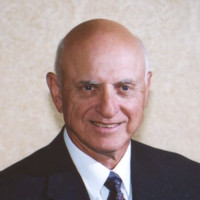 Donald L. Schilling合作论文数Polytechnic Institute of Brooklyn/City College of New York1
 Vinko Erceg合作论文数Broadcom Corp.1E. Kanterakis合作论文数1
 Nathan Pletcher合作论文数1
 Aaron C. Koralek合作论文数Helen Wills Neurosci Inst, Univ Calif Berkeley1




