Removal of sulfur species from blast furnace gas is urgently needed due to the strict emission limits imposed on iron-steel industrial flue gas. Improving the sulfur capacity of H2S is a crucial challenge to reduce the operation cost. NiFe layered double hydroxide (LDH) adsorbents were synthesized using the hydrothermal method to strengthen the adsorption of H2S, achieving a high sulfur capacity of 133.6 mg/g at 50 degrees C. Characterization studies have revealed that the reaction pathway of H2S on the NiFe LDH surface involves adsorption, dissociation and oxidation. It has been clarified that the high sulfur capacity can be attributed to the abundant H2S dissociation sites and the excellent O2 activation sites. The dissociation sites of H2S encompass metal sites, -OH and CO32-. The interaction between O2 and the bridge site of asymmetric metal atoms significantly enhances the dissociation of O2. Strengthening the dissociation of H2S and O2 improves the sulfur capacity. The deactivation of adsorbents comes from the continuous consumption of oxygen species mainly composed of -OH and the deposition of sulfur species in the smaller mesopores ranging from 2 to 10 nm. This work provides useful insights into designing highly efficient iron-based adsorbents for the desulfurization of blast furnace gas.
About 70% of the flue gas in the iron-steel industry has achieved multi-pollutant ultra-low emissions in China until 2023, and then the blast furnace gas purification has become the control step and bottleneck. Our research group has designed and constructed the world's first blast furnace gas desulfurization pilot plant with the scale of 2000 Nm3/h in October 2021. The pilot plant is a two-step combined desulfurization device including catalytic hydrolysis of carbonyl sulfur (COS) and absorption-oxidation of H2S, continuously running for 120 days. In the hydrolysis system, one reason for catalyst deactivation has been verified from the sulfur deposition. HCN in blast furnace gas can be hydrolyzed on the hydrolysis catalyst to produce the nitrogen deposition, which is one of the reasons for catalyst deactivation and has never been found in previous studies. The deposition forms of S and N elements are determined, S element forms elemental sulfur and sulfate, while N element forms -NH2 and NH4+. In the absorption-oxidation system, the O2 loading and the residence time have been optimized to control the oxidation of HS- to produce elemental sulfur instead of by-product S2O32-. The balance and distribution of S and N elements have been calculated for the whole multi-phase system, approximately 84.4% of the sulfur is converted to solid sulfur product, about 1.3% of the sulfur and 19.2% of N element are deposited on the hydrolysis catalyst. The pilot plant provides technical support for multi-pollutant control of blast furnace.
α-Keto ketals and benzannulated oxo-spiroketals have been regioselectively synthesized using a Sc 3+ -coordinated riboflavin tetraacetate photocatalyst with electron-deficient alkynes and alkynediols, respectively.
Heterogeneously catalyzed N-formylation of amines to formamide with CO2/H-2 is highly attractive for the valorization of CO2. However, the relationship of the catalytic performance with the catalyst structure is still elusive. Herein, mixed valence catalysts containing Cu2O/Cu interface sites were constructed for this transformation. Both aliphatic primary and secondary amines with diverse structures were efficiently converted into the desired formamides with good to excellent yields. Combined ex and in situ catalyst characterization revealed that the presence of Cu2O/Cu interface sites was vital for the excellent catalytic activity. Density functional theory (DFT) calculations demonstrated that better catalytic activity of Cu2O/Cu(111) than Cu(111) is attributed to the assistance of oxygen at the Cu2O/Cu interface (O-inter) in formation of O-inter-H moieties, which not only reduce the apparent barrier of HCOOH formation but also benefit the desorption of the desired N-formylated amine, leading to high activity and selectivity.
The modification of activated carbon by Cu or Fe has been shown to considerably improve the degradation activities. It is found that chlorobenzene is adsorbed both in micropores of 1.93 nm as well as on metal active sites. The degradation mechanism on Cu and Fe active centers is illustrated. C6H5Cl is first dechlorinated to form *Cl and C6H6, and then C6H6 is oxidized to CO2, CO, and H2O. The rate-determining step of C6H6 oxidation is the decomposition of acetate on Cu/AC, but the decomposition of benzoquinone and maleate on Fe/AC. The Fe active sites promote dechlorination and accelerate deposition of FeCl2, FeCl3 and organic Cl-containing components. The Cu active center has higher oxidation performance to provide higher C6H5Cl conversion and long-term stability. The main Cl-containing product is HCl, and less polychlorinated organic compounds or metal chlorides to inactivate the catalyst. The decomposition products in activated carbon regeneration process were clarified.
The practical catalytic enantioselective cis-dihydroxylation of olefins that utilize earth-abundant first-row transition metal catalysts under environmentally friendly conditions is an important yet challenging task. Inspired by the cis-dihydroxylation reactions catalyzed by Rieske dioxygenases and non-heme iron models, we report the biologically inspired cis-dihydroxylation catalysis that employs an inexpensive and readily available mononuclear non-heme manganese complex bearing a tetradentate nitrogen-donor ligand and aqueous hydrogen peroxide (H2O2) and potassium peroxymonosulfate (KHSO5) as terminal oxidants. A wide range of olefins are efficiently oxidized to enantioenriched cis-diols in practically useful yields with excellent cis-dihydroxylation selectivity and enantioselectivity (up to 99% ee). Mechanistic studies, such as isotopically 18O-labeled water experiments, and density functional theory (DFT) calculations support that a manganese(V)-oxo-hydroxo (HO-MnV═O) species, which is formed via the water-assisted heterolytic O-O bond cleavage of putative manganese(III)-hydroperoxide and manganese(III)-peroxysulfate precursors, is the active oxidant that effects the cis-dihydroxylation of olefins; this is reminiscent of the frequently postulated iron(V)-oxo-hydroxo (HO-FeV═O) species in the catalytic arene and alkene cis-dihydroxylation reactions by Rieske dioxygenases and synthetic non-heme iron models. Further, DFT calculations for the mechanism of the HO-MnV═O-mediated enantioselective cis-dihydroxylation of olefins reveal that the first oxo attack step controls the enantioselectivity, which exhibits a high preference for cis-dihydroxylation over epoxidation. In this study, we are able to replicate both the catalytic function and the key chemical principles of Rieske dioxygenases in mononuclear non-heme manganese-catalyzed enantioselective cis-dihydroxylation of olefins.
Enantioselective cis-dihydroxylation of alkenes represents an ideal route to synthesize enantioenriched syn-2,3-dihydroxy esters that are important structural motifs in numerous biologically and pharmaceutically relevant molecules. Bioinspired nonheme iron-catalyzed enantioselective cis-dihydroxylation meets the requirement of the modern synthetic chemistry from the atomic economy, green chemistry, and sustainable development perspectives. However, nonheme iron-catalyzed enantioselective cis-dihydroxylation is much underdeveloped because of the formidable challenges of controlling chemo-and enantioselectivities and product selectivity caused by the competitive epoxidation, cis-dihydroxylation, and overoxidation reactions. Herein, we disclose the fabrication of a biologically inspired nonheme iron complex-catalyzed enantioselective cis-dihydroxylation of multisubstituted acrylates using hydrogen peroxide (H2O2) as the terminal oxidant by controlling the non-ligating or weakly ligating counterions of iron(II) complexes, demonstrating a dramatic counteranion effect on the enantioselective cisdihydroxylation of olefins by H2O2 catalyzed by nonheme iron complexes. A range of structurally disparate alkenes were transformed to the corresponding syn-2,3-dihydroxy esters in practically useful yields with exquisite chemo-and enantioselectivities (up to 99% ee). Given the mild and benign nature of this biologically inspired oxidation system as well as the ubiquity and synthetic utility of enantioenriched syn-2,3-dihydroxy esters as pharmaceuticals candidates and natural products, we expect that this strategy could serve as a promising complement to the well-known Sharpless asymmetric dihydroxylation, which is the chemical reaction of an alkene with OsO4 to produce a vicinal diol. [GRAPHICS] .
According to the statistical data of special equipment accidents, and in accordance with the requirements of the "double limit" policy, the height limit device of hoisting machinery includes a variety of types, focusing on the two representative types of fire interrupter device and mechanical drive height limit. By establishing a CAD model of the corresponding device mechanism structure, using the finite element method, simulating the movement of the device mechanism, analyzing the force of the structure, and obtaining relevant information, the cause and mechanism of the device failure can be obtained, and then from the design, manufacture, installation and the use of the device. Reliability improvement and enhancement are carried out in multiple links such as inspection.
The reduction of NO by CO was proposed to be applied for regeneration gas to remove NO x from industrial flue gas with activated carbon purification technology.
Cobalt/peroxymonosulfate (Co/PMS) system is an efficient advanced oxidation process (AOP) for degradation of organic pollutants in wastewater, however, has limitations in organic synthesis. Herein, we employ a Co/PMS system to the preparation of biaryl lactones by the valorization of 2‐aryl aromatic acids via intramolecular O‐H/C‐X oxidative coupling. This system exhibits intriguing advantages, such as non‐noble metal catalyst, common oxidant, mild condition, easy workup and product isolation. Mechanism studies, including the radical quenching experiments and multiple probe substrates, suggest that a high‐valent cobalt‐oxo intermediate should be one major active species. Meanwhile, both persulfate radical anion (SO 4 •− ) and hydroxyl radical (•OH) are present in the process and contribute to the organic reaction. This work not only expands the synthetic application of Co/Oxone system beyond environmental fields, but also provides more active intermediates than generally‐accepted SO 4 •− in the known metal‐based AOPs.
A catalyst-free and transition-metal-free method for the synthesis of 1,2-diketones from aerobic alkyne oxidation was reported. The oxidation of various internal alkynes, especially more challenging aryl-alkyl acetylenes, proceeded smoothly with inexpensive, easily handled, and commercially available potassium persulfate and an ambient air balloon, achieving the corresponding 1,2-diketones with up to 85% yields. Meanwhile, mechanistic studies indicated a radical process, and the two oxygen atoms in the 1,2-diketons were most likely from persulfate salts and molecular oxygen, respectively, rather than water.
The catalytic dehydrogenation of ethanol to acetaldehytde by releasing hydrogen, which is then catalyzed by heterogeneous catalysis is an improsing and sustainable approach. Compared with the oxidative pathyway, the catalytic dehydrogenation of ethanol affords the production of H-2 simultaneously, which is considered an efficient, clean, and renewable energy source. This article provides a mini review of the recent developments of the heterogeneous catalytic dehydrogenation of ethanol. This review article is separated into three sections based on the types of catalysts: (i) heterogeneous noble metal catalysts, such as Pd, Au, Ru, and Ag; (ii) heterogeneous non-noble metal catalysts, such as Cu and Co; (iii) other active catalysts, such as allyed catalyts, carbide and nitride catalysts, and metal oxide catalysts. The nature of active sites, the effect of supports, and the role of modifiers are discussed in detail for the catalytic dehydrogenation of ethanol. Finally, we give some perspectives for future progress in this field.
Natural killer (NK) cells play a crucial role in the surveillance of malignant cells. The engagement of NK group 2 member D (NKG2D) receptor with its ligands on target cells represents a promising therapeutic strategy against cancers. Here, we report that parvifoline AA (PAA), a natural ent-kaurane diterpenoid, markedly stimulates the expression of NKG2D ligands on hepatocellular carcinoma (HCC) cells, considerably enhancing their recognition and lysis by NK cells. We determined that PAA covalently binds to the conserved cysteine site of peroxiredoxins I/II (Prxs-I/II) and inhibits their catalytic activity, subsequently activating the ROS/ERK axis and the immunogenicity of HCC toward NK cells. Robust tumor growth inhibition by PAA dependent on NK cell activation was detected in vivo. Our data suggest Prxs-I/II as a promising cancer immune therapeutic target and provide a compelling rationale for further development of the inhibitor PAA as a sensitizer agent for NK cell-mediated HCC immunotherapy.
In this study, a green, efficient, recyclable Cu2O nanoparticles on reduced graphene oxide (Cu2O-NPs@rGO) carbon-based composite catalyst was synthesized by facile one-pot hydrothermal method. And Cu2O-NPs@rGO catalyst was characterized by XRD, XPS, TEM, SEM, SEM-EDS and ICP-OES to explore its morphology, structure and chemical composition. The heterogeneous catalyst shows great catalytic performance and excellent functional group tolerance in the oxidative coupling of aryl methyl ketones and secondary amines leading to alpha-ketoamides with O-2 and N-iodosuccinimide (NIS) under room temperature. Furthermore, Cu2O-NPs@rGO exhibits good recyclability, which was reused seven times without obvious decline in the catalytic activity.
For the first time, Pd supported on natural palygorskite was developed for amine formylation with CO2 and H2. Both secondary and primary amines with diverse structures could be converted into the desired formamides at < 100 °C, and good to excellent yields were obtained.
A novel series of 4-methyl substituted pyrazole derivatives were designed, synthesized and biologically evaluated as potent glucagon receptor (GCGR) antagonists. In this study, compounds 9q, 9r, 19d and 19e showed high GCGR binding (IC50 = 0.09 μM, 0.06 μM, 0.07 μM and 0.08 μM, respectively) and cyclic-adenosine monophosphate (cAMP) activities (IC50 = 0.22 μM, 0.26 μM, 0.44 μM and 0.46 μM, respectively) in cell-based assays. Most importantly, the docking experiment demonstrated that compound 9r formed extensive hydrophobic interactions with the receptor binding pocket, making it justifiable to further investigate the potential of becoming a GCGR antagonist.
Photocatalytic organic synthesis needs photocatalysts to initiate the reactions and to control the reaction paths. Available photocatalytic systems rely on electron transfer or energy transfer between the photoexcited catalysts and the substrates. We explore a concept based on the photopromoted catalyst coupling to the substrate and the phototriggered catalyst regeneration by elimination from the catalytic cycle. A catalytic amount of elementary I-2 is applied as both a visible light photocatalyst and a pi Lewis acid, enabling the direct activation of alkyne C C bonds for electrophilic cyclization reactions, one of the most important reactions of alkynes. Visible light is crucial for both the iodocyclization of the propargyl amide and the deiodination of the intermediate. Singlet oxygen is found to play a key role in the regeneration of I-2. This system shows good functional group compatibility for the generation of substituted oxazole aldehydes and indole aldehydes. Hence, this study provides a readily accessible alternative catalytic system for the construction of heterocycle aldehyde derivatives by sunlight photocatalysis.
Terminal cobalt(IV)-oxo (CoIV-O) species have been implicated as key intermediates in various cobalt-mediated oxidation reactions. Herein we report the photocatalytic generation of a mononuclear non-haem [(13-TMC)CoIV(O)]2+ (2) by irradiating [CoII(13-TMC)(CF3SO3)]+ (1) in the presence of [RuII(bpy)3]2+, Na2S2O8, and water as an oxygen source. The intermediate 2 was also obtained by reacting 1 with an artificial oxidant (that is, iodosylbenzene) and characterized by various spectroscopic techniques. In particular, the resonance Raman spectrum of 2 reveals a diatomic Co-O vibration band at 770 cm-1, which provides the conclusive evidence for the presence of a terminal Co-O bond. In reactivity studies, 2 was shown to be a competent oxidant in an intermetal oxygen atom transfer, C-H bond activation and olefin epoxidation reactions. The present results lend strong credence to the intermediacy of CoIV-O species in cobalt-catalysed oxidation of organic substrates as well as in the catalytic oxidation of water that evolves molecular oxygen.
An efficient protocol for the synthesis of trisubstitued pyrrolo[1,2-a]pyrazines through three components cyclization and one-pot cascade reaction is presented. Various trisubstitued pyrrolo[1,2-a]pyrazines are obtained by this metal-free process in moderate to good yields.
We report a remarkable Brønsted acid effect in the epoxidation of olefins by nonheme manganese catalysts and aqueous hydrogen peroxide. More specifically, a mononuclear nonheme manganese complex bearing a tetradentate N4 ligand, Mn(II)(Dbp-MCP)(OTf)2 (Dbp-MCP = (1R,2R)-N,N'-dimethyl-N,N'-bis((R)-(3,5-di-tert-butyl-phenyl)-2-pyridinylmethyl)cyclohexane-1,2-diamine; OTf(-) = CF3SO3(-)), is a highly efficient catalyst in the epoxidation of olefins by aqueous H2O2 in the presence of H2SO4 (1-3 mol %). The yields of epoxide products as well as the chemo- and enantioselectivities increase dramatically in the presence of H2SO4; no formation of epoxides is observed in the absence of H2SO4. In addition, the product yields and enantioselectivities are dependent significantly on the manganese catalysts and Brønsted acids. The catalytic epoxidation of olefins by other oxidants, such as peracids, alkyl hydroperoxides, and iodosylbenzene, is also affected by the presence of H2SO4; product yields and enantioselectivities are high and similar irrespective of the oxidants in the presence of H2SO4, suggesting that a common epoxidizing intermediate is generated in the reactions of [Mn(II)(Dbp-MCP)](2+) and the oxidants. Mechanistic studies, performed with (18)O-labeled water (H2(18)O) and cumyl hydroperoxide, reveal that a high-valent manganese-oxo species is formed as an epoxidizing intermediate via O-O bond heterolysis of Mn-OOH(R) species. The role of H2SO4 is proposed to facilitate the formation of a high-valent Mn-oxo species and to increase the oxidizing power and enantioselectivity of the Mn-oxo oxidant in olefin epoxidation reactions. Density functional theory (DFT) calculations support experimental results such as the formation of a Mn(V)-oxo species as an epoxidizing intermediate.
 Wonwoo Nam合作论文数Department of Chemistry and Nanoscience, Ewha Womans University;Center for Biomimetic Systems, Ewha Womans University;Korean Academy of Science and Technology;University of Hong Kong;Nanjing University9
 Yong-Min Lee合作论文数8
 Yian Shi (史一安)合作论文数School of Petrochemical Engineering, Changzhou University6
 Wei Sun (孙伟)合作论文数Lanzhou Institute of Chemical Physics, Chinese Academy of Sciences;University of Chinese Academy of Sciences5
 Chungu Xia (夏春谷)合作论文数Lanzhou Institute of Chemical Physics, Chinese Academy of Sciences;University of Chinese Academy of Sciences5
 Yuran Li (李玉然)合作论文数Institute of Process Engineering, Chinese Academy of Sciences;University of Chinese Academy of Sciences4
 Tingyu Zhu (朱廷钰)合作论文数Institute of Process Engineering, Chinese Academy of Sciences;University of Chinese Academy of Sciences4
 Cong Yu (于聪)合作论文数Changchun Institute of Applied Chemistry, Chinese Academy of Sciences4Cheng-Xia Miao合作论文数4Yu-Mei Shen合作论文数3Mianran Chao合作论文数3Duyi Shen合作论文数Sch Chem & Chem Engn, Qufu Normal Univ3
 Huping Jiao (焦虎平)合作论文数College of Animal Science, Jilin University3Dongli Liao合作论文数3Mi Sook Seo合作论文数3Hongyan Wang合作论文数2Fubi Zhong合作论文数2Shuang-Ming Meng合作论文数2Haixing Zhang合作论文数2Yuankai Xu合作论文数2Woon-Young Tcho合作论文数2
 Xinjiang Cui (崔新江)合作论文数Lanzhou Institute of Chemical Physics, Chinese Academy of Sciences;University of Chinese Academy of Sciences2
 Jie Chen合作论文数2Yuting Lin (林玉婷)合作论文数2Hangkong Yuan合作论文数2
 Wenying Li合作论文数2
 Jian Chen (陈建)合作论文数School of Chemistry and Chemical Engineering, Hunan University of Science and Technology2JingLei Tian (田京雷)合作论文数2HongQiang Liu (刘宏强)合作论文数2Peiwei Gong合作论文数2Clémancey Martin合作论文数2Xingchao Dai合作论文数Lanzhou Institute of Chemical Physics Chinese Academy of Sciences, Chinese Academy of Sciences2
 Jing Han合作论文数2
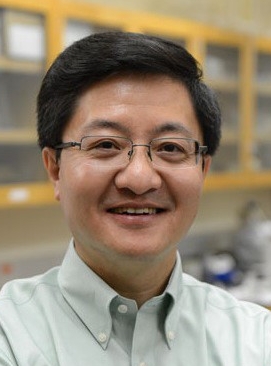 Yong Wang合作论文数Institute for Integrated Catalysis, Pacific Northwest National Laboratory;Gene and Linda Voiland School of Chemical Engineering and Bioengineering, Voiland College of Engineering and Architecture, Washington State University2
 Feng Shi (石峰)合作论文数Lanzhou Institute of Chemical Physics, Chinese Academy of Sciences2Jean-Marc Latour合作论文数2Takashi Ogura合作论文数2
 Shoufeng Wang (王首锋)合作论文数Schoolof Basic Medical Sciences, Zhejiang University2
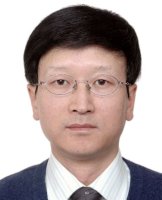 Yingjie Lin (林英杰)合作论文数College of Chemistry, Jilin University2
 Jason Shearer合作论文数Department of Chemistry;UniVersity of Washington;Department of Chemistry, UniVersity of Washington2Zhicheng Xu (徐志成)合作论文数2Kyung-Bin Cho合作论文数The Lise Meitner-Minerva Center for Computational Quantum Chemistry, The Hebrew University of Jerusalem2O. Andrea Wong合作论文数Department of Chemistry, Colorado State University2
 Kallol Ray合作论文数2Buqin Jing合作论文数2
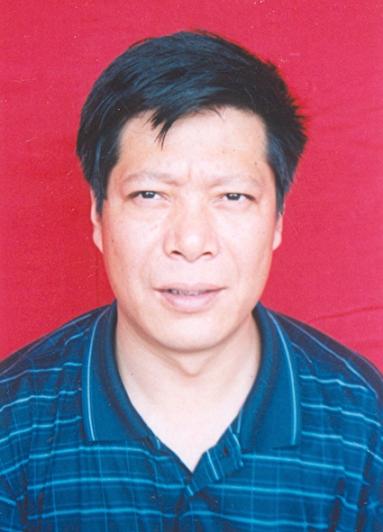 Jinmao You (尤进茂)合作论文数School of Chemistry and Chemical Engineering, Qufu Normal University;Northwest Institute of Plateau Biology, Chinese Academy of Sciences;School of Environmental Science and Engineering, Shandong University1
 Chen-Ho Tung (佟振合)合作论文数Technical Institute of Physics and Chemistry, Chinese Academy of Sciences1Dakota Ma合作论文数1Myoung Jin Kim合作论文数1




