Supercritical water gasification (SCWG) provided a novel approach for the clean treatment and waste-to-fuel utilization of organic wastes benefiting from the unique properties of supercritical water (SCW). As a widely utilized kind of plastic, Polymethyl methacrylate (PMMA) wastes will become an important source of white pollution in the future. Previous studies have already investigated the SCWG reactions of various kinds of plastics, while the gasification performance of PMMA in SCW still remains unknown. In this research, the SCWG of PMMA was performed through a quartz tube reactor. The syngas products and liquid/solid residues were collected and analyzed respectively. Results showed that increasing reaction temperature, extending residence time, and lowering feedstocks concentration significantly enhanced gasification efficiency. The optimal reaction environment for PMMA SCWG was determined: after 700 degrees C and 5 min of SCWG treatment, a syngas yield of 33.97 mol/kg and a total lower heat value of 17.63 MJ/kg was achieved, with carbon efficiency of 90.67 %. Comparison to other plastics demonstrates that the gasification performance of PMMA is out-standing. This work contributes to the understanding of plastic conversion in supercritical environments and supports the development of cleaner technologies for plastic waste valorization.
The structure tuning of bulk graphitic carbon nitride (g-C3N4) is a critical way to promote the charge carriers dynamics for enhancing photocatalytic H-2-evolution activity. Exploring feasible post-treatment strategies can lead to effective structure tuning, but it still remains a great challenge. Herein, a supercritical CH3OH (ScMeOH) post-treatment strategy (250-300 degrees C, 8.1-11.8 MPa) is developed for the structure tuning of bulk g-C3N4. This strategy presented advantages of time-saving (less than 10 min), high yield (over 80%), and scalability due to the enhanced mass transfer and high reactivity of ScMeOH. During the ScMeOH post-treatment process, CH3OH molecules diffused into the interlayers of g-C3N4 and subsequently participated in N-methylation and hydroxylation reactions with the intralayers, resulting in a partial phase transformation from g-C3N4 into carbon nitride with a poly(heptazine imide)-like structure (Q-PHI) as well as abundant methyl and hydroxyl groups. The modified g-C3N4 showed enhanced photocatalytic activity with an H-2-evolution rate 7.2 times that of pristine g-C3N4, which was attributed to the synergistic effects of the g-C3N4/Q-PHI isotype heterojunction construction, group modulation, and surface area increase. This work presents a post-treatment strategy for structure tuning of bulk g-C3N4 and serves as a case for the application of supercritical fluid technology in photocatalyst synthesis.
Supercritical water gasification is a clean technology for biomass conversion and utilization. In supercritical water gasification systems, H2O is often used as the transport medium. Decreases in the reaction temperature at the gasification area and in the heating rate of biomass may limit the gasification rate and efficiency. In this paper, CO2 is used as the transport medium due to its relatively low critical point and specific heat capacity. Moreover, a corn stalk gasification system with different transport media is established in this paper, and the influences of various operating parameters, such as temperature, pressure and feedstock concentration, are investigated. The results show that the gas yield in the CO2-transport system decreases by no more than 5 wt %. In addition, thermodynamic analysis reveals that a system with CO2 as transport medium consumes approximately 25% less electricity than a system with H2O as the transport medium. In addition, the reaction heat absorption decreases. The results show the superiority of CO2 to H2O as a transport medium.
In this chapter, polycarbonate plastics, polypropylene plastics, acrylonitrile butadiene styrene plastics, and other thermoplastic plastics were used as raw materials to analyze their resource utilization technology. First, supercritical water (SCW) gasification and liquefaction experiments were conducted, and the effects of reaction conditions on the products were discussed. In considering the issue of marine microplastics, artificial seawater was also used to study the gasification properties of plastics. Then, the possibility of fixing carbon dioxide when plastics degrade in the mixed environment of SCW and carbon dioxide was explored. We also studied the synergistic effect of several typical plastic cogasifications with lignite and soda lignin. Finally, the hydrophobic behavior of carbon spheres coated surfaces made from microplastics was studied experimentally, providing new insights into preparing hydrophobic materials.
This chapter first describes the raw material production companies and main chemical structures for all the materials in this monograph, including plastics, lignite, and soda lignin. Next, the instruments used to characterize the materials are introduced. The raw materials are analyzed by elemental analysis, industrial analysis, thermogravimetric analysis, etc. In addition, two reaction devices—a quartz tube reactor and a batch kettle reactor are introduced to assist readers in understanding better their characteristics, operation processes, and product collection methods. Finally, the analytical instruments, methods, and indexes of three products in the gas, liquid, and solid phases are introduced.
Energy shortage and environmental pollution make people aware of the need to recycle waste resources and develop environment-friendly energy. The massive plastic waste and clean solar energy provide new solutions to energy and environment issues. In this study, a solar-driven gas-heat-electricity poly-generation system based on supercritical water gasification of plastics was established. Plastic waste and solar energy were converted into electricity, heat and hydrogen-rich gas. A detailed analysis of mass, energy and exergy flow of the system was analyzed under typical operating conditions. The effects of temperature, pressure, plastics to water ratio, etc., on gasification performance, system efficiency, and energy output distribution were investigated. The results showed that the system exergy loss mainly occurred in cooler, reactor and heat exchanger, and their loss account for more than 85% of the total loss. The increase in temperature significantly increased total gas production and H2 molar fraction. At 800 degrees C, the total gas production reached 77.50 kg/h and the H2 molar fraction was 65.78%. However, increasing temperature had a negative impact on system efficiency. The effect of pressure on the gasification reaction and system efficiency was not significant. Increasing plastics to water ratio was beneficial in improving system efficiency, while each gas production showed varying degrees of growth. However, H2 yield and molar fraction decreased dramatically. The increase of turbine feed water led to a slight decrease of energy efficiency, while the exergy efficiency remained basically unchanged. These can provide theoretical guidance for system optimization and promote the industrial application of the technology.
Plastics have become indispensable in industrial production and daily life because they are lightweight, durable, waterproof, chemically stable, and have low manufacturing costs. The widespread use of plastics has led to an enormous increase in plastic waste. Its unreasonable disposal brings great harm to human beings and the environment. By focusing on the problem of treating waste plastics, this chapter examines the hazards of waste plastics, the limitations of traditional treatment methods, the unique properties of supercritical water (SCW), and the principles and research progress of technology targeting the utilization of waste plastics resources in SCW. In the global environment calling for environmental protection, energy conservation, and emission reduction, clean and efficient SCW treatment technology will become a public focus and research hotspot.
The development of waste plastic recycling technology is significant for protecting biodiversity, maintaining soil fertility, protecting the environment, and saving resources. This chapter explains the urgency of developing this technology and summarizes domestic and foreign plastic governance policies. It also puts forward improvement measures from technology, government-enterprise cooperation, and public education. Finally, existing problems of this technology, such as insufficient basic theory, corrosion of reaction systems, and deactivation of catalysts, are explained. In the future, we can comprehensively study the flow and heat transfer laws of supercritical water, establish a visual testing system, design a new efficient reaction system, and innovate management mechanisms. This technology will achieve large-scale industrial applications in the near future.
Supercritical water (SCW) treatment technology has been applied in the field of waste plastics recycling due to its advantages of clean, high efficiency and low carbon. Previous research has focused on liquefaction of plastics to produce oil, mainly for some general-purpose plastics. Different plastics have different structures, which will affect their gasification behavior in SCW. As one of the five engineering plastics, polyoxymethylene (POM) plastics will also become one of the main sources of waste plastics recycling industry in the future. In this paper, the supercritical water gasification (SCWG) experiment of POM plastics was carried out. The effects of tem-perature, residence time, feedstocks concentration, pressure on the gasification reaction were discussed. The carbon balance of the products under different working conditions was investigated. The optimum condition for SCWG of POM plastics was determined. On this basis, the gasification kinetics of POM plastics were studied. It was found that the gasification efficiency of plastics was significantly improved by temperature increase. The total carbon content of gas and liquid phase products increased gradually. At 700 degrees C, the total conversion rate reached 99.79%. With the prolongation of the reaction time, the organic carbon in the liquid phase was gradually converted into gas and the gasification reaction proceeds more completely. The increase in concentration reduced the contact area between the raw material and the gasification agent. At the same time, the diffusion of organic matter was hindered, resulting in a lower gasification rate. The effect of pressure on the plastics gasi-fication reaction was not significant. Under the optimum gasification reaction conditions, the carbon gasification efficiency reached 97.15%. Finally, a gasification kinetic model was established, and the activation energy of paraformaldehyde was 160.38 kJ/mol.
As a benign energy vector, hydrogen has been discussed for a long time. Supercritical water gasification was one of good ways to produce hydrogen. However, supercritical water gasification system with H2O transporting was energy consuming in the process of heating due to the high specific heat of H2O. A new supercritical water gasification system was established in this paper with supercritical CO2 as medium instead. Phenolic plastics were used as the sample transported by CO2. Production yields, energy flow and exergy flow of the system were collected and the influence of temperature, pressure, gasification concentration and transporting concentration was investigated. Mass flow of H2O input into the reactor was 1000 kg/h. The typical condition was as follow: temperature 923.15 K, pressure 23 MPa, and the mass ratio of water, sample and transporting medium was 100:9:9. Yield of H-2, CH4, CO and CO2 at this condition was 8.1 kg/h, 39.6 kg/h, 6.6 kg/h and 137.5 kg/h, respectively. Similar system with H2O transporting was used to compare with the supercritical CO2 transporting system and proved that system with CO2 transporting could reduce the loss of both energy and exergy while the reduce of each gas production yield was less than 0.1 mol/mol.
Plastic has caused serious "white pollution" to the environment, and the highly inert characteristics of plastic bring a major challenge for degradation. Supercritical fluids have unique physical properties and have been widely used in various fields. In this work, supercritical CO 2 (Sc-CO 2 ) with mild conditions was selected and assisted by NaOH/HCl solution to degrade polystyrene (PS) plastic, and the reaction model was designed using response surface methodology (RSM). It was found that, regardless of the types of assistance solutions, the factors affecting PS degradation efficiencies were reaction temperature, reaction time, and NaOH/HCl concentration. At the temperature of 400 °C, time of 120 min, and base/acid concentration of 5% (in weight), 0.15 g PS produced 126.88/116.99±5 mL of gases with 74.18/62.78±5 mL of H 2 , and consumed 81.2/71.5±5 mL of CO 2 . Sc-CO 2 created a homogeneous environment, which made PS highly dispersed and uniformly heated, thus promoting the degradation of PS. Moreover, Sc-CO 2 also reacted with the degradation products to produce new CO and more CH 4 and C 2 H x ( x =4, 6). Adding NaOH/HCl solution not only improved the solubility of PS in Sc-CO 2 , but also provided a base/acid environment that reduced the activation energy of the reaction, and effectively improved the degradation efficiencies of PS. In short, degrading PS in Sc-CO 2 is feasible, and better results are obtained with the assistance of base/acid solution, which can provide a reference for the disposal of waste plastics in the future.
Hydrothermal treatment has been widely employed for material synthesis and modification. In this work, with the help of the homemade microreactor, a rapid high-temperature hydrothermal post treatment (RHTHTPT) process with fast heat transfer and short processing time was elaborately designed for graphitic carbon nitride (gC3N4). Taking advantage of high temperature and short duration time during RHTHTPT process, the RHTHTPTderived g-C3N4 reached up to a high product yield over 80%. The RHTHTPT-derived g-C3N4 showed an enhanced photocatalytic H2-evolution activity about 5.1 times that of pristine g-C3N4 under visible-light irradiation (lambda > 400 nm). With systematic characterizations and the tracking of gas-liquid-solid products by RHTHTPT, it was found that the RHTHTPT could effectively enlarge the specific surface area to increase the active sites for photocatalytic H2-evolution reaction, abundant amino groups and the insertion of oxygen-containing functional groups in the surface of g-C3N4 could realize efficient carriers separation, both of which gave rise to the improved photocatalytic H2-evolution performance. This work develops a promising hydrothermal strategy to regulate the in-plane structure of g-C3N4 and brings a deeper understanding for the correlation between RHTHTPT-induced structure modification with photocatalytic ability, and therefore further provides some guidelines for directionally designing the special structures of g-C3N4 as well as other potential materials by hydrothermal modification.
Supercritical water gasification (SCWG) of coal is a clean coal utilization technology that has gradually developed in recent years. It has great application prospect because of low pollution, good economy and high energy efficiency. Due to the complexity of coal molecular structure, it is difficult to directly study SCWG mechanism of coal at molecular level. Based on the Wiser molecular structure model of coal, diphenyl ether and diphenylmethane were selected as model compounds to study the bond breaking characteristics and gasification law of characteristic bridge bonds. The effects of catalyst, temperature, concentration and other factors on model compounds gasification were discussed. The results showed that temperature had the most significant influence on gasification effect. The effect order of catalyst on promoting gasification from high to low was: K2CO3 & nbsp;> Na2CO3 > Ca(OH)(2). The increase of catalyst amount and residence time had a certain promotion effect on gasification reaction. Under the same condition, the gasification effect of diphenyl ether was better than that of diphenylmethane. At the same time, the kinetic model of coal-like structure model compound gasification in SCW was established, and the key parameters were solved. The activation energy of diphenyl ether and diphenylmethane was 82.96 kJ/mol and 99.92 kJ/mol, respectively.
 Hui Jin (金辉)合作论文数State Key Laboratory of Multiphase Flow in Power Engineering, School of Energy and Power Engineering, Xi'an Jiaotong University13
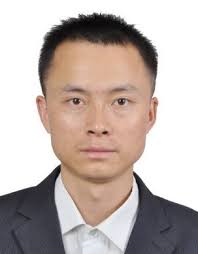 Jinwen Shi (师进文)合作论文数School of Energy and Power Engineering, Xi'an Jiaotong University11
 Weizuo Wang合作论文数7
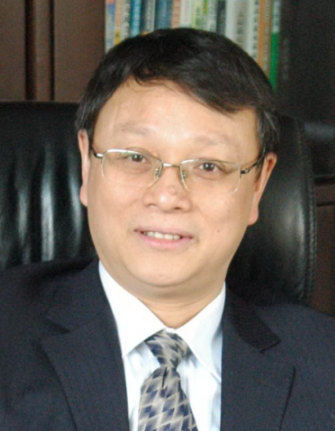 Liejin Guo (郭烈锦)合作论文数State Key Laboratory of Multiphase Flow in Power Engineering, Xi'an Jiaotong University;School of Advanced Energy, Faculty of Engineering, Sun Yat-sen University6Liuhao Mao合作论文数4Xing Kang合作论文数3
 Changqing Cao (曹长青)合作论文数School of Chemical Engineering and Technology, Xi'an Jiaotong University3Yanbing Liu合作论文数2
 Qiuyang Zhao合作论文数2Binjiang Zhai合作论文数1Zhiwei Ge (葛志伟)合作论文数University of Chinese Academy of Sciences;Institute of Engineering Thermophsics, Chinese Academy of Sciences1Bin Bai合作论文数1
 Yazhou Zhang (张亚周)合作论文数State Key Laboratory of Multiphase Flow in Power Engineering, School of Advanced Energy, Sun Yat-sen University1Yingdong Wang合作论文数State Key Laboratory of Multiphase Flow in Power Engineering, Xi'an Jiaotong University1
 Cui Wang (c wang)合作论文数State Key Laboratory of Multiphase Flow in Power Engineering, Xi’an Jiaotong University1
 Yunan Chen (陈渝楠)合作论文数School of Energy and Power Engineering, Xi'an Jiaotong University1
 Yubin Chen (陈玉彬)合作论文数School of Energy and Power Engineering, Xi'an Jiaotong University1
 Wenwen Wei (魏雯雯)合作论文数State Key Laboratory of Multiphase Flow in Power Engineering, Xi'an Jiaotong University1
 Eric Lichtfouse合作论文数Xi'an Jiaotong University1




