Rare events such as conformational changes in biomolecules, phase transitions, and chemical reactions are central to the behavior of many physical systems, yet they are extremely difficult to study computationally because unbiased simulations seldom produce them. Transition Path Theory (TPT) provides a rigorous statistical framework for analyzing such events: it characterizes the ensemble of reactive trajectories between two designated metastable states (reactant and product), and its central object–the committor function, which gives the probability that the system will next reach the product rather than the reactant–encodes all essential kinetic and thermodynamic information. We introduce a framework that casts committor estimation as a stochastic optimal control (SOC) problem. In this formulation the committor defines a feedback control–proportional to the gradient of its logarithm–that actively steers trajectories toward the reactive region, thereby enabling efficient sampling of reactive paths. To solve the resulting hitting-time control problem we develop two complementary objectives: a direct backpropagation loss and a principled off-policy Value Matching loss, for which we establish first-order optimality guarantees. We further address metastability, which can trap controlled trajectories in intermediate basins, by introducing an alternative sampling process that preserves the reactive current while lowering effective energy barriers. On benchmark systems, the framework yields markedly more accurate committor estimates, reaction rates, and equilibrium constants than existing methods.
We study the problem of training diffusion and flow generative models to sample from target distributions defined by an exponential tilting of a base density; a formulation that subsumes both sampling from unnormalized densities and reward fine-tuning of pre-trained models. This problem can be approached from a stochastic optimal control (SOC) perspective, using adjoint-based or score matching methods, or from a non-equilibrium thermodynamics perspective. We provide a unified framework encompassing these approaches and make three main contributions: (i) bias-variance decompositions revealing that Adjoint Matching/Sampling and Novel Score Matching have finite gradient variance, while Target and Conditional Score Matching do not; (ii) norm bounds on the lean adjoint ODE that theoretically support the effectiveness of adjoint-based methods; and (iii) adaptations of the CMCD and NETS loss functions, along with novel Crooks and Jarzynski identities, to the exponential tilting setting. We validate our analysis with reward fine-tuning experiments on Stable Diffusion 1.5 and 3.
Diffusion and flow-matching models scale because pretraining is supervised regression: a clean sample is noised analytically, and a model regresses against a closed-form target. RL post-training aligns the model with a reward. In image generation, this makes samples compose objects correctly, render text legibly, and match human preferences. Existing methods rely on costly SDE rollouts, reward gradients, or surrogate losses, sacrificing pretraining's regression structure. We show that the structure extends to RL post-training. Under KL-regularized reward maximization, the optimal generative process tilts the clean-endpoint distribution towards samples with higher reward and leaves the noising law unchanged. Combining this with the adjoint-matching optimality condition and a REINFORCE identity, we derive Reinforce Adjoint Matching (RAM): a consistency loss that corrects the pretraining target with the reward. At each step, we draw a clean endpoint from the current model, evaluate its reward, noise it as in pretraining, and regress. No SDE rollouts, backward adjoint sweeps, or reward gradients are required. Like the pretraining objective, RAM is simple and scales. On Stable Diffusion 3.5M, RAM achieves the highest reward on composability, text rendering, and human preference, reaching Flow-GRPO's peak reward in up to $50\times$ fewer training steps.
Cross-entropy (CE) training provides dense and scalable supervision for language models, but it optimizes next-token prediction under teacher forcing rather than sequence-level behavior under model rollouts. We introduce a feature-matching objective for language-model fine-tuning that targets sequence-level statistics of the completion distribution, providing dense semantic feedback without requiring a task-specific verifier or preference model. To optimize this objective efficiently, we propose energy-based fine-tuning (EBFT), which uses strided block-parallel sampling to generate multiple rollouts from nested prefixes concurrently, batches feature extraction over these rollouts, and uses the resulting embeddings to perform an on-policy policy-gradient update. We present a theoretical perspective connecting EBFT to KL-regularized feature-matching and energy-based modeling. Empirically, across Q A coding, unstructured coding, and translation, EBFT matches RLVR and outperforms SFT on downstream accuracy while achieving a lower validation cross-entropy than both methods.
Reward fine-tuning of diffusion and flow models and sampling from tilted or Boltzmann distributions can both be formulated as stochastic optimal control (SOC) problems, where learning an optimal generative dynamics corresponds to optimizing a control under SDE constraints. In this work, we revisit and generalize Adjoint Matching, a recently proposed SOC-based method for learning optimal controls, and place it on a rigorous footing by deriving it from the Stochastic Maximum Principle (SMP). We formulate a general Hamiltonian adjoint matching objective for SOC problems with control-dependent drift and diffusion and convex running costs, and show that its expected value has the same first variation as the original SOC objective. As a consequence, critical points satisfy the Hamilton–Jacobi–Bellman (HJB) stationarity conditions. In the important practical case of state- and control-independent diffusion, we recover the lean adjoint matching loss previously introduced in adjoint matching, which avoids second-order terms and whose critical points coincide with the optimal control under mild uniqueness assumptions. Finally, we show that adjoint matching can be precisely interpreted as a continuous-time method of successive approximations induced by the SMP, yielding a practical and implementable alternative to classical SMP-based algorithms, which are obstructed by intractable martingale terms in the stochastic setting. These results are also of independent interest to the stochastic control community, providing new implementable objectives and a viable pathway for SMP-based iterations in stochastic problems.
Inference-time methods that aggregate and prune multiple samples have emerged as a powerful paradigm for steering large language models, yet we lack any principled understanding of their accuracy-cost tradeoffs. In this paper, we introduce a route to rigorously study such approaches using the lens of *particle filtering* algorithms such as Sequential Monte Carlo (SMC). Given a base language model and a *process reward model* estimating expected terminal rewards, we ask: *how accurately can we sample from a target distribution given some number of process reward evaluations?* Theoretically, we identify (1) simple criteria enabling non-asymptotic guarantees for SMC; (2) algorithmic improvements to SMC; and (3) a fundamental limit faced by all particle filtering methods. Empirically, we demonstrate that our theoretical criteria effectively govern the *sampling error* of SMC, though not necessarily its final *accuracy*, suggesting that theoretical perspectives beyond sampling may be necessary.
Dynamical generative models that produce samples through an iterative process, such as Flow Matching and denoising diffusion models, have seen widespread use, but there have not been many theoretically-sound methods for improving these models with reward fine-tuning. In this work, we cast reward fine-tuning as stochastic optimal control (SOC). Critically, we prove that a very specific *memoryless* noise schedule must be enforced during fine-tuning, in order to account for the dependency between the noise variable and the generated samples. We also propose a new algorithm named *Adjoint Matching* which outperforms existing SOC algorithms, by casting SOC problems as a regression problem. We find that our approach significantly improves over existing methods for reward fine-tuning, achieving better consistency, realism, and generalization to unseen human preference reward models, while retaining sample diversity.
Solving stochastic optimal control problems with quadratic control costs can be viewed as approximating a target path space measure, e.g. via gradient-based optimization. In practice, however, this optimization is challenging in particular if the target measure differs substantially from the prior. In this work, we therefore approach the problem by iteratively solving constrained problems incorporating trust regions that aim for approaching the target measure gradually in a systematic way. It turns out that this trust region based strategy can be understood as a geometric annealing from the prior to the target measure, where, however, the incorporated trust regions lead to a principled and educated way of choosing the time steps in the annealing path. We demonstrate in multiple optimal control applications that our novel method can improve performance significantly, including tasks in diffusion-based sampling and fine-tuning of diffusion models.
A common recipe to improve diffusion models at test-time so that samples score highly against a user-specified reward is to introduce the gradient of the reward into the dynamics of the diffusion itself. This procedure is often ill posed, as user-specified rewards are usually only well defined on the data distribution at the end of generation. While common workarounds to this problem are to use a denoiser to estimate what a sample would have been at the end of generation, we propose a simple solution to this problem by working directly with a flow map. By exploiting a relationship between the flow map and velocity field governing the instantaneous transport, we construct an algorithm, Flow Map Trajectory Tilting (FMTT), which provably performs better ascent on the reward than standard test-time methods involving the gradient of the reward. The approach can be used to either perform exact sampling via importance weighting or principled search that identifies local maximizers of the reward-tilted distribution. We demonstrate the efficacy of our approach against other look-ahead techniques, and show how the flow map enables engagement with complicated reward functions that make possible new forms of image editing, e.g. by interfacing with vision language models.
We introduce Adjoint Sampling, a highly scalable and efficient algorithm for learning diffusion processes that sample from unnormalized densities, or energy functions. It is the first on-policy approach that allows significantly more gradient updates than the number of energy evaluations and model samples, allowing us to scale to much larger problem settings than previously explored by similar methods. Our framework is theoretically grounded in stochastic optimal control and shares the same theoretical guarantees as Adjoint Matching, being able to train without the need for corrective measures that push samples towards the target distribution. We show how to incorporate key symmetries, as well as periodic boundary conditions, for modeling molecules in both cartesian and torsional coordinates. We demonstrate the effectiveness of our approach through extensive experiments on classical energy functions, and further scale up to neural network-based energy models where we perform amortized conformer generation across many molecular systems. To encourage further research in developing highly scalable sampling methods, we plan to open source these challenging benchmarks, where successful methods can directly impact progress in computational chemistry.
The reasoning paradigm, where language models reason before answering, has enabled breakthroughs on tasks such as mathematical problem-solving. While current tooling for reasoning is built around next-token prediction trained models, recent works introduce an alternative choice: masked diffusion language models (MDLMs). MDLMs are trained to infill positions in randomly masked sequences. We introduce reasoning-as-infilling, a prompting technique that pre-fills tokens to explicitly delimit reasoning and answer regions, unlocking a unified set of capabilities for MDLM reasoning. Because answer positions are explicitly designated, the model's conditional distributions over answer tokens are directly accessible during generation. This enables early exits when the model is certain of its answer. The same framework supports post-hoc reasoning: given question-answer pairs, MDLMs can sample high-quality reasoning traces from their posterior, a distribution that is intractable for autoregressive models. On GSM8k, fine-tuning LLaDA-8B-Base on these posterior traces improves accuracy by +14.9
Permutation tests are a popular choice for distinguishing distributions and testing independence, due to their exact, finite-sample control of false positives and their minimax optimality when paired with U-statistics. However, standard permutation tests are also expensive, requiring a test statistic to be computed hundreds or thousands of times to detect a separation between distributions. In this work, we offer a simple approach to accelerate testing: group your datapoints into bins and permute only those bins. For U and V-statistics, we prove that these cheap permutation tests have two remarkable properties. First, by storing appropriate sufficient statistics, a cheap test can be run in time comparable to evaluating a single test statistic. Second, cheap permutation power closely approximates standard permutation power. As a result, cheap tests inherit the exact false positive control and minimax optimality of standard permutation tests while running in a fraction of the time. We complement these findings with improved power guarantees for standard permutation testing and experiments demonstrating the benefits of cheap permutations over standard maximum mean discrepancy (MMD), Hilbert-Schmidt independence criterion (HSIC), random Fourier feature, Wilcoxon-Mann-Whitney, aggregated MMD, cross-MMD, and cross-HSIC tests.
Stochastic optimal control, which has the goal of driving the behavior of noisy systems, is broadly applicable in science, engineering and artificial intelligence. Our work introduces Stochastic Optimal Control Matching (SOCM), a novel Iterative Diffusion Optimization (IDO) technique for stochastic optimal control that stems from the same philosophy as the conditional score matching loss for diffusion models. That is, the control is learned via a least squares problem by trying to fit a matching vector field. The training loss, which is closely connected to the cross-entropy loss, is optimized with respect to both the control function and a family of reparameterization matrices which appear in the matching vector field. The optimization with respect to the reparameterization matrices aims at minimizing the variance of the matching vector field. Experimentally, our algorithm achieves lower error than all the existing IDO techniques for stochastic optimal control for three out of four control problems, in some cases by an order of magnitude. The key idea underlying SOCM is the path-wise reparameterization trick, a novel technique that may be of independent interest.
Stochastic optimal control (SOC) aims to direct the behavior of noisy systems and has widespread applications in science, engineering, and artificial intelligence. In particular, reward fine-tuning of diffusion and flow matching models and sampling from unnormalized methods can be recast as SOC problems. A recent work has introduced Adjoint Matching (Domingo-Enrich et al., 2024), a loss function for SOC problems that vastly outperforms existing loss functions in the reward fine-tuning setup. The goal of this work is to clarify the connections between all the existing (and some new) SOC loss functions. Namely, we show that SOC loss functions can be grouped into classes that share the same gradient in expectation, which means that their optimization landscape is the same; they only differ in their gradient variance. We perform simple SOC experiments to understand the strengths and weaknesses of different loss functions.
We investigate the optimal transport problem between probability measures when the underlying cost function is understood to satisfy a least action principle, also known as a Lagrangian cost. These generalizations are useful when connecting observations from a physical system where the transport dynamics are influenced by the geometry of the system, such as obstacles (e.g., incorporating barrier functions in the Lagrangian), and allows practitioners to incorporate a priori knowledge of the underlying system such as non-Euclidean geometries (e.g., paths must be circular). Our contributions are of computational interest, where we demonstrate the ability to efficiently compute geodesics and amortize spline-based paths, which has not been done before, even in low dimensional problems. Unlike prior work, we also output the resulting Lagrangian optimal transport map without requiring an ODE solver. We demonstrate the effectiveness of our formulation on low-dimensional examples taken from prior work. The source code to reproduce our experiments is available at https://github.com/facebookresearch/lagrangian-ot.
The theory of statistical learning has focused on variational objectives expressed on functions. In this note, we discuss motivations to write similar objectives on measures, in particular to discuss out-of-distribution generalization and weakly-supervised learning. It raises a natural question: can one cast usual statistical learning results to objectives expressed on measures? Does the resulting construction lead to new algorithms of practical interest?
Let V_* : ℝ^d →ℝ be some (possibly non-convex) potential function, and consider the probability measure π∝ e^-V_*. When π exhibits multiple modes, it is known that sampling techniques based on Wasserstein gradient flows of the Kullback-Leibler (KL) divergence (e.g. Langevin Monte Carlo) suffer poorly in the rate of convergence, where the dynamics are unable to easily traverse between modes. In stark contrast, the work of Lu et al. (2019; 2022) has shown that the gradient flow of the KL with respect to the Fisher-Rao (FR) geometry exhibits a convergence rate to π is that independent of the potential function. In this short note, we complement these existing results in the literature by providing an explicit expansion of KL(ρ_t^FRπ) in terms of e^-t, where (ρ_t^FR)_t≥ 0 is the FR gradient flow of the KL divergence. In turn, we are able to provide a clean asymptotic convergence rate, where the burn-in time is guaranteed to be finite. Our proof is based on observing a similarity between FR gradient flows and simulated annealing with linear scaling, and facts about cumulant generating functions. We conclude with simple synthetic experiments that demonstrate our theoretical findings are indeed tight. Based on our numerics, we conjecture that the asymptotic rates of convergence for Wasserstein-Fisher-Rao gradient flows are possibly related to this expansion in some cases.
Learning high-dimensional distributions is often done with explicit likelihood modeling or implicit modeling via minimizing integral probability metrics (IPMs). In this paper, we expand this learning paradigm to stochastic orders, namely, the convex or Choquet order between probability measures. Towards this end, exploiting the relation between convex orders and optimal transport, we introduce the Choquet-Toland distance between probability measures, that can be used as a drop-in replacement for IPMs. We also introduce the Variational Dominance Criterion (VDC) to learn probability measures with dominance constraints, that encode the desired stochastic order between the learned measure and a known baseline. We analyze both quantities and show that they suffer from the curse of dimensionality and propose surrogates via input convex maxout networks (ICMNs), that enjoy parametric rates. We provide a min-max framework for learning with stochastic orders and validate it experimentally on synthetic and high-dimensional image generation, with promising results. Finally, our ICMNs class of convex functions and its derived Rademacher Complexity are of independent interest beyond their application in convex orders.
Kernel two-sample testing provides a powerful framework for distinguishing any pair of distributions based on $n$ sample points. However, existing kernel tests either run in $n^2$ time or sacrifice undue power to improve runtime. To address these shortcomings, we introduce Compress Then Test (CTT), a new framework for high-powered kernel testing based on sample compression. CTT cheaply approximates an expensive test by compressing each $n$ point sample into a small but provably high-fidelity coreset. For standard kernels and subexponential distributions, CTT inherits the statistical behavior of a quadratic-time test -- recovering the same optimal detection boundary -- while running in near-linear time. We couple these advances with cheaper permutation testing, justified by new power analyses; improved time-vs.-quality guarantees for low-rank approximation; and a fast aggregation procedure for identifying especially discriminating kernels. In our experiments with real and simulated data, CTT and its extensions provide 20--200x speed-ups over state-of-the-art approximate MMD tests with no loss of power.
Simulation-free methods for training continuous-time generative models construct probability paths that go between noise distributions and individual data samples. Recent works, such as Flow Matching, derived paths that are optimal for each data sample. However, these algorithms rely on independent data and noise samples, and do not exploit underlying structure in the data distribution for constructing probability paths. We propose Multisample Flow Matching, a more general framework that uses non-trivial couplings between data and noise samples while satisfying the correct marginal constraints. At very small overhead costs, this generalization allows us to (i) reduce gradient variance during training, (ii) obtain straighter flows for the learned vector field, which allows us to generate high-quality samples using fewer function evaluations, and (iii) obtain transport maps with lower cost in high dimensions, which has applications beyond generative modeling. Importantly, we do so in a completely simulation-free manner with a simple minimization objective. We show that our proposed methods improve sample consistency on downsampled ImageNet data sets, and lead to better low-cost sample generation.
 Joan Bruna合作论文数Courant Institute of Mathematical Sciences, New York University;Center for Data Science, New York University7
 Samy Jelassi合作论文数Microsoft6
 Ricky Tian Qi Chen合作论文数Facebook AI Research5
 Brandon Amos合作论文数Fundamental AI Research Group, Meta AI4
 Youssef Mroueh合作论文数IBM Research;MIT-IBM Watson AI lab4
 Damien Scieur合作论文数Samsung SAIT AI Lab4
 Arthur Mensch合作论文数Mistral AI4
 Yuanqi Du合作论文数Department of Computer Science, Cornell University;NVIDIA3
 Eric Vanden-Eijnden合作论文数Courant Institute of Mathematical Sciences, New York University3
 Aram-Alexandre Pooladian合作论文数Center for Data Science, New York University;Meta AI Research3
 Michael S Albergo合作论文数Center for Cosmology and Particle Physics, New York University2
 Raaz Rsk Dwivedi合作论文数Cornell Tech, Cornell University;Department of Operations Research and Information Engineering, Cornell University2
 Yuanzhi Li (李远志)合作论文数Meta2
 Jiequn Han (韩劼群)合作论文数Department of Mathematics, Princeton University2
 Brian Karrer合作论文数Facebook2
 Lester Mackey合作论文数Department of Statistics, Stanford University;Microsoft Research New England2
 Xiang Fu合作论文数1Daniel S. Levine合作论文数1Bing Yan合作论文数1
 Yair Schiff合作论文数Department of Computer Science, Cornell University;Cornell Tech;Instadeep1
 Hao Zou合作论文数1
 Yuhuai (Tony) Wu (吴宇怀)合作论文数xAI1
 Denis Blessing合作论文数Autonomous Learning Robots Lab, Institut für Anthropomatik und Robotik, Karlsruher Institut für Technologie1
 Aaron J. Havens合作论文数Meta1
 Guan-Horng Liu合作论文数Meta1
 Jiajun He (何佳峻)合作论文数University of Cambridge1
 Raghav Singhal合作论文数Courant Institute of Mathematical Sciences, New York University1
 Julius Berner合作论文数Faculty of Mathematics, University of Vienna;Brainference1
 Rosie Zhao合作论文数McGill University1
 Benjamin Kurt Miller合作论文数European Laboratory for Learning and Intelligent Systems;Amsterdam Machine Learning Lab, University of Amsterdam1
 Noah Golowich合作论文数Microsoft Research1
 Amirmojtaba Sabour合作论文数Department of Computer Science, University of Toronto;NVIDIA1
 Marylou Gabrie合作论文数Laboratoire de Physique Statistique, École Normale Supérieure & Université Pierre et Marie Curie, Paris, France1
 Grant M. Rotskoff合作论文数Department of Chemistry, School of Humanities and Sciences, Stanford University1
 Brandon Wood合作论文数Laboratory for Energy Applications for the Future, Lawrence Livermore National Laboratory1
 Fabian Pedregosa合作论文数Google DeepMind1
 Alberto Bietti合作论文数Center for Computational Mathematics, Flatiron Institute, Simons Foundation1
 Anuroop Sriram合作论文数Meta1
 Sara Ricci合作论文数1
 Dhruv Rohatgi合作论文数Massachusetts Institute of Technology1
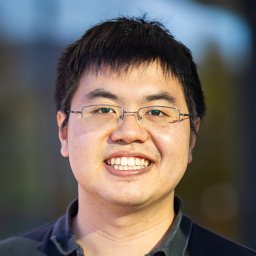 Yilun Du合作论文数Kempner Institute, Harvard University;Harvard John A. Paulson School of Engineering and Applied Sciences, Harvard University1
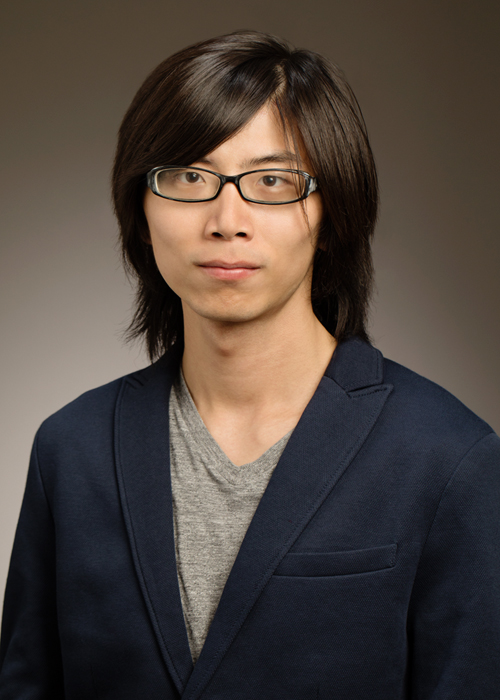 Bin Hu合作论文数Coordinated Science Laboratory, Department of Electrical and Computer Engineering, University of Illinois at Urbana-Champaign1
 Dinghuai Zhang (张鼎怀)合作论文数Mila - Quebec Artificial Intelligence Institute;Univrsity of Montreal1
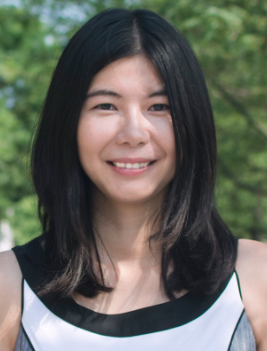 Zhou Yu (俞舟)合作论文数Department of Computer Science, Fu Foundation School of Engineering and Applied Science, Columbia University;Arklex AI;South Park Commons1
 Gerhard Neumann合作论文数Lehrstuhl für Autonome Lernende Roboter, Institut für Anthropomatik und Robotik, Karlsruher Institut für Technologie1
 Sham M. Kakade合作论文数Kempner Institute, Harvard University1
 Kathleen McKeown合作论文数Department of Computer Science, Columbia University1
 Karsten Kreis合作论文数NVIDIA1
 Francois Charton合作论文数Facebook AI Research;Meta AI1




