Ignacio Martín Baró, compañero jesuita, fue y sigue siendo ejemplo de entrega al ser humano sin condiciones y a todo riesgo, cuando la honestidad intelectual y el amor lo exigen. Mostró que la academia está para orientar la pasión de los pueblos por la dignidad. Desde lo profundo de El Salvador, donde le arrebataron la vida, inspiró la seriedad con la verdad de los excluidos y de nosotros mismos. Carlos Martín Beristain nos entrega en este libro el diálogo de una amistad que sigue viva hoy, enfrentando las mismas luchas y las mismas esperanzas de Ignacio. Francisco de Roux
Bake-prozesuak garatzeko justizia trantsizionalak proposatzen dituen hainbat neurri erabil ditzakegu. Ikerketa honek Latinoamerikan azken hamarkada hauetan gertatutakoaz hausnartzea du helburu, haien esperientziatikikasgaiak ateratzeko asmotan. 4.899 inkestaren bitartez, 5 herrialdetako biztanleen iritziak jaso dira. Emaitzak aztertuta, honako neurri hauek adiskidetzeko bidean paper garrantzitsua jokatzen dutela ondoriozta dezakegu: iragana eta indarkeriaren garaia jorratzea funtsezkoa da eta, nahiz eta emozio negatiboak azaleratu, indarkeriaren biktimengan batik bat, hedatutako neurrien eraginkortasunean eragin handia du. Gainera, neurriok eraginkorrak direla sumatzen denean, giro soziala hobetzen dute, elkartasuna eta erakundeenganako konfiantza berrituz.
espanolEste boletin da cuenta de las investigaciones realizadas por el Hegoa respecto a las violaciones de derechos humanos contra la poblacion saharaui, y analiza el papel de dicha investigacion y el enfoque de derechos humanos en la busqueda de salidas politicas al conflicto. Se da cuenta de los resultados de dos grandes investigaciones, El Oasis de la Memoria publicado en 2012, basada en 261 casos, donde se analizan los hechos, impactos y demandas de las victimas. Ademas se recogen las conclusiones de una investigacion y exhumacion de 8 personas desaparecidas, encontradas en dos fosas comunes en el desierto en la zona de Meheris-Amgala, llevada a cabo junto con un equipo forense de la Sociedad de ciencias Aranzadi en 2013. Se analizan las implicaciones de estos estudios y se proponen las lineas de trabajo para la transformacion del conflicto que logre una salida el conflicto politico que se encuentra bloqueada desde hace decadas. La solucion politica tiene que ir unida a la agenda de reconstruccion del tejido social basada en una cultura de derechos humanos. Y el Sahara dejar de ser un conflicto olvidado. EnglishThis newsletter introduces the research work done by Hegoa regarding human rights violations against the Saharawi population, and analyzes the role of such research and, in particular, of the human rights approach in the search for a political solution to the conflict. newsletter takes account of the conclusions of two recent research projects. One is The Oasis of Memory, published in 2012 , in which the experiences and claims of 261 victims, are analysed. second consists of the findings of an exhumation of 8 missing people found in two mass graves in the area of the Meheris - Amgala desert. This study was carried out in 2013 by a forensic team from the Aranzadi Sciences Society. political implications of both these studies are analyzed and a number of proposals are made as to how political progress can be rescued from decades of paralysis. conclusion is that the political solution must be founded on a human rights agenda centred on the reconstruction of the social fabric. Western Sahara conflict needs to re-emerge from its recent neglect.
El presente volumen analiza el impacto de la violencia colectiva en sus victimas directas y en la sociedad en general, y el desafio que supone la reconstruccion de las relaciones sociales, las bases de la convivencia y el respeto a los derechos humanos. El estudio abre con los aspectos mas contextuales y amplios de la violencia colectiva para centrarse despues en el impacto de esta sobre los afectados: sobre su bienestar psicosocial y sus creencias basicas pero tambien en la capacidad de resistencia de las victimas como sujetos activos y algunas reacciones de crecimiento post-traumatico. La tercera parte analiza el papel de la memoria y el perdon: las comisiones de la verdad y reconciliacion en contextos de transicion politica. Finalmente se presentan algunos estudios sobre la educacion para la paz y los modelos de trabajo mas relevantes dentro del ambito escolar. Los diferentes capitulos incluyen asimismo los instrumentos de medida mas importantes para cada uno de los temas analizados. Todo ello con el objetivo ultimo de desarrollar una «politica positiva» que ofrezca los elementos necesarios para la construccion de una cultura de paz. CARLOS MARTIN BERISTAIN es medico y doctor en psicologia. Colabora con el Instituto de Derechos Humanos Pedro Arrupe, y ha sido consultor de comisiones de verdad y organismos de derechos humanos. Es autor, entre otras obras, de Reconstruir el tejido social.
OBJECTIVES:Epidemiologic research on collective violence (violence exerted by and within groups in pursuit of political, social or economic goals) is very scarce despite its growing recognition as a major public health issue. This paper describes the conceptual model and design of one of the first research studies conducted in Spain aiming to assess the impact of collective violence in the health status of its victims (study known as ISAVIC, based on its Spanish title Impacto en la SAlud de la VIolencia Colectiva).METHODS:Starting with a comprehensive but non-systematic review of the literature, the authors describe the sequelae likely produced by collective violence and propose a conceptual model to explain the nature of the relationships between collective violence and health status. The conceptual model informed the ISAVIC study design and its measurement instruments.RESULTS:The possible sequelae of collective violence, in the physical, emotional and social dimensions of health, are described. Also, the review distinguishes the likely impact in primary and secondary victims, as well as the interplay with the social environment. The mixed methodological design of the ISAVIC study supports the coherence of the conceptual model described.CONCLUSIONS:The ISAVIC study suggests that collective violence may affect the main dimensions of the health status of its victims, in intimate relation to the societal factors where it operates. It is necessary to validate these results with new studies.
Objective: Despite the significant influence of collective violence on the health status of its victims, there are still many gaps in our understanding of the nature of the functional limitations this violence produces and its impact on victims’ wellbeing and quality of life. The ISAVIC study was carried out in the autonomous region of the Basque Country from 2005-2008 to estimate the effects of collective violence on health. The assessment included victims’ perceptions of these sequelae and their impact on health. Methods: A purposive sample of 36 primary victims was selected through contact networks and mediators. The victims’ perceptions were collected through semi-structured in-depth interviews, which were later analyzed according to the study’s conceptual framework. Results: The victims’ testimony suggests that they were profoundly traumatized by the collective violence experienced, which was often not yet completely overcome and significantly impaired their quality of life. The main functional, physical, emotional and social limitations described by the victims were identified. Conclusions: The qualitative results of this study are coherent with those obtained through the parametric phase of the ISAVIC study and provide a more complete overview of the nature of the sequelae of collective violence and its impact on quality of life. These results should be verified in larger studies and the influence of the social context on the relationship between collective violence and health should be analyzed in greater depth.
Objetivo: A pesar de la importancia de la violencia colectiva en la salud, aún quedan muchas lagunas sobre la naturaleza de las lesiones que produce y su relación con el bienestar y la calidad de vida de sus víctimas. Durante los años 2005-2008 se realizó en el País Vasco el estudio ISAVIC para estimar los efectos de este tipo de violencia en la salud. El estudio intentó comprender las características de las secuelas de la violencia colectiva en la salud de las víctimas a partir de sus percepciones. Métodos: Se seleccionó una muestra intencional de 36 víctimas primarias, a través de redes de contactos y mediadores. Se realizaron entrevistas en profundidad semiestructuradas, analizadas en función del modelo conceptual del estudio. Resultados: Los testimonios sugieren que las víctimas han experimentado un proceso traumático de gran intensidad que no han superado en su totalidad y que es causa de una importante pérdida de calidad de vida. Se describen las principales limitaciones funcionales observadas en términos físicos, emocionales y sociales. Conclusiones: Los resultados cualitativos son coherentes con los obtenidos mediante instrumentos estandarizados, a los que dotan de mayor sentido al explicar la naturaleza de las limitaciones de la salud. También permiten intuir algunas de las relaciones entre las diferentes limitaciones funcionales y su impacto en la calidad de vida. Conviene verificar los resultados con muestras más amplias de víctimas y profundizar en el estudio de la relación entre violencia y salud, incluyendo el impacto del contexto social.Objective: Despite the significant influence of collective violence on the health status of its victims, there are still many gaps in our understanding of the nature of the functional limitations this violence produces and its impact on victims' wellbeing and quality of life. The ISAVIC study was carried out in the autonomous region of the Basque Country from 2005-2008 to estimate the effects of collective violence on health. The assessment included victims' perceptions of these sequelae and their impact on health. Methods: A purposive sample of 36 primary victims was selected through contact networks and mediators. The victims' perceptions were collected through semi-structured in-depth interviews, which were later analyzed according to the study's conceptual framework. Results: The victims' testimony suggests that they were profoundly traumatized by the collective violence experienced, which was often not yet completely overcome and significantly impaired their quality of life. The main functional, physical, emotional and social limitations described by the victims were identified. Conclusions: The qualitative results of this study are coherent with those obtained through the parametric phase of the ISAVIC study and provide a more complete overview of the nature of the sequelae of collective violence and its impact on quality of life. These results should be verified in larger studies and the influence of the social context on the relationship between collective violence and health should be analyzed in greater depth.
 Dario Paez合作论文数Social Psychology Department, University of the Basque Country24
 Bernard Rimé合作论文数Faculty of Psychology and Educational Sciences, University of Louvain7Patrick Kanyangara合作论文数7Izarzugaza M I合作论文数6
 Itziar Fernandez-Villanueva合作论文数6Markez Iñaki合作论文数6
 Itziar Larizgoitia合作论文数6
 Maitane Arnoso合作论文数Dept Social Psychol, Univ Basque Country4
 florentino moreno martin合作论文数Dept Social Work & Differential Psychol, Univ Complutense Madrid4Larizgoitia Arantza合作论文数4González-Castro José Luis合作论文数Department of Educational Science, University of Burgos4
 Elza Techio合作论文数4
 Ioseba Iraurgi Castillo合作论文数Dirección de Drogodependencias del Gobierno Vasco4
 Manuel Cardenas合作论文数Universidad de Valparaíso3Javier Ballesteros合作论文数2manzanos bilbao合作论文数2
 Angela Iranzo Dosdad合作论文数Dept Relac Int & Humanidades, Univ Deusto2
 Ioseba Iraurgi合作论文数2
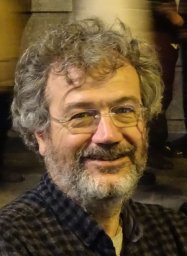 Pau Perez-Sales合作论文数Grupo de Acción Comunitaria2
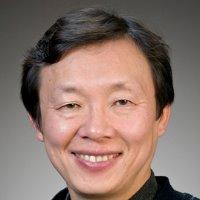 James H. Liu合作论文数School of Psychology, Massey University2
 Díaz Darío合作论文数2Retolaza Ander合作论文数2
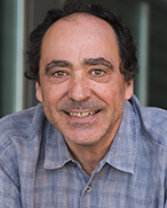 Jordi Alonso Caballero合作论文数Department of Medicine and Life Sciences, University Pompeu Fabra;Centro de Investigación Biomédica en Red de Epidemiología y Salud Pública;Institut Hospital del Mar d'Investigacions Mèdiques2Giorgia Doná合作论文数Refugee Research Centre;University of East;Refugee Research Centre, University of East2
 Joseph De Rivera合作论文数2Amalio Blanco Abarca合作论文数2
 Agustin Espinosa合作论文数Departament de Sistemes Informítics i Computació, Universitat Politècnica de València2Sonia Mayordomo Lopez合作论文数2
 Alberto Fernandez Liria合作论文数Alcalá de Henares, Hospital Universitario Príncipe de Asturias2
 Nekane Basabe合作论文数Department of Social Psychology and Methodology of Behaviour Sciences, University of the Basque Country2maria angeles bilbao ramirez合作论文数1
 Eran Halperin合作论文数The Hebrew University of Jerusalem1Ubillos-Landa Silvia合作论文数1
 Elena Zubieta合作论文数Departamento de Psicología Social;Metodología de las Ciencias del Comportamiento;Universidad del País Vasco;Metodología de las Ciencias del Comportamiento, Universidad del País Vasco1Dario Paez Rovira合作论文数1
 Maite Garaigordobil合作论文数UPV/EHU, Universidad del Pais Vasco1
 M. Ángeles Bilbao合作论文数The Pontifical Catholic University of Valparaíso1
 M. Brinton Lykes合作论文数Boston College1




