As Large Language Models (LLMs) are increasingly deployed in social and strategic scenarios, it becomes critical to understand where and why their behavior diverges from that of humans. While behavioral game theory (BGT) provides a framework for analyzing behavior, existing models do not fully capture the idiosyncratic behavior of humans or black-box, non-human agents like LLMs. We employ AlphaEvolve, a cutting-edge program discovery tool, to directly discover models of human and LLM behavior from data, thereby enabling open-ended discovery of structural factors driving human and LLM behavior. Our analysis on iterated rock-paper-scissors reveals that frontier LLMs can be capable of deeper strategic behavior than humans. These results provide a foundation for understanding structural differences driving differences in human and LLM behavior in strategic interactions.
N-agent ad hoc teamwork (NAHT) is a newly introduced challenge in multi-agent reinforcement learning, where controlled subteams of varying sizes must dynamically collaborate with varying numbers and types of unknown teammates without pre-coordination. The existing learning algorithm (POAM) considers only independent learning for its flexibility in dealing with a changing number of agents. However, independent learning fails to fully capture the inter-agent dynamics essential for effective collaboration. Based on our observation that transformers deal effectively with sequences with varying lengths and have been shown to be highly effective for a variety of machine learning problems, this work introduces a centralized, transformer-based method for N-agent ad hoc teamwork. Our proposed approach incorporates historical observations and actions of all controlled agents, enabling optimal responses to diverse and unseen teammates in partially observable environments. Empirical evaluation on a StarCraft II task demonstrates that MAT-NAHT outperforms POAM, achieving superior sample efficiency and generalization, without auxiliary agent-modeling objectives.
Learning to collaborate with previously unseen partners is a fundamental generalization challenge in multi-agent learning, known as Ad Hoc Teamwork (AHT). Existing AHT approaches often adopt a two-stage pipeline, where first, a fixed population of teammates is generated with the idea that they should be representative of the teammates that will be seen at deployment time, and second, an AHT agent is trained to collaborate well with agents in the population. To date, the research community has focused on designing separate algorithms for each stage. This separation has led to algorithms that generate teammates with limited coverage of possible behaviors, and that ignore whether the generated teammates are easy to learn from for the AHT agent. Furthermore, algorithms for training AHT agents typically treat the set of training teammates as static, thus attempting to generalize to previously unseen partner agents without assuming any control over the set of training teammates. This paper presents a unified framework for AHT by reformulating the problem as an open-ended learning process between an AHT agent and an adversarial teammate generator. We introduce ROTATE, a regret-driven, open-ended training algorithm that alternates between improving the AHT agent and generating teammates that probe its deficiencies. Experiments across diverse two-player environments demonstrate that ROTATE significantly outperforms baselines at generalizing to an unseen set of evaluation teammates, thus establishing a new standard for robust and generalizable teamwork.
Large Language Model (LLM) agents have demonstrated impressive capabilities for social interaction and are increasingly being deployed in situations where they might engage with both human and artificial agents. These interactions represent a critical frontier for LLM-based agents, yet existing evaluation methods fail to measure how well these capabilities generalize to novel social situations. In this paper, we introduce a method for evaluating the ability of LLM-based agents to cooperate in zero-shot, mixed-motive environments using Concordia, a natural language multi-agent simulation environment. Our method measures general cooperative intelligence by testing an agent's ability to identify and exploit opportunities for mutual gain across diverse partners and contexts. We present empirical results from the NeurIPS 2024 Concordia Contest, where agents were evaluated on their ability to achieve mutual gains across a suite of diverse scenarios ranging from negotiation to collective action problems. Our findings reveal significant gaps between current agent capabilities and the robust generalization required for reliable cooperation, particularly in scenarios demanding persuasion and norm enforcement.
Two desiderata of reinforcement learning (RL) algorithms are the ability to learn from relatively little experience and the ability to learn policies that generalize to a range of problem specifications. In factored state spaces, one approach towards achieving both goals is to learn state abstractions, which only keep the necessary variables for learning the tasks at hand. This paper introduces Causal Bisimulation Modeling (CBM), a method that learns the causal relationships in the dynamics and reward functions for each task to derive a minimal, task-specific abstraction. CBM leverages and improves implicit modeling to train a high-fidelity causal dynamics model that can be reused for all tasks in the same environment. Empirical validation on manipulation environments and Deepmind Control Suite reveals that CBM's learned implicit dynamics models identify the underlying causal relationships and state abstractions more accurately than explicit ones. Furthermore, the derived state abstractions allow a task learner to achieve near-oracle levels of sample efficiency and outperform baselines on all tasks.
Current approaches to learning cooperative multi-agent behaviors assume relatively restrictive settings. In standard fully cooperative multi-agent reinforcement learning, the learning algorithm controls all agents in the scenario, while in ad hoc teamwork, the learning algorithm usually assumes control over only a single agent in the scenario. However, many cooperative settings in the real world are much less restrictive. For example, in an autonomous driving scenario, a company might train its cars with the same learning algorithm, yet once on the road, these cars must cooperate with cars from another company. Towards expanding the class of scenarios that cooperative learning methods may optimally address, we introduce N-agent ad hoc teamwork (NAHT), where a set of autonomous agents must interact and cooperate with dynamically varying numbers and types of teammates. This paper formalizes the problem, and proposes the Policy Optimization with Agent Modelling (POAM) algorithm. POAM is a policy gradient, multi-agent reinforcement learning approach to the NAHT problem, that enables adaptation to diverse teammate behaviors by learning representations of teammate behaviors. Empirical evaluation on tasks from the multi-agent particle environment and StarCraft II shows that POAM improves cooperative task returns compared to baseline approaches, and enables out-of-distribution generalization to unseen teammates.
Current approaches to learning cooperative multi-agent behaviors assume relatively restrictive settings. In fully cooperative multi-agent reinforcement learning, the learning algorithm controls all agents in the scenario, while in ad hoc teamwork, the learning algorithm usually assumes control over only a single agent in the scenario. However, many cooperative settings in the real world are much less restrictive. For example, in an autonomous driving scenario, a company might train its cars to cooperate with each other, yet once on the road, these cars must additionally cooperate with cars from other companies. Towards expanding the class of scenarios that cooperative learning methods may optimally address, this research agenda introduces and proposes to study N-agent ad hoc teamwork (NAHT), where a set of autonomous agents must interact and cooperate with dynamically varying numbers and types of teammates.
While combining imitation learning (IL) and reinforcement learning (RL) is a promising way to address poor sample efficiency in autonomous behavior acquisition, methods that do so typically assume that the requisite behavior demonstrations are provided by an expert that behaves optimally with respect to a task reward. If, however, suboptimal demonstrations are provided, a fundamental challenge appears in that the demonstration-matching objective of IL conflicts with the return-maximization objective of RL. This paper introduces D-Shape, a new method for combining IL and RL that uses ideas from reward shaping and goal-conditioned RL to resolve the above conflict. D-Shape allows learning from suboptimal demonstrations while retaining the ability to find the optimal policy with respect to the task reward. We experimentally validate D-Shape in sparse-reward gridworld domains, showing that it both improves over RL in terms of sample efficiency and converges consistently to the optimal policy in the presence of suboptimal demonstrations.
Current approaches to multi-agent cooperation rely heavily on centralized mechanisms or explicit communication protocols to ensure convergence. This paper studies the problem of distributed multi-agent learning without resorting to centralized components or explicit communication. It examines the use of distribution matching to facilitate the coordination of independent agents. In the proposed scheme, each agent independently minimizes the distribution mismatch to the corresponding component of a target visitation distribution. The theoretical analysis shows that under certain conditions, each agent minimizing its individual distribution mismatch allows the convergence to the joint policy that generated the target distribution. Further, if the target distribution is from a joint policy that optimizes a cooperative task, the optimal policy for a combination of this task reward and the distribution matching reward is the same joint policy. This insight is used to formulate a practical algorithm (DM$^2$), in which each individual agent matches a target distribution derived from concurrently sampled trajectories from a joint expert policy. Experimental validation on the StarCraft domain shows that combining (1) a task reward, and (2) a distribution matching reward for expert demonstrations for the same task, allows agents to outperform a naive distributed baseline. Additional experiments probe the conditions under which expert demonstrations need to be sampled to obtain the learning benefits.
We study interpretable recidivism prediction using machine learning (ML) models and analyze performance in terms of prediction ability, sparsity, and fairness. Unlike previous works, this study trains interpretable models that output probabilities rather than binary predictions, and uses quantitative fairness definitions to assess the models. This study also examines whether models can generalize across geographic locations. We generated black-box and interpretable ML models on two different criminal recidivism datasets from Florida and Kentucky. We compared predictive performance and fairness of these models against two methods that are currently used in the justice system to predict pretrial recidivism: the Arnold PSA and COMPAS. We evaluated predictive performance of all models on predicting six different types of crime over two time spans. Several interpretable ML models can predict recidivism as well as black-box ML models and are more accurate than COMPAS or the Arnold PSA. These models are potentially useful in practice. Similar to the Arnold PSA, some of these interpretable models can be written down as a simple table. Others can be displayed using a set of visualizations. Our geographic analysis indicates that ML models should be trained separately for separate locations and updated over time. We also present a fairness analysis for the interpretable models. Interpretable ML models can perform just as well as non-interpretable methods and currently-used risk assessment scales, in terms of both prediction accuracy and fairness. ML models might be more accurate when trained separately for distinct locations and kept up-to-date.
Current approaches to multi-agent cooperation rely heavily on centralized mechanisms or explicit communication protocols to ensure convergence. This paper studies the problem of distributed multi-agent learning without resorting to explicit coordination schemes. The proposed algorithm (DM) leverages distribution matching to facilitate independent agents’ coordination. Each individual agent matches a target distribution of concurrently sampled trajectories from a joint expert policy. The theoretical analysis shows that under some conditions, if each agent optimizes their individual distribution matching objective, the agents increase a lower bound on the objective of matching the joint expert policy, allowing convergence to the joint expert policy. Further, if the distribution matching objective is aligned with a joint task, a combination of environment reward and distribution matching reward leads to the same equilibrium. Experimental validation on the StarCraft domain shows that combining the reward for distribution matching with the environment reward allows agents to outperform a fully distributed baseline. Additional experiments probe the conditions under which expert demonstrations need to be sampled in order to outperform the fully distributed baseline.
The UT Austin Villa team, from the University of Texas at Austin, won the 2021 RoboCup 3D Simulation League, winning all 19 games the team played. During the course of the competition the team scored 108 goals while conceding only 5. Additionally the team finished second in the overall RoboCup 3D Simulation League technical challenge by finishing second in both the fat proxy and scientific challenges. This paper details and analyzes the results of the 2021 competition, and also presents a new deep RL learning framework that was presented during the scientific challenge.
We are pleased to have the opportunity of this rejoinder, which permits a broader discussion on the issues surrounding proprietary models than in our article, "The age of secrecy and unfairness in recidivism prediction."We would like to thank all discussants, and the Editor for organizing the discussion.We will start our discussion with the response to Eugenie Jackson and Christina Mendoza, who represent Northpointe, the company that owns COMPAS. Eugenie Jackson and Christina Mendoza from Northpointe
In our current society, secret algorithms make important decisions about individuals. There has been substantial discussion about whether these algorithms are unfair to groups of individuals. While noble, this pursuit is complex and ultimately stagnating because there is no clear definition of fairness and competing definitions are largely incompatible. We argue that the focus on the question of fairness is misplaced, as these algorithms fail to meet a more important and yet readily obtainable goal: transparency. As a result, creators of secret algorithms can provide incomplete or misleading descriptions about how their models work, and various other kinds of errors can easily go unnoticed. By partially reverse engineering the COMPAS algorithm -- a recidivism-risk scoring algorithm used throughout the criminal justice system -- we show that it does not seem to depend linearly on the defendant's age, despite statements to the contrary by the algorithm's creator. Furthermore, by subtracting from COMPAS its (hypothesized) nonlinear age component, we show that COMPAS does not necessarily depend on race, contradicting ProPublica's analysis, which assumed linearity in age. In other words, faulty assumptions about a proprietary algorithm lead to faulty conclusions that go unchecked without careful reverse engineering. Were the algorithm transparent in the first place, this would likely not have occurred. The most important result in this work is that we find that there are many defendants with low risk score but long criminal histories, suggesting that data inconsistencies occur frequently in criminal justice databases. We argue that transparency satisfies a different notion of procedural fairness by providing both the defendants and the public with the opportunity to scrutinize the methodology and calculations behind risk scores for recidivism.
 Peter Stone合作论文数Department of Computer Science, College of Natural Sciences, The University of Texas at Austin;Sony AI;Sony Research9
 Elad Liebman合作论文数College of Natural Sciences, The University of Texas at Austin;Amazon5
 Ishan Durugkar合作论文数Sony AI5
 Cynthia Rudin合作论文数Pierre R. Lamond Department of Electrical and Computer Engineering, Pratt School of Engineering, Duke University3
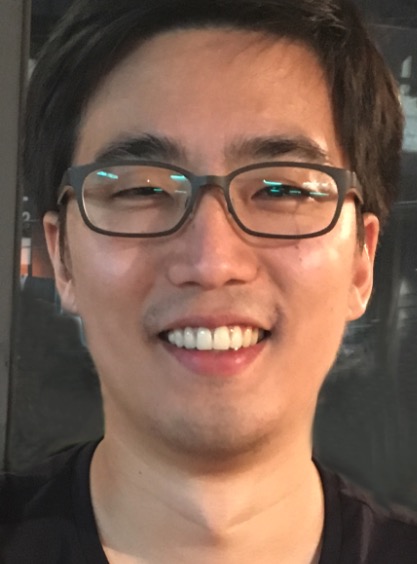 Yoonchang Sung合作论文数Department of Computer Science, The University of Texas at Austin2
 Beau Coker合作论文数Harvard University, Harvard University2
 Jiaxun Cui (崔佳勋)合作论文数Cockrell School of Engineering, The University of Texas at Austin2
 Zixia Jia合作论文数Beijing Institute for General Artificial Intelligence1
 Elizaveta Tennant合作论文数Machine Intelligence Lab, Department of Computer Science, University College London1Jesse Clifton合作论文数1Shuqing Shi合作论文数1Ziyan Wang合作论文数King's College London;Huawei R&D UK1Bhrij Patel合作论文数1
 Xuesu Xiao合作论文数Department of Computer Science, George Mason University;Unsorted1
 Lewis Hammond合作论文数Future of Humanity Institute, University of Oxford;The Wilson Center;Cooperative AI Foundation1
 Zhaowei Zhang合作论文数Hangzhou Dianzi Univ, Coll Elect Informat, Hangzhou 310018, Zhejiang, Peoples R China1
 Bin Han合作论文数University of Washington1
 Ruben Manrique合作论文数Univ Los Andes, Syst & Comp Engn Dept, Bogota, Colombia1
 Minsuk Chang合作论文数School of Computing, KAIST Naver AI LAB1
 Dylan Hadfield-Menell合作论文数Department of Electrical Engineering and Computer Science, Massachusetts Institute of Technology1
 Alexander Sasha Vezhnevets合作论文数DeepMind1
 Joel Z Leibo合作论文数Google DeepMind;King's College London1
 Zizhao Wang合作论文数University of Texas at Austin;OpenAI1
 Zilong Zheng (郑子隆)合作论文数Center for Vision, Cognition, Learning, and Autonomy1
 José Hernández-Orallo合作论文数Valencian Research Institute for Artificial Intelligence, Universitat Politecnica de Valencia;Department of Computer Systems and Computation, School of Informatics, Universitat Politècnica de València;Leverhulme Centre for the Future of Intelligence, University of Cambridge;Centre for the Study of Existential Risk, University of Cambridge1
 Yali Du合作论文数Department of Computer Science, University College London1
 Bo Liu合作论文数Department of Computer Science, University of Texas at Austin1Patrick Macalpine合作论文数University of Texas at Austin1
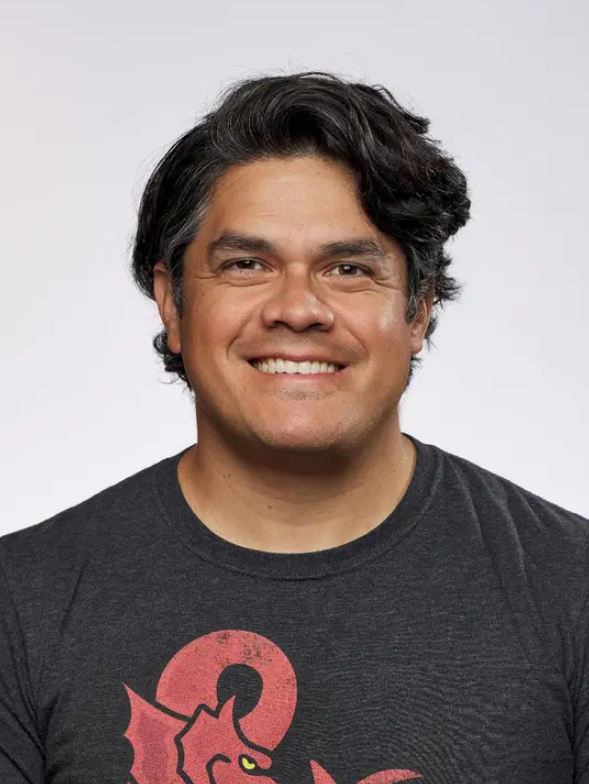 Pablo Samuel Castro合作论文数Google DeepMind1
 Natasha Jaques合作论文数Paul G. Allen School of Computer Science & Engineering, College of Engineering, University of Washington;Google DeepMind1
 John P Agapiou合作论文数Google DeepMind1
 Garrett Warnell合作论文数U.S. Army DEVCOM Army Research Laboratory1
 Luis Felipe Giraldo合作论文数Department of Biomedical Engineering, School of Engineering, Universidad de los Andes1
 Yuke Zhu (朱玉可)合作论文数Department of Computer Science, College of Natural Sciences, The University of Texas at Austin;NVIDIA1
 Mengmeng Wang (王蒙蒙)合作论文数College of Computer Science & Technology, Zhejiang University of Technology1
 Nicanor Quijano合作论文数Ohio State University;Department of Electrical Engineering;Department of Electrical Engineering, Ohio State University1
 Yang Liu合作论文数Amazon, AGI1
 Marwa Abdulhai合作论文数Berkeley Artificial Intelligence Research Lab, University of California, Berkeley1
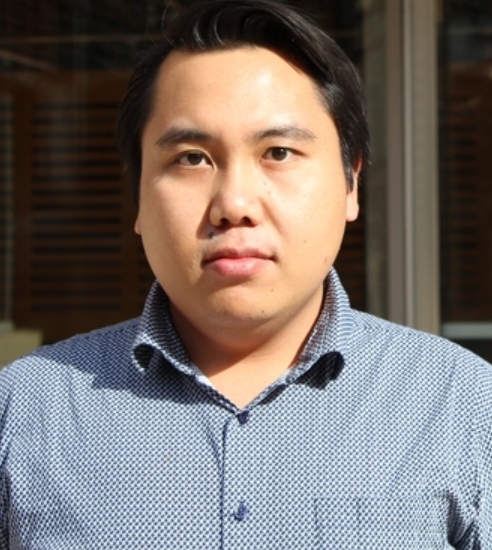 Muhammad Arrasy Rahman合作论文数University of Texas at Austin1
 Edgar A. Duéñez-Guzmán合作论文数Phygtl, Inc;Gibran AI1
 William Macke合作论文数MITRE1
 Fangwei Zhong (钟方威)合作论文数School of Artificial Intelligence, Beijing Normal University1




