Large language models (LLMs) largely rely on Transformers, where self-attention provides global token interaction but does not explicitly encode the locality of natural language. We study whether lightweight depthwise convolutions can supply this local inductive bias without materially increasing model size. Our macro-level ablation compares convolution at 17 locations in a Qwen3 Transformer block and finds the best results when convolution is applied to the projected queries, keys, and values before attention. A subsequent micro-level study favors a residual depthwise convolution with kernel size k=3, without additional normalization or activation. Across Qwen3 models and several pre-training data budgets, this design improves the average accuracy on seven downstream benchmarks while adding less than 0.01% parameters. A representation-level case study further suggests that the convolution makes repeated token IDs more sensitive to their immediate context. These results support depthwise convolution as a lightweight complement to self-attention for modeling short-range token interactions.
Tool-using language-model agents introduce security failures that go beyond unsafe text: they can disclose protected objects, write persistent memory, send messages, modify databases, or trigger harmful code and tool effects. Existing evaluations often collapse these stages into a single attack success rate, making it difficult to tell whether a model merely agreed with an attacker or actually produced observable harm. We introduce SafeClawBench, a staged benchmark for tool-using agent security with 600 controlled adversarial tasks across six attack families: direct and indirect prompt injection, tool-return injection, memory poisoning, memory extraction, and ambiguity-driven unsafe inference. SafeClawBench reports three separate endpoints: semantic attack acceptance, audit-visible harm evidence, and sandbox-observed tool/state harm. Evaluating five agent endpoints under four prompt-level policies, we find that these endpoints capture different failure modes. Without additional prompt protection, semantic failure rates vary widely across models, from 9.0
Current document parsing methods compete primarily on model architecture innovation, while systematic engineering of training data remains underexplored. Yet SOTA models of different architectures and parameter scales exhibit highly consistent failure patterns on the same set of hard samples, suggesting that the performance bottleneck stems from shared deficiencies in training data rather than architecture itself. Building on this finding, we present , which advances the state of the art solely through data engineering and training strategy optimization while keeping the 1.2B-parameter architecture of completely fixed. At its core is a Data Engine co-designed around coverage, informativeness, and annotation accuracy: Diversity-and-Difficulty-Aware Sampling expands training data from under 10M to 65.5M samples while correcting distribution shift; Cross-Model Consistency Verification leverages output agreement among heterogeneous models to assess sample difficulty and generate reliable annotations; the Judge-and-Refine pipeline improves annotation quality for hard samples through render-then-verify iterative correction. A three-stage progressive training strategy – large-scale pre-training, hard sample fine-tuning, and GRPO alignment – sequentially exploits these data at different quality tiers. On the evaluation front, we fix element-matching biases in OmniDocBench v1.5 and introduce a Hard subset, establishing the more discriminative OmniDocBench v1.6 protocol. Without any architectural modification, achieves 95.69 on OmniDocBench v1.6, improving over the same-architecture baseline by 2.71 points and surpassing all existing methods including models with over 200× more parameters.
We introduce MinerU2.5, a 1.2B-parameter document parsing vision-language model that achieves state-of-the-art recognition accuracy while maintaining exceptional computational efficiency. Our approach employs a coarse-to-fine, two-stage parsing strategy that decouples global layout analysis from local content recognition. In the first stage, the model performs efficient layout analysis on downsampled images to identify structural elements, circumventing the computational overhead of processing high-resolution inputs. In the second stage, guided by the global layout, it performs targeted content recognition on native-resolution crops extracted from the original image, preserving fine-grained details in dense text, complex formulas, and tables. To support this strategy, we developed a comprehensive data engine that generates diverse, large-scale training corpora for both pretraining and fine-tuning. Ultimately, MinerU2.5 demonstrates strong document parsing ability, achieving state-of-the-art performance on multiple benchmarks, surpassing both general-purpose and domain-specific models across various recognition tasks, while maintaining significantly lower computational overhead.
We introduce Intern-S1-Pro, the first one-trillion-parameter scientific multimodal foundation model. Scaling to this unprecedented size, the model delivers a comprehensive enhancement across both general and scientific domains. Beyond stronger reasoning and image-text understanding capabilities, its intelligence is augmented with advanced agent capabilities. Simultaneously, its scientific expertise has been vastly expanded to master over 100 specialized tasks across critical science fields, including chemistry, materials, life sciences, and earth sciences. Achieving this massive scale is made possible by the robust infrastructure support of XTuner and LMDeploy, which facilitates highly efficient Reinforcement Learning (RL) training at the 1-trillion parameter level while ensuring strict precision consistency between training and inference. By seamlessly integrating these advancements, Intern-S1-Pro further fortifies the fusion of general and specialized intelligence, working as a Specializable Generalist, demonstrating its position in the top tier of open-source models for general capabilities, while outperforming proprietary models in the depth of specialized scientific tasks.
General-purpose agents such as OpenClaw are increasingly used as autonomous tool users, but their coding ability is difficult to measure under SWE-bench: a generic agent does not by itself satisfy the clean Docker workspace, patch, and prediction contract required for scoring. We introduce Claw-SWE-Bench, a multilingual SWE-bench-style benchmark and adapter protocol that makes heterogeneous agent harnesses, or claws, comparable under fair settings including a fixed prompt, runtime budget, workspace contract, patch extraction procedure, and evaluator. The full benchmark contains 350 GitHub issue-resolution instances across 8 languages and 43 repositories, drawn from SWE-bench-Multilingual and SWE-bench-Verified-Mini after future-commit cleanup. We also release Claw-SWE-Bench Lite for faster validation, which is an 80-instance subset selected by a cost-aware, rank-aware procedure over 17 calibration columns. On the full benchmark, OpenClaw with a minimal direct-diff adapter scores only 19.1% Pass@1, whereas the full adapter reaches 73.4% with the same GLM 5.1 backbone, showing that adapter design is essential for enabling OpenClaw-style harnesses to perform coding tasks effectively. Across an OpenClaw × nine-model sweep and a five-claw × two-model sweep, model choice changes Pass@1 by 29.4 pp and harness choice by 27.4 pp under fixed models; systems with similar accuracy can differ substantially in total API cost. Claw-SWE-Bench therefore treats harness and cost accounting as first-class axes of SWE-style coding-agent evaluation, providing both a full benchmark and a low-cost reference set for reproducible comparison. The data is available at https://github.com/opensquilla/claw-swe-bench and https://huggingface.co/datasets/TokenRhythm/Claw-SWE-Bench.
The paradigm of Large Language Models (LLMs) is currently defined by auto-regressive (AR) architectures, which generate text through a sequential “brick-by-brick” process. Despite their success, AR models are inherently constrained by a causal bottleneck that limits global structural foresight and iterative refinement. Diffusion Language Models (DLMs) offer a transformative alternative, conceptualizing text generation as a holistic, bidirectional denoising process akin to a sculptor refining a masterpiece. However, the potential of DLMs remains largely untapped as they are frequently confined within AR-legacy infrastructures and optimization frameworks. In this Perspective, we identify ten fundamental challenges ranging from architectural inertia and gradient sparsity to the limitations of linear reasoning that prevent DLMs from reaching their “GPT-4 moment”. We propose a strategic roadmap organized into four pillars: foundational infrastructure, algorithmic optimization, cognitive reasoning, and unified multimodal intelligence. By shifting toward a diffusion-native ecosystem characterized by multi-scale tokenization, active remasking, and latent thinking, we can move beyond the constraints of the causal horizon. We argue that this transition is essential for developing next-generation AI capable of complex structural reasoning, dynamic self-correction, and seamless multimodal integration.
High-quality main content extraction from web pages is a critical prerequisite for constructing large-scale training corpora. While traditional heuristic extractors are efficient, they lack the semantic reasoning required to handle the structural heterogeneity of the modern web. Conversely, well-pretrained generative Large Language Models (LLMs) offer superior document comprehension but are prohibited by excessive computational costs, limited context windows, and hallucination risks when applied at web scale. We present Dripper, a lightweight framework that resolves these bottlenecks through four contributions: (1) We reformulate extraction as a constrained sequence labeling task using SLMs (Small Language Models). This paradigm eliminates generative hallucinations and achieves exceptional efficiency, reaching a throughput of 3.08 pages per second on a single A100 GPU. (2) We construct WebMainBench, a rigorous benchmark of 7,809 human-annotated pages covering 5,434 unique domains and multiple languages. Evaluations show our Dripper-0.6B model outperforms heuristics like Trafilatura and rivals massive models like DeepSeek-V3.2(685B), GPT-5 and Gemini-2.5-Pro, offering an optimal efficiency-accuracy trade-off. (3) We demonstrate infrastructural value by pre-training a 1B model on a Dripper-curated corpus (63B tokens). This model significantly outperforms baselines in downstream tasks, proving the critical role of extraction quality and the effectiveness of our framework. (4) We open-source the Dripper-0.6B weights and codebase to facilitate the construction of high-quality datasets.
Partial Label Learning (PLL) aims to train multi-class classifiers from examples where each instance is associated with a set of candidate labels, among which the ground-truth label is assumed to be included. While most existing studies assume that partial labels are both instance-independent and reliable, such assumptions often break down in real-world scenarios, where candidate sets may depend on instance-specific features and even exclude the ground-truth label. In this work, we investigate a more realistic setting termed Unreliable Instance-Dependent Partial Label Learning (UIDPLL). To address the challenges in UIDPLL, we propose a novel framework named Neighborhood-guided Label Augmentation and Pruning (NLAP). NLAP exploits the structural consistency among neighboring instances to progressively refine candidate label sets and integrates classifier feedback to disambiguate labels during training. This progressive mechanism improves classification performance by tackling ambiguity caused by noise and instance dependency in partial labels. Furthermore, we provide theoretical guarantees for the proposed NLAP framework, demonstrating that label ambiguity can be effectively reduced through appropriate refinement and pruning procedures. Extensive experiments on both benchmark and real-world datasets demonstrate the robustness and effectiveness of the proposed method.
Private neural network training on encrypted data provides strong protection for user identity privacy. However, its substantial computational overhead hinders practical deployment, particularly on large-scale datasets where full training cycles may require thousands of hours. Current FHE-based privacy-preserving approaches predominantly rely on transfer learning, which appends and fine-tunes new classification layers atop pre-trained models. Nevertheless, transfer learning often introduces significant redundancy when applied to new datasets, considerably prolonging the encrypted training process. To mitigate this, we propose a simple yet efficient FHE-compatible algorithm for sample importance evaluation. A core innovation is that sample scoring is performed exclusively during the initial training epoch, eliminating repeated full-dataset evaluations throughout the entire training cycle and drastically reducing computational overhead. Furthermore, our evaluation method entirely avoids polynomial homomorphic evaluations, circumventing a major source of latency in existing FHE-based methods. Building on this, we design a sample reorganization strategy that leverages a carefully initialized encrypted data layout to rapidly assemble informative samples and prune redundant ones, thereby substantially reducing the effective dataset size. Experimental results demonstrate that our approach achieves a 30
Diffusion Transformers (DiTs) have become a de facto backbone of modern visual generation, and nearly every major axis of their design – tokenization, attention, conditioning, objectives, and latent autoencoders – has been extensively revisited. The residual stream that governs how information accumulates across layers, however, has been directly inherited from the original Transformer. In this paper, we present a systematic empirical analysis of cross-layer information flow in DiTs, jointly along depth and denoising timestep, and identify three concrete symptoms of traditional residual addition, namely monotonic forward magnitude inflation, sharp backward gradient decay, and pronounced block-wise redundancy. Motivated by this diagnosis, we propose Diffusion-Adaptive Routing (DAR), a drop-in residual replacement that performs learnable, timestep-adaptive, and non-incremental aggregation over the history of sublayer outputs. Moreover, the proposed DAR is compatible with many modern Transformer enhancement methods, such as REPA. On ImageNet 256×256, DAR improves SiT-XL/2 by 2.11 FID (7.56 vs. 9.67) and matches the baseline's converged quality with 8.75× fewer training iterations. Stacked on top of REPA, it yields a 2× training acceleration in the early stage, suggesting cross-layer information routing as an underexplored design axis in diffusion modeling, one that operates orthogonally to existing representation-alignment objectives. Beyond pretraining, DAR can also be applied during the fine-tuning stage of large-scale T2I models and preserves high-frequency details during Distribution Matching Distillation.
Polarization, as an intrinsic property of light along side amplitude and phase, has demonstrated great potential in a variety of downstream applications by providing valuable physical cues encoded in the degree of polarization (DoP) and the angle of polarization (AoP). Polarimetric imaging aims to acquire these polarimetric parameters by capturing polarized snapshots. However, compared to conventional imaging, it faces greater difficulties due to the presence of polarizers, which attenuate light intensity in a spatially variant manner. Such attenuation complicates exposure control: a short exposure leads to low signal-to-noise ratio and color distortion, whereas a relatively long exposure increases the risk of motion blur and saturation. To address these challenges, this work proposes PolFusion+, a unified framework that robustly produces clean and sharp polarized snapshots by complementarily fusing a degraded pair of short-exposed noisy and long-exposed blurry inputs. Building upon a polarization-aware three-phase fusion scheme, PolFusion+ introduces two key advancements. First, to handle saturation in the blurry snapshot, the irradiance restoration phase extracts and rectifies color information from both inputs, effectively mitigating saturation-induced degradation. Second, to ensure physically faithful polarization reconstruction, the framework explicitly models the individual characteristics and interdependencies of the DoPandAoP, enabling their joint restoration. These improvements are supported by a degradation-oriented neural network tailored to the fusion scheme. Experimental results demonstrate that PolFusion+ achieves state-of-the-art performance, effectively benefiting downstream applications.
Diffusion language models (DLMs) have recently emerged as a strong alternative to autoregressive models by enabling parallel text generation. To improve inference efficiency and KV-cache compatibility, prior work commonly adopts block-based diffusion, decoding tokens block by block. However, this paradigm suffers from a structural limitation that we term Boundary-Induced Context Truncation (BICT): undecoded tokens near block boundaries are forced to commit without access to nearby future context, even when such context could substantially reduce uncertainty. This limitation degrades decoding certainty and generation quality, especially for tasks requiring precise reasoning, such as mathematical problem solving and code generation. We propose Deferred Commitment Decoding (DCD), a novel, training-free decoding strategy that mitigates this issue. DCD maintains a certainty-aware sliding window over masked tokens, resolving low-uncertainty tokens early while deferring high-uncertainty tokens until sufficient contextual evidence becomes available. Extensive experiments across multiple diffusion language models, benchmarks, and caching configurations show that DCD improves generation accuracy by 1.73
Recent video generation research has focused heavily on isolated actions, leaving interactive motions-such as hand-face interactions-largely unexamined. These interactions are essential for emerging biometric authentication systems, which rely on interactive motion-based anti-spoofing approaches. From a security perspective, there is a growing need for large-scale, high-quality interactive videos to train and strengthen authentication models. In this work, we introduce a novel paradigm for animating realistic hand-face interactions. Our approach simultaneously learns spatio-temporal contact dynamics and biomechanically plausible deformation effects, enabling natural interactions where hand movements induce anatomically accurate facial deformations while maintaining collision-free contact. To facilitate this research, we present InterHF, a large-scale hand-face interaction dataset featuring 18 interaction patterns and 90,000 annotated videos. Additionally, we propose InterAnimate, a region-aware diffusion model designed specifically for interaction animation. InterAnimate leverages learnable spatial and temporal latents to effectively capture dynamic interaction priors and integrates a region-aware interaction mechanism that injects these priors into the denoising process. To the best of our knowledge, this work represents the first large-scale effort to systematically study human hand-face interactions. Qualitative and quantitative results show InterAnimate produces highly realistic animations, setting a new benchmark. Code and data will be made public to advance research.
While fully homomorphic encryption (FHE) provides strong security guarantees for privacy-preserving machine learning, its practical adoption is hindered by substantial computational overhead where bootstrapping operations dominate 84% of inference latency. Existing single-image approaches further suffer from significant ciphertext slot underutilization in convolutional layers. To address these limitations, we propose a novel multi-image homomorphic convolution framework featuring three key innovations: (1) simultaneous multi-image packing enabling batched convolution at single-image computational cost, (2) complex number encoding utilizing both real and imaginary components to double slot utilization, and (3) sparsity-aware ciphertext merging that dynamically consolidates underutilized slots. Our comprehensive evaluation on CIFAR-10, CIFAR-100 and ImageNet using ResNet architectures demonstrates that processing 16 images concurrently achieves 74% latency reduction compared to single-image baselines while maintaining a 30% speed advantage over multi-image variants of prior work with negligible accuracy degradation (< 0.7% drop). These results establish a new state-of-the-art for efficient and scalable privacy-preserving inference.
While web data quality is crucial for large language models, most curation efforts focus on filtering and deduplication,treating HTML-to-text extraction as a fixed pre-processing step. Existing web corpora rely on heuristic-based extractors like Trafilatura, which struggle to preserve document structure and frequently corrupt structured elements such as formulas, codes, and tables. We hypothesize that improving extraction quality can be as impactful as aggressive filtering strategies for downstream performance. We introduce MinerU-HTML, a novel extraction pipeline that reformulates content extraction as a sequence labeling problem solved by a 0.6B-parameter language model. Unlike text-density heuristics, MinerU-HTML leverages semantic understanding and employs a two-stage formatting pipeline that explicitly categorizes semantic elements before converting to Markdown. Crucially, its model-based approach is inherently scalable, whereas heuristic methods offer limited improvement pathways. On MainWebBench, our benchmark of 7,887 annotated web pages, MinerU-HTML achieves 81.8% ROUGE-N F1 compared to Trafilatura's 63.6%, with exceptional structured element preservation (90.9% for code blocks, 94.0% for formulas). Using MinerU-HTML, we construct AICC (AI-ready Common Crawl), a 7.3-trillion token multilingual corpus from two Common Crawl snapshots. In controlled pretraining experiments where AICC and Trafilatura-extracted TfCC undergo identical filtering, models trained on AICC (62B tokens) achieve 50.8% average accuracy across 13 benchmarks, outperforming TfCC by 1.08pp-providing direct evidence that extraction quality significantly impacts model capabilities. AICC also surpasses RefinedWeb and FineWeb on key benchmarks. We publicly release MainWebBench, MinerU-HTML, and AICC, demonstrating that HTML extraction is a critical, often underestimated component of web corpus construction.
Label shift, which investigates the adaptation of label distributions between the fixed source and target domains, has attracted significant research interests and broad applications in offline settings. In real-world scenarios, however, data often arrives as a continuous stream. Addressing label shift in online learning settings is paramount. Existing strategies, which tailor traditional offline label shift techniques to online settings, have degraded performance due to the inconsistent estimation of label distributions and violation of convex assumption for theoretical guarantee. In this paper, we propose a novel method to ensure consistent adaptation to online label shift. We construct a new convex risk estimator that is pivotal for both online optimization and theoretical analysis. Furthermore, we enhance an optimistic online algorithm as the base learner and refine the classifier using an ensemble method. Theoretically, we derive a universal dynamic regret which achieves minimax optimal. Extensive experiments on both real-world datasets and human motion task demonstrate the superiority of our method comparing existing methods.
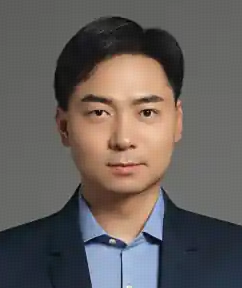 Dacheng Tao (陶大程)合作论文数College of Computing & Data Science, Nanyang Technological University;Lee Kong Chian School of Medicine, Nanyang Technological University;DaXiao Robot66
 Chang Xu (徐畅)合作论文数School of Computer Science, Faculty of Engineering, The University of Sydney62
 Yunhe Wang (王云鹤)合作论文数Noah's Ark Lab, Huawei Technologies59
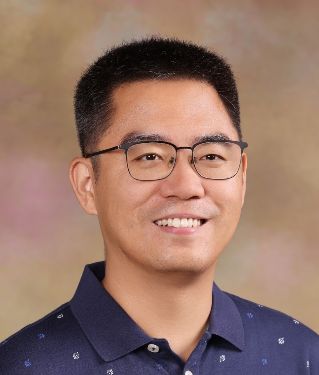 Boxin Shi (施柏鑫)合作论文数Institute for Artificial Intelligence, Peking University47
 Hanting Chen合作论文数Noah's Ark Lab, Huawei Technologies Ltd.26
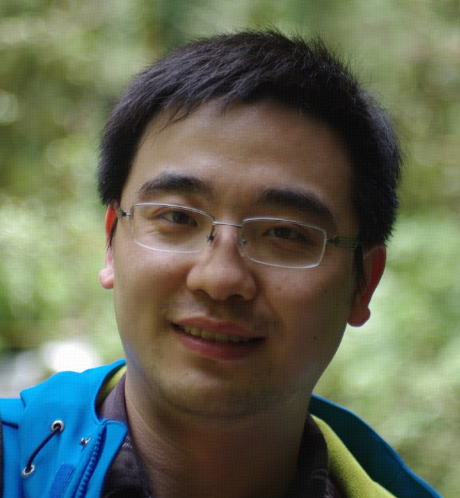 Bo Geng合作论文数Fintopia22
 Yehui Tang (唐业辉)合作论文数Noah's Ark Lab, Huawei Technologies Ltd.20
 Yangxi Li合作论文数19
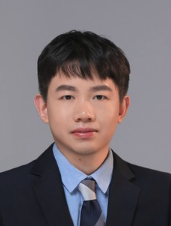 Yong Luo (罗勇)合作论文数School of Computer Science, Wuhan University18
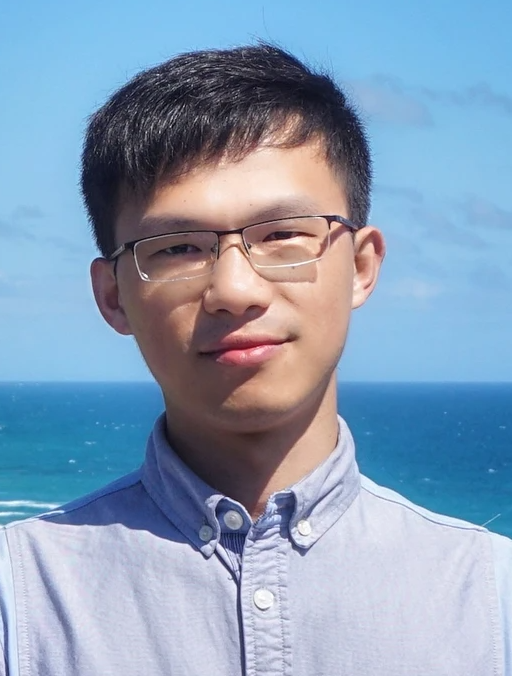 Conghui He (何聪辉)合作论文数Shanghai AI Laboratory18
 Chu Zhou (周矗)合作论文数Digital Content and Media Sciences Research Division, National Institute of Informatics17
 Kai Han (韩凯)合作论文数Noah's Ark Lab, Huawei Technologies;State Key Lab of Computer Science, University of Chinese Academy of Sciences17
 Chunjing Xu合作论文数Huawei Technologies Co. Ltd.17
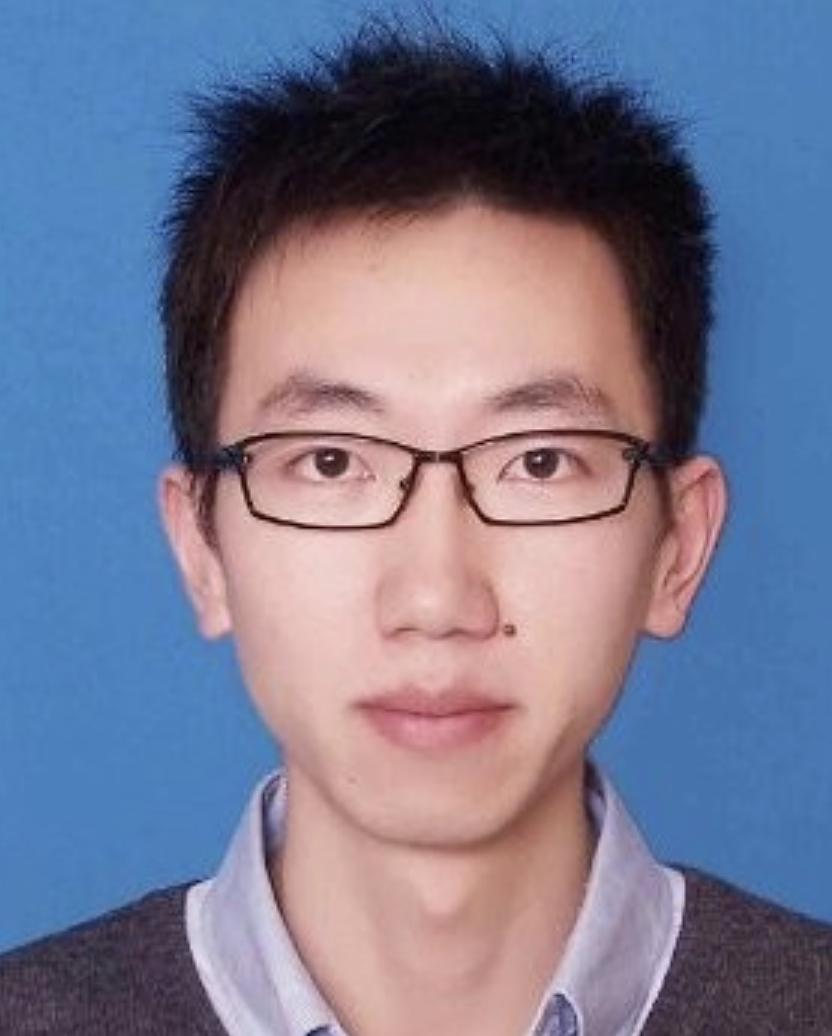 Miaojing Shi (史淼晶)合作论文数Department of Control Science & Engineering, Tongji University16
 Bin Wang (王斌)合作论文数Shanghai AI Laboratory15
 Yuchuan Tian合作论文数State Key Lab of General AI, School of Intelligence Science and Technology, Peking University13
 Tianyu Guo合作论文数Noah's Ark Lab, Huawei Technologies Ltd.12
 Dahua Lin (林達華)合作论文数Department of Information Engineering, The Chinese University of Hong Kong;Shanghai Artificial Intelligence Laboratory12
 Yu Qiao (乔宇)合作论文数Multimedia Laboratory, Shenzhen Institutes of Advanced Technology, Chinese Academy of Sciences;Shanghai AI Laboratory;Shenzhen University of Advanced Technology11
 Shan You (游山)合作论文数SenseTime11
 Linjun Yang合作论文数Microsoft11
 Wei Li合作论文数10
 Bo Zhang合作论文数Shanghai Aritifcal Intelligence Laboratory10Zhenjiang Jin合作论文数9
 Zhaohui Yang合作论文数Key Lab of Machine Perception, Department of Machine Intelligence, Peking University9Yuan Qu合作论文数8Yizhen Zhang合作论文数8
 Yixing Xu合作论文数Advanced Micro Devices, Inc.8Minggui Teng合作论文数8
 Jin Han (韩金)合作论文数Graduate School of Information Science and Technology, University of Tokyo;SonyAI;National Institute of Informatics8
 Jianyuan Guo (郭健元)合作论文数Department of Computer Science, City University of Hong Kong8Pei Chu合作论文数7Linke Ouyang (欧阳霖柯)合作论文数Shanghai Artificial Intelligence Laboratory7
 Jiantao Qiu (邱剑涛)合作论文数Shanghai Artificial Intelligence Laboratory7
 Xiansheng Hua (华先胜)合作论文数School of Mechanical Engineering, Tongji University;Institute of AI for Engineering, Tongji University7Botian Shi合作论文数Shanghai AI Laboratory7
 Yonggang Wen合作论文数School of Computer Science and Engineering, Nanyang Technological University;College of Engineering, Nanyang Technological University7Xiaomeng Zhao合作论文数6Zhiyuan Zhao合作论文数6
 Xinghao Chen合作论文数Efficient AI Lab, Huawei6Ning Ding合作论文数State Key Lab of General AI, School of Intelligence Science and Technology, Peking University6
 Jiaqi Wang (王佳琦)合作论文数Shanghai AI Laboratory6
 Tiejun Huang (黄铁军)合作论文数Institute for Artificial Intelligence, Peking University;School of Computer Science, Peking University;Beijing Academy of Artificial Intelligence;National Engineering Laboratory for Video Technology, Peking University6
 Zhengjun Zha (查正军)合作论文数Department of Automation, School of Information Science and Technology, University of Science and Technology of China;National Engineering Laboratory for Brain-Inspired Intelligence Technology and Application, University of Science and Technology of China6
 Kai Chen (陈恺)合作论文数6
 Qi Tian (田奇)合作论文数Huawei Consumer Business Group;Guangming Laboratory6Fukai Shang合作论文数5zhenxing dong (董振兴)合作论文数5




