PurposeThis study sought to explore the experiences of receiving formal psychological support following non-vascular-related lower limb amputation.Materials and MethodsSemi-structured interviews were conducted with five individuals (3 males, 2 females, aged 38-56) with lower limb loss. Two had unilateral above knee amputations, one a unilateral below knee amputation, one a unilateral through-knee amputation, and one had bilateral above knee amputations. Four had trauma-related amputations, one had an amputation due to cancer. All had received formal psychological support related to their amputation. Interpretative phenomenological analysis was used for the analysis of the data.ResultsFour themes were developed: (1) The need for psychological intervention-denial and acceptance; (2) "Safe space"-being valued, heard, and validated; (3) The importance of focus, transparency, and specialist knowledge; and (4) The most helpful techniques and approaches. Findings highlighted aspects of psychological support that were helpful and unhelpful.ConclusionsThe findings provide insights into how psychological support for people with lower limb amputation can be delivered or improved. These include: the importance of psychological support throughout rehabilitation; the benefit of transparency and collaborative goal setting in sessions; and participants' preference that those providing formal psychological support have limb loss specific knowledge.
This study explored the psychological sense-making of people with amputations towards their phantom limb pain. Interviews with eight participants were analysed using interpretative phenomenological analysis. Four themes were developed: (1) 'Everybody just thinks you're some kind of freak': Making personal and social sense of phantom limb pain; (2) 'If you talk about them, they seem to come': Perceiving phantom limb pain as an externalised threat; (3) 'The sooner you accept things, truthfully accept things, then life becomes better': Achieving acceptance; and (4) The unrecognised role of psychology in managing phantom limb pain. The findings indicate the importance of (1) education and validation for those who experience phantom limb pain, (2) education around the role psychology can have in managing with the pain, and (3) psychological interventions being available and offered to those with phantom limb pain.
BackgroundPsychotic-like experiences (PLEs) refer to subclinical experiences consistent with psychosis that may include hearing, feeling or seeing things that others cannot, or experiencing unusual beliefs. These experiences appear to be more common during the perinatal period. There appear to be barriers which make it difficult for midwives to support mothers with mental health difficulties. However, it is important that midwives can provide support with PLEs.AimThis study aimed to explore UK midwives' perspectives and perceptions relating to mothers' psychotic-like experiences in the perinatal period.MethodsA qualitative study using semi-structured interviews with ten midwives recruited online was conducted. Transcripts were analysed using thematic analysis.ResultsFour themes were developed: (1) Identifying psychotic-like experiences would be complicated; (2) Psychotic-like experiences can feel overwhelming for women and midwives; (3) This is my responsibility: I'll do what I can to support women even if it's hard; and (4) The system feels unsafe and insecure which makes the anticipated role in supporting psychotic-like experiences harder.ConclusionMidwives described their motivation to support mothers with PLEs but articulated many factors that made this difficult. The results emphasise the importance of training and guidance for midwives to support them being able to offer support and information to mothers. The findings also highlight the importance of systemic safety for midwives alongside support through supervision and reflective practice.
This qualitative study aimed to explore how having a child with a functionally univentricular heart (FUH) affected mothers’ experiences of their parental role and identity. Eight mothers whose children had undergone the Fontan surgical procedure were recruited via social media. Interviews were completed using Microsoft Teams and audio-recorded, then transcribed and analysed using Interpretative Phenomenological Analysis. Four themes were identified: (1) being a “heart mum”, (2) managing competing roles: “you have to wear lots of different hats all at the same time”, with subthemes (a) promoting normality vs. protecting the child and (b) mothering vs. nursing roles, (3) loss and regaining of identity and (4) relinquishing control and letting go of caring roles. Parenting children and young people (CYP) with FUH presented significant challenges to mothers’ parental role and identity, which they managed in various ways. There are implications for health services to support mothers with their psychological wellbeing, managing nursing roles and their child’s transition to adulthood.
ObjectivesGovernment-enforced lockdown restrictions associated with preventing the spread of the COVID-19 virus had a series of unintended, negative effects. One group of individuals whose physical and mental health was significantly and disproportionately impacted were those with Parkinson's. However, research has been mainly cross-sectional, with no previous study qualitatively following up participants through both lockdowns and the easing of restrictions. Consequently, this study aimed to provide a detailed understanding of the experience of lockdowns and the easing of restrictions on the physical and mental health of people with Parkinson's.MethodData from semi-structured interviews collected at four time points across an 18-month period (May 2020 - September 2021) from the same participants (six men and four women) were analysed using interpretative phenomenological analysis.ResultsThree themes were derived: (1) Wrestling with a Parkinson's identity, agency and control during the pandemic; (2) The encroachment and acceleration of a Parkinson's future; and (3) Recalibrating priorities from COVID-19 to Parkinson's.ConclusionAs currently the only published study to provide an in-depth longitudinal analysis with this population, we used a more dynamic theoretical account, Strauss and Corbin's theory of illness trajectories, to understand the findings and suggest ways of supporting individuals with Parkinson's in this stage of the pandemic. The scale and breadth of the support needed is a significant challenge for current statutory systems.
PurposeThis systematic review aimed to synthesize qualitative research on parents' psychological experiences following their child's diagnosis of congenital heart disease (CHD).MethodsA systematic search of six electronic databases (CINAHL, Embase, MEDLINE, PsycINFO, PubMed and Web of Science) was completed, inclusive of all years up to May 2022. Any included articles were synthesized using thematic synthesis and appraised using the Critical Appraisal Skills Programme Qualitative Checklist.ResultsTwenty-six articles were included. Four main themes, and 11 subthemes, emerged from the synthesis. Theme 1 (unpreparedness for the diagnosis) concerned parents' shock, guilt and anger regarding the diagnosis. Theme 2 (the overwhelming reality of CHD) described parental fear about decision-making and the child's prognosis, and the influence of professionals on parents' well-being. Theme 3 (mourning multiple losses) detailed parents' sadness at losing their envisioned pregnancy, birth and parenthood experiences. Theme 4 (redefining hopes to reach an acceptance of CHD) described parents' adjustment to the diagnosis.ConclusionsReceiving a child's CHD diagnosis was a uniquely challenging situation for parents. The findings provided insight into the emotions parents experienced and how they adjusted to the diagnosis psychologically. As parents' experiences were significantly influenced by their interactions with professionals, clinicians should offer compassion, validation and clear information throughout the diagnosis process.
Purpose Research highlights the differences and unique experiences of military veterans experiencing amputation compared to civilians. This review aimed to synthesise qualitative research exploring the experience of amputation and rehabilitation among existing or previous members of the military.Methods A systematic search of six databases (PsycINFO, AMED, MEDLINE, CINAHL, Web of Science and Scopus) was undertaken in March 2022. The results of 17 papers reporting 12 studies published between 2009 and 2022 were synthesised using a meta-ethnographic approach to generate new interpretations reflecting the experiences of members of the military who have experienced limb loss.Results Three themes were developed from the data: (1) Making the physical and psychological transition to life after amputation; (2) The role of the military culture in rehabilitation; and (3) The impact of relationships and the gaze of others during rehabilitation and beyond.Conclusions Military veterans with limb loss experience difficulties in navigating civilian healthcare systems and gaining appropriate support away from the military. Rehabilitation professionals, with psychological training or mentoring, involved in the care of military veterans following amputation could offer psychological support during the transition to civilian life and targeted therapies to veterans experiencing high levels of pain, and facilitate peer support programmes.
While the direct effects of COVID-19 caused widespread global suffering and death, the indirect impacts—via public health preventative measures and a reduction in health and social care services—were also devastating for many. More recently, it has also become increasingly apparent that such measures have had disproportionate effects, exacerbating existing health inequalities. For caregivers of individuals with chronic illness, the effects have been marked and particularly so for informal caregivers of individuals with complex neurodegenerative conditions such as Parkinson’s. Nine informal caregivers (all partners: three men and six women) of individuals with Parkinson’s in England took part in individual semi-structured interviews on two occasions (December 2021/January 2022 and May 2022). The interviews focused on their experiences of supporting their partner, their own challenges, and how these evolved and changed post-lockdown. Interpretative phenomenological analysis was used to inform the methodology and analysis. Four themes were identified: (i) lockdown-induced revolution and evolution of the relationship dynamic with partner; (ii) fighting to be seen, heard, and understood in healthcare encounters; (iii) making sense of, and adapting to, risk in a time of COVID-19; and (iv) managing isolation and need for support during and after lockdown. The negative effects from both the lockdowns and the depletion of usual health and support services were apparent for all participants. Existing vulnerabilities from being a carer of an individual with complex needs were also exacerbated. As caregivers worked hard to mitigate these effects for their partners as much as possible, the long-term impact of such intense psychological and practical effort was often considerable. Ultimately, a simple restoration of pre-lockdown support levels may be insufficient to facilitate a successful return to optimal levels of support and wellbeing.
This study aimed to investigate fathers' lived experiences of stillbirth through the lens of continuing bonds and use of objects. Semi-structured interviews were conducted with six fathers who had experienced stillbirth from 20 weeks gestation. Interpretative phenomenological analysis revealed five themes: loss and continued bonds in a mother-mediated dynamic, objects as manifestations of relational and meaningful memories, exerting existence and continued connection to others, continued bond through physical presence and evolving expressions of love and fatherhood. Findings offer a novel understanding of the relationship between objects and continued bonds, where objects are seen to facilitate this bond through varying means, including physical manifestation of the deceased and representation of the father-infant relationship. The study places importance on fathers' involvement in creating objects permeated with meaning and memories, and of validating fathers' experiences of loss rather than considering these men merely as partners of a mother who lost their own baby.
The covid-19 pandemic and associated restrictions have had significant consequences for those living with chronic conditions such as Parkinson's. The restrictions in access to healthcare as well as reductions in social care, family support and community activities have led to decreases in physical and mental wellbeing. However, not everyone has been equally affected and the predictors of distress are currently being investigated worldwide. Here we use data from a UK survey conducted by the charity Parkinson's UK during Summer 2021 to look at physical and social predictors of wellbeing of people with Parkinson's. Specifically, we aimed to look at the combined effects of worsening physical symptoms, social isolation and loneliness on psychological wellbeing when controlling for age, gender and disease duration. The data from 612 participants were analysed using multiple regression analyses and showed that worsened physical symptoms, loneliness and social isolation each independently predicted wellbeing thus showing the impact of both physical symptoms and social factors. Improved access to healthcare and physical activity is needed to help improve physical health. However, addressing the social needs of people with Parkinson's is also important, and not only during a pandemic. Additional interventions may be needed to reduce social isolation and loneliness as there may be added barriers for people with Parkinson's which need to be considered.
Many females engaged in sex work are mothers, often experiencing poverty, violence, marginalization, and psychological distress, factors also found to affect parental bonds. However, little is known about how this context impacts the bonding process. Given the ubiquity of sex work across geographical territories, understanding the relationship it has with mother-child bonding is an important international consideration in providing healthcare for sex working mothers and their children. Therefore, in this study we sought to explore women's experiences of bonding with their children in the context of sex work. We interviewed six women in the UK who were sex working during the first two years of their child's life about their bonding experiences and analyzed transcripts using Interpretative Phenomenological Analysis. We identified four themes were identified: (1) the complex process of bonding; (2) the role of powerlessness on bonding; (3) the powerful impact of receiving help, and (4) new perspectives of the body and sex work following motherhood. Findings contribute to the research literature on bonding by emphasizing the value of supportive care and the importance of social context, indicating specific factors to inform psychological support among sex working women.
This study explored the secondary school transition experiences of children with cleft lip and/or palate (CL/P). Data were collected via semi-structured interviews and analysed using interpretative phenomenological analysis (IPA). Participants were recruited from a National Health Service (NHS) specialist cleft service covering a large geographical area in the United Kingdom. Six participants with CL/P (aged 11–12 years old) in their first 12 months following transition to secondary school were interviewed. Four themes describe participants’ transition experiences: (a) managing and valuing difference: the impact on self-worth and identity; (b) managing and valuing difference within the social context; (c) disclosure and the process of informing others about CL/P; and (d) developing positive peer relationships. Children with CL/P experience several psychosocial challenges during the transition to secondary school. Professionals involved with working with and supporting these children (and their families), such as psychologists, school nurses or wellbeing staff, child psychiatrists, social workers, mental health nurses and paediatricians, should attend to these issues when preparing for this transition in order to foster resilience and adjustment.
Objectives The purpose of this study was to explore the experiences of individuals with Parkinson's through the theoretical lens of illness uncertainty during the first UK full lockdown period (March–June 2020) put in place due outbreak of the COVID-19 pandemic. Methods Individual semi-structured interviews were carried out via telephone in May 2020 with 10 individuals with Parkinson's (six men and four women) recruited from Parkinson's UK. Interviews were recorded and transcribed verbatim, and thematic analysis was adopted to analyse the resulting data. Results Four overarching themes emerged from the interview data: (1) COVID-19 amplifying existing fears and difficulties around the uncertainty of Parkinson's; (2) practical and psychological efforts to manage uncertainty; (3) benefit-finding as a way of acknowledging the positives of lockdown; (4) risk and future management in the context of uncertainty. Discussion Participants reported a range of implicit and explicit strategies to cope with the ‘double whammy’ of uncertainty caused by having Parkinson's during a global pandemic. While these were generally successful in maintaining well-being, it is important that such successful accounts are used to help inform novel strategies and interventions targeting individuals who might need additional support.
This chapter primarily examines the data collection and analysis method of interpretative phenomenological analysis (IPA) in which individuals’ experiences, and their meaning-making about their experiences, are the centre of research attention. Interpretative phenomenological analysis was developed with the vision to return the study of lived experience to the centre ground of research attention by cultivating a phenomenologically based methodology that was inherently psychological in nature. Interpretative phenomenological analysis treats language as disclosing participants’ being-in-the-world, and the meanings of this for them. It is an approach intended to explore how participants’ experience their world, and hence enable an insider’s perspective of the topic under study. This approach has emerged out of a set of philosophical and theoretical traditions that have given rise to a suite of qualitative research methods that can be characterized as phenomenological, or concerned with lived experience. This chapter examines the history and philosophical underpinnings of these phenomenological approaches, the key characteristics of IPA and practical considerations in conducting an IPA study.
There is a lack of research examining the mental health of practicing mediums, yet the nature of mediumship work inherently presents a number of challenges to the mental health of practitioners. In this study, we aimed to gain an understanding of how mediums experience their mental health in relation to their mediumistic practice and how they recognise and respond to psychological difficulties experienced by their clients. Fourteen mediums from the North West of England took part in one-to-one interviews, which were transcribed and subject to interpretative phenomenological analysis. Four themes were identified: from past traumas to mediumistic identity; spirit makes sense, mental illness is chaos; being resilient but vulnerable; and ethical mediumistic practice. The research highlights the value of not dismissing or attempting to change appraisals of valued aspects of mediums' anomalous experiences. However, the findings do indicate that support for exposure to clients' difficulties might be helpful.
Research indicates that adverse childhood experiences play a causal role in the development of poor health and social outcomes in adulthood. Despite this, research suggests that such experiences go undetected since spontaneous disclosure is unlikely, and practitioners are unlikely to ask. A project was developed in which practitioners were trained to routinely enquire about adversity in their daily practice. Four pilot services took part that worked directly and indirectly with children and young people, many of whom were exposed to multiple adverse experiences. The aim of this study was to construct an understanding of the experiences of these practitioners. Seven interviews were conducted, and the data was analysed using thematic analysis. The emerging themes were: change in knowledge, perception and practice; the emotional impact of hearing and responding to disclosures; confidence in asking and responding appropriately; making sense of the impact for clients; how and when to ask. Findings indicate that participants' change toward more adverse-experience-informed formulations of clients' difficulties ensure commitment to routine enquiry and changes in referral patterns and therapeutic practice. Suggestions are made with regard to the practicalities of routine enquiry and how services can best support practitioners who are embedding this skill into their practice.
This chapter sets out the use of interpretative phenomenological analysis to study lived experiences in healthcare and rehabilitation settings. The study focus is on patient and family members’ experiences of a mechanical ventilation weaning unit. The analysis highlighted participants’ perception of both themselves and the unit being different and special in a number of ways, particularly because the unit has the ability to choose who comes onto it, along with the difficulties surrounding the transition from unit to home. The process of transitioning from the unit back to home life was experienced as a difficult one as there were a range of barriers which impeded the discharge process. Although the present findings offer particular issues of consideration for specialist mechanical ventilation weaning units and ICUs, our description and application of IPA here serves an illustrative purpose for others interested in applying qualitative methods for similar purposes to other healthcare settings.
 Jezz Fox合作论文数21David Wilde合作论文数12
 Fiona Eccles合作论文数School of Health and Medicine, Lancaster University9
 Stephen Pettifer合作论文数Department of Computer Science, The University of Manchester8
 Jane Simpson合作论文数College of Arts and Social Sciences, The Australian National University6
 Andrew Crabtree合作论文数Mixed Reality Laboratory, School of Computer Science, Faculty of Science, University of Nottingham6
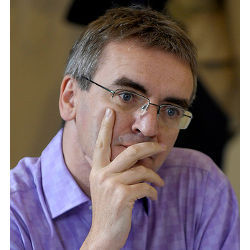 Tom Rodden合作论文数School of Computer Science, Faculty of Science, University of Nottingham5
 Fabrice Caillette合作论文数Advanced Interfaces Group;School of Computer Science;University of Manchester;School of Computer Science, University of Manchester5victoria molyneaux合作论文数4Anna Warm合作论文数4Emma L Patchick合作论文数4Ian Garner合作论文数4joanne murray合作论文数university of glasgow4Adrian J. West合作论文数4heather atkin合作论文数3Cathal Doyle合作论文数3Jai Kulkarni合作论文数3Claire McDonald合作论文数3Cairns Victoria合作论文数3
 Mark J Forshaw合作论文数Faculty of Sciences, Staffordshire University3catherine keen合作论文数2Sarah Butchard合作论文数2Caroline Malone合作论文数2Samantha Townsend合作论文数2Clare Dixon合作论文数2
 Hannah Wilson合作论文数Univ Med & Hlth Sci, Royal Coll Surg Ireland RCSI2
 Nicolo Zarotti合作论文数Sheffield Institute for Translational Neuroscience (SITraN),, University of Sheffield2Anja Wittkowski合作论文数Division of Psychology and Mental Health, School of Health Sciences, Faculty of Biology, Medicine and Health, The University of Manchester2Katherine Berry合作论文数Division of Psychology and Mental Health, School of Health Sciences, Faculty of Biology, Medicine and Health, The University of Manchester2
 Mark Hayward合作论文数2Sanderson Joanne合作论文数2McMahon Lindsay合作论文数2Seal Karen合作论文数2Hurrell Ruth合作论文数2Anderson Deborah L合作论文数2Paul Arnold合作论文数2Rushbrooke Elizabeth合作论文数2Donnellan Deanna合作论文数2
 Sheila Alison Payne合作论文数2
 John Hughes合作论文数Department of Computer Science, Brown University2
 Karen Quinn合作论文数2Candy Bamford合作论文数2
 Judith Sixsmith合作论文数Institute for Health and Social Change;Department Psychology;Manchester Metropolitan University;Institute for Health and Social Change, Manchester Metropolitan University2Amy Mawson合作论文数2
 Anna Daiches合作论文数2L. Seddon合作论文数2E. Patchick合作论文数1kate maciver合作论文数1




