This paper proposes a totally multiplier-less approximate reconstruction cosine modulated filter bank. The prototype filter is designed to obtain a computationally efficient, sharp transition width, finite impulse response (FIR) filter using the frequency response masking (FRM) approach combined with the canonic signed digit (CSD) representation of the coefficients. Meta-heuristic algorithms are deployed to optimize the performance of the filter bank. The algorithms are modified to suit the optimization problem, in which the objective function is non linear and the search space consists of integers
It has been documented that diseases can spread within an aircraft cabin from the sneezing, coughing or breathing of a sick passenger. To understand the spreading mechanism it is very important to quantify the airflow and droplet transmission around a sneezing/coughing incident. In this project, tracer gas experiments were carried out in a full-scale Boeing 767-300 mock-up to study the global transport process of contaminated air within the cabin. Computational fluid dynamics (CFD) simulation was also used to provide additional information for understanding the principle. A steady airflow field was simulated first and then it was compared with the experimental data. The global airflow patterns were similar to those observed experimentally. This velocity field was adopted as the initial condition for further unsteady pollutant transport simulation. Experimental and simulated results were compared and discussed to develop a relationship between concentration and airflow pattern, source location, transport direction, and ventilation rate. Finally, the overall picture of concentration evolution by both experimental and simulated approaches was discussed.
Examination of the critical observed temperature profiles will lead to the following conclusions: 1 Thick bottom slabs in deep sections (Sections 1 and 2) lead to lower than predicted temperatures and significant tensile stresses in these slabs. 2 The difference in temperature between the two webs of box girders are the source of a horizontal thermal gradient in deep box girder sections (Sections 1 and 2). For shallower section (Section 3), this was not observed. 3 The effect of horizontal temperature gradient cannot be ignored for deep sections when calculating continuity stresses. For shallow section this can be ignored. 4 The maximum seasonal displacement the bridge experienced during the 3-year period was found to be 226 mm. The Canadian standard CSA-S6-00 gives a good estimate for maximum temperature but seriously underestimates minimum temperature and differential temperature, for deep sections. Also, the code lacks guidance regarding design values for horizontal differential temperature.
The performance of a particle tracking algorithm which detects particle trajectories from discretely recorded particle positions could be substantially hindered by the input noise. In this paper, a particle tracking algorithm is developed which is robust against input noise. This algorithm employs the regression method instead of the extrapolation method usually employed by existing algorithms to predict future particle positions. If a trajectory cannot be linked to a particle at a frame, the algorithm can still proceed by trying to find a candidate at the next frame. The connectivity of tracked trajectories is inspected to remove the false ones. The algorithm is validated with synthetic data. The result shows that the algorithm is superior to traditional algorithms in the aspect of tracking long trajectories.
The evaluation of temperature data recorded on the world's longest bridge built over ice-covered water is presented. The data in question are the hourly recorded temperatures in three girder sections with variable geometry and ambient temperature, solar radiation, and wind speed measured on site from 1998 to 2000. The data were first carefully screened, and problematic records were identified and repaired. The temperatures were then spatially reduced to a set of thermal variables including average, differential, and residual temperatures. Extreme value analysis was performed to obtain 100 year return thermal loads. The results are compared with the provisions in the Canadian highway bridge design code (CAN/CSA-S6-00) and the original design temperatures for the bridge. Temperature distributions for maximum positive vertical differential temperatures during the recording period are plotted for the three girder sections. The observed unrestrained curvatures and nonlinear stresses are compared with those estimated by the Priestley model. Modifications are found to be necessary for extremely deep cross sections.Key words: concrete bridge, thermal response, statistical evaluation, average temperature, differential temperature, curvature, stress.
In complex ventilation systems with air recirculation, the contaminant concentration at the supply inlets is generally unknown, which limits the application of computational fluid dynamics (CFD) tools to simulate the indoor contaminant distribution. In this article, we develop a new algorithm that can deal with different ventilation scenarios while it requires minimum computing time. This algorithm divides indoor contaminant distribution into two parts: the contribution from inlets and the contribution from sources. The former can be obtained with the concentrations at inlets and volume fraction for each inlet, which is defined as the relative concentration when the boundary concentrations are 1 for the inlet and 0 for other inlets. The latter is calculated by setting the concentrations at all inlets as 0. By combining the contaminant transportation characteristics in rooms and system ducts, the algorithm does not require iteration to solve the contaminant distribution in actual ventilation systems. The demonstration results of two case studies show the great influence of duct configuration on indoor contaminant distribution.
Fresh air age is an important index to evaluate indoor environment. The conventional method for measuring or calculating fresh air age is only suitable for simple ventilation systems and not for central ventilation systems. In this paper, an algorithm for calculating fresh air-age in central ventilation system is presented, which is based on the analysis of air flow in duct and air mixing. An example is given to illustrate the algorithm. The fresh air age in every ventilated room and duct can be acquired after all rooms and duct are directly calculated in turn without iteration. The algorithm is suitable,for different central ventilation systems.
Air age is an important index to evaluate indoor air quality in ventilated rooms. Current definition of air age is limited to indoor part, i.e., the air age at the inlets of air supply diffusers is assumed to be zero. This work extends the air age concept to the so-called “total air age” by considering the impact of air delivery process on air age. The air age in duct is solved using one-dimensional flow characteristic, which includes the mixing process between airflows with different ages. It is then coupled with the room air age which is solved using computational fluid dynamics technique. An iterative algorithm is proposed to calculate total air age in general ventilation systems and a direct method is further derived for systems with only one air handling unit. Two examples are given to demonstrate the calculation of total air age and the distributions of total air age are compared with those of traditional air age.
Air-exchange efficiency is widely used to indicate the ventilation effect and indoor air quality in ventilated rooms. However, it does not take occupant distribution in the room into account and is thus limited. In this paper, a revised air-exchange efficiency (occupant air-exchange efficiency) that differentiates between different zones by considering different occupancy in each zone is developed. Results from studies of a large-space ventilation case, a personalized ventilation case, and a displacement ventilation case show that occupant air-exchange efficiency can better be used to evaluate the ventilation effect of a room.
Air age is an important index to evaluate indoor air quality in ventilated rooms. The traditional definition of air age is limited to the indoor part (i.e., the air age at the inlets of air supply diffusers is assumed to be zero). Total air age extends the traditional air age concept by considering the influence of air delivery process on air age distribution. In this paper, we report the development of an algorithm to calculate total air age in a room ventilated by multiple air-handling units (AHUs). Compared to the conventional iteration method, the new algorithm is much faster in obtaining a solution of total air age. The total air age distribution in a large space ventilated by 16 AHUs is calculated using the algorithm.
通风换气的新风年龄是评价室内空气品质的一个很重要指标, 传统的测量和计算方法不能适用于越来越普遍采用的集中通风系统. 通过分析空气在风道中的流动和多股空气混合时的新风年龄计算方法, 给出了适用于集中通风系统新风年龄的计算方法和示例. 该方法不需在各个房间之间进行迭代, 只需依次求解即可一次得到所有房间和风道中的新风年龄值 , 并能适用于常见的各种集中通风系统.
An algorithm is presented for designing digital filters with coefficients expressible as sums of signed power-of-two (SPT) terms. For each filter gain, the time complexity of the algorithm is a second-order polynomial in the filter order and is a first-order polynomial in the filter wordlength. Unlike conventional methods where each coefficient is allocated a fixed number of SPT terms, the author's method allows the number of SPT terms for each coefficient to vary subject to the number of SPT terms for the entire filter. This provides the possibility of finding a better filter without increasing the number of adders, which determines the realization cost for a given filter length. Application of the algorithm to finite impulse response (FIR) filter designs shows that it achieves up to 8.9 dB improvement over simulated annealing and mixed integer linear programing on the normalized peak ripples of example filters.< >
For a steady case, the generation of contaminant is steady and the contaminant age is determined by flow pattern and property of contaminant. In order to get the contaminant age distribution, the concentration of contaminant versus the time should be recorded. However, the measurement of contaminant concentration versus time is expensive and time-consuming and cannot be widely used by engineers. In this paper, the transport equation of contaminant age was derived based on the species equation of contaminant. It is consisted of three terms: convective, diffusive and source. The diffusive coefficient is the same as that of species equation and the source term is 1. One-dimensional case was analyzed and the influence of Pe number was discussed.
As a new numerical simulation method of airflow, error-pretreatment method are generated from the multi-grid method. They adopt a different way to fasten the calculation speed from other methods. Some samples arc selected to testify the error-pretreatment method. The result shows the method is efficient and correct.
It is well known that if each coefficient value of a digital filter is a sum of SPT terms, the filter can be implemented without using multipliers. In the past decade, several methods had been developed for the design of filters whose coefficient values are sums of SPT terms. Most of these methods are for the design of filters where all the coefficient values have the same number of SPT terms. In this paper, we present a new method for allocating different number of SPT terms to each coefficient value keeping the total number of SPT terms fixed. Our technique yields excellent results.
This paper presents a method to find the minimum number of adders for implementing a multiplier of a given multiplicand and the corresponding structure to realize it. In comparison with the widely used structure based on the canonic signed digit (CSD) expression of multiplicands, the number of adders required by using our structure is not more than that of the CSD structure for any multiplicand. The contiguous range of integer multiplicands whose corresponding multiplications can be implemented by no more than a given number of adders increases exponentially with the increase of the number of adders allowed. It is shown that the ratio of the largest contiguous integer range of our structure to that of the CSD structure is equal to 10.76 and 64.43, respectively, for using no more than 4 and 5 adders. Our method for replacing multipliers with shifters and adders is applied to the design of multiplierless digital filters. Experimental results show that the normalized peak ripples of the filters designed by our method is decreased by up to 4.2 dB over those obtained by the corresponding design method based on the CSD expression of filter coefficients
A decoupled full-dimension form is introduced for state models. In this form, the dimension of the state vector is time-invariant, which is equal to the dimension of the state-space at each time instant. Therefore, the dimension of the state vector is minimized from the time-variant point of view and all the state variables are independent. Moreover, the state vector in a state model of the decoupled full-dimension form is partitioned into two decoupled subvectors, each of which alone forms a subsystem. One of the subsystems is an FIR system whose state vector is dependent only on inputs at (finitely) past instants. In addition, this subsystem is completely reachable. The other subsystem is an IIR system whose state-space is equal to the force-free solution set of the state vector of the subsystem. It is proved that every state model in the conventional form can be mapped by a linear one-to-one map into an equivalent state model in the decoupled full-dimension form. In comparison with a state model in the conventional form, the one in the decoupled full-dimension form has the advantages that the dimension of its state vector clearly shows the state-space and the set of all possible states for prescribed past inputs. This avoids erroneous conclusions resulting from including or selecting a state that the system does not own. The proposed decoupled full-dimension form, which suggests a new realization form of the input-output map, is consequently a convenient tool for studying LTV systems.
This paper presents a multiplierless realization structure for the implementation of adaptive digital filters. Multiplierless realization is achieved by quantizing input signals in such way that each input sample is expressed as a sum of a fixed number of signed power-of-two (SPT) terms. This simplifies all multiplications involving input signal data. Simulation results for suppressing a narrow-band interference in a direct-sequence spread-spectrum communication system show that the performance of our technique with input signal quantized to 2 SPT terms is comparable to a conventional filter with input uniformly quantized to 10 bits. However, our technique reduces the number of transistors required for realization in a custom VLSI circuit to about 1/3 of that required by conventional realization
This paper presents a method for synthesizing a recursive linear time-variant digital filter in finite time domain. The desired filter can be nonrecursive and is given by its generalized frequency function. The synthesized filter is described by a linear difference equation with time-variant coefficients. These coefficients at a given time instant are derived recursively from those at the previous instants. In addition, for the determined coefficients at the previous instants, the coefficients at the given instant minimize the error between the generalized frequency function of the desired filter and that of the synthesized one at the given instant. The performance of this method is illustrated and compared with another available method through numerical examples. The results show an improvement of nearly two order of magnitude in the normalized mean squared error between the amplitudes of the generalized frequency function of the desired filter and that of the synthesized.
The paper presents a computationally efficient realization technique for recursive linear time-variant (LTV) digital bandpass filters by transforming lowpass ones. The transformation is based on the principle that an input signal is first demodulated, then filtered by lowpass filters, and at last modulated back again. The presented technique simplifies this procedure and needs no modulators and demodulators. The performance of this transformation is illustrated.
 Xianting Li (李先庭)合作论文数School of Architecture, Tsinghua university8
 Chunpeng Dou (窦春朋)合作论文数4JR Yang合作论文数3Wei Yan合作论文数3
 Xudong Yang (杨旭东)合作论文数School of Architecture, Tsinghua university3
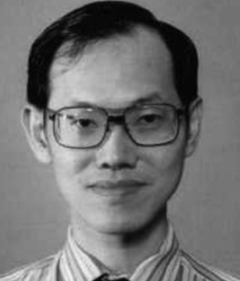 Yong-Ching Lim合作论文数DASP Pte Ltd;School of Electrical and Electronic Engineering, Nanyang Technological University3
 Yuanhui Zhang合作论文数The Grainger College of Engineering, University of Illinois Urbana Champaign;Environment-Enhancing Energy Laboratory, University of Illinois Urbana Champaign;BioEnvironmental Structure and Systems Laboratory, University of Illinois Urbana Champaign;Agricultural and Biological Engineering Department, University of Illinois Urbana Champaign3
 Yigang Sun合作论文数University of Illinois2
 Marc A. Maes合作论文数Department of Civil Engineering, University of Calgary2
 Bin Zhao (赵彬)合作论文数Department of Building Science, School of Architecture, Tsinghua university2
 Jianjian Song合作论文数Department of Electrical and Computer Engineering2H. Nezamabadi-pour合作论文数1w h dilger合作论文数1Song, J.合作论文数1Dt Huang合作论文数1
 Sergio L. Netto合作论文数Electrical Engineering Program;Federal University of Rio de Janeiro;Rio de Janeiro;Electrical Engineering Program, Federal University of Rio de Janeiro1Jianrong Yang合作论文数1
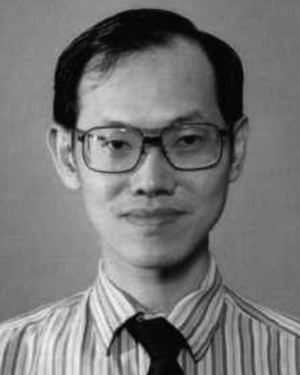 Yong Ching Lim合作论文数School of Electrical and Electronic Engineering, Nanyang Technological University1
 Rui Yang合作论文数Department of Intelligent Science, School of Advanced Technology, Xi’an Jiaotong-Liverpool University;Department of Computer Science, University of Liverpool1
 Paulo S. R. Diniz合作论文数Laboratório de Sinais, Multimídia e Telecomunicações;Concordia University1
 Esmat Rashedi合作论文数Department of Electrical Engineering, Shahid Bahonar University of Kerman1
 Walter Dilger合作论文数Schulich School of Engineering, University of Calgary;Walter Dilger Consulting1




