A review of the performance of the barrel calorimeter system of the high resolution spectrometer (HRS) is given. The system has been in operation for several years at the PEP e+e− storage ring. The barrel calorimeter, consisting of Pb-scintillator sandwiches and proportional wire tubes with charge-division readout, measures the energies and production angles of electromagnetic showers and also provides time-of-flight for particles produced in e+e− collisions.
During the initial data run with the High Resolution Spectrometer (HRS) at SLAC PEP, an integrated luminosity of 19.6 p${\mathrm{b}}^{\ensuremath{-}1}$ at a center-of-mass energy of 29 GeV was accumulated. The data on Bhabha scattering and muon pair production are compared with the predictions of QED and the standard model of electroweak interactions. The measured forward-backward charge asymmetry in the angular distribution of muon pairs is -8.4%\ifmmode\pm\else\textpm\fi{}4.3%. A comparison between the data and theoretical predictions places limits on alternative descriptions of leptons and their interactions. The existence of heavy electronlike or photonlike objects that alter the structure of the QED vertices or modify the propagator are studied in terms of the QED cutoff parameters. The Bhabha-scattering results give a lower limit on a massive photon and upper limits on the effective size of the electron of ${\ensuremath{\Lambda}}_{+}>121$ GeV and ${\ensuremath{\Lambda}}_{\ensuremath{-}}>118$ GeV at the 95% confidence level. Muon pair production yields ${\ensuremath{\Lambda}}_{+}>172$ GeV and ${\ensuremath{\Lambda}}_{\ensuremath{-}}>172$ GeV. If electrons have substructure, the magnitude and character of the couplings of the leptonic constituents affects the Bhabha-scattering angular distributions to such an extent that limits on the order of a TeV can be extracted on the effective interaction length of the components. For models in which the constituents interact with vector couplings of strength $\frac{{g}^{2}}{4\ensuremath{\pi}}\ensuremath{\sim}1$, the energy scale ${\ensuremath{\Lambda}}_{\mathrm{VV}}$ for the contact interaction is measured to be greater than 1419.0 GeV at the 95% confidence level. We set limits on the production of supersymmetric scalar electrons through $s$-channel single-photon annihilation and $t$-channel inelastic scattering. Using events with two noncollinear electrons and no other charged or observed neutral particles in the final state, we see one event which is consistent with a simple supersymmetric model but which is also consistent with QED. This allows us to exclude the scalar electron to 95% confidence level in the mass range 1.8 to 14.2 GeV/${\mathit{c}}^{2}$.
Inc1usive production of (D, D ) and D' mesons have been observed in e+e annihilation at 29 QeV.The signaIs correspond to R values of R(D +D ) = 3.25+1.2and R(D++D ) = 1.35+ 0.6.D*' production is also observed via the process D*+-D 7I' and its charge conjugate.The D and D* production rates are compared.
%e have observed inclusive production of D and D+ mesons, and their charge conju- gates, in e+e annihilation at 29 GeV on the basis of a data sample of 106 pb '.These sig- nals correspond to R values of R(DO+Do) =1.8 +0.5 and R(D++D ) =1. 2 +0.4.Tak- ing the D+ and D data together, we measure a charge asymmetry of A = -0.08 +0.12 for charmed quarks.A comparison of R(D+D) with R(D'+D') obtained via the process D" + Don+ gives a D/D' ratio of 1. 0+oo~3, indicating that direct D" production dominates over direct D production.
The study of multi-particle final state in high-energy reactions has a long history. Detailed studies of hadronic interactions at Fermilab and at the CERN ISR have shown that particles are emitted in clear jets of hadrons along the beam directions. For the highest energies, a small fraction of events contains large-angle jets originating from hard collisions, in addition to the beam and target fragmentation products. The clearest observation of jets has been in high-energy e/sup +/e/sup -/ reactions. Hadronic interactions contain 5 or 6 valence quarks already in the initial state. The final state in e/sup +/e/sup -/ annihilation represents at the parton level a relatively simple dynamical system: a q anti q state plus possibly a hard gluon therefore jets produced in e/sup +/e/sup -/ annihilation have to be considered as the cleanest ones. The study of their properties can help, not only to understand quark fragmentation but may also serve as an important tool in the analysis of the much more complex mechanism in hadronic interactions. In this paper we present preliminary results of the overall features of our first sample of e/sup +/e/sup -/ annihilation events at 29 GeV. The data were taken using the High Resolution Spectrometer (HRS) operated at the PEP storage ring at the Stanford Linear Accelerator Center.
D* production is studied in the decay chain D*/sup +/ ..-->.. D/sup 0/ ..pi../sup +/ with the D/sup 0/ observed in the K/sup -/..pi../sup +/ mode and the corresponding charge conjugate decays. The results were obtained from a preliminary analysis of an 80 pb/sup -1/ data sample of e/sup +/e/sup -/ annihilations at 29 GeV taken with the High Resolution Spectrometer at PEP. The excellent mass resolution of the HRS allows the study of the D* production and decay with very low background. We present the fragmentation function over the range of Z from 0.2 to 1.0.
 D. Blockus合作论文数5i beltrami合作论文数5
 Steve Ahlen合作论文数Physics Department, College of Arts and Sciences, Boston University5B. Brabson合作论文数5
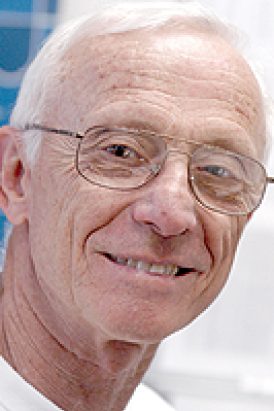 J. Chapman合作论文数Department of Physics, College of Literature, Science, and the Arts, University of Michigan5Greg Baranko合作论文数5Bruce Cork合作论文数5LK RANGAN合作论文数4Ei Shibata合作论文数4J. S. Loos合作论文数4J. Schlereth合作论文数4r j debonte合作论文数3j m weiss合作论文数3a a seidl合作论文数3D. Rubin合作论文数3E. Fernandez合作论文数3S. W. Gray合作论文数3
 H. Ogren合作论文数3R. Stevens合作论文数3m willutzky合作论文数3Jp Guillaud合作论文数3t trinko合作论文数3
 K. K. Gan合作论文数Department of Physics, College of Arts and Sciences, The Ohio State University3B. Musgrave合作论文数3
 Udayan Mallik合作论文数Northrop Grumman Corp.3
 D. Nitz合作论文数3R. Singer合作论文数3L. Hyman合作论文数3M. Derrick Et Al.合作论文数3P. Kesten合作论文数3P. Ong合作论文数3D. Wood合作论文数3
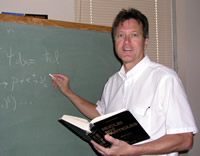 David Koltick合作论文数Department of Physics and Astronomy Purdue University3
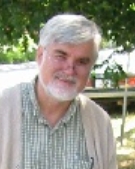 Jerry Va'Vra合作论文数National Accelerator Laboratory, Stanford Linear Accelerator Center3
 Steven Errede合作论文数Department of Physics, The Grainger College of Engineering, University of Illinois Urbana-Champaign3Philip S. Baringer合作论文数The University of Kansas, Lawrence, USA3F. Lopinto合作论文数3Philip a Schreiner合作论文数3L. Keller合作论文数3Carl Akerlof合作论文数3Stephen C Ems合作论文数3Rudolf Thun合作论文数3R. Klem合作论文数3P. Kooijman合作论文数3S. Kooijman合作论文数2Ge Forden合作论文数2Cr Ng合作论文数2n harnew合作论文数2C. Ward合作论文数2




