James Buchanan's normative theory of political exchange would justify debt repudiation when debt finances the consumption of a majority. He also insisted that each generation, as a group, deserves an equal starting point. Would this theory of political exchange justify reparations to Black Americans for state actions that caused intergenerational harm? We see many similarities between the cases.
Abram L. Harris was the second Black person to obtain an economics Ph.D. in the United States and a major figure in the early years of the American Civil Rights movement. Upon his death in 1963 his colleague and friend, Frank Knight delivered memorial remarks. The remembrance explains how Knight and Harris met, how Harris came to Chicago, and how the two scholars shared an intellectual commitment to the idea of race as “caste” and an opposition to state paternalism. We consider Knight’s odd characterization of Harris’ early work as “propaganda” as well as Harris’s extensive analysis of paternalism before he went to Chicago.
The Princeton Panel was formed by Claude Robinson, a partner of George Gallup, to produce an ideology of capitalism by capitalist methods. It proposed to replace donors with market-based transactions. We explain this concern over the influence of donors by appealing to the ghastly experience of Isaac Don Levine when he attacked the antisemitism of Merwin Hart, the head of the influential National Economic Council. Although the Princeton Panel did not survive Robinson's passing, it served as a node in market liberalism. Gordon Tullock worked for Robinson and through the Princeton Panel met Murray Rothbard and Karl Popper.
Para Adam Smith, las personas son intrínsecamente iguales, pero están sujetas a circunstancias desiguales en sus distintos rangos, y acaban cumpliendo funciones distintas en el marco de la división del trabajo. Por esto, para Smith, un mejoramiento (improvement) general de la sociedad debe partir por los rangos más bajos de ella a través de una expansión de la división del trabajo. Esto debería conducir a la erradicación de la pobreza y a un progreso de personas alegres. Una posición similar fue seguida por John Stuart Mill, para quien las personas tenían iguales capacidades y estaban motivadas por la búsqueda del placer y por evitar el dolor. Para Smith y Mill, el mejoramiento era un proceso ascendente en el que los individuos deciden, de manera independiente, qué significa mejorar y buscan formas de conseguirlo. Sin embargo, tanto Smith como Mill se enfrentaban a un contexto intelectual en el que la idea de inferioridad racial o nacional predominaba y en el que el improvement dependía de una supuesta calidad de las personas. El artículo concluye que, para Smith, el mejoramiento no proviene desde afuera. No obstante, en la época, distintos intelectuales y policymakers presuponían la inferioridad natural de determinadas personas y proponían intervenir de manera radical para reconstruir a los ciudadanos, desechando su igualdad natural y dándoles forma desde arriba, incluso desde la eugenesia.
An abstract is not available for this content so a preview has been provided. Please use the Get access link above for information on how to access this content.
This article responds to Daniel Kuehn's critique and expands on the discussion of James Buchanan's later essay, which has received insufficient attention. The focus is on the 1965 revision of the "Virginia Plan for Universal Education" by Buchanan and Warren Nutter. While the revision is acknowledged by all, its significance is debated. The authors argue that Nutter and Buchanan's original contribution lies in contrasting implied majority rule with explicit proportional representation, a distinction not found in Milton Friedman's work. The period between 1959 and 1965 witnessed changes, including the development of an economic approach to constitutions and the attempt to prevent parents from using vouchers for integrated schools. The 1965 addition highlights the importance of alternative democratic decision rules and sets the stage for Buchanan's subsequent work on racially determined policies. Buchanan's involvement with racial issues extended beyond the voucher proposal, including his support for affirmative action. The addition to the 1965 voucher proposal addresses the impact of decision rules on minority well-being. The mischaracterization of minority concerns is addressed, drawing on Lani Guinier's book and quoting Buchanan's principles of fair representation. The essay concludes by emphasizing the importance of the 1965 addition in Buchanan's work on racial fairness and its connection to Lani Guinier's perspectives.
Review of “Adam Smith’s America: How a Scottish Philosopher Became an Icon of American Capitalism” by Glory M. Liu.
The early Virginia School of Economics builds upon the work of the British classical economists as extended by Knight at the University of Chicago. In opposition to the nascent economic orthodoxy's emphasis on efficiency, the Virginia School emphasized economic activity and policy as processes generated by discussion. One continuing controversy involves the status of group goals. Virginia's Vining defended the NBER against Koopmans’ criticism as atheoretic and thus inefficient. For Vining, the NBER attempted to discover hypotheses, an activity for which efficiency is undefined. Buchanan used the Knightian principle of government by discussion to argue that Arrow’s demonstration of an inefficient democracy assumed away the possibility of discovering one’s goals through discussion. Government by discussion has an unappreciated role in Buchanan’s development of Wicksell’s unanimity criterion into the view of politics as exchange. Who participates in the discussion? Only people who actually exist. That privileges the status quo and reduces the economist’s role to offering advice to fellow citizens as equals.
 Sandra J. Peart合作论文数Jepson School of Leadership Studies, University of Richmond91
 Susan Feigenbaum合作论文数5
 Michael D. Makowsky合作论文数Department of Economics;George Mason University;Department of Economics, George Mason University4
 Erte Xiao合作论文数Monash Energy Institute, Faculty of Information Technology, Monash University3
 Daniel Houser合作论文数The MITRE Corporation3Kail Padgitt合作论文数3Claire H. Hammond合作论文数2Jd Hammond合作论文数2
 Steven G. Medema合作论文数Department of Economics, Trinity College of Arts & Sciences, Duke University2Warren J. Samuels合作论文数2
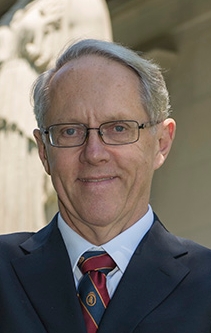 Stephen M. Stigler合作论文数Department of Statistics, The University of Chicago2A Farrant合作论文数2
 Michele I. Naples合作论文数The College of New Jersey2Claire Friedland合作论文数2Craufurd D. Goodwin合作论文数2Robin D. Hanson合作论文数George Mason University2henry a murray合作论文数1simon h tulchin合作论文数1Karen Horn合作论文数1Fred Mcchesney合作论文数1m d edward weiss合作论文数1
 Stefan Kolev合作论文数Polit Econ, Univ Appl Sci1Stanley Cobb合作论文数1
 Willard Moore合作论文数School of the Earth, Ocean and Environment, McCausland College of Arts and Sciences, University of South Carolina1Leon J Saul合作论文数1
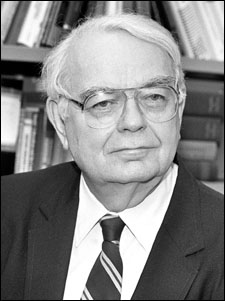 Frederick Mosteller合作论文数Harvard University1Harold G. Wolff合作论文数1Julius B. Richmond合作论文数1Joseph L. Lilienthal合作论文数1
 Nancy Van House合作论文数UC Berkeley School of Information1Lawrence S. Kubie合作论文数1Roy G. Hoskins合作论文数1
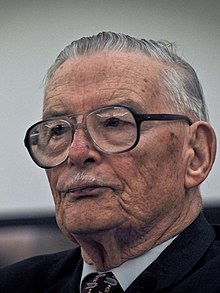 James M. Buchanan合作论文数George Mason University1Hilde Bruch合作论文数1Molly Harrower合作论文数1Wood Llp合作论文数1Howard S. Liddell合作论文数1Lawrence G. Buc合作论文数1
 Barbara P. Buttenfield (Babs)合作论文数USGS Center for Excellence in Geospatial Information Science;Rocky Mountain Census Research Data Center, University of Colorado – Boulder;Department of Geography, University of Colorado-Boulder1Joy M. Leong合作论文数1Alberto Seguin合作论文数1Walter L. Palmer合作论文数1Michael K. Plunkett合作论文数1Paul H. Hoch合作论文数1Harold C. Stuart合作论文数1Herrman Blumgart合作论文数1Bertram D. Lewin合作论文数1Roy R. Grinker合作论文数1Daniel C. Brotsky合作论文数1




