While Large Language Models (LLMs) are the dominant models for generative tasks in language, they do not perform as well as diffusion models on image and video generation. To effectively use LLMs for visual generation, one crucial component is the visual tokenizer that maps pixel-space inputs to discrete tokens appropriate for LLM learning. In this paper, we introduce MAGVIT-v2, a video tokenizer designed to generate concise and expressive tokens for both videos and images using a common token vocabulary. Equipped with this new tokenizer, we show that LLMs outperform diffusion models on standard image and video generation benchmarks including ImageNet and Kinetics. In addition, we demonstrate that our tokenizer surpasses the previously top-performing video tokenizer on two more tasks: (1) video compression comparable to the next-generation video codec (VCC) according to human evaluations, and (2) learning effective representations for action recognition tasks.
For learned image representations, basic autoencoders often produce blurry results. Reconstruction quality can be improved by incorporating additional penalties such as adversarial (GAN) and perceptual losses. Arguably, these approaches lack a principled interpretation. Concurrently, in generative settings diffusion has demonstrated a remarkable ability to create crisp, high quality results and has solid theoretical underpinnings (from variational inference to direct study as the Fisher Divergence). Our work combines autoencoder representation learning with diffusion and is, to our knowledge, the first to demonstrate jointly learning a continuous encoder and decoder under a diffusion-based loss and showing that it can lead to higher compression and better generation. We demonstrate that this approach yields better reconstruction quality as compared to GAN-based autoencoders while being easier to tune. We also show that the resulting representation is easier to model with a latent diffusion model as compared to the representation obtained from a state-of-the-art GAN-based loss. Since our decoder is stochastic, it can generate details not encoded in the otherwise deterministic latent representation; we therefore name our approach "Sample what you can't compress", or SWYCC for short.
We propose to replace vector quantization (VQ) in the latent representation of VQ-VAEs with a simple scheme termed finite scalar quantization (FSQ), where we project the VAE representation down to a few dimensions (typically less than 10). Each dimension is quantized to a small set of fixed values, leading to an (implicit) codebook given by the product of these sets. By appropriately choosing the number of dimensions and values each dimension can take, we obtain the same codebook size as in VQ. On top of such discrete representations, we can train the same models that have been trained on VQ-VAE representations. For example, autoregressive and masked transformer models for image generation, multimodal generation, and dense prediction computer vision tasks. Concretely, we employ FSQ with MaskGIT for image generation, and with UViM for depth estimation, colorization, and panoptic segmentation. Despite the much simpler design of FSQ, we obtain competitive performance in all these tasks. We emphasize that FSQ does not suffer from codebook collapse and does not need the complex machinery employed in VQ (commitment losses, codebook reseeding, code splitting, entropy penalties, etc.) to learn expressive discrete representations.
We present VideoPoet, a language model capable of synthesizing high-quality video, with matching audio, from a large variety of conditioning signals. VideoPoet employs a decoder-only transformer architecture that processes multimodal inputs -- including images, videos, text, and audio. The training protocol follows that of Large Language Models (LLMs), consisting of two stages: pretraining and task-specific adaptation. During pretraining, VideoPoet incorporates a mixture of multimodal generative objectives within an autoregressive Transformer framework. The pretrained LLM serves as a foundation that can be adapted for a range of video generation tasks. We present empirical results demonstrating the model's state-of-the-art capabilities in zero-shot video generation, specifically highlighting VideoPoet's ability to generate high-fidelity motions. Project page: http://sites.research.google/videopoet/
By optimizing the rate-distortion-realism trade-off, generative compression approaches produce detailed, realistic images, even at low bit rates, instead of the blurry reconstructions produced by rate-distortion optimized models. However, previous methods do not explicitly control how much detail is synthesized, which results in a common criticism of these methods: users might be worried that a misleading reconstruction far from the input image is generated. In this work, we alleviate these concerns by training a decoder that can bridge the two regimes and navigate the distortion-realism trade-off. From a single compressed representation, the receiver can decide to either reconstruct a low mean squared error reconstruction that is close to the input, a realistic reconstruction with high perceptual quality, or anything in between. With our method, we set a new state-of-the-art in distortion-realism, pushing the frontier of achievable distortion-realism pairs, i.e., our method achieves better distortions at high realism and better realism at low distortion than ever before.
The rate-distortion performance of neural image compression models has exceeded the state-of-the-art for non-learned codecs, but neural codecs are still far from widespread deployment and adoption. The largest obstacle is having efficient models that are feasible on a wide variety of consumer hardware. Comparative research and evaluation is difficult due to the lack of standard benchmarking platforms and due to variations in hardware architectures and test environments. Through our rate-distortion-computation (RDC) study we demonstrate that neither floating-point operations (FLOPs) nor runtime are sufficient on their own to accurately rank neural compression methods. We also explore the RDC frontier, which leads to a family of model architectures with the best empirical trade-off between computational requirements and RD performance. Finally, we identify a novel neural compression architecture that yields state-of-the-art RD performance with rate savings of 23.1% over BPG (7.0% over VTM and 3.0% over ELIC) without requiring significantly more FLOPs than other learning-based codecs.
We present the first neural video compression method based on generative adversarial networks (GANs). Our approach significantly outperforms previous neural and non-neural video compression methods in a user study, setting a new state-of-the-art in visual quality for neural methods. We show that the GAN loss is crucial to obtain this high visual quality. Two components make the GAN loss effective: we i) synthesize detail by conditioning the generator on a latent extracted from the warped previous reconstruction to then ii) propagate this detail with high-quality flow. We find that user studies are required to compare methods, i.e., none of our quantitative metrics were able to predict all studies. We present the network design choices in detail, and ablate them with user studies.
We show how transformers can be used to vastly simplify neural video compression. Previous methods have been relying on an increasing number of architectural biases and priors, including motion prediction and warping operations, resulting in complex models. Instead, we independently map input frames to representations and use a transformer to model their dependencies, letting it predict the distribution of future representations given the past. The resulting video compression transformer outperforms previous methods on standard video compression data sets. Experiments on synthetic data show that our model learns to handle complex motion patterns such as panning, blurring and fading purely from data. Our approach is easy to implement, and we release code to facilitate future research.
Connectomic reconstruction of neural circuits relies on nanometer resolution microscopy which produces on the order of a petabyte of imagery for each cubic millimeter of brain tissue. The cost of storing such data is a significant barrier to broadening the use of connectomic approaches and scaling to even larger volumes. We present an image compression approach that uses machine learning-based denoising and standard image codecs to compress raw electron microscopy imagery of neuropil up to 17-fold with negligible loss of reconstruction accuracy.
We review a class of methods that can be collected under the name nonlinear transform coding (NTC), which over the past few years have become competitive with the best linear transform codecs for images, and have superseded them in terms of rate-distortion performance under established perceptual quality metrics such as MS-SSIM. We assess the empirical rate-distortion performance of NTC with the help of simple example sources, for which the optimal performance of a vector quantizer is easier to estimate than with natural data sources. To this end, we introduce a novel variant of entropy-constrained vector quantization. We provide an analysis of various forms of stochastic optimization techniques for NTC models; review architectures of transforms based on artificial neural networks, as well as learned entropy models; and provide a direct comparison of a number of methods to parameterize the rate-distortion trade-off of nonlinear transforms, introducing a simplified one.
We present a neural video compression method based on generative adversarial networks (GANs) that outperforms previous neural video compression methods and is comparable to HEVC in a user study. We propose a technique to mitigate temporal error accumulation caused by recursive frame compression that uses randomized shifting and un-shifting, motivated by a spectral analysis. We present in detail the network design choices, their relative importance, and elaborate on the challenges of evaluating video compression methods in user studies.
We propose a novel joint lossy image and residual compression framework for learning l∞-constrained nearlossless image compression. Specifically, we obtain a lossy reconstruction of the raw image through lossy image compression and uniformly quantize the corresponding residual to satisfy a given tight l∞ error bound. Suppose that the error bound is zero, i.e., lossless image compression, we formulate the joint optimization problem of compressing both the lossy image and the original residual in terms of variational auto-encoders and solve it with end-to-end training. To achieve scalable compression with the error bound larger than zero, we derive the probability model of the quantized residual by quantizing the learned probability model of the original residual, instead of training multiple networks. We further correct the bias of the derived probability model caused by the context mismatch between training and inference. Finally, the quantized residual is encoded according to the bias-corrected probability model and is concatenated with the bitstream of the compressed lossy image. Experimental results demonstrate that our near-lossless codec achieves the state-of-the-art performance for lossless and near-lossless image compression, and achieves competitive PSNR while much smaller l∞ error compared with lossy image codecs at high bit rates.
In learning-based approaches to image compression, codecs are developed by optimizing a computational model to minimize a rate-distortion objective. Currently, the most effective learned image codecs take the form of an entropy-constrained autoencoder with an entropy model that uses both forward and backward adaptation. Forward adaptation makes use of side information and can be efficiently integrated into a deep neural network. In contrast, backward adaptation typically makes predictions based on the causal context of each symbol, which requires serial processing that prevents efficient GPU / TPU utilization. We introduce two enhancements, channel-conditioning and latent residual prediction, that lead to network architectures with better rate-distortion performance than existing context-adaptive models while minimizing serial processing. Empirically, we see an average rate savings of 6.7% on the Kodak image set and 11.4% on the Tecnick image set compared to a context-adaptive baseline model. At low bit rates, where the improvements are most effective, our model saves up to 18% over the baseline and outperforms hand-engineered codecs like BPG by up to 25%.
Despite considerable progress on end-to-end optimized deep networks for image compression, video coding remains a challenging task. Recently proposed methods for learned video compression use optical flow and bilinear warping for motion compensation and show competitive rate-distortion performance relative to hand-engineered codecs like H.264 and HEVC. However, these learning-based methods rely on complex architectures and training schemes including the use of pre-trained optical flow networks, sequential training of sub-networks, adaptive rate control, and buffering intermediate reconstructions to disk during training. In this paper, we show that a generalized warping operator that better handles common failure cases, e.g. disocclusions and fast motion, can provide competitive compression results with a greatly simplified model and training procedure. Specifically, we propose scale-space flow, an intuitive generalization of optical flow that adds a scale parameter to allow the network to better model uncertainty. Our experiments show that a low-latency video compression model (no B-frames) using scale-space flow for motion compensation can outperform analogous state-of-the art learned video compression models while being trained using a much simpler procedure and without any pre-trained optical flow networks.
In learning-based approaches to image compression, codecs are developed by optimizing a computational model to minimize a rate-distortion objective. Currently, the most effective learned image codecs take the form of an entropy-constrained autoencoder with an entropy model that uses both forward and backward adaptation. Forward adaptation makes use of side information and can be efficiently integrated into a deep neural network. In contrast, backward adaptation typically makes predictions based on the causal context of each symbol, which requires serial processing that prevents efficient GPU / TPU utilization. We introduce two enhancements, channel-conditioning and latent residual prediction, that lead to network architectures with better rate-distortion performance than existing context-adaptive models while minimizing serial processing. Empirically, we see an average rate savings of 6.7% on the Kodak image set and 11.4% on the Tecnick image set compared to a context-adaptive baseline model. At low bit rates, where the improvements are most effective, our model saves up to 18% over the baseline and outperforms hand-engineered codecs like BPG by up to 25%.
We consider the problem of using variational latent-variable models for data compression. For such models to produce a compressed binary sequence, which is the universal data representation in a digital world, the latent representation needs to be subjected to entropy coding. Range coding as an entropy coding technique is optimal, but it can fail catastrophically if the computation of the prior differs even slightly between the sending and the receiving side. Unfortunately, this is a common scenario when floating point math is used and the sender and receiver operate on different hardware or software platforms, as numerical round-off is often platform dependent. We propose using integer networks as a universal solution to this problem, and demonstrate that they enable reliable cross-platform encoding and decoding of images using variational models.
We propose a method for lossy image compression based on recurrent, convolutional neural networks that outperforms BPG (4:2:0), WebP, JPEG2000, and JPEG as measured by MS-SSIM. We introduce three improvements over previous research that lead to this state-of-the-art result using a single model. First, we modify the recurrent architecture to improve spatial diffusion, which allows the network to more effectively capture and propagate image information through the network's hidden state. Second, in addition to lossless entropy coding, we use a spatially adaptive bit allocation algorithm to more efficiently use the limited number of bits to encode visually complex image regions. Finally, we show that training with a pixel-wise loss weighted by SSIM increases reconstruction quality according to multiple metrics. We evaluate our method on the Kodak and Tecnick image sets and compare against standard codecs as well as recently published methods based on deep neural networks.
The leading approach for image compression with artificial neural networks (ANNs) is to learn a nonlinear transform and a fixed entropy model that are optimized for rate-distortion performance. We show that this approach can be significantly improved by incorporating spatially local, image-dependent entropy models. The key insight is that existing ANN-based methods learn an entropy model that is shared between the encoder and decoder, but they do not transmit any side information that would allow the model to adapt to the structure of a specific image. We present a method for augmenting ANN-based image coders with image-dependent side information that leads to a 17.8% rate reduction over a state-of-the-art ANN-based baseline model on a standard evaluation set, and 70-98% reductions on images with low visual complexity that are poorly captured by a fixed, global entropy model.
Recent models for learned image compression are based on autoencoders that learn approximately invertible mappings from pixels to a quantized latent representation. The transforms are combined with an entropy model, which is a prior on the latent representation that can be used with standard arithmetic coding algorithms to generate a compressed bitstream. Recently, hierarchical entropy models were introduced as a way to exploit more structure in the latents than previous fully factorized priors, improving compression performance while maintaining end-to-end optimization. Inspired by the success of autoregressive priors in probabilistic generative models, we examine autoregressive, hierarchical, and combined priors as alternatives, weighing their costs and benefits in the context of image compression. While it is well known that autoregressive models can incur a significant computational penalty, we find …
We describe an end-to-end trainable model for image compression based on variational autoencoders. The model incorporates a hyperprior to effectively capture spatial dependencies in the latent representation. This hyperprior relates to side information, a concept universal to virtually all modern image codecs, but largely unexplored in image compression using artificial neural networks (ANNs). Unlike existing autoencoder compression methods, our model trains a complex prior jointly with the underlying autoencoder. We demonstrate that this model leads to state-of-the-art image compression when measuring visual quality using the popular MS-SSIM index, and yields rate-distortion performance surpassing published ANN-based methods when evaluated using a more traditional metric based on squared error (PSNR). Furthermore, we provide a qualitative comparison of models trained for different distortion metrics.
 George Toderici合作论文数Google DeepMind15
 Thad Starner合作论文数Contextual Computing Group, College of Computing, Georgia Institute of Technology;School of Interactive Computing, College of Computing, Georgia Institute of Technology;GVU Center, Georgia Institute of Technology14
 Sung Jin Hwang合作论文数Google12
 Nick Johnston合作论文数Google11
 Irfan Essa合作论文数School of Interactive Computing, College of Computing, Georgia Institute of Technology;Interdisciplinary Research Center for Machine Learning, Georgia Institute of Technology;Google Inc.9
 Johannes Ballé合作论文数Google9
 Saurabh Singh合作论文数Poetiq8
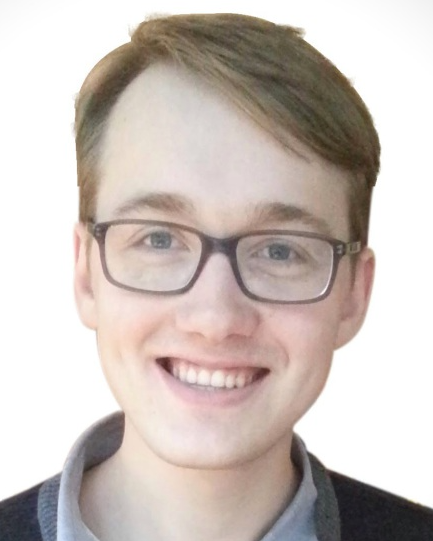 Eirikur Agustsson合作论文数Google DeepMind7
 Michele Covell合作论文数Primepoint6
 Fabian Mentzer合作论文数Google Research5Charles Isbell合作论文数Georgia Institute of Technology5
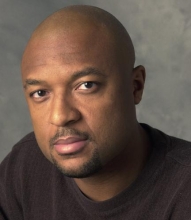 Charles L. Isbell Jr合作论文数College of Computing, Georgia Institute of Technology;School of Interactive Computing, College of Computing, Georgia Institute of Technology5Damien Vincent合作论文数Microsoft4
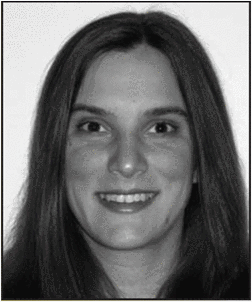 Tracy L. Westeyn合作论文数4
 Joel Shor合作论文数Deep Genomics3
 Bastian Leibe合作论文数Visual Computing Institute, RWTH Aachen University3
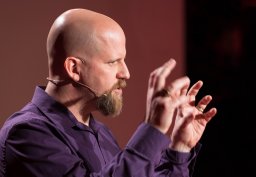 Christopher R. Wren合作论文数Massachusetts Institute of Technology. Cambridge, MA, USA
Media Laboratory, Vision and Modeling Group3
Christopher R. Wren合作论文数Massachusetts Institute of Technology. Cambridge, MA, USA
Media Laboratory, Vision and Modeling Group3 Yong Cheng合作论文数DeepMind2
 Lijun Yu (于力军)合作论文数Google DeepMind2
 Vighnesh Birodkar合作论文数Luma AI2
 Amy Hurst合作论文数Department of Occupational Therapy, Steinhardt School of Culture, Education, and Human Development, New York University2
 Joshua V. Dillon合作论文数Luma AI2
 José Lezama合作论文数Deepmind2
 David Ross合作论文数Google DeepMind;Google2
 Xiuye Gu合作论文数Google Research2
 Agrim Gupta合作论文数Department of Computer Science, Stanford University2
 Lu Jiang合作论文数Apple2Peng Zang合作论文数2
 Paul Yarin合作论文数Thales Digital Identity and Security2
 Troy T. Chinen合作论文数Google DeepMind2
 Sergey Ioffe合作论文数xAI2
 Ming-Hsuan Yang合作论文数Vision and Learning Lab, University of California, Merced;Google DeepMind2
 Sean M. O'Malley合作论文数University of Houston2Justin Weeks合作论文数GVU Center, Georgia Insititute of Technology2
 Kihyuk Sohn合作论文数Reality Labs, Meta2Ming-Chang Chiu合作论文数1Jimmy Yan合作论文数1David Hendon合作论文数1Nitesh Bharadwaj Gundavarapu合作论文数1Yair Alon合作论文数1Tim Blakely合作论文数1Rachel Hornung合作论文数1
 Sergi Caelles合作论文数Perception Team, Google Research1Alexander Shapson-Coe合作论文数1Huisheng Wang合作论文数1Daniel Lee Ashbrook合作论文数Department of Computer Science, Faculty of Science, University of Copenhagen1Runsen Feng合作论文数1
 Anja Hauth合作论文数Google1
 Meera Hahn合作论文数1




