We present Split-then-Merge (StM), a novel framework designed to enhance control in generative video composition and address its data scarcity problem. Unlike conventional methods relying on annotated datasets or handcrafted rules, StM splits a large corpus of unlabeled videos into dynamic foreground and background layers, then self-composes them to learn how dynamic subjects interact with diverse scenes. This process enables the model to learn the complex compositional dynamics required for realistic video generation. StM introduces a novel transformation-aware training pipeline that utilizes a multi-layer fusion and augmentation to achieve affordance-aware composition, alongside an identity-preservation loss that maintains foreground fidelity during blending. Experiments show StM outperforms SoTA methods in both quantitative benchmarks and in humans/VLLM-based qualitative evaluations. More details are available at our project page: https://split-then-merge.github.io
Long video understanding presents challenges due to the inherent high computational complexity and redundant temporal information. An effective representation for long videos must efficiently process such redundancy while preserving essential contents for downstream tasks. This paper introduces SEmantic Attention Learning (SEAL), a novel unified representation for long videos. To reduce computational complexity, long videos are decomposed into three distinct types of semantic entities: scenes, objects, and actions, allowing models to operate on a compact set of entities rather than a large number of frames or pixels. To further address redundancy, we propose an attention learning module that balances token relevance with diversity, formulated as a subset selection optimization problem. Our representation is versatile and applicable across various long video understanding tasks. Extensive experiments demonstrate that SEAL significantly outperforms state-of-the-art methods in video question answering and temporal grounding tasks across diverse benchmarks, including LVBench, MovieChat-1K, and Ego4D.
Top-down instance segmentation architectures excel with predefined closed-world taxonomies but exhibit biases and performance degradation in open-world scenarios. In this work, we introduce bottom-Up and top-Down Open-world Segmentation (UDOS), a novel approach that combines classical bottom-up segmentation methods within a top-down learning framework. UDOS leverages a top-down network trained with weak supervision derived from class-agnostic bottom-up segmentation to predict object parts. These part-masks undergo affinity-based grouping and refinement to generate precise instance-level segmentations. UDOS balances the efficiency of top-down architectures with the capacity to handle unseen categories through bottom-up supervision. We validate UDOS on challenging datasets (MS-COCO, LVIS, ADE20k, UVO, and OpenImages), achieving superior performance over state-of-the-art methods in cross-category and cross-dataset transfer tasks. Our code and models will be publicly available.
Many modern frame interpolation approaches rely on explicit bidirectional optical flows between adjacent frames, thus are sensitive to the accuracy of underlying flow estimation in handling occlusions while additionally introducing computational bottlenecks unsuitable for efficient deployment. In this paper, we propose a flow-free approach that is completely end-to-end trainable for multi-frame video interpolation. Our method, FLAVR, leverages 3D spatio-temporal kernels to directly learn motion properties from unlabeled videos and greatly simplifies the process of training, testing and deploying frame interpolation models. As a result, FLAVR delivers up to 6× speed up compared to the current state-of-the-art methods for multi-frame interpolation while consistently demonstrating superior qualitative and quantitative results compared with prior methods on popular benchmarks including Vimeo-90K, SNU-Film, and GoPro. Additionally, we show that frame interpolation is a competitive self-supervised pre-training task for videos by demonstrating various novel applications of FLAVR including action recognition, optical flow estimation, and video object tracking. Code and trained models are available in the project page: https://tarun005.github.io/FLAVR/ . We have provided additional qualitative results for frame interpolation as well as downstream applications in our video available using this web link https://paperid1300.s3.us-west-2.amazonaws.com/FLAVRVideo.mp4 (link).
We propose a new task of space-time semantic correspondence prediction in videos. Given a source video, a target video, and a set of space-time key-points in the source video, the task requires predicting a set of keypoints in the target video that are the semantic correspondences of the provided source keypoints. We believe that this task is important for fine-grain video understanding, potentially enabling applications such as activity coaching, sports analysis, robot imitation learning, and more. Our contributions in this paper are: (i) proposing a new task and providing annotations for space-time semantic correspondences on two existing benchmarks: Penn Action and Pouring; and (ii) presenting a comprehensive set of baselines and experiments to gain insights about the new problem. Our main finding is that the space-time semantic correspondence prediction problem is best approached jointly in space and time rather than in their decomposed sub-problems: time alignment and spatial correspondences.
Most modern frame interpolation approaches rely on explicit bidirectional optical flows between adjacent frames, thus are sensitive to the accuracy of underlying flow estimation in handling occlusions while additionally introducing computational bottlenecks unsuitable for efficient deployment. In this work, we propose a flow-free approach that is completely end-to-end trainable for multi-frame video interpolation. Our method, FLAVR, leverages 3D spatio-temporal kernels to directly learn motion properties from unlabeled videos and greatly simplifies the process of training, testing and deploying frame interpolation models. As a result, FLAVR delivers up to 6× speed up compared to the current state-of-the-art methods for multi-frame interpolation while consistently demonstrating superior qualitative and quantitative results compared with prior methods on popular benchmarks including Vimeo-90K, Adobe-240FPS, and GoPro. Finally, we show that frame interpolation is a competitive self-supervised pre-training task for videos via demonstrating various novel applications of FLAVR including action recognition, optical flow estimation, and video object tracking. Code and trained models are provided in the supplementary material.
Egocentric videos are often available in the form of uninterrupted, uncurated long videos capturing the camera wearers' daily life activities. Understanding these videos requires models to be able to reason about activities, objects, and their interactions. However, current video benchmarks study these problems independently and under short, curated clips. In contrast, real-world applications, e.g. AR assistants, require bundling these problems for both model development and evaluation. In this paper, we propose to study these problems in a joint framework for long video understanding. Our contributions are three-fold. First, we propose an integrated framework, namely Relational Space-Time Query (ReST), for evaluating video understanding models via templated spatiotemporal queries. Second, we introduce two new benchmarks, ReST-ADL and ReST-Ego4D 1 1 The latest version of our benchmark and models will be available here., which augment the existing egocentric video datasets with abundant query annotations generated by the ReST framework. Finally, we present a set of baselines and in-depth analysis on the two benchmarks and provide insights about the query tasks. We view our integrated framework and benchmarks as a step towards comprehensive, multi-step reasoning in long videos, and believe it will facilitate the development of next generations of video understanding models.
Video understanding tasks take many forms, from action detection to visual query localization and spatio-temporal grounding of sentences. These tasks differ in the type of inputs (only video, or video-query pair where query is an image region or sentence) and outputs (temporal segments or spatio-temporal tubes). However, at their core they require the same fundamental understanding of the video, i.e., the actors and objects in it, their actions and interactions. So far these tasks have been tackled in isolation with individual, highly specialized architectures, which do not exploit the interplay between tasks. In contrast, in this paper, we present a single, unified model for tackling query-based video understanding in long-form videos. In particular, our model can address all three tasks of the Ego4D Episodic Memory benchmark which entail queries of three different forms: given an egocentric video and a visual, textual or activity query, the goal is to determine when and where the answer can be seen within the video. Our model design is inspired by recent query-based approaches to spatio-temporal grounding, and contains modality-specific query encoders and task-specific sliding window inference that allow multi-task training with diverse input modalities and different structured outputs. We exhaustively analyze relationships among the tasks and illustrate that cross-task learning leads to improved performance on each individual task, as well as the ability to generalize to unseen tasks, such as zero-shot spatial localization of language queries.
Open-world instance segmentation is the task of grouping pixels into object instances without any pre-determined taxonomy. This is challenging, as state-of-the-art methods rely on explicit class semantics obtained from large labeled datasets, and out-of-domain evaluation performance drops significantly. Here we propose a novel approach for mask proposals, Generic Grouping Networks (GGNs), constructed without semantic supervision. Our approach combines a local measure of pixel affinity with instance-level mask supervision, producing a training regimen designed to make the model as generic as the data diversity allows. We introduce a method for predicting Pairwise Affinities (PA), a learned local relationship between pairs of pixels. PA generalizes very well to unseen categories. From PA we construct a large set of pseudo-ground-truth instance masks; combined with human-annotated instance masks we train GGNs and significantly outperform the SOTA on open-world instance segmentation on various benchmarks including COCO, LVIS, ADE20K, and UVO.
Video transformers have recently emerged as a competitive alternative to 3D CNNs for video understanding. However, due to their large number of parameters and reduced inductive biases, these models require supervised pretraining on large-scale image datasets to achieve top performance. In this paper, we empirically demonstrate that self-supervised pretraining of video transformers on video-only datasets can lead to action recognition results that are on par or better than those obtained with supervised pretraining on large-scale image datasets, even massive ones such as ImageNet-21K. Since transformer-based models are effective at capturing dependencies over extended temporal spans, we propose a simple learning procedure that forces the model to match a long-term view to a short-term view of the same video. Our approach, named Long-Short Temporal Contrastive Learning (LSTCL), enables video transformers to learn an effective clip-level representation by predicting temporal context captured from a longer temporal extent. To demonstrate the generality of our findings, we implement and validate our approach under three different self-supervised contrastive learning frameworks (MoCo v3, BYOL, SimSiam) using two distinct video-transformer architectures, including an improved variant of the Swin Transformer augmented with space-time attention. We conduct a thorough ablation study and show that LSTCL achieves competitive performance on multiple video benchmarks and represents a convincing alternative to supervised image-based pretraining.
Current state-of-the-art object detection and segmentation methods work well under the closed-world assumption. This closed-world setting assumes that the list of object categories is available during training and deployment. However, many real-world applications require detecting or segmenting novel objects, i.e., object categories never seen during training. In this paper, we present, UVO (Unidentified Video Objects), a new benchmark for openworld class-agnostic object segmentation in videos. Besides shifting the focus to the open-world setup, UVO is significantly larger, providing approximately 6 times more videos compared with DAVIS, and 7 times more mask (instance) annotations per video compared with YouTube-VO(I)S. UVO is also more challenging as it includes many videos with crowded scenes and complex background motions. We also demonstrated that UVO can be used for other applications, such as object tracking and super-voxel segmentation. We believe that UVO is a versatile testbed for researchers to develop novel approaches for open-world class-agnostic object segmentation, and inspires new research directions towards a more comprehensive video understanding beyond classification and detection.
Typical video classification methods often divide a video into short clips, do inference on each clip independently, then aggregate the clip-level predictions to generate the video-level results. However, processing visually similar clips independently ignores the temporal structure of the video sequence, and increases the computational cost at inference time. In this paper, we propose a novel framework named FASTER, i.e., Feature Aggregation for Spatio-TEmporal Redundancy. FASTER aims to leverage the redundancy between neighboring clips and reduce the computational cost by learning to aggregate the predictions from models of different complexities. The FASTER framework can integrate high quality representations from expensive models to capture subtle motion information and lightweight representations from cheap models to cover scene changes in the video. A new recurrent network (i.e., FAST-GRU) is designed to aggregate the mixture of different representations. Compared with existing approaches, FASTER can reduce the FLOPs by over 10x while maintaining the state-of-the-art accuracy across popular datasets, such as Kinetics, UCF-101 and HMDB-51.
Motion is a salient cue to recognize actions in video. Modern action recognition models leverage motion information either explicitly by using optical flow as input or implicitly by means of 3D convolutional filters that simultaneously capture appearance and motion information. This paper proposes an alternative approach based on a learnable correlation operator that can be used to establish frame-to-frame matches over convolutional feature maps in the different layers of the network. The proposed architecture enables the fusion of this explicit temporal matching information with traditional appearance cues captured by 2D convolution. Our correlation network compares favorably with widely-used 3D CNNs for video modeling, and achieves competitive results over the prominent two-stream network while being much faster to train. We empirically demonstrate that correlation networks produce strong results on a variety of video datasets, and outperform the state of the art on four popular benchmarks for action recognition: Kinetics, Something-Something, Diving48, and Sports1M.
Consider end-to-end training of a multi-modal vs. a single-modal network on a task with multiple input modalities: the multi-modal network receives more information, so it should match or outperform its single-modal counterpart. In our experiments, however, we observe the opposite: the best single-modal network always outperforms the multi-modal network. This observation is consistent across different combinations of modalities and on different tasks and benchmarks. This paper identifies two main causes for this performance drop: first, multi-modal networks are often prone to overfitting due to increased capacity. Second, different modalities overfit and generalize at different rates, so training them jointly with a single optimization strategy is sub-optimal. We address these two problems with a technique we call Gradient Blending, which computes an optimal blend of modalities based on their overfitting behavior. We demonstrate that Gradient Blending outperforms widely-used baselines for avoiding overfitting and achieves state-of-the-art accuracy on various tasks including human action recognition, ego-centric action recognition, and acoustic event detection.
This paper proposes a new approach for traffic sign board detection and also describes the SVM approach for the shape recognition into different classes of traffic sign boards. First, the object is detected using area-based analysis. The area-based analysis is performed on the video frames based on the circularity parameter. The test input for the project is video obtained from a camera mounted on a vehicle. Before that, the image pre-processing techniques are applied to improve the quality of the image and to convert it into a binary image. Then the properties of the image frame have been obtained for further analysis. The feature generation is done to get the principal component for the classification of objects. Then the machine learning algorithm is applied to the dataset classification purpose. The classification into different classes (unsupervised shape recognition) is done with the SVM approach.
Visual and audio modalities are highly correlated, yet they contain different information. Their strong correlation makes it possible to predict the semantics of one from the other with good accuracy. Their intrinsic differences make cross-modal prediction a potentially more rewarding pretext task for self-supervised learning of video and audio representations compared to within-modality learning. Based on this intuition, we propose Cross-Modal Deep Clustering (XDC), a novel self-supervised method that leverages unsupervised clustering in one modality (e.g., audio) as a supervisory signal for the other modality (e.g., video). This cross-modal supervision helps XDC utilize the semantic correlation and the differences between the two modalities. Our experiments show that XDC outperforms single-modality clustering and other multi-modal variants. XDC achieves state-of-the-art accuracy among self-supervised methods on multiple video and audio benchmarks. Most importantly, our video model pretrained on large-scale unlabeled data significantly outperforms the same model pretrained with full-supervision on ImageNet and Kinetics for action recognition on HMDB51 and UCF101. To the best of our knowledge, XDC is the first self-supervised learning method that outperforms large-scale fully-supervised pretraining for action recognition on the same architecture.
Modern approaches for multi-person pose estimation in video require large amounts of dense annotations. However, labeling every frame in a video is costly and labor intensive. To reduce the need for dense annotations, we propose a PoseWarper network that leverages training videos with sparse annotations (every k frames) to learn to perform dense temporal pose propagation and estimation. Given a pair of video frames---a labeled Frame A and an unlabeled Frame B---we train our model to predict human pose in Frame A using the features from Frame B by means of deformable convolutions to implicitly learn the pose warping between A and B. We demonstrate that we can leverage our trained PoseWarper for several applications. First, at inference time we can reverse the application direction of our network in order to propagate pose information from manually annotated frames to unlabeled frames. This makes it possible to generate pose annotations for the entire video given only a few manually-labeled frames. Compared to modern label propagation methods based on optical flow, our warping mechanism is much more compact (6M vs 39M parameters), and also more accurate (88.7% mAP vs 83.8% mAP). We also show that we can improve the accuracy of a pose estimator by training it on an augmented dataset obtained by adding our propagated poses to the original manual labels. Lastly, we can use our PoseWarper to aggregate temporal pose information from neighboring frames during inference. This allows our system to achieve state-of-the-art pose detection results on the PoseTrack2017 and PoseTrack2018 datasets. Code has been made available at: this https URL.
Group convolution has been shown to offer great computational savings in various 2D convolutional architectures for image classification. It is natural to ask: 1) if group convolution can help to alleviate the high computational cost of video classification networks; 2) what factors matter the most in 3D group convolutional networks; and 3) what are good computation/accuracy trade-offs with 3D group convolutional networks. This paper studies the effects of different design choices in 3D group convolutional networks for video classification. We empirically demonstrate that the amount of channel interactions plays an important role in the accuracy of 3D group convolutional networks. Our experiments suggest two main findings. First, it is a good practice to factorize 3D convolutions by separating channel interactions and spatiotemporal interactions as this leads to improved accuracy and lower computational cost. Second, 3D channel-separated convolutions provide a form of regularization, yielding lower training accuracy but higher test accuracy compared to 3D convolutions. These two empirical findings lead us to design an architecture -- Channel-Separated Convolutional Network (CSN) -- which is simple, efficient, yet accurate. On Sports1M and Kinetics, our CSNs are comparable with or better than the state-of-the-art while being 2-3 times more efficient.
Current fully-supervised video datasets consist of only a few hundred thousand videos and fewer than a thousand domain-specific labels. This hinders the progress towards advanced video architectures. This paper presents an in-depth study of using large volumes of web videos for pre-training video models for the task of action recognition. Our primary empirical finding is that pre-training at a very large scale (over 65 million videos), despite on noisy social-media videos and hashtags, substantially improves the state-of-the-art on three challenging public action recognition datasets. Further, we examine three questions in the construction of weakly-supervised video action datasets. First, given that actions involve interactions with objects, how should one construct a verb-object pre-training label space to benefit transfer learning the most? Second, frame-based models perform quite well on action recognition; is pre-training for good image features sufficient or is pre-training for spatio-temporal features valuable for optimal transfer learning? Finally, actions are generally less well-localized in long videos vs. short videos; since action labels are provided at a video level, how should one choose video clips for best performance, given some fixed budget of number or minutes of videos?
Anticipating actions before they are executed is crucial for a wide range of practical applications including autonomous driving and the moderation of live video streaming. While most prior work in this area requires partial observation of executed actions, in the paper we focus on anticipating actions seconds before they start. Our proposed approach is the fusion of a purely anticipatory model with a complementary model constrained to reason about the present. In particular, the latter predicts present action and scene attributes, and reasons about how they evolve over time. By doing so, we aim at modeling action anticipation at a more conceptual level than directly predicting future actions. Our model outperforms previously reported methods on the EPIC-KITCHENS and Breakfast datasets.
 Lorenzo Torresani合作论文数Northeastern University;Meta28
 Heng Wang合作论文数TikTok10
 Manohar Paluri合作论文数Meta10
 Matt Feiszli合作论文数Meta10
 Weiyao Wang合作论文数Facebook AI5
 Bruno Korbar合作论文数4
 Manmohan Chandraker合作论文数Department of Computer Science & Engineering, Jacobs School of Engineering, University of California, San Diego;Visual Computing Center, Jacobs School of Engineering, University of California, San Diego4
 Lubomir Bourdev合作论文数Primepoint4Jamie Ray合作论文数Gridmatic3
 Tarun Kalluri合作论文数CSE Department, University of California San Diego;Visual Computing Group, University of California San Diego;Meta AI3
 Rohit Girdhar合作论文数GenAI Research Group, Meta3
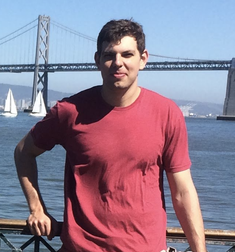 Gedas Bertasius合作论文数Facebook AI3
 Duan Tran合作论文数Dept. of Comput. Sci., Univ. of Illinois at Urbana-Champaign3
 Junsong Yuan (袁浚菘)合作论文数Visual Computing Lab, Department of Computer Science and Engineering, School of Engineering and Applied Sciences, University at Buffalo3
 Rob Fergus合作论文数CILVR Lab, Courant Institute of Mathematical Sciences, New York University;DeepMind New York3
 Duong Anh Duc合作论文数Faculty of Information Technology|University of Natural Sciences3
 Georgia Gkioxari合作论文数Computing + Mathematical Sciences Department, Division of Engineering and Applied Science, California Institute of Technology2
 Deepak Pathak合作论文数The Robotics Institute, School of Computer Science, Carnegie Mellon University2
 Yufei Wang合作论文数2
 Xitong Yang合作论文数Meta2
 Raghav Goyal合作论文数Samsung Research America2
 Antoine Miech合作论文数DeepMind2
 Josef Sivic合作论文数Czech Institute of Informatics, Robotics and Cybernetics, Czech Technical University2
 Ivan Laptev合作论文数Mohamed bin Zayed University of Artificial Intelligence;VisionLabs2
 Jianbo Shi合作论文数Department of Computer and Information Science, School of Engineering and Applied Science, University of Pennsylvania2
 Jitendra Malik合作论文数Department of Electrical Engineering and Computer Sciences, University of California, Berkeley2
 Wen-Sheng Chu合作论文数Google2
 Dhruv Mahajan合作论文数Meta2
 Christoph Feichtenhofer合作论文数Meta2
 Deva Ramanan合作论文数Center for Autonomous Vehicle Research, Robotics Institute, School of Computer Science, Carnegie Mellon University2Yujia Chen合作论文数1Balamanohar Paluri合作论文数1Robert Fergus合作论文数1
 Joost Van Amersfoort合作论文数Google DeepMind1
 Mike Z. Shou合作论文数Show Lab, Department of Electrical & Computer Engineering, National University of Singapore1
 Maksim Bolonkin合作论文数Dartmouth Coll, Hanover, NH 03755 USA1
 Shruti Agarwal合作论文数Dartmouth Coll, Dept Comp Sci, Hanover, NH 03755 USA1
 Fu Jen Chu合作论文数Georgia Institute of Technology1
 Effrosyni Mavroudi合作论文数FAIR, Meta AI1
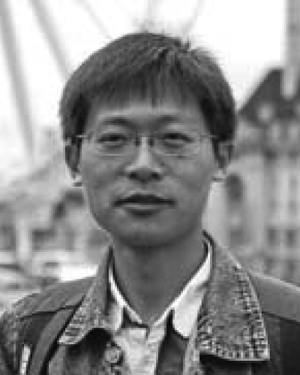 Dongdong Wang合作论文数1
 Deepti Ghadiyaram合作论文数Department of Computer Science, Boston University;Runway1
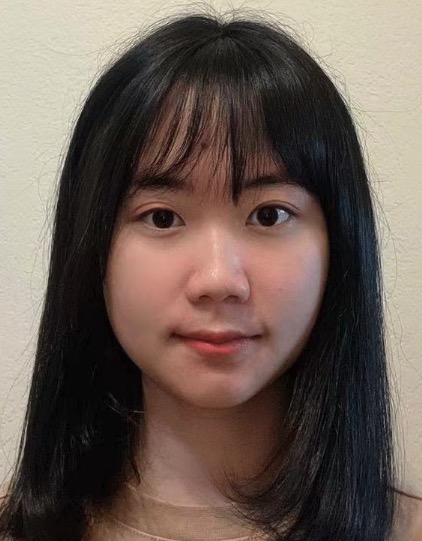 Lan Wang (汪澜)合作论文数Everlyn1
 Linchao Zhu (朱霖潮)合作论文数College of Computer Science and Technology, Zhejiang University1
 Yi Yang (杨易)合作论文数College of Computer Science and Technology, Zhejiang University1
 Chenglin Liu (刘成林)合作论文数National Laboratory of Pattern Recognition, Institute of Automation, Chinese Academy of Sciences;School of Artificial Intelligence, University of Chinese Academy of Sciences;School of Information Science and Technology, Shanghai Tech University1
 Hany Farid合作论文数School of Information, University of California, Berkeley1
 Jue Wang合作论文数College of Engineering, Australian National University1
 Anitha Kannan合作论文数Curai Health1
 Shih-Fu Chang合作论文数Fu Foundation School of Engineering and Applied Science, Columbia University;Electrical Engineering Department, Columbia University;Computer Science Department, Columbia University;Digital Video and Multimedia Lab, Columbia University1





