Food quality depends on both consumer expectations and industry standards. Sensory assessment is one dimension of food quality. The current method of food industry to assess quality of food is product testing through trained sensory panels or consumer panels. These evaluations are effective, but very time consuming in time and human resources. So, food industry is interested in the development of new faster and cheaper methods. This paper proposes a complete computer system to predict quality of bread from color images of its crust and crumb. The proposed method encloses an algorithm to extract the crust and crumb from the bread image, a module to calculate color texture features from images and a machine learning module to predict the sensory traits, using support vector regression among other methods. Statistical evaluation comparing the Pearson correlation (R) between the scores provided by the trained panel and the computer prediction is presented for 24 sensory traits on 54 bread samples. The prediction achieved high reliability for 7 out of 24 traits (R≥0.75), 14 traits with moderate to good reliability (0.5≤R<0.75) and only 3 traits are predicted with bad to moderate reliability (R approximately 0.4). These results are very encouraging for the bread industry, although still subject to some limitations due to the small size of the dataset, due to its application in quality control and product categorization.
Background: Obsessive Compulsive Disorder (OCD) is associated with an increased suicide risk in comparison with general population. Among the suicide risk factors we can highlight psychiatric comorbidities, childhood trauma, obsessive-compulsive severity and a combination of other risk factors related to social and family environment. This study aims to develop and validate a reliable machine learning algorithm to predict suicide risk in OCD patients, based on a combination of clinical and sociodemographic variables. Method: A cohort of 199 OCD patients was followed for an average of 17.8 years (follow-up time range of between 2-28 years) in an OCD-specialized unit. Suicide-related behaviors were documented in the medical records of each participant at the time of occurrence. For the present study, a specialized psychiatrist systematically reviewed all clinical records to extract detailed information on the type of suicide-related behaviors experienced by each participant. Clinical data, including comorbidities, Y-BOCS and CTQ, were collected and used to train supervised machine learning models. Results: The best-performing model included three predictive variables: family history of suicide, affective comorbidities, and substance use. This model achieved a sensitivity of 71.4%, specificity of 74.4%, F1score=62.7% and area under ROC curve of 0.80, demonstrating moderate predictive capability. OCD severity and childhood trauma did not significantly enhance prediction performance. Conclusion: This study highlights the potential of supervised machine learning in identifying suicide risk in OCD patients based on commonly-collected clinical variables. The presence of any of the three predictors that conform the best-performing model (family history of suicide, affective comorbidities, and substance use) is sufficient to detect the presence of suicide-behavior risk. Those predictors are routinely assessed in clinical practice, making this model a feasible instrument for early risk detection. Further research with larger and more diverse cohorts is needed to refine predictive accuracy and integrate additional biomarkers for improved suicide risk stratification.
Dry-cured ham is a traditional Mediterranean meat product consumed throughout the world. This product is very variable in terms of composition and consumer's acceptability is influenced by different factors, among others, visual intramuscular fat and its distribution across the slice, also known as marbling. On-line inter and intramuscular fat evaluation and marbling assessment is of interest for classification purposes at the industry. Currently, this assessment can only be performed by visual inspection and traditional sensory panels. The current work presents the software MarblingPredictor, which predicts the marbling score of the three most representative ham muscles from square regions of interest automatically extracted from a ham slice. It also estimates the rate of subcutaneous and intermuscular fat content in the ham slice. Using MarblingPredictor, the mean absolute error between the true and predicted marbling scores was 0.53, very similar to the error of sensory panellist, which is 0.50. The correlation between the computer and sensory scores is 0.68, which means a moderate to good recognition. This result underscores the relevance of this tool for its application in the ham industry for quality control and categorization purposes. As part of this work, we also present the dataset HamMarbling of annotated ham slices used to train and test the software with the marbling scores provided by the panellists. The MarblingPredictor software and images are available from https://citius.usc.es/transferencia/software/marblingpredictor for Windows- and Linux-based systems for research purposes.
Research has linked camouflaging with compensating and hiding autistic traits during social interactions. Furthermore, these strategies have been linked to increased anxiety and depression symptoms and to greater reliance on camouflaging behaviors among individuals with more autistic traits, even in non-autistic populations. This study evaluated the viability of a machine learning algorithm to predict autistic traits and symptoms of depression and anxiety using camouflaging behaviors. The sample included 601 participants: 102 autistic adults (72 women, 18 men, and 12 non-binary individuals) and 499 non-autistic adults (399 women, 92 men, and eight non-binary individuals). The study predicted autistic traits measured with the Broader Autism Phenotype Questionnaire (BAPQ) subscales - Aloofness, Pragmatics, and Rigidity - as well as the total score of depressive (Patient Health Questionnaire - PHQ-9) and anxious symptoms (General Anxiety Disorder - GAD-7) using the individual items from the Camouflaging Autistic Traits Questionnaire Spanish version (CAT-Q-ES) as predictors. We developed fifty supervised learning models, including support vector machines, neural networks, linear regressors, decision trees, random forests, and Gaussian processes, among others. Correlation coefficients between true and predicted scores were strong for Aloofness (R=.85), Pragmatics (R=.82), and Rigidity (R=.74), being only moderate for Depression (R=.60) and Anxiety (R=.54). Autism diagnosis or gender identity did not improve the prediction's accuracy. These results show the viability of machine learning algorithms to predict autistic traits (Aloofness, Pragmatics and Rigidity) and anxiety-depression symptoms, using the CAT-Q-ES. This suggests potential for developing a tool that may improve autistic traits and emotional problems screening in individuals whose diagnosis is unclear or not yet established, regardless of gender identity.
Kids with autism often “see” the world differently than other kids do. They can have unique experiences of vision, hearing, taste, smell, or touch sensations. These sensory changes are often linked to behavior problems such as isolation, lack of interest, aggression, anxiety, depression, or lack of attention. We thought it would helpful if we could detect behavior problems that might not be obvious yet but are possible in the future. In our study, we used computer programs, based on a type of artificial intelligence called machine learning, to predict possible behavior problems based on how autistic kids receive sensations in their everyday lifes. Our programs analyze the answers to test questions about the way kids perceive the world through their senses, and these programs can then make reliable predictions of behavior problems before they arise. These early predictions allow families and doctors to be aware of and treat those problems early.
We analyzed the ability of 120 encapsulated strains of B. fragilis to agglutinate guinea pig and human red blood cells. Sixteen strains showed a strong hemagglutination (HA) ability, 21 strains a moderate HA ability, 7 strains a weak HA ability and 74 strains did not agglutinate the tested red blood cells. Six strains tested from each HA group were able to adhere to cheek epithelial cells and to a cultured human intestinal cell line. Hemagglutinating strains were the most adhesive. By electron microscopy, pilus-like structures were found in three of the encapsulated adhesive strains. Treatment of the bacterial cells with pronase E reduced both HA ability and adherence of piliated encapsulated, and of piliated non-encapsulated strains. Glucosidase treatment of cells reduced HA activity and adherence of piliated encapsulated and of non-piliated encapsulated strains. Finally, it was found that hemoagglutinating strains are more frequently isolated from clinical specimens (55%) than from feces of healthy donors (20%).
Atypical sensory processing described in autism spectrum disorders (ASDs) frequently cascade into behavioral alterations: isolation, aggression, indifference, anxious/depressed states, or attention problems. Predictive machine learning models might refine the statistical explorations of the associations between them by finding out how these dimensions are related. This study investigates whether behavior problems can be predicted using sensory processing abilities. Participants were 72 children and adolescents (21 females) diagnosed with ASD, aged between 6 and 14 years (M = 7.83 years; SD = 2.80 years). Parents of the participants were invited to answer the Sensory Profile 2 (SP2) and the Child Behavior Checklist (CBCL) questionnaires. A collection of 26 supervised machine learning regression models of different families was developed to predict the CBCL outcomes using the SP2 scores. The most reliable predictions were for the following outcomes: total problems (using the items in the SP2 touch scale as inputs), anxiety/depression (using avoiding quadrant), social problems (registration), and externalizing scales, revealing interesting relations between CBCL outcomes and SP2 scales. The prediction reliability on the remaining outcomes was “moderate to good” except somatic complaints and rule-breaking, where it was “bad to moderate.” Linear and ridge regression achieved the best prediction for a single outcome and globally, respectively, and gradient boosting machine achieved the best prediction in three outcomes. Results highlight the utility of several machine learning models in studying the predictive value of sensory processing impairments (with an early onset) on specific behavior alterations, providing evidences of relationship between sensory processing impairments and behavior problems in ASD.
The study of biology and population dynamics of fish species requires the estimation of fecundity parameters in individual fish in many fisheries laboratories. The traditional procedure used in fisheries research is to classify and count the oocytes manually on a subsample of known weight of the ovary, and to measure few oocytes under a binocular microscope. With an adequate interactive tool, this process might be done on a computer. However, in both cases the task is very time consuming, with the obvious consequence that fecundity studies are not conducted routinely. In this work we develop a computer vision system for the classification of oocytes using texture features in histological images. The system is structured in three stages: 1) extraction of the oocyte from the original image; 2) calculation of a texture feature vector for each oocyte; and 3) classification of the oocytes using this feature vector. A statistical evaluation of the proposed system is presented and discussed.
We present a semi--automatic system that detects and counts the yearly growths rings of cod otoliths. The system is based on morphing an angular section of the otolith to a rectangular region where the vertical directions follow B--splines that we place with an optimization algorithm such that they cross the rings in a close to perpendicular manner. The rectangular area is treated with standard Fourier techniques and classical filters. We obtain a large number of intensity profiles which we further analyze to count the annual rings. The preliminary results achieved on a small subset of our large database are encouraging. The manual steps of the system are easy to be performed automatically as well, however, we postponed their implementation concentrating at the beginning on the global system design.
The study of biology and population dynamics of fish species requires the estimation of fecundity in individual fish in a routine way in many fisheries laboratories. The traditional procedure used by fisheries research is to count the oocytes manually on a subsample of known weight of the ovary, and to measure few oocytes under a binocular microscope. This process could be done on a computer using an interactive tool to count and measure oocytes. In both cases, the task is very time consuming, which implies that fecundity studies are rarely conducted routinely. This work represents the first attempt to design an automatic algorithm to recognize the oocytes in histological images. Two approaches based on region and edge information are described to segment the image and extract the oocytes. An statistical analysis reveals that higher than 74% of oocytes are recognized for both approaches, when an overlapping area between machine detection and true oocyte demanded is greater than 75%.
Palynological data are used in a wide range of applications. Some studies describe the benefits of the development of a computer system to pollinic analysis. The system should involve the detection of the pollen grains on a slice, and their classification. This paper presents a system that realizes both tasks. The latter is based on the combination of shape and texture analysis. In relation to shape parameters, different ways to understand the contours are presented. The resulting system is evaluated for the discrimination of species of the Urticaceae family which are quite similar. The performance achieved is 89% of correct pollen grain classification.
Nowadays many efforts are being focused on design of general systems to manage medical images. Conventional mammography is currently the most efficient technique to detect early breast cancer. Due to special requirements of breast radiography images, integration of digital mammography in PACS is not yet achieved. In this paper, we present a possible solution with a specific miniPACS design to mammography.
Deformable Models are extensively used as a Pattern Recognition technique. They are curves defined within an image domain that can be moved under the influence of internal and external forces. Some trade-offs of standard deformable models algorithms are the selection of image energy function (external force), the location of initial snake and the attraction of contour points to local energy minima when the snake is being deformed. This paper proposes a new procedure using potential fields as external forces. In addition, standard Deformable Models algorithm has been enhanced with both this new external force and algorithmic improvements. The performance of the presented approach has been successfully proved to extract muscles from Magnetic Resonance Imaging (MRI) sequences of Iberian ham at different maturation stages in order to calculate their volume change. The main conclusions of this paper are the practical viability of potential fields used as external forces, as well as the validation of the algorithmic improvements developed. The feasibility of applying Computer Vision techniques, in conjunction with MRI, for determining automatically the optimal ripening time of the Iberian ham is a practical conclusion reached with the proposed approach.
Dry-cured Iberian ham is one of the most valuable meat products in Spain, with a first-rate consumer acceptance. Visually discernible characteristics of fat and lean, such as marbling, have an effect on the acceptability and palatability of ripened Iberian ham pieces. Important marbling properties include the amount and spatial distribution of intramuscular fat streaks. Chemical processing is the only proved way to determine the fat level of pig meat, but this technique is tedious, destroying and unable to offer information about fat distribution. The determination of Iberian ham sensorial quality has traditionally involved appraisal of marbling characteristics by descriptive analysis methods, which rely heavily on visual evaluation and testing by panels of trained graders. We present a novel method to recognize marbling in Iberian ham images to provide the base for the design of an automatic, non-destroying expert computer system, based on computer vision and pattern recognition techniques, which shall allow food technology industries to evaluate and characterize Iberian ham independently of the subjective and variable criteria of human testers.
Humans are interested in the determination of the geo- graphical origin of honeybee pollen due to its nutritional value and therapeutical benefits. This task is currently be- ing developed in a manual way using images from optical microscopy. We have proposed (1, 2) an automatic system for pollen identification, based on its texture classification using a minimum distance classifier. In the present paper, we explore the use of more sophisticated classifiers to im- prove the classification stage. Specifically, we apply sev- eral well-known classifiers, KNN, Support Vector Machine and Multi-Layer Perceptron, in order to increase the classi- fication rate on this problem.
 Manuel Fernández Delgado合作论文数Facultad de Física, Universidad de Santiago de Compostela8
 Arno Formella合作论文数Departamento de Informática, Escola Superior de Enxeñaría Informática, Universidade de Vigo4
 Maria Tubio Fungueirino合作论文数Fdn Inst Invest Sanitaria Santiago Compo FIDIS3
 Fernández-Prieto Montse合作论文数3
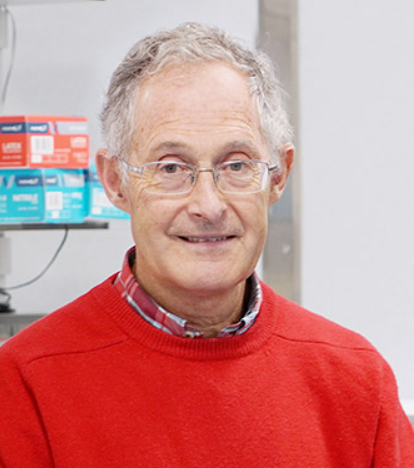 Ángel Carracedo Álvarez合作论文数Center for Research in Molecular Medicine and Chronic Diseases, University of Santiago de Compostela3Pilar Carrión合作论文数3
 Pablo G. Rodriguez合作论文数Escuela Politécnica, Universidad de Extremadura2M Fernandez-Delgado合作论文数1José M Menchón合作论文数1T Antequera合作论文数1lorea marbarrutia合作论文数1
 Sandra Margarida Carvalho合作论文数1Sara Bertolín合作论文数1
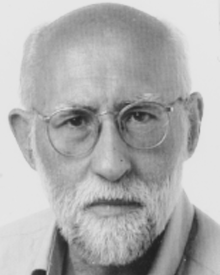 Jj Vidal合作论文数1Cinto Segalàs合作论文数1
 Elena Fulladosa合作论文数1Muñoz Israel合作论文数1
 Cruz Sara合作论文数CIPsi School of Psychology, University of Minho1
 Alberto Gonzalez Villar合作论文数Department of Clinical Psychology and Psychobiology, University of Santiago de Compostela1
 Andres Caro合作论文数Escuela Politécnica, Universidad de Extremadura1Jose Fortes Galvez合作论文数1
 Oscar Goncalves合作论文数University Portucalense Infante D. Henrique;Department of Physical Medicine and Rehabilitation, Spaulding Rehabilitation Hospital;Centre for Health Technology and Services Research, Universidade Portucalense1
 M. Pilar De-Sá-Otero合作论文数1
 Antonio Plaza合作论文数Hyperspectral Computing Laboratory, Department of Technology of Computers and Communications, Escuela Politécnica de Cáceres, University of Extremadura;School of Artificial Intelligence, Xidian University1
 Teresa Antequera合作论文数Facultad de Veterinaria, Universidad de Extremadura1
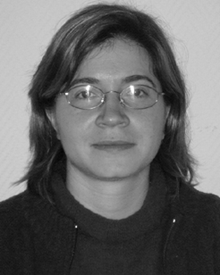 María Rodríguez-Damián合作论文数1
 Adriana Sampaio合作论文数School of Psychology, University of Minho1
 Pino Alonso合作论文数Department of Psychiatry, Bellvitge University Hospital1
 Fran Saborido-Rey合作论文数Instituto de Investigaciones;Federal Research Centre for Fisheries Institute for Sea Fisheries Palmaille;Instituto de Investigaciones, Federal Research Centre for Fisheries Institute for Sea Fisheries Palmaille1S. Alén合作论文数1Eva Real合作论文数1




