Summary An isomer of the natural phthalate ester spatozoate (1), n-butyl 2-benzoyloxymethylbenzoate (2a) and a series of its new derivatives 2b–2s were synthesized and exposed to selected biological screening, as phthalates were reported to possess different biological activities. Compound 2g was found to be the most potent cytotoxic agent with a LD50 = 8.98 µg/ml. In a bactericidal assay the compounds showed a broad spectrum of activities. Compound 2a has a very promising fungicidal activity against Microsporum canis.
The studies presented here deal with the convenient and efficient one-step conversion of o-alkylbenzoic acids into their corresponding isobenzofuran-1 (3H)-ones (phthalides) using NaBrO3/NaHSO3 in a two-phase system. A range of o-alkylbenzoic acids was used with the object of getting a variety of phthalide derivatives as multipurpose biologically active compounds. Seventeen phthalides have been synthesized and tested for cytotoxicity, antibacterial and antifungal activities. Some of these compounds showed promising cytotoxic effects against Artemia salina. Compounds 4j-4p were highly active against Gram-negative and Gram-positive bacteria among all tested compounds. In the fungicidal assay, the compounds showed a broad spectrum of activity against six fungi. All compounds were characterized via elemental analysis, UV, IR, mass and-NMR spectroscopy.
A variety of 2-(1-bromoalkyl) benzoic acids 4 undergo intramolecular nucleophilic substitution reaction when treated with a CsF-Celite as solid base in acetonitrile under reflux condition to give the corresponding cyclized phthalides in moderate to very good yield. These 2-(1-bromoalkyl) benzoic acids 4 are formed by the alpha-bromination of 2-alkylbenzoic acids 3 using N-bromosuccinimide and a catalytic amount of alpha,alpha'-azoisobutyronitrile in carbon tetrachloride under reflux.
Homooligodeoxyribonucleotides differing one nucleotide in length from 12- to 15-mer and from 17- to 20-mer were separated by size with capillary gel electrophoresis (CGE) using an entangled polymer solution in coated capillaries. The resolved components were analyzed by on-line coupling of CGE with electrospray mass spectrometry (ES-MS), denoted as CGE/ES-MS, in the full-scan negative ion detection mode. Baseline separation was achieved for the 12-15-mer oligonucleotide mixtures. Both synthetic phosphodiester oligonucleotide mixtures as well as their phosphorothioate analogues, serving as model compounds for antisense oligonucleotides, could be analyzed by on-line CGE/ES-MS coupling. Terminally phosphorylated and nonphosphorylated synthetic failure sequences could be electrophoretically separated and mass spectrometically characterized as well. This methodology might be a useful tool for synthesis control of phosphodiester oligonucleotides as well as for analysis of phosphorothioate analogues as they are used in antisense drug development.
A mixture of unsaturated fatty acid methyl esters was separated with a new splitless capillary set-up. With the employed apparatus configuration different capillary separation techniques such as capillary high-performance liquid chromatography (cHPLC), capillary electrochromatography (CEC) and pressurized capillary electrochromatography (pCEC) could be applied. The detection and identification of the sample compounds were accomplished by hyphenating these capillary separation techniques with nuclear magnetic resonance (NMR) spectroscopy using a novel configuration of the detection capillary set-up. Using modified electrokinetically driven separation techniques, the electric field was applied solely across the separation column. With this improved interface for capillary liquid chromatography-NMR on-line coupling, the stereochemical assignment of the cis and trans configuration of unsaturated fatty acids could be easily accomplished. Finally, the results of cHPLC-NMR, CEC-NMR and pCEC-NMR coupling experiments were compared.
A variety of allylic and benzylic alcohols have been converted into the corresponding iodides using cesium iodide (CsI) in the presence of boron trifluoride etherate (BF3.Et2O) in acetonitrile under mild conditions.
It has been found that the N-alkylation of aniline, carboxamides and heterocyclic compounds bearing an acidic hydrogen atom attached to nitrogen can be accomplished with alkyl halides in acetonitrile and cesium fluoride–celite employed as a solid base. In this manner, pyrrole, indole, pyrazole, imidazole, benzimidazole, carbazole, phthalimide, indazole, indoline, 2-pyrrolidinone, piperidine and 1,2,4-triazole can be successfully alkylated. The procedure is convenient, efficient and generally gives rise to the N-alkylated product exclusively.
A comparison of different separation methods (high-performance liquid chromatography (HPLC), capillary HPLC (CHPLC) and pressurized capillary electrochromatography (pCEC)) coupled on-line with mass spectrometry (MS) is undertaken using the separation of a crude extract of ergot fungus (secalis cornuti) as an example. New and simple setups for a two-dimensional CHPLC coupled on-line with electrospray ionization (ESI)-MS (2D-CHPLC-MS) as well as for capillary size-exclusion chromatography performed under pCEC conditions and coupled on-line with ESI-MS (CSEC-pCEC-MS) are shown. In addition, an improved method for column packing is presented.
This chapter discusses the mass spectrometry (MS) of oligosaccharides. Past decades have seen a growing awareness of the importance of carbohydrates in biological processes and the recognition of their widespread functions. Among these are the modulation of protein folding and structure, the rendering of proteins resistant to proteolysis, and signaling the intracellular trafficking as cell surface receptors. Their polyhedric character provides numerous functional groups that can undergo specific interactions and that are capable of being modified (e.g., acetylation that leads to the formation of sulfates or phosphates). Monomers within an oligomer can also participate in multiple linkage and branching patterns, thereby creating a vast array of structural isomers. Microheterogeneity as a consequence of variable antennae termination further adds to complexity. Thus, the structural characterization of oligosaccharides, including the determination of not only the sequence of monomers (which themselves are structural isomers) but also the position of each linkage as well as the anomeric configuration of the glycosidic linkages, is important and, at the same time, an exceedingly difficult analytical task.
This chapter focuses on the developments made in chromatography around the world. It describes the current situation of Japanese chromatographic societies and discusses the history of the developments made in chromatography in Japan. Several Japanese scientists started to use Shimadzu and Hitachi gas chromatography (GC) instruments after their introduction and realized the need to organize small meetings to introduce this useful technique to other people. This was the origin of The GC Discussion Group in JSAC that started in September, 1958. With the development of electronic devices and other related technology, the GC systems have changed very much as compared to the original model GC-1A. However, the basic concept has not changed and the applicability of this technique has expanded with time. The development of chromatography and introduction of chromatographic techniques to industry, medicine, and science in the USSR began in the latter half of the 20th century. A.V. Kiselev had been one of the foremost and best known Russian chromatographers. E.N. Gapon suggested precipitation chromatography, based on the formation of precipitates and their migration through the column. This is the single example of a special variant of liquid chromatography, where the in situ formed new phases move along the chromatographic packing.
Diffusion oder Perfusion – das ist nun nicht mehr die Frage bezüglich des elektroosmotischen Flusses (EOF) in kapillaren Festbetten. Der mit Hilfe spezieller NMR-Methoden nachgewiesene intrapartikuläre EOF legt in der Kapillarelektrochromatographie den Grundstein für eine weitere drastische Steigerung der Trennleistung, Massenempfindlichkeit und Analysengeschwindigkeit. Elektrokinetische Perfusionsphänomene in porösen Materialien spielen auch in anderen Bereichen eine wichtige Rolle wie etwa bei der Entwässerung von Abfallschlacken oder der Dekontaminierung belasteter Böden.
This paper presents a new protecting group, the (2-nitrofluoren-9-yl)methoxycarbonyl group. Investigations on the properties of this new modification of the Fmoc-system, such as the solvent-dependent photochemical cleavage, and enhanced lability towards bases, are described, as well as UV-kinetic measurements of the cleavage reaction. In addition, the incorporation of the (2-nitrofluoren-9-yl)methoxycarbonyl group into two peptides, and a sequence-dependent photochemical cleavage reaction are reported.
This chapter presents several chromatography Awardees/scientists, including a biography of each of them. It discusses the unique activities of Awardees, their research experiences, and the description of their discovery(s) and contributions to chromatography. Daniel W. Armstrong has been recognized through a number of citations: Teaching Excellence Award from the Arts and Sciences Council of Texas Tech University, 1985; Faculty Excellence Award, 1988; Teaching Excellence Award, 1988–1989, 1992, and 1994; Curator's Distinguished Professorship, 1989, and others. The chapter describes the unconventional approaches of Daniel W. Armstrong for understanding and developing separations. He used both classic liquid chromatography (LC) and high performance liquid chromatography (HPLC) in an attempt to separate products from a micelle catalyzed reaction. The chapter outlines the theory and mechanism of pseudophase separations. Today, micelles and cyclodextrins are well-known, important elements in a variety of modern, high performance analytical procedures, including chromatography, capillary electrophoresis, and a variety of spectroscopic methods.
o-Alkylbenzenecarboxylic acids are treated with a sodium bromate and sodium hydrogen sulfite reagent under a two-phase system using ethyl acetate as solvent, under mild conditions to give the corresponding cyclized phthalides in moderate to satisfactory yield. Intermediately the α-brominated alkylbenzenecarboxylic acids are formed by the in situ generated hypobromous acid. These α-brominated acids undergo an intramolecular nucleophilic substitution reaction to afford the corresponding γ-lactones.
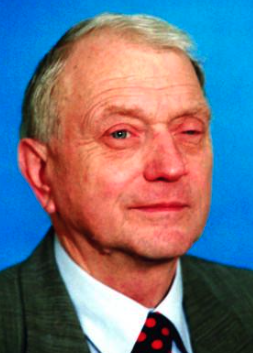 Wolfgang Voelter合作论文数New Research Laboratory, International Center for Chemical and Biological Sciences;Tübingen University32
 Klaus Albert合作论文数Institut für Organische Chemie, Mathematisch-Naturwissenschaftliche Fakultät, Universität Tübingen25
 Kurt Geckeler合作论文数Department of Medical System Engineering, Gwangju Institute of Science and Technology;School of Materials Science and Engineering, Gwangju Institute of Science and Technology21
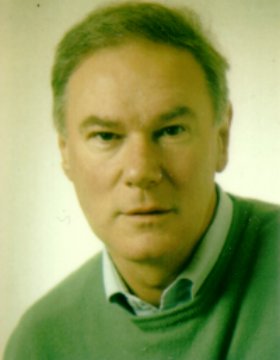 Günther Jung合作论文数Institute of Organic Chemistry, University of Tübingen15
 Eberhard Breitmaier合作论文数15Manfred Mutter合作论文数University of Lausanne13Ulrich Tallarek合作论文数12
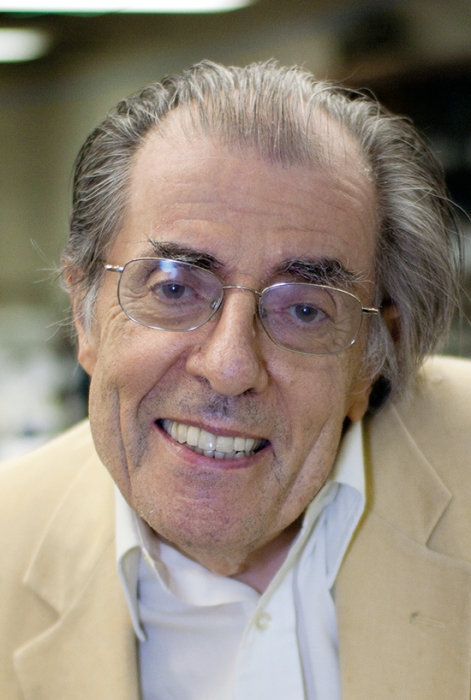 Georges A. Guiochon合作论文数University of Tennessee9
 Henk Van As合作论文数Lab of Biophysics, Wageningen University8Heiner Eckstein合作论文数8Herbert Schott合作论文数8Bernd Henkel合作论文数7
 Khalid M. Khan合作论文数University of Karachi7Mohamed Kutubuddin合作论文数7
 Safdar Hayat合作论文数7
 M. Iqbal Choudhary合作论文数International Center for Chemical and Biological Sciences, University of Karachi6
 Volker Schurig合作论文数Institut für Organische Chemie, Mathematisch-Naturwissenschaftliche Fakultät, Eberhard Karls Universität Tübingen6
 Carl Djerassi合作论文数Department of Chemistry, Stanford University6Wolfgang Rapp合作论文数6Bernhard Koppenhoefer合作论文数6Edward Bunnenberg合作论文数6
 Bettina Pfleiderer合作论文数5B. C. Grabmaier合作论文数5
 Dagmar Van Dusschoten合作论文数Forschungszentrum Jülich GmbH5Wolfgang Parr合作论文数5
 Atta-ur-Rahman (阿塔·拉曼)合作论文数International Center of Chemical and Biological Sciences, University of Karachi5Vojtech Bilik合作论文数5Gisela Kuhfittig合作论文数5michael gerster合作论文数4B Hemmasi合作论文数4Kneifel H合作论文数4Charles W. Gehrke合作论文数4Martin Ilg合作论文数4Wilhelm Schumann合作论文数4Jerzy Leppert合作论文数Centre of Clinical Research;Uppsala University;Central Hospital;Central Hospital, Uppsala University4
 Erdmann Rapp合作论文数Bioprocess Engineering, Max Planck Institute for Dynamics of Complex Technical Systems4Rainer Uhmann合作论文数3G. Blasse合作论文数3Harald Lutz合作论文数3Graeme Nicholson合作论文数3E. Gil-Av合作论文数3Hartmut Frank合作论文数3Robert L. Wixom合作论文数3Ruth Records合作论文数3Hans Fritz合作论文数3Manuel Kunst合作论文数3Hans Eberhardt合作论文数3Franz Brandstetter合作论文数3




