A novel algorithm based on the window construction method using local edge detection is presented. Firstly, in order to construct the adaptive window, a virtual closed edge is formed around each pixel via second order differential operator. Secondly, a novel rule called Dissimilar Intensity Support (DIS) technique is proposed. This rule is used to distinguish support pixels with dissimilar intensity from those with similar intensity for each centered pixel. So that the performance of window-based cost aggregation computation is improved. Thirdly, belief propagation (BP) optimization algorithm is used to obtain the disparity. The experimental results based on Middlebury stereo benchmark show that the proposed algorithm has good performances.
In this paper, the importance of cost aggregation for belief propagation (BP) and the interaction of them are discussed. A global stereo matching algorithm based on BP with local edge detection-based cost aggregation is proposed. Firstly, a virtual closed edge is formed surrounding each pixel via second derivative operator in order to construct the adaptive window. Then, for centered pixel, local cost aggregation is calculated on support pixels in adaptive window. Finally, BP optimization algorithm is used to obtain the disparity. The experiments based on Middlebury benchmark indicate that local edge detection-based cost aggregation can do well with BP and also show encouraging results of proposed stereo matching algorithm.
讨论了区域匹配代价和全局置信度传播算法之间的相互作用,提出一种基于全局置信度传播和区域边缘构建的立体匹配算法。首先,在每个像素的固定邻域内利用二阶微分边缘算子搜索并构建一条虚拟的封闭边缘,形成相应的区域自适应窗口;然后使用自适应窗口内的支持像素计算中心像素之间的匹配代价;最后利用具备加速消息更新机制的置信度传播算法获取视差。实验结果表明,基于区域边缘构建的匹配代价可以较好地适用于全局置信度传播优化算法,提出的立体匹配算法可以在Middlebury标准下获得良好的匹配结果。
Aiming at the mismatching problem in low texture areas and the well-known streaking effect of dynamic programming, an improved algorithm based on binocular stereo matching technology is proposed to generate three-dimensional reconstruction model for low texture images. Firstly, matching cost is computed based on the distinctiveness of pixels and the similarity among them. Secondly, an adaptive polygon-based support window is adopted in the matching cost aggregation, and a simple tree structure dynamic programming is introduced to guide the pixel to pixel matching. Finally, a simple and efficient method is presented to refine the mismatching pixels detected according to the left-right consistency constraint. To testify the applicability of the proposed algorithm, it is applied to low texture gray images captured in the real situation, and the experimental results show that smooth and vivid 3D points cloud models are generated.
A stereo reconstruction algorithm is proposed, which combines techniques of local edge detection, stereo matching and binocular vision. Firstly, the left and right images of the object are taken by calibrated binocular cameras. Then, in rectified matching images, the closed local edge is formed surrounding each pixel by Prewitt edge operator in order to construct an adaptive window, in which cost aggregation is calculated by normalized cross-correlation-coefficient. Next, local winner-take-all optimization is used to obtain disparity, and image smoothing technique is introduced to reduce matching errors. Finally, points cloud of the object is produced based on calibration information of binocular cameras and results of stereo matching. The experimental results show that the proposed algorithm can overcome impacts of real environment on reconstruction system and successfully achieves smooth and vivid 3D points cloud models of different real objects with high automation degree.
Ni-P coated carbon fibers were prepared by a chemical plating method. The microstructures of uncoated and coated carbon fibers were investigated by SEM and XRD, and the surface atom compositions were studied by EDS. The tensile strength of the carbon fibers was analyzed by a Weibull statistical method. Results show that the number of defects on the carbon fiber surfaces decreases after Ni-P coating. When the thickness of the Ni-P coatinc, reaches 0.149 mu m, the tensile strength of carbon fibers exhibits a maximum value of 3.10 GPa, a 8.77% increase compared to the uncoated carbon fibers, which might be ascribed to the elimination of a number of surface defects by the Ni-P coating.
A new method has been developed to detect the formation of carbon–carbon bonds by Diels–Alder reactions based on the fluorescence quenching of conjugated polymers. Conjugated copolymers containing various amounts of functional furan pendant groups (PFP–F) have been synthesized and characterized. A maleimide group linked to 1‐methyl‐4,4‐bipyridinium iodide acts as the electron quencher (M–MV 2+ ). The Diels–Alder reaction between the maleimide and furan moieties results in intramolecular electron transfer from the conjugated copolymer to the MV 2+ , and thus the fluorescence of the conjugated copolymer is quenched via a photoinduced electron transfer process. Higher furan concentrations increase the fluorescence quenching efficiency ( EF ) of the conjugated copolymers. The copolymer PFP–F 3 with the highest furan content can be used as a platform to monitor Diels–Alder reactions. The PFP–F 3 /M–MV 2+ system can also be used to screen catalysts for Diels–Alder reactions.
A new method is developed for sensitive, homogeneous, and convenient assays of nucleases and methyltransferases using complexes of cationic conjugated polymers with DNA containing a fluorescein tag at the 5'-terminus (DNA-F1). The cleavage of DNA by nucleases can be monitored by fluorescence spectra by observing conjugated-polymer or fluorescein emission changes in aqueous solutions.
In this paper, the micromixing efficiency in a membrane reactor was studied by employing competing parallel reactions. In the membrane reactor, one liquid is added gradually into another one through the nano-scaled micropores of ultrafiltration membranes. The effects of molecular weight cut-off (MWCO) of membranes, permeation fluxes, Reynolds number and reactants concentrations on the segregation index were investigated. The results show that the decreasing membranes MWCO and the increasing Reynolds number favor the enhancement of micromixing efficiency. Compared with the other reactors (e.g. stirring tank, ultrasound, static mixer, Coutte flow reactor), the membrane reactor exhibits more excellent effects in intensifying micromixing.
Polyacrylonitrile fibers were pre-oxidized in air at temperatures from 180℃ to 265℃. The morphological rearrangement, chemical reactions and the variation of thermal properties during the continuous thermal oxidative stabilization were characterized by X-ray diffraction, FT-IR, DSC and TG. Results showed that: (1) When the pre-oxidative temperature was below 200℃, the cyclization reaction was slow. When the temperature increased from 200℃ to 230℃, the cyclization index increased rapidly and the reaction was drastic. The reaction rate reduced after the pre-oxidative temperature reached above 230℃. (2) The pre-oxidation reactions were first initiated in an amorphous region, thereafter the reactions propagated to the crystalline regime at high tempe ̄ratures where reactions were drastic. (3) When the pre-oxidative temperature was below 210℃, the crystal size increased, corresponding to stress crystallization. The crystallite size decreased rapidly after the pre-oxidative temperature reached above 210℃.
The effect of graphitization temperature on the microstructure, elemental composition, surface character and mechanical properties of carbon fibers was studied by means of SEM, XRD, Raman spectroscopy, elemental analysis and mechanical testing. It was found that with an increase of heat treatment temperature ranging from 1800 to 3000, the percent carbon increases from 92.62% to 99.99%, the interlayer spacing d(002) decreases, both d(100) and the d(110) increase, L-a and L-c increase, tensile strength decreases, and Young' s modulus increases.
Polyaluminum chloride (PAC), containing about 70% Alb, with the Al concentration (0.35mol/L) satisfying the in situ water treatment, was synthesized efficiently with a membrane reactor. The effects of the membrane molecular weight cut-off (MWCO), the membrane modules lengths and the reaction temperatures on the species distribution, pH values, pressure drops and flow rates of aluminum solutions were studied. It is found that lower membrane MWCO, shorter membrane module length and higher temperature are favorable for the synthesis of PAC with high Alb content.
Al13 or Alb is usually regarded as the most efficient species of polyaluminum chloride (PAC), the performance flocculant for water treatment. This paper was intended to report a new method to synthesize PAC with high content Alb, by using the membrane reactor. NaOH solutions were managed to permeate slowly through the micropores of ultrafiltration membrane into AICl3 solutions under the suitable transmembrane pressure(TMP). Meanwhile NaOH drops size was limited to nano-scale, resulting in dramatical reduction of the characteristic diffusion time and great increment of contact interface between the strong base and Al ions in solution to favor the formation of Al(OH)4-, the precursor of Al13, so few precipitates and much Alb are produced. When the initial concentration of AlCl3/NaOH is 0.40/2.0 (mol/L), MWCO = 10000, TMP = 0.0085 MPa, T = 305 K and B (molar ratio of OH-/Al3+) = 2.25, the quantity of Alb attains about 80%. The results of 27Al-NMR determination showed that the Al13 content is equal to Alb content. And our PAC product has shown better flocculation effects than the commercial product.
An aminated PAN resin was spun by wet-spinning technology. The influence of amination degree on the hydrophilicity of the PAN resin was characterized by the contact angle method. The effect of coagulation temperature, dimethylsulfoxide concentration in the coagulation bath and aminating degree on cross-sectional morphologies of the nascent filament, and void structure were investigated by optical niicroscopy, SEM and mercury porosimetry. Results show that the cross-section shape gets more and more circular with increasing of aminating degree and coagulation temperature. The total void volume decreases with the aminating degree. Some large voids with diameter ranging from 6 mm to 100 mm were transformed to small voids below 140 nm when the aminating degree was enhanced. The proportion of large voids in the total void volume was decreased with increasing coagulation temperature and dimethylsulfoxide concentration.
The effects of three retardants, NH4Cl, (NH4)2SO4 and NH4H2PO4, on the thermal decomposition of wood-derived rayon fiber have been investigated by thermogravimetry–mass spectrometry (TG–MS) analysis. The main thermal decomposition of pure wood-derived rayon fiber, like other cellulosic materials, takes place rapidly over a narrow temperature range. When wood-derived rayon fiber is impregnated with the fire retardants, there is a shift in the temperature of maximum rate of weight loss to the values lower than 300°C, while the amount of char residue formed is increased. The fire retardants have resulted in the increase of the intensity (peak area) of m/z=18 and 28 MS signals, but the decrease of the intensity of m/z=44 MS signals. Furthermore, it appears with a relative decrease of the intensity of m/z=60 and 68 MS signals, which means that low levels of levoglucosan and levoglucosenone are recorded in the presence of the fire retardants. Finally, the relationship between char residue formation and the relative quantity of levoglucosan is determined.
Drawing machine under pressurized steam is key equipment for preparation high quatity PAN precursors. It has excellent tensile strength and high degree of orientation.
The thermal pyrolysis of wood-derived rayon fiber has been studied from ambient temperature up to 800 °C by thermogravimetry–mass spectrometry (TG–MS) analysis in an inert environment. Following an initial plateau region, the wood-derived rayon fiber rapidly decomposes in a narrow temperature range of 300–350 °C. After this sharp weight loss, there is a gradual but constant weight loss up to 800 °C. The values of kinetic parameters have been determined by using two dynamic thermogravimetric curves (TG and DTG). The data show that kinetics of wood-derived rayon fiber is similar to that of other cellulosic materials thermal degradation. Gases and tarry volatile products formed from the pyrolysis of wood-derived rayon fiber are monitored by MS. Water (m/z 18) is the predominant ion observed, followed by CO (m/z 28), CO2 (m/z 44) and CH4 (m/z 16). The MS signals show that the tarry volatiles are composed of varieties of compounds. The formation reactions of primary products from the pyrolysis are discussed in detail in the present paper.
 Chunxiang Lu (吕春祥)合作论文数Institute of Coal Chemistry, Chinese Academy of Sciences6
 Yonggang Yang (杨永岗)合作论文数中国科学院山西煤炭化学研究所6
 Feipeng Da (达飞鹏)合作论文数School of Automation, Southeast University5
 Zhongzhou Liu合作论文数5
 Licheng Ling (凌立成)合作论文数School of Chemical Engineering, East China University of Science and Technology4
 Zhiqian Jia (贾志谦)合作论文数College of Chemistry, Beijing Normal University4ZM Wang合作论文数3
 Gangping Wu (吴刚平)合作论文数中国科学院山西煤炭化学研究所3
 Shu Wang (王树)合作论文数Institute of Chemistry, Chinese Academy of Sciences3Ren Fu-zhong合作论文数2
 Qingfeng Liu合作论文数†Department of Physics and Astronomy, University of Kansas2Peijing Wang合作论文数2
 Tang YanLi (唐艳丽)合作论文数陕西师范大学化工学院2
 Daoben Zhu (朱道本)合作论文数Institute of Chemistry, Chinese Academy of Sciences2
 Yuliang Li (李玉良)合作论文数Institute of Chemistry, Chinese Academy of Sciences;University of Chinese Academy of Sciences2Lizhen Zhang合作论文数1Zhao Liang合作论文数1F. Feng合作论文数1M. Yu合作论文数1Jing Shao合作论文数1Xing-ming ZHU (朱星明)合作论文数1HuanZhang Wang (王焕章)合作论文数1DongFeng Li (李东风)合作论文数1
 Rui Zhang (张瑞)合作论文数College of Chemistry and Chemical Engineering, Southwest Petroleum University1
 Xinrui Duan (段新瑞)合作论文数School of Chemistry & Chemical Engineering, Shaanxi Normal University1
 Hongfei Wang (王红飞)合作论文数中国科学院空间应用工程与技术中心1
 Xueping Wu (武雪萍)合作论文数Institute of Agricultural Resources and Regional Planning, Chinese Academy of Agricultural Sciences1Yonghong Li (李永红)合作论文数中国科学院山西煤炭化学研究所1
 Haojing Wang (王浩静)合作论文数中国科学院西安光学精密机械研究所1
 Kaixi Li (李开喜)合作论文数中国科学院山西煤炭化学研究所1
 Jingtang Zheng (郑经堂)合作论文数College of Chemical Engineering, China University Of Petroleum1
 Jianguo Zhang (张建国)合作论文数School of Mechatronics Engineering, Beijing Institute of Technology1
 Yonggen Lv (吕永根)合作论文数College of Materials Science and Engineering, Donghua University1
 Xinkui Wang (王新葵)合作论文数School of Chemistry, Dalian University of Technology1Yu Yang合作论文数1
 Xiaoyi Liang (梁晓怿)合作论文数School of Chemical Engineering, East China University of Science and Technology1
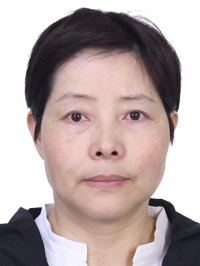 Yuelian Peng (彭跃莲)合作论文数College of Environmental and Energy Engineering, Beijing University of Technology1
 Shuxia Yuan (袁淑霞)合作论文数Institute of Coal Chemistry, Chinese Academy of Sciences;University of Chinese Academy of Sciences1Zhangwen Chen合作论文数1Quan Zhou合作论文数1Zhaohui Xu合作论文数1Minghui Yu合作论文数1Pu-Cha Zhou合作论文数1Rongbo Guan合作论文数1Yinglu Ji合作论文数1Hongbing Li合作论文数1Bijiang Zhang合作论文数1Xiao-Xuan Lu合作论文数1




