We present SCOPE (Scale-Consistent One-Pass Estimation of 3D Geometry), a novel approach for estimating 3D geometry from extended monocular video sequences, where existing methods struggle to maintain both geometric accuracy and temporal consistency across hundreds of frames. Our approach generates affine-invariant 3D point maps with shared parameters across entire sequences, enabling consistent scale-invariant representations. We introduce three key innovations: viewpoint-invariant geometry aligning multi-perspective points in a unified reference frame; appearance-invariant learning enforcing consistency across exponential timescales; and frequency-modulated positioning enabling extrapolation to sequences vastly exceeding training length. Experiments across diverse datasets demonstrate significant improvements, reducing relative point map error by 24.2
Recent advances in video generation have made minute-level synthesis possible; however, generating long videos remains challenging due to error accumulation, attribute drift, and the limited availability of long video data. In this paper, we introduce an infinite-length video generation framework that focusing on addressing these issues and produces high-quality, dynamic, and identity-consistent single-shot long videos. We first finetune a diffusion model as a video extension model on large-scale short video data to autoregressively generate temporally coherent clips. Inspired by the success of large language models (LLMs), we adopt causal attention computation between clips to further finetune this model on long video data. In this way, the tokens in one clip (short video) are computed by bidirectional attention while tokens among clips are computed by unidirectional attention. This design leverages the strengths of modern diffusion models while preserving long-term context information, effectively mitigating error accumulation and attribute drift. To achieve memory efficiency during inference, we adopt a key-value (KV) caching mechanism to maintain a constant KV memory. Furthermore, we introduce truncation-rectified flow (T-RFlow) technique to further suppress error accumulation. Experimental results demonstrate the effectiveness of our method. Our framework establishes a new benchmark for realistic and coherent minute-level video synthesis.
Pose-driven human image animation aims to synthesize a human video from a reference image and a target pose sequence while preserving identity consistency, motion consistency, and temporal coherence. Existing methods often improve controllability by introducing duplicated reference branches or dedicated pose encoders. However, such designs incur substantial architectural redundancy, memory overhead, and adaptation cost, especially when transferred to large diffusion transformer (DiT) video models. In this paper, we introduce DanceDiT, a lightweight and practical framework for pose-driven human image animation. DanceDiT adapts pretrained DiT video models while explicitly balancing identity consistency, motion consistency, and efficiency. DanceDiT treats the reference image as a unified frame in the latent video sequence, enabling direct interaction between reference and video tokens within a single DiT backbone and eliminating the need for a duplicated reference network. For motion control, DanceDiT encodes the target pose sequence in the shared 3D variational autoencoder (VAE) latent space and injects pose information through an adaptive normalization fusion design, which dynamically modulates pose guidance across denoising steps without relying on a heavy pose encoder. To preserve identity under this lightweight design, we further incorporate complementary facial and semantic cues using ArcFace and DINOv2. In addition, we adopt a capability-preserving fine-tuning strategy that updates only attention-related layers and task-specific conditioning modules, reducing adaptation overhead while retaining the pretrained model’s generative capability. Experiments demonstrate that DanceDiT achieves strong quantitative and qualitative results, providing a better balance among identity consistency, motion consistency, and efficiency than prior heavier pose-driven human animation systems.
Recent advances in diffusion models have shown impressive performance in controllable image generation and dense prediction tasks. However, existing approaches typically treat diffusion-based controllable generation and dense prediction as separate tasks, overlooking the potential benefits of jointly modeling the heterogeneous distributions. In this work, we introduce UniGP, a framework built upon MMDiT, which unifies controllable generation and dense prediction through simple joint training, without the need for complex task-specific designs or losses, while preserving the backbone's versatile priors. By learning controllable generation and prediction under different conditions, our model effectively captures the joint distribution of image-geometry pairs. UniGP is capable of versatile controllable generation, dense prediction, and joint generation. Specifically, the proposed UniGP consists of DUGP and a unified dataset training strategy. The former, following the principle of Occam's razor, uses only a copied image branch of MMDiT to model dense distributions beyond RGB, while the latter integrates heterogeneous datasets into a unified training framework to jointly model generation and perception tasks. Extensive experiments demonstrate that our unified model surpasses prior unified approaches and performs on par with specialized methods. Furthermore, we demonstrate that multi-task joint training provides complementary benefits: generative priors enrich perceptual details, while perceptual learning improves structural alignment in generation.
Autoregressive (AR) language modeling is the dominant paradigm for text generation, yet its sequential token-by-token decoding makes inference memory-bound and inefficient. Existing acceleration approaches, such as speculative decoding and diffusion language models, can yield speedups under certain conditions but do not directly address high-load batch serving–the scenario most critical for industrial-scale deployment. We introduce K-Forcing, a push-forward language modeling paradigm for joint next-k-token decoding. K-Forcing distills an existing AR model into a conditional push-forward mapping–one that transforms independent uniform noise variables into a joint sample of multiple future tokens in a single forward pass. This design preserves fixed-length outputs, reuses the AR teacher backbone, and remains compatible with standard AR serving infrastructure. We train this mapping via progressive self-forcing distillation, which gradually expands the prediction window while enabling the student to closely match the sequence distribution of the AR teacher. We evaluate K-Forcing on LM1B and OpenWebText using a standard causal Transformer backbone. When aggressively configured to generate k = 4 tokens per forward pass, K-Forcing delivers approximately 2.4-3.5x speedup across different batch sizes, while incurring modest quality degradation relative to its AR teacher. As inference increasingly dominates the lifetime compute cost of modern LLMs, K-Forcing offers a promising route toward accelerating AR generation under real-world high-load deployment.
Building trustworthy medical multimodal large language models (MLLMs) is critical for reliable clinical decision support. Existing medical hallucination benchmarks mainly focus on data collection, but often ignore where hallucinations originate within the reasoning process. We find that hallucination sources vary across samples: errors may arise from visual misrecognition, incorrect medical knowledge recall, or flawed reasoning integration. To enable source-level hallucination diagnosis, we introduce ClinHallu, a benchmark for stage-wise hallucination diagnosis in medical MLLM reasoning. ClinHallu contains 7,031 validated instances, where each instance is augmented with a structured reasoning trace decomposed into Visual Recognition, Knowledge Recall, and Reasoning Integration. We also use stage-replacement interventions to measure how correcting specific stages affects the final answer. Beyond evaluation, we show that trace-supervised fine-tuning reduces stage-wise hallucinations. ClinHallu provides a fine-grained hallucination testbed for diagnosing and mitigating reasoning failures in medical MLLMs. The benchmark is publicly available at https://github.com/alibaba-damo-academy/ClinHallu.
Recent advances in diffusion models have significantly improved text-to-video generation, enabling personalized content creation with fine-grained control over both foreground and background elements. However, precise face–attribute alignment across subjects remains challenging, as existing methods lack explicit mechanisms to ensure intra-group consistency. Addressing this gap requires both explicit modeling strategies and face-attribute-aware data resources. We therefore propose $\textbf{\textit{Lumos{X}}}$, a framework that advances both data and model design. On the data side, a tailored collection pipeline orchestrates captions and visual cues from independent videos, while multimodal large language models (MLLMs) infer and assign subject-specific dependencies. These extracted relational priors impose a finer-grained structure that amplifies the expressive control of personalized video generation and enables the construction of a comprehensive benchmark. On the modeling side, Relational Self-Attention and Relational Cross-Attention intertwine position-aware embeddings with refined attention dynamics to inscribe explicit subject–attribute dependencies, enforcing disciplined intra-group cohesion and amplifying the separation between distinct subject clusters. Comprehensive evaluations on our benchmark demonstrate that $\textit{LumosX}$ achieves state-of-the-art performance in fine-grained, identity-consistent, and semantically aligned personalized multi-subject video generation.
Accurate liver segmentation from contrast-enhanced MRI is essential for diagnosis, treatment planning, and disease monitoring. However, it remains challenging due to limited annotated data, heterogeneous enhancement protocols, and significant domain shifts across scanners and institutions. Traditional image-to-image translation frameworks have made great progress in domain generalization, but their application is not straightforward. For example, Pix2Pix requires image registration, and cycle-GAN cannot be integrated seamlessly into segmentation pipelines. Meanwhile, these methods are originally used to deal with cross-modality scenarios, and often introduce structural distortions and suffer from unstable training, which may pose drawbacks in our single-modality scenario. To address these challenges, we propose CoSSeg-TTA, a compact segmentation framework for the GED4 (Gd-EOB-DTPA enhanced hepatobiliary phase MRI) modality built upon nnU-Netv2 and enhanced with a semi-supervised mean teacher scheme to exploit large amounts of unlabeled volumes. A domain adaptation module, incorporating a randomized histogram-based style appearance transfer function and a trainable contrast-aware network, enriches domain diversity and mitigates cross-center variability. Furthermore, a continual test-time adaptation strategy is employed to improve robustness during inference. Extensive experiments demonstrate that our framework consistently outperforms the nnU-Netv2 baseline, achieving superior Dice score and Hausdorff Distance while exhibiting strong generalization to unseen domains under low-annotation conditions.
Autoregressive large language models (LLMs) have unified a vast range of language tasks, inspiring preliminary efforts in autoregressive (AR) video generation. Existing AR video generators either diverge from standard LLM architectures, depend on bulky external text encoders, or incur prohibitive latency due to next-token decoding. In this paper, we introduce Lumos-1, an LLM-based unified model for AR video generation with efficient discrete diffusion. Firstly, to fit videos with LLMs, we identify that 1D RoPE is ill-suited for visual spatiotemporal correlation modeling, and while demonstrated to be useful, naive 3D RoPE exhibits imbalanced frequency spectra. Therefore, we propose MM‑RoPE, which preserves the original textual RoPE while seamlessly accommodating video data with comprehensive frequency spectra and scaled 3D positions. Secondly, to fit the video data's nature and overcome the inefficiency of next-token decoding, we adopt a parallel and mask-based discrete diffusion with the intra-frame bidirectional and inter-frame causal attention masks. Based on this attention mask, we uncover the frame‑wise loss imbalance issue caused by spatial information redundancy and propose Autoregressive Discrete Diffusion Forcing, which introduces temporal tube masking during training with a compatible inference‑time masking policy to avoid quality degradation. Despite using only 48 GPUs for pre-training, limited data and a discrete tokenizer, Lumos-1 achieves results surpassing those of Show-o2 on GenEval, COSMOS-Video2World on VBench-I2V, and OpenSoraPlan on VBench-T2V.
Generating human videos with realistic and controllable motions is a challenging task. While existing methods can generate visually compelling videos, they lack separate control over four key video elements: foreground subject, background video, human trajectory and action patterns. In this paper, we propose a decomposed human motion control and video generation framework that explicitly decouples motion from appearance, subject from background, and action from trajectory, enabling flexible mix-and-match composition of these elements. Concretely, we first build a ground-aware 3D world coordinate system and perform motion editing directly in the 3D space. Trajectory control is implemented by unprojecting edited 2D trajectories into 3D with focal-length calibration and coordinate transformation, followed by speed alignment and orientation adjustment; actions are supplied by a motion bank or generated via text-to-motion methods. Then, based on modern text-to-video diffusion transformer models, we inject the subject as tokens for full attention, concatenate the background along the channel dimension, and add motion (trajectory and action) control signals by addition. Such a design opens up the possibility for us to generate realistic videos of anyone doing anything anywhere. Extensive experiments on benchmark datasets and real-world cases demonstrate that our method achieves state-of-the-art performance on both element-wise controllability and overall video quality.
Contrast-enhanced computed tomography (CECT) is pivotal for highlighting tissue perfusion and vascularity, yet its clinical ubiquity is impeded by the invasive nature of contrast agents and radiation risks. While virtual contrast enhancement (VCE) offers an alternative to synthesizing CECT from non-contrast CT (NCCT), existing methods struggle with anatomical heterogeneity and spatial misalignment, leading to inconsistent enhancement patterns and incorrect details. This paper introduces PHASOR, a volumetric diffusion framework for high-fidelity CT VCE. By treating CT volumes as coherent sequences, we leverage a video diffusion model to enhance structural coherence and volumetric accuracy. To ensure anatomy-phase consistent synthesis, we introduce two complementary modules. First, anatomy-routed mixture-of-experts (AR-MoE) anchors distinct enhancement patterns to anatomical semantics, with organ-specific memory to capture salient details. Second, intensity-phase aware representation alignment (IP-REPA) highlights intricate contrast signals while mitigating the impact of imperfect spatial alignment. Extensive experiments across three datasets demonstrate that PHASOR significantly outperforms state-of-the-art methods in both synthesis quality and enhancement accuracy.
CT interpretation requires radiologists to review hundreds of volumetric slices per examination, making reporting time-consuming and highly expertise-dependent. Automated CT report generation offers a promising route to improving clinical efficiency, yet the field still lacks a generalizable CT report generation foundation model that supports multi-region reporting and remains robust across external real-world cohorts. Intrinsic inconsistencies in reporting style and diagnostic terminology across cohorts make naive joint training prone to noisy textual supervision, thereby limiting model generalizability. Here we present Astra, a generalizable CT report generation foundation model trained on 90,678 thoracoabdominal CT-report pairs (CTRgDB) with 353,671 abnormalities spanning eight organ systems. By harmonizing report style and further refining diagnostic consistency via reinforcement learning, Astra achieves style-consistent and diagnostically accurate report generation across diverse anatomical regions and institutions. Evaluating on CTRgDB and six external cohorts, Astra achieves state-of-the-art performance with a 44.1
Long video generation has gained increasing attention due to its widespread applications in fields such as entertainment and simulation. Despite advances, synthesizing temporally coherent and visually compelling long sequences remains a formidable challenge. Conventional approaches often synthesize long videos by sequentially generating and concatenating short clips, or generating key frames and then interpolate the intermediate frames in a hierarchical manner. However, both of them still remain significant challenges, leading to issues such as temporal repetition or unnatural transitions. In this paper, we revisit the hierarchical long video generation pipeline and introduce LumosFlow, a framework introduce motion guidance explicitly. Specifically, we first employ the Large Motion Text-to-Video Diffusion Model (LMTV-DM) to generate key frames with larger motion intervals, thereby ensuring content diversity in the generated long videos. Given the complexity of interpolating contextual transitions between key frames, we further decompose the intermediate frame interpolation into motion generation and post-hoc refinement. For each pair of key frames, the Latent Optical Flow Diffusion Model (LOF-DM) synthesizes complex and large-motion optical flows, while MotionControlNet subsequently refines the warped results to enhance quality and guide intermediate frame generation. Compared with traditional video frame interpolation, we achieve 15x interpolation, ensuring reasonable and continuous motion between adjacent frames. Experiments show that our method can generate long videos with consistent motion and appearance. Code and models will be made publicly available upon acceptance. Our project page: https://jiahaochen1.github.io/LumosFlow/
The paper-to-video task converts a research paper into a structured video abstract, distilling key concepts, methods, and conclusions into an accessible, well-organized format. While state-of-the-art video generation models demonstrate potential, they are constrained by limited context windows, rigid video duration constraints, limited stylistic diversity, and an inability to represent domain-specific knowledge. To address these limitations, we introduce Preacher, the first paper-to-video agentic system. Preacher employs a topdown approach to decompose, summarize, and reformulate the paper, followed by bottom-up video generation, synthesizing diverse video segments into a coherent abstract. To align cross-modal representations, we define key scenes and introduce a Progressive Chain of Thought (P-CoT) for granular, iterative planning. Preacher successfully generates high-quality video abstracts across five research fields, demonstrating expertise beyond current video generation models. Code will be released at: https://github.com/GenVerse/Paper2Video
Virtual try-on systems have long been hindered by heavy reliance on human body masks, limited fine-grained control over garment attributes, and poor generalization to real-world, in-the-wild scenarios. In this paper, we propose JCo-MVTON (Jointly Controllable Multi-Modal Diffusion Transformer for Mask-Free Virtual Try-On), a novel framework that overcomes these limitations by integrating diffusion-based image generation with multi-modal conditional fusion. Built upon a Multi-Modal Diffusion Transformer (MM-DiT) backbone, our approach directly incorporates diverse control signals – such as the reference person image and the target garment image – into the denoising process through dedicated conditional pathways that fuse features within the self-attention layers. This fusion is further enhanced with refined positional encodings and attention masks, enabling precise spatial alignment and improved garment-person integration. To address data scarcity and quality, we introduce a bidirectional generation strategy for dataset construction: one pipeline uses a mask-based model to generate realistic reference images, while a symmetric “Try-Off” model, trained in a self-supervised manner, recovers the corresponding garment images. The synthesized dataset undergoes rigorous manual curation, allowing iterative improvement in visual fidelity and diversity. Experiments demonstrate that JCo-MVTON achieves state-of-the-art performance on public benchmarks including DressCode, significantly outperforming existing methods in both quantitative metrics and human evaluations. Moreover, it shows strong generalization in real-world applications, surpassing commercial systems.
Relighting is a crucial task with both practical demand and artistic value, and recent diffusion models have shown strong potential by enabling rich and controllable lighting effects. However, as they are typically optimized in semantic latent space, where proximity does not guarantee physical correctness in visual space, they often produce unrealistic results—such as overexposed highlights, misaligned shadows, and incorrect occlusions. We address this with **UniLumos**, a unified relighting framework for both images and videos that brings RGB-space geometry feedback into a flow-matching backbone. By supervising the model with depth and normal maps extracted from its outputs, we explicitly align lighting effects with the scene structure, enhancing physical plausibility. Nevertheless, this feedback requires high-quality outputs for supervision in visual space, making standard multi-step denoising computationally expensive. To mitigate this, we employ path consistency learning, allowing supervision to remain effective even under few-step training regimes. To enable fine-grained relighting control and supervision, we design a structured six-dimensional annotation protocol capturing core illumination attributes. Building upon this, we propose **LumosBench**, a disentangled attribute-level benchmark that evaluates lighting controllability via large vision-language models, enabling automatic and interpretable assessment of relighting precision across individual dimensions. Extensive experiments demonstrate that UniLumos achieves state-of-the-art relighting quality with significantly improved physical consistency, while delivering a 20x speedup for both image and video relighting. Code is available at https://github.com/alibaba-damo-academy/Lumos-Custom.
We introduce MVRoom, a controllable novel view synthesis (NVS) pipeline for 3D indoor scenes that uses multi-view diffusion conditioned on a coarse 3D layout. MVRoom employs a two-stage design in which the 3D layout is used throughout to enforce multi-view consistency. The first stage employs novel representations to effectively bridge the 3D layout and consistent image-based condition signals for multi-view generation. The second stage performs image-conditioned multi-view generation, incorporating a layout-aware epipolar attention mechanism to enhance multi-view consistency during the diffusion process. Additionally, we introduce an iterative framework that generates 3D scenes with varying numbers of objects and scene complexities by recursively performing multi-view generation (MVRoom), supporting text-to-scene generation. Experimental results demonstrate that our approach achieves high-fidelity and controllable 3D scene generation for NVS, outperforming state-of-the-art baseline methods both quantitatively and qualitatively. Ablation studies further validate the effectiveness of key components within our generation pipeline.
We introduce PlayerOne, the first egocentric realistic world simulator, facilitating immersive and unrestricted exploration within vividly dynamic environments. Given an egocentric scene image from the user, PlayerOne can accurately construct the corresponding world and generate egocentric videos that are strictly aligned with the real scene human motion of the user captured by an exocentric camera. PlayerOne is trained in a coarse-to-fine pipeline that first performs pretraining on large-scale egocentric text-video pairs for coarse-level egocentric understanding, followed by finetuning on synchronous motion-video data extracted from egocentric-exocentric video datasets with our automatic construction pipeline. Besides, considering the varying importance of different components, we design a part-disentangled motion injection scheme, enabling precise control of part-level movements. In addition, we devise a joint reconstruction framework that progressively models both the 4D scene and video frames, ensuring scene consistency in the long-form video generation. Experimental results demonstrate its great generalization ability in precise control of varying human movements and worldconsistent modeling of diverse scenarios. It marks the first endeavor into egocentric real-world simulation and can pave the way for the community to delve into fresh frontiers of world modeling and its diverse applications.
Controllable character animation remains a challenging problem, particularly in handling rare poses, stylized characters, character-object interactions, complex illumination, and dynamic scenes. To tackle these issues, prior work has largely focused on injecting pose and appearance guidance via elaborate bypass networks, but often struggles to generalize to open-world scenarios. In this paper, we propose a new perspective that, as long as the foundation model is powerful enough, straightforward model modifications with flexible fine-tuning strategies can largely address the above challenges, taking a step towards controllable character animation in the wild. Specifically, we introduce RealisDance-DiT, built upon the Wan-2.1 video foundation model. Our sufficient analysis reveals that the widely adopted Reference Net design is suboptimal for large-scale DiT models. Instead, we demonstrate that minimal modifications to the foundation model architecture yield a surprisingly strong baseline. We further propose the low-noise warmup and "large batches and small iterations" strategies to accelerate model convergence during fine-tuning while maximally preserving the priors of the foundation model. In addition, we introduce a new test dataset that captures diverse real-world challenges, complementing existing benchmarks such as TikTok dataset and UBC fashion video dataset, to comprehensively evaluate the proposed method. Extensive experiments show that RealisDance-DiT outperforms existing methods by a large margin.
Recent advances in video generation have enabled the synthesis of high-quality and visually realistic clips using diffusion transformer models. However, most existing approaches operate purely in the 2D pixel space and lack explicit mechanisms for modeling 3D structures, often resulting in temporally inconsistent geometries, implausible motions, and structural artifacts. In this work, we introduce geometric regularization losses into video generation by augmenting latent diffusion models with per-frame depth prediction. We adopted depth as the geometric representation because of the great progress in depth prediction and its compatibility with image-based latent encoders. Specifically, to enforce structural consistency over time, we propose a multi-view geometric loss that aligns the predicted depth maps across frames within a shared 3D coordinate system. Our method bridges the gap between appearance generation and 3D structure modeling, leading to improved spatio-temporal coherence, shape consistency, and physical plausibility. Experiments across multiple datasets show that our approach produces significantly more stable and geometrically consistent results than existing baselines.
 Hao Luo (罗浩)合作论文数Alibaba Damo Academy23
 Weihua Chen (陈威华)合作论文数Alibaba DAMO Academy22
 Pichao Wang合作论文数NVIDIA14
 Hao Li (李昊)合作论文数Artificial Intelligence Innovation and Incubation (AI³) Institute, Fudan University11
 Chaohui Yu (于超辉)合作论文数DAMO Academy, Alibaba Group10
 Zhibin Wang合作论文数10
 Qiang Zhou合作论文数Alibaba Group8
 Jingkai Zhou合作论文数Alibaba DAMO Academy8Jiasheng Tang合作论文数Alibaba Group7
 Hangjie Yuan (袁杭杰)合作论文数Zhejiang University;Alibaba Cloud;University of Cambridge7Shuning Chang合作论文数Alibaba Group5Fei Du合作论文数5
 Wei Jiang (姜伟)合作论文数Institute of Cyber-Systems and Control, College of Control Science and Engineering, Zhejiang University5
 Leonidas Guibas合作论文数Computer Science Department, School of Engineering, Stanford University;Department of Electrical Engineering, Stanford University5
 Rong Jin合作论文数Alibaba Group5
 Shuting He (何淑婷)合作论文数School of Computing and Artificial Intelligence, Shanghai University of Finance and Economics4
 Qixing Huang合作论文数4
 Bo Dong合作论文数Zhejiang University;Alibaba Group3
 Jiazheng Xing (幸家正)合作论文数Department of Control Science and Engineering, Zhejiang University3
 Jianlong Yuan合作论文数3Xianzhe Xu合作论文数Alibaba Grp, Machine Intelligence Technol Lab, Hangzhou, Peoples R China3Yuang Liu合作论文数East China Normal University, No. 3663, North Zhongshan Road, 200062 Shanghai, China3
 Hu Yu (俞虎)合作论文数University of Science and Technology of China3
 Shaofeng Zhang (张少锋)合作论文数School of Artificial Intelligence and Data Science, University of Science and Technology of China3Yuqi Zhang合作论文数Hefei University of Technology3
 Yi Yang (杨易)合作论文数College of Computer Science and Technology, Zhejiang University3
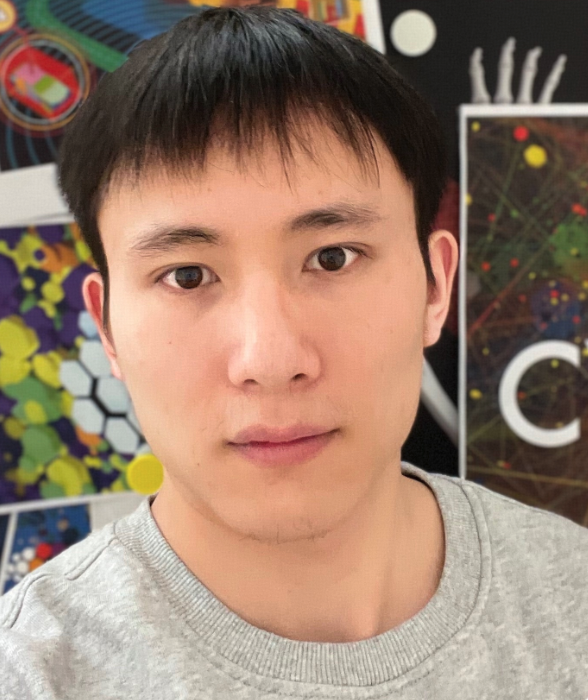 Jingyun Liang合作论文数Alibaba Group3
 Zhen Lei (雷震)合作论文数National Laboratory of Pattern Recognition, Institute of Automation, Chinese Academy of Sciences;School of Artificial Intelligence, University of Chinese Academy of Sciences;Centre for Artificial Intelligence and Robotics, Hong Kong Institute of Science & Innovation, Chinese Academy of Sciences3Jingqi Bai合作论文数2Benzhi Wang合作论文数CBSR & NLPR, Institute of Automation, Chinese Academy of Sciences;University of Chinese Academy of Sciences2Min Wei合作论文数2
 Jinzhi Zhang合作论文数Tsinghua Visual Tntelligence and Computational Imaging Lab, Department of Electronic Engineering, Tsinghua University2Wenjian Huang合作论文数Dept. of Computer Science and Engineering, Southern University of Science and Technology2
 Yabing Wang合作论文数2
 Ruqi Huang (黄儒麒)合作论文数Tsinghua Shenzhen International Graduate School, Tsinghua University2
 Yuan Hu合作论文数University of Chinese Academy of Sciences, Beijing 100049, China2
 Yang Yang (杨阳)合作论文数National Laboratory of Pattern Recognition, Institute of Automation, Chinese Academy of Sciences;School of Artificial Intelligence, University of Chinese Academy of Sciences2
 Chenjie Cao (曹辰捷)合作论文数Alibaba DAMO Academy;School of Data Science, Fudan University2
 Jianfeng Dong (董建锋)合作论文数School of Computer Science and Technology, Zhejiang Gongshang University2Zhihui Lin合作论文数Tsinghua University2
 Lu Fang (方璐)合作论文数Department of Electronic Engineering, Tsinghua University2
 Hengshuang Zhao (赵恒爽)合作论文数Division of AI & Data Science, School of Computing and Data Science, The University of Hong Kong2
 Jianguo Zhang (张建国)合作论文数Department of Computer Science and Engineering, College of Engineering, Southern University of Science and Technology2Tao Feng合作论文数Tsinghua University2Sitong Wu合作论文数Institute of Deep Learning, Baidu Research;National Engineering Laboratory for Deep Learning Technology and Application2
 Feng Zhao (赵峰)合作论文数Department of Automation, School of Information Science and Technology, University of Science and Technology of China2
 Junchi Yan (严骏驰)合作论文数Department of Computer Science and Engineering, Shanghai Jiao Tong University;ReThinkLab, Shanghai Jiao Tong University2Hongyan Li合作论文数1




