The retinoblastoma protein (RB) is a well-characterized repressor of E2F transcriptional activity that controls genes involved in cell proliferation during the G1 phase. Here, we examine the effect of RB on chromatin organization and uncover a non-canonical role for RB in which it promotes the removal of cohesin from insulators and thereby induces the expression of adjacent genes. We identify that RB colocalizes with cohesin across the human genome. During mitosis, RB facilitates the removal of cohesin from CTCF sites, with this effect persisting into early G1, impacting loop formation and extrusion at topologically associating domain (TAD) boundaries. Chromosome conformation capture assays reveal that RB reduces insulation at TAD boundaries and promotes enhancer-promoter interactions marked by histone 3 lysine 27 acetylation. In this way, RB enhances the transcription of hundreds of genes beyond the E2F transcriptional program, a finding that expands our understanding of this key tumor suppressor and cell cycle regulator.
Intrinsic and acquired resistance to CDK4/6 inhibitors (CDK4/6i) is a critical challenge in hormone receptor-positive (HR+), human epidermal growth factor receptor 2-negative (HER2-) metastatic breast cancer (MBC). CDK2 inhibitors (CDK2i) show promise in this context, with several currently under early-phase clinical evaluation. Here, by analyzing tumor and liquid biopsies from patients treated with the selective CDK2i PF-07104091, we observed that PF-07104091 monotherapy achieved disease stabilization in a cohort of CDK4/6i-resistant HR+/HER2- MBC patients. Notably, responses were observed irrespective of RB expression and phosphorylation, whereas non-progressive disease appeared more frequently among patients whose tumors retained wild-type TP53. Studies in established and patient-derived cell lines further substantiated that the growth suppressive effects of CDK2i were independent of RB status in CDK4/6i-resistant models. CDK2i activity reduced DNA replication rate, increased DNA damage, and inhibited mitotic entry, with growth inhibition dependent on p53 expression. These findings indicate that CDK dependency shifts from CDK4/6 toward CDK2 as cells transition from CDK4/6i-sensitive to CDK4/6i-resistant state. The distinct mechanisms of CDK2i and CDK4/6i support enhanced synergistic activity in HR+/HER2- MBC with acquired resistance to CDK4/6i therapy.
Abstract The retinoblastoma protein (RB) suppresses the activity of the E2F transcription factor family, controlling cellular proliferation. Recent studies, however, indicate that RB's role in chromatin organization, which is not yet fully understood, might be distinct from this E2F-dependent regulation. Employing chromosome conformation capture at a single nucleosome resolution, we identified RB as a cell cycle-regulated repressor of cohesin-dependent loop formation at topologically associating domain (TAD) boundaries. RB depletion increased the number and size of cohesin-dependent loops and strengthened topologically associating domains (TADs). This phenomenon was specific to the G1 phase and was not observed in the S phase, indicating that this novel RB function is regulated by the cell cycle. Mechanistically, RB showed extensive colocalization with cohesin in the human genome, and it impacted cohesin’s distribution on the chromatin. Active RB reduced cohesin from RB-bound TAD boundaries and decreased cohesin activity therein, as assessed by the increased K105/106 acetylation of the cohesin subunit SMC3. This led to reduced insulation in chromosome conformation capture assays. Importantly, by weakening the insulation activity of the adjacent insulators, RB non-canonically enhanced the expression of non-E2F target genes salient for cell adhesion and extracellular matrix organization. When RB was lost, cells showed a more rapid cellular detachment rate and an elevated migration rate, indicating that this novel RB function controls specific transcriptional programs rather than arbitrary genes to regulate the process of cell adhesion and migration. Overall, we conclude that RB has a central role in the interplay between cell cycle and chromatin organization, by repressing the cohesin-dependent loop formation at TAD boundaries. This RB function safeguards E2F-independent transcriptional programs driven by active enhancers and helps maintain cellular adhesion to the extracellular matrix. Citation Format: Hanjun Lee, Ioanna-Maria Gkotinakou, Badri Krishnan, Nicholas J. Dyson, Michael S. Lawrence, Ioannis Sanidas. RB represses cohesin-dependent loop formation and activates E2F-independent transcription [abstract]. In: Proceedings of the American Association for Cancer Research Annual Meeting 2024; Part 1 (Regular Abstracts); 2024 Apr 5-10; San Diego, CA. Philadelphia (PA): AACR; Cancer Res 2024;84(6_Suppl):Abstract nr 1648.
Despite the great significance of the tumor suppressor Rb in cancer biology, the full spectrum of its binding pattern in human cells was yet to be established. Here, we report that rather than exclusively associating with E2F-bound promoters, chromatin-bound Rb associates with three distinct types of loci—E2F1-bound promoters, AP-1-bound enhancers, and CTCF-bound insulators. The binding pattern of Rb correlated with cohesin binding and chromatin accessibility in all three types of Rb-bound regions. When cells entered the S phase after the G1/S checkpoint, Rb redistributed from promoters to enhancers, leading to distinct transcriptional changes. These Rb-bound enhancers were cell-type-specific, in contrast to Rb-bound promoters that were constitutively present throughout most human cell types. Overall, our study provides a comprehensive view on the role of the tumor suppressor Rb, which has a well-preserved role in the G1 phase of regulating transcription at E2F1-bound promoters, while having a cell-type-specific role in the S phase when cells are determined to replicate. Citation Format: Hanjun Lee, Ioanna M. Gkotinakou, Ioannis Sanidas, Michael S. Lawrence, Nicholas J. Dyson. The non-canonical role of Rb in enhancers and insulators [abstract]. In: Proceedings of the American Association for Cancer Research Annual Meeting 2023; Part 1 (Regular and Invited Abstracts); 2023 Apr 14-19; Orlando, FL. Philadelphia (PA): AACR; Cancer Res 2023;83(7_Suppl):Abstract nr 1420.
쌀은 국내 농산물 중 압도적으로 생산 비중이 높은 작물이다. 쌀 수급 안정은 매년 주요 국정 과제이며 쌀 수급 정책 수립을 위한 수확량 예측이 매우 중요하다. 그럼에도 불구하고 타 농산물 대비 관련 연구가 부족한 실정이며 기존 연구들 또한 예측 정확도 측면에서 개선의 여지가 많다. 이에 본 연구에서는 moderate resolution imaging spectroradiometer (MODIS) 데이터셋을 통해 normalized difference vegetation index (NDVI), enhanced vegetation index (EVI)와 같은 식생지수를 기상 데이터와 함께 수집하고, 시계열적 특성을 고려한 딥러닝 기법인 BiLSTM을 활용하여 쌀생산량 예측모델을 제안하였다. 본 연구의 결과는 쌀 수급 정책 의사결정에 유용한 근거자료로 활용될 수 있을 것이다.
Computational pipelines for chromatin immunoprecipitation sequencing analysis can neglect colocalization events that occur in a mere subset of the genome. Here, we detail a streamlined approach for assessing colocalization of chromatinbound proteins using the bedGraph2Cluster and PanChIP algorithms. Using histone modifications as an example, bedGraph2Cluster performs clustering analysis on chromatin binding patterns of target proteins. PanChIP then compares these clusters with a reference library of chromatin binding patterns and measures the overlap in peaks, capturing the heterogeneity in chromatin binding and colocalization patterns.For complete details on the use and execution of this protocol, please refer to Sanidas et al. (2022).1
While the link between serum proteins and cancer has been studied in an effort to enable early-stage cancer detection, factors that might perturb this link has been poorly understood. To ask this question, we performed serum protein profiling on a prospective cohort of 601 individuals with or without lung, pancreatic, or colorectal cancers and identified ten distinct serum protein signatures with distinct link to the patient metadata. Importantly, we discovered that a positive history of alcohol consumption is a major factor that diminishes the sensitivity of serum protein-mediated liquid biopsy in early-stage malignancies, resulting in a 44% decline in the sensitivity of detecting American Joint Committee on Cancer (AJCC) stage I malignancies. Our data provide evidence that patient lifestyle can affect the sensitivity of liquid biopsy and suggest the potential need for abstinence from alcohol before measurement during serum protein-based cancer screening.
The interaction of RB with chromatin is key to understanding its molecular functions. Here, for first time, we identify the full spectrum of chromatin-bound RB. Rather than exclusively binding promoters, as is often described, RB targets three fundamentally different types of loci (promoters, enhancers, and insulators), which are largely distinguishable by the mutually exclusive presence of E2F1, c-Jun, and CTCF. While E2F/DP facilitates RB association with promoters, AP-1 recruits RB to enhancers. Although phosphorylation in CDK sites is often portrayed as releasing RB from chromatin, we show that the cell cycle redistributes RB so that it enriches at promoters in G1 and at non-promoter sites in cycling cells. RB-bound promoters include the classic E2F-targets and are similar between lineages, but RB-bound enhancers associate with different categories of genes and vary between cell types. Thus, RB has a well-preserved role controlling E2F in G1, and it targets cell-type-specific enhancers and CTCF sites when cells enter S-phase.
RB restricts G1/S progression by inhibiting E2F. Here, we show that sustained expression of active RB, and prolonged G1 arrest, causes visible changes in chromosome architecture that are not directly associated with E2F inhibition. Using FISH probes against two euchromatin RB-associated regions, two heterochromatin domains that lack RB-bound loci, and two whole-chromosome probes, we found that constitutively active RB (ΔCDK-RB) promoted a more diffuse, dispersed, and scattered chromatin organization. These changes were RB dependent, were driven by specific isoforms of monophosphorylated RB, and required known RB-associated activities. ΔCDK-RB altered physical interactions between RB-bound genomic loci, but the RB-induced changes in chromosome architecture were unaffected by dominant-negative DP1. The RB-induced changes appeared to be widespread and influenced chromosome localization within nuclei. Gene expression profiles revealed that the dispersion phenotype was associated with an increased autophagy response. We infer that, after cell cycle arrest, RB acts through noncanonical mechanisms to significantly change nuclear organization, and this reorganization correlates with transitions in cellular state.
The recent identification of Vitamin E acetate as one of the causal agents for the e-cigarette, or vaping, product use associated lung injury (EVALI) is a major milestone. In membrane biophysics, Vitamin E is a linactant and a potent modulator of lateral phase separation that effectively reduces the line tension at the two-dimensional phase boundaries and thereby exponentially increases the surface viscosity of the pulmonary surfactant. Disrupted dynamics of respiratory compression-expansion cycling may result in an extensive hypoxemia, leading to an acute respiratory distress entailing the formation of intraalveolar lipid-laden macrophages. Supplementation of pulmonary surfactants which retain moderate level of cholesterol and controlled hypothermia for patients are recommended when the hypothesis that the line-active property of the vitamin derivative drives the pathogenesis of EVALI holds.
 Michael S. Lawrence合作论文数Harvard Medical School;Lawrence Laboratory, Mass General Cancer Center, Massachusetts General Hospital6
 Ioannis Sanidas合作论文数Laboratory of Biochemistry, The Aristotle University6
 Nicholas J. Dyson合作论文数5Krishnan Badri合作论文数Department of Biochemistry and Cellular and Molecular Biology, University of Tennessee, Knoxville, Tennessee 37996.3
 Purva Rumde合作论文数2
 Marcello Stanzione合作论文数Tech Univ Dresden, Fac Med, Inst Physiol Chem, Fetscherstr 74, D-01307 Dresden, Germany2Dong Wook Kim合作论文数1
 Soroush Hajizadeh合作论文数1
 Gabriel Golczer合作论文数Harvard Medical School, Massachusetts General Hospital1Benjamin J Drapkin合作论文数1Seo Yihl Kim合作论文数Seoul Natl Univ, Res Inst Vet Sci, Coll Vet Med, Dept Vet Physiol, Seoul 08826, South Korea1Chenyue Lu合作论文数1
 Moshe Sade-Feldman合作论文数Broad Institute of MIT and Harvard, Cambridge, MA, USA.1
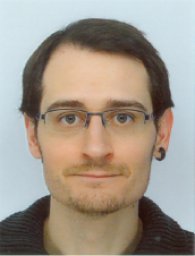 Boulay Gaylor合作论文数Center for Cancer Research, Massachusetts General Hospital and Harvard Medical School1Cho Sukki合作论文数1
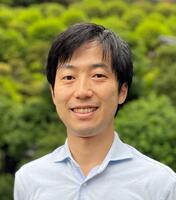 Takaaki Yasuhara (安原崇哲)合作论文数Graduate School of Biostudies, Kyoto University1
 Meagan B. Ryan合作论文数University of North Carolina, University of North Carolina at Chapel Hill1
 Soo Young Park合作论文数Department of Materials Science and Engineering, College of Engineering, Seoul National University1
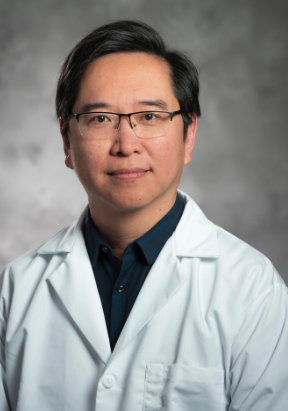 Lee Zou合作论文数Department of Pharmacology and Cancer Biology, School of Medicine, Duke University;Duke Cancer Institute, School of Medicine, Duke University1
 Je-Yoel Cho合作论文数School of Dentistry, Kyungpook National University1
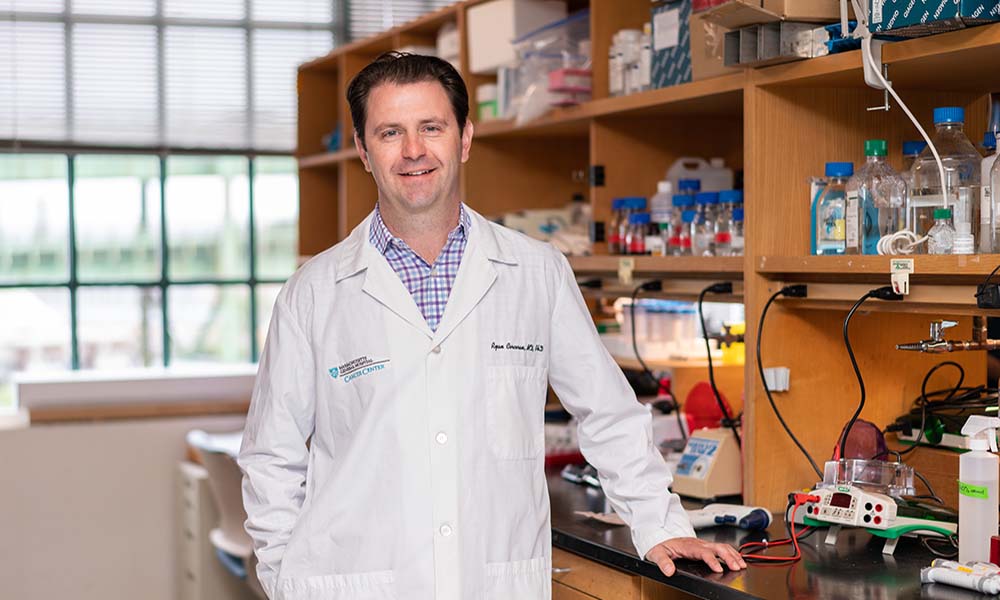 Ryan B. Corcoran合作论文数Department of Medicine, Harvard Medical School1Linda T. Nieman合作论文数1
 Miguel N. Rivera合作论文数Harvard Medical School, Harvard University1Jun Zhong合作论文数McKusick-Nathans Institute of Genetic Medicine and the Department of Biological Chemistry, Johns Hopkins University1Wilhelm Haas合作论文数Department of Cell Biology, Harvard Medical School1
 Jin-Hyeok Hwang合作论文数Division of Gastroenterology, College of Medicine, Seoul National University;Department of Internal Medicine, Seoul National University Bundang Hospital1




