Analyses of AI power geometries have so far predominantly focused on the perspectives of Silicon Valley’s Big Tech and its “loud futuring” of AI. However, for comprehending Silicon Valley’s imaginaries surrounding AI, an analysis of the “quiet futuring” of AI-related groups and communities in the San Francisco Bay Area is equally essential because they are an integral part of its imaginative landscape of AI. Based on an ethnographic study conducted between December 2024 and February 2026, this article reveals how Silicon Valley’s imaginative landscape of AI is anchored in appropriated places, constructed within specific social figurations, and characterized by distinct discursive thickenings. Although this landscape may at first appear fragmented or even contradictory, taken together, it forms a coherent “quiet futuring” of AI. The associated visions extend beyond the technology itself, focusing instead on the potential futures it presents. Three themes dominate these visions: the possible futures of AGI, the possible futures of job loss, and the possible futures of AI geopolitics. With such an analysis, the article contributes to the discussion in “Media, Culture & Society” about the power geometries of AI by showing how Silicon Valley’s agency also refers to the local anchoring of AI’s imaginative landscape.
As a network of journalists and technologists, Hacks/Hackers represents a transformative force reshaping traditional journalistic practice. From advocating for data journalism to proposing automated journalism, Hacks/Hackers plays a crucial role in “curating AI into being” by advancing AI-driven communication as journalism’s digital future. Based on a media ethnography conducted across Germany, the United Kingdom, and the USA, the article demonstrates that this happens in a three-step process: (1) introducing AI as an emerging trend, (2) consolidating the vision through illustrative examples, and (3) normalizing it. Ultimately, Hacks/Hackers’ curation serves as a twofold amplifier—supporting a sociotechnical imaginary of AI not only as the future of journalism but also as a transformative force in society more broadly.
As a network of journalists and technologists, Hacks/Hackers represents a transformative force reshaping traditional journalistic practice. From advocating for data journalism to proposing automated journalism, Hacks/Hackers plays a crucial role in "curating AI into being" by advancing AI-driven communication as journalism's digital future. Based on a media ethnography conducted across Germany, the United Kingdom, and the USA, the article demonstrates that this happens in a three-step process: (1) introducing AI as an emerging trend, (2) consolidating the vision through illustrative examples, and (3) normalizing it. Ultimately, Hacks/Hackers' curation serves as a twofold amplifier- supporting a sociotechnical imaginary of AI not only as the future of journalism but also as a transformative force in society more broadly.
Current media coverage surrounding ChatGPT, LaMDA, and Luminous has brought questions about the automation of communication into the mainstream. Artificially intelligent media are no longer merely mediating instances of communication but are themselves becoming communicative participants. This has generated broad public discussion about these systems and others and the challenges they bring to domains such as education, public discourse, and journalistic production. Much of this new “AI hype” revolves around the question of whether such systems will soon “replace” humans as workers in these various domains, whether they will develop “super intelligence” and as a result challenge or even marginalize the human species. With this panel, we would like to give this discussion a new twist by asking what a critical perspective on communicative AI should look like. If these systems of “automated media” are not about intelligence, but about communication, what should a critical approach to them consider? Raising this question, we want to present five key critical perspectives on communicative AI. The first paper develops a critical perspective on the visions of pioneer communities. It poses the question of whether today's pioneering communities ultimately reproduce basic patterns of the old Californian Ideology in relation to communicative AI. A second paper focuses on the perspective of data colonialism. In essence, it is about showing that a critical engagement with communicative AI means addressing the question of the extent to which systems of automated communication are linked to existing data infrastructures and nexus models of exploitation. The third paper highlights the perspective of economic value production. Since more and more social situations include human-machine communication, more social interactions become possible to monetize. This relates not only to commercial settings, but also in the public sector as it relates to the welfare state. The fourth paper focuses on a material perspective. At its core is the question of how Big Tech procures power for data centres to construct the emerging geography of cheap computational labour needed for communicative AI. The fifth paper deals with the perspective of an eco-political economy of communicative AI. Through this prism, the question of the ecological consequences of communicative AI can be addressed. By contrasting these five critical perspectives on communicative AI, we want to discuss what an overarching, critical approach to communicative AI might look like.
This article aims to foster the systematic integration of "digital futures" into media and communication research. The concept of "digital futures" encompasses all imaginations of possible futures that envision a social world in which, first, digital media and their infrastructures play a constitutive role in constructing sociality, and second, these media are seen as primary drivers of societal transformation. A scientific engagement with digital futures should be integral to a media and communication research approach focused on "emergence." This requires broadening our perspective on media-related transformations, which have predominantly been characterized through a focus on "consequences." To date, research has largely focused on the effects and impacts of established media and their infrastructures. However, by expanding our view to include emergence, we inevitably confront questions about the future-an essential dimension of human agency, inherently tied to our capacity to project possible futures.
The aim of this article is to contribute to a more systematic inclusion of digital futures-or, more precisely: various possible digital futures-in research on the refiguration of societies. A social-scientific examination of digital futures should be part of media and communication research on emergence. In order to make this connection tangible, the article examines in a first step how previous research on the global transformations of societies with digital media and their infrastructures has been dominated by a focus on "consequence" rather than "emergence". However, if one broadens the view to emergence-as is argued in a second step-one is inevitably confronted with questions of the future, as it is a fundamental aspect of human agency in general. In a third step, this argument leads to a closer look at figurations of digital futures, which are understood in a twofold sense: on the one hand, as social figurations in which digital futures are produced, and on the other hand, as the figurations of human coexistence in the digital future imagined in the process. This conceptual clarification is finally condensed into a sketch of media and communication research on emergence.
Der Artikel hat das Ziel dazu beizutragen, dass die digitale Zukunft – oder genauer gesagt: verschiedene mögliche digitale Zukünfte – systematischer als bisher in der Forschung zur Refiguration von Gesellschaften einbezogen wird. Eine sozialwissenschaftliche Auseinandersetzung mit digitalen Zukünften sollte dabei Teil einer Medien- und Kommunikationsforschung der Emergenz sein. Um diesen Zusammenhang greifbar zu machen, setzt sich der Artikel in einem ersten Schritt damit auseinander, inwieweit die bisherige Forschung zum globalen Wandel von Gesellschaften mit digitalen Medien und deren Infrastrukturen von einem Fokus auf „Konsequenz“ statt „Emergenz“ dominiert wurde. Erweitert man aber – wie in einem zweiten Schritt argumentiert wird – den Blick auf Emergenz, ist man unweigerlich mit Fragen der Zukunft konfrontiert, da diese ein grundlegender Aspekt menschlicher Agency überhaupt ist. Dieses Argument führt in einem dritten Schritt zu einer näheren Betrachtung von Figurationen digitaler Zukünfte, die in einem doppelten Sinne begriffen werden: einerseits als soziale Figurationen, in denen digitale Zukünfte hervorgebracht werden, andererseits als die dabei imaginierten Figurationen menschlichen Zusammenlebens in der digitalen Zukunft. Diese konzeptionelle Klärung wird abschließend zur Skizze einer Medien- und Kommunikationsforschung der Emergenz verdichtet.
Este artigo explora o conceito de midiatização da cultura a partir da revisão e análise das teorias da mídia. Através dele argumento que as abordagens existentes esclarecem aspectos importantes da cultura dos meios de comunicação, embora sejam incapazes de fornecer uma base adequada para pesquisas teórica e empiricamente fundamentadas sobre as relações entre mídia e sociedade. Com o objetivo de contribuir para a construção de uma perspectiva teórico-metodológica que permita compreender a crescente onipresença e as forças de moldagem da comunicação, faço uma distinção mais precisa entre o conceito de mediação e midiatização afastando desde último as questões que envolvem a(s) lógica(s) da mídia e reconhecendo seu caráter de metaprocesso.
Protective shields and medical devices produced in Makerspaces as well as the early detection of disease through self-measurement have been widely publicized in the media coverage of the Covid-19 pandemic. This article systematically examines this phenomenon by analyzing the coverage of the Maker and Quantified Self movements in Germany and the UK. Through a discourse analysis of (online) newspapers, the article demonstrates that during the pandemic the coverage of both pioneer communities was markedly positive. Makers were often portrayed as problem solvers, while Quantified Self members were depicted as seismographs of the pandemic. Overall, our analysis reveals an overarching narrative that constructs members of these groups as "do-it-yourself heroes" who respond to the Covid-19 pandemic through their experimental practices, promoting a form of technological solutionism.
As research fields, mediatization and Human-Machine Communication (HMC) have distinct historical trajectories. While mediatization research is concerned with the fundamental interrelation between the transformation of media and communications and cultural and societal changes, the much younger field of HMC delves into human meaning-making in interactions with machines. However, the recent wave of “deep mediatization,” characterized by an increasing emphasis on general communicative automation and the rise of communicative AI, highlights a shared interest in technology’s role within human interaction. This introductory article examines the trajectories of both fields, demonstrating how mediatization research “zooms out” from overarching questions of societal and cultural transformations, while HMC tends to “zoom in” to approach the concrete situatedness of the interaction between humans and machines. It is argued that we need to combine both perspectives to better understand how the automation of communication transforms the social construction of culture and society. This article offers an overview of the key themes explored in this thematic issue, highlighting the productive intersection of HMC and mediatization within each article. Additionally, it identifies potential avenues for future research emerging from this fruitful intersection.
Research typically considers corporate actors such as large tech companies or government agencies as drivers of deep mediatization, the increasing saturation of society by digital media and their infrastructures. This article aims to focus on another group of collective actors: pioneer communities, exemplified by the Maker, Hacks/Hackers, and Quantified Self movements. They are characterized by their experimental practices and their visions of media-related, digital futures. On the basis of published research, the article discusses their life cycle, starting with their formation, when they emerged from the context of social movements and technology-related communities, through their peak phase, during which they receive media attention, to their dispersion phase, a stage in their development characterized by their “becoming everyday” as their experimentation is absorbed into everyday practices. It is argued that the role pioneer communities play in processes of deep mediatization rests in their ability to curate experimentation and visions of digital futures.
In media and communication research the datafied society has become a core concept for describing a society in which data-based sense making has become a fundamental principle of the construction of reality. In datafied societies it is often suggested that the possibilities of human agency are evolving, while also recognizing that a new form of machinic agency has become a ubiquitous phenomenon of daily life. The thematic issue Agency in a datafied society takes up such a discussion and aims to contribute to further clarification through theoretical and empirical articles. This introduction aims to achieve two objectives: First, it addresses the intellectual risks posed by empirical and conceptual ambiguity linked to vague interpretations of a datafied society. In tandem, it systematically categorizes the diverse applications of the term agency in the context of investigating a datafied society. Both serve as a foundation for situating the further contributions to this special issue in within the broader discourse of the field.
This article unpacks the deep engagement of media and communication studies with questions of social construction and the material infrastructures on which media's role in social construction is based. For that reason, for communication scholars, there is no contradiction between constructivism and realism, and the notion of a materialist phenomenology seems necessary and unproblematic. We take materialist phenomenology further as a concept via the notion of entanglements, drawing on Karen Barad. Then we go on to explore two contemporary debates in media and communication studies which illustrate its broader commitment to understanding the materiality of social construction: first, the broad phenomenon of deep mediatization (Couldry & Hepp, 2016) whereby all aspects of social processes now take mediated forms, and second, the particular process of data colonialism (Couldry & Mejias, 2019) whereby life itself is increasingly the object of colonial appropriation in the form of extracted data.
Zusammenfassung Der Artikel stellt das nutzer:innenzentrierte Verfahren der „Co-Creation“ für die selbst-reflexive Entwicklung von Forschungssoftware in der Kommunikations- und Medienwissenschaft vor. Im Kern sollen dabei drei Vorzüge von Co-Creation deutlich gemacht werden: Erstens ermöglicht es Co-Creation, Forschungssoftware mit engem Bezug auf bestehende Forschungspraktiken zu entwickeln. Zweitens hilft Co-Creation, Forschungssoftware dicht an die Handlungspraktiken von Menschen im Alltag heranzuführen und diese dabei als beforschte Subjekte ernst zu nehmen. Und drittens fördert Co-Creation die Entwicklung einer Forschendengemeinschaft um die jeweilige Forschungssoftware, die so deren nachhaltige Absicherung stützt. Um dies zu verdeutlichen, wird das Verfahren des Co-Creation als eine bestimmte Umgangsweise mit Infrastrukturen diskutiert, die das unsichtbare Arbeiten an ihr sichtbar und damit auch reflektierbar macht. Anschließend stellen wir den iterativen Prozess des Co-Creation detaillierter vor. Dabei legen wir die Ebenen der Praxis der Beforschten, der Praxis der Forschenden und der Praxis der Implementierenden mit ihren je spezifischen Methoden dar, die einem qualitativen Forschungsdesign der Kommunikations- und Medienwissenschaft nahestehen. Im Fazit wird das Potenzial von Co-Creation weit über die Entwicklung von Forschungssoftware hinaus diskutiert.
The Californian Ideology has been a buzzword for criticizing the tech industry in Silicon Valley for almost 30 years. But how exactly is this term to be understood? What is its historical context, and how does the Californian Ideology live on today? This introduction to the thematic issue approaches these questions by first reconstructing the genesis of Barbrook and Cameron's article, "The Californian Ideology," and the original discussion surrounding it. It then takes a closer look at the role of tech movements and pioneer communities: Both were not only an important context for the emergence of Californian Ideology but are also closely linked to its global spread. Finally, based on these clarifications, this introduction provides an overview of the articles in the thematic issue, focusing on their contribution to a discussion of ideological moments and subsequent imaginaries of possible digital futures.
 Matthias Berg合作论文数Fraunhofer IESE28
 Cindy Roitsch合作论文数26
 Swantje Lingenberg合作论文数23
 Johanna Moller合作论文数19
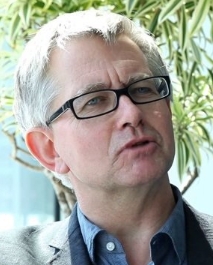 Nick Couldry合作论文数School of Media and Communication, RMIT;Department of Media and Communications, London School of Economics and Political Science17
 Veronika Krönert合作论文数15
 Laura Suna合作论文数14
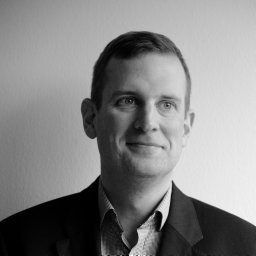 Leif Kramp合作论文数Ctr Media Commun & Informat Res, Univ Bremen13
 Çiğdem Bozdağ合作论文数Dept Intercultural Educ, Univ Bremen13
 Anke Offerhaus合作论文数13Brüggemann Michael合作论文数University of Hamburg12
 Katharina Kleinen-Von Königslöw合作论文数Department of Social Sciences, Faculty of Business, Economics and Social Sciences, University of Hamburg11
 Uwe Hasebrink合作论文数Hans-Bredow-Institute for Media Research11
 Wiebke Loosen合作论文数Institut für Journalistik und Kommunikationswissenschaft, Universität Hamburg11
 Nico Carpentier合作论文数SCOM, Vrije Universiteit Brussel11
 Monika Elsler合作论文数10Friedrich Krotz合作论文数Lehrstuhls Kommunikationswissenschaft/Soziale Kommunikation, Universität Erfurt10tobias olsson合作论文数9H Nieminen合作论文数Institute of Occupational Health, Department of Physiology, Helsinki, Finland9richard kilborn合作论文数8
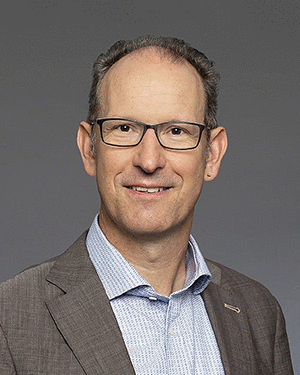 Andreas Breiter合作论文数ifib an der Universität Bremen8
 Risto Kunelius合作论文数University of Tampere7ebba sundin合作论文数6Anne Schmitz合作论文数6
 Tomanic-Trivundza Ilija合作论文数6Waldemar Vogelgesang合作论文数6
 Göran Bolin合作论文数School of Culture and Communication, Södertörn University;Faculty of Humanities, Social Sciences and Life Sciences, Södertörn University4
 Carsten Winter合作论文数4Piet Simon合作论文数4
 Florian Hohmann合作论文数4
 Stig Hjarvard合作论文数Department of Communication, Faculty of Humanities, University of Copenhagen4
 Hartmut Wessler合作论文数Universität Mannheim Seminar für Medien- und Kommunikationswissenschaft L74
 Francois Heinderyckx合作论文数Université libre de Bruxelles3
 Michaela Pfadenhauer合作论文数WISO Fakultät, Universität Dortmund3
 Knut Lundby合作论文数3
 Juliane Jarke合作论文数3
 Stefan Welling合作论文数2Monika Sowinska合作论文数2
 Olivier Driessens合作论文数Department of Communication, Faculty of Humanities, University of Copenhagen2Heiko Kirschner合作论文数2Wolfgang Schulz合作论文数2
 Sigrid Kannengießer合作论文数2
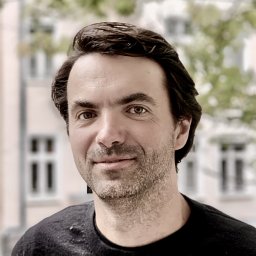 Christian Katzenbach合作论文数Alexander von Humboldt Inst Internet & Soc2
 Rainer Malaka合作论文数Center for Computing Technologies, University of Bremen;Digital Media Lab, Faculty of Mathematics and Computer Science, University of Bremen2
 Stephan Dreyer合作论文数2Thomas N. Friemel合作论文数University of Zurich Institute of Mass Communication and Media Research (IPMZ)2
 Cornelius Puschmann合作论文数Institute of Language and Information, Heinrich-Heine-University Duesseldorf2
 Ien Ang合作论文数Institute for Culture and Society, Western Sydney University2
 Pille Pruulmann Vengerfeldt合作论文数Faculty of Culture and Society, Malmö University;School of Arts and Communication, Malmö University2




