Glass scintillators have garnered considered attention due to their inherent advantages of cost-effective, easy preparation, and high image resolution in X-ray imaging. In this paper, Eu2+-doped oxyfluoride glass scintillator was successfully prepared by introducing aluminum powder as a reducing agent. The aluminum powder can efficiently reduce Eu3+ to Eu2+. The optimal glass sample exhibits a relatively good transmittance (81.8% @ 542 nm), outstanding integrated X-ray excited luminescence intensity (165% of that of Bi4Ge3O12), an excellent stability after continuous X-ray irradiation, and a high spatial resolution (20 lp.mm-1) for X-ray imaging. These results prove that Eu2+-doped oxyfluoride glass scintillator possesses the potential in X-ray imaging.
An environmentally friendly iodine‐catalyzed electrochemical synthetic protocol has developed to access 3‐alkynyltriazoles through the cyclization of α,β‐alkynic hydrazones and primary amines. This reaction is carried out without the addition of electrolyte with excellent functional group tolerance in an undivided cell under mild conditions, affording substituted 3‐alkynyltriazoles with moderate to good yields. The gram scale reaction demonstrates the potential of this protocol in industrial synthesis.
Nitrogen-containing compounds are widely found in many natural products and have a wide range of pharmacological and physiological activities.Furthermore, they have comprehensive applications in medicine and pesticide fields, industry and multi-functional materials.Great advances in the synthesis of these compounds have been sprung up, a diversity of synthetic methods of them via cyanamide (NH2-CN) as raw material were exploited in recent years.The research progress on the synthesis of nitrogen-containing compounds through cyanamide as a building block is introduced comprehensively.Moreover, their characteristics, rules, advantages and disadvantages are summarized and discussed for the development of new synthetic methodologies and reactions of nitrogen-containing compounds.
An efficient and eco-friendly electrosynthesis of 2-alkoxy/aryloxy-5-substituted 1,3,4-oxadiazoles, and 5-substituted 1,3,4-oxadiazol-2(3H)-ones has been developed through the annulation of aldehydes and carbazates.
A base/B(2)pin(2)-mediated iodofluoroalkylation of alkynes and a part of alkenes, using ethyl difluoroiodoacetate (ICF2CO2Et) or ICnF2n+1 (n = 3, 4, 6) as difluoroacetylating or perfluoroalkylating reagent, is disclosed. The reaction proceeds under mild conditions, and iododifluoroalkylation, hydrodifluoroalkylation and several perfluoroalkylation products were generated from alkynes or alkenes. Notably, this methodology provides a simple access to difluoroalkylated and perfluoroalkylated organic compounds starting from simple alkynes or alkenes.
Mechanical properties of carbon-doped sapphire crystals with different carbon concentrations were studied at room temperature. The present work showed that the fracture strength and fracture toughness of as grown crystals were significantly improved by carbon doping and the visible-infrared optical property did not adversely affect. When the concentration of doped carbon was 5×10 -3 , the fracture strength and fracture toughness were in- creased to 752 MPa and 2.81 MPa·m 1/2 in average, respectively, and the transmition of visible-infrared was about 80%. Appropriate carbon dopant in the crystals played the roles of clearance ions and created blocking effect to the sapphires cracking, which improved fracture strength and fracture toughness of sapphires at room temperature. However the mechanical properties and optical properties declined when carbon dopant was excessive, due to car-
LEDs (Light emitting diodes) are considered as the most promising green lighting sources in 21st Century for the advantages in high brightness, long lifetime (more than 50,000 hours), low energy consumption, short corresponding time, good shock resistance, non-toxic, recy‐ clable, safety. LEDs have already been extensively used in outdoor displays, traffic lights, high-performance back light units in liquid-crystal displays, general lighting. Strategies Un‐ limited Company predicted that the compound annual growth rate (CAGR) of the LED mar‐ ket would increase to 30.6%, up to $20.2 billion in 2014. It is obvious that incandescent bulbs and fluorescent lamps will be replaced by LEDs, which could alleviate the increasingly seri‐ ous global energy crisis. Therefore, the development of semiconductor lighting industry is of great significance. Many countries have already launched National Semiconductor Light‐ ing Plan, investing heavily in researching and developing the LEDs industry. In 1998, Japan made a “Light for the 21st Century” plan with the budget of 6 billion yen. In July 2000, Eu‐ ropean Union implemented “Rainbow project bring color to LEDs” plan, setting up ECCR and promoting the application of white light LED through the EU BRITE/ EURAM-3 pro‐ gram. U.S. Department of Energy established “National research program on semiconductor lighting” plan. It is expected that in 2025, the use of solid state lighting will reduce half of the lighting electricity consumption and save $35 billion per year. In June 2003, the Chinese Ministry of Science and Technology launched an “National Semiconductor Lighting Project” in support of the “863” Project. In 2009, ministry of Science and Technology started “Ten thousand LED lights in ten cities” semiconductor lighting demonstration program. It is ex‐ pected that in 2015, semiconductor lighting will occupy 30% of the domestic general lighting market.
Mechanical properties of titanium and iron co-doped Sapphire crystal are first studied at room temperature Large (ø180 × 280 mm3 in dimension 30 kg in weight) titanium and iron codoped sapphire single crystal is grown by the Kyropoulos technique It is shown that the fracture strength and surface hardness and fracture toughness of as-grown crystals are significantly improved and the visible-infrared optical property is not adversely affected by titanium and iron codoping and certain heat treatment. The Fe3+ in the doped Fe2O3 palys a role of substituting Al3+, leading to an in creased internal stress in the crystal. And the Ti4+ in the doped TiO2 crystallizes the second phase needle crystal and brings in a toughening effect through certain heat treatment. As a consequence, the mechanical properties of as-grown sapphire are improved at room temperature. The present work has the realistic significance for developing the sapphires of excellent mechanical properties.
Ultra-broadband emission covering 1000?1800 and 1800?3020?nm of Bi2O3?GeO2 binary system materials, from glass to glass-ceramics to crystals, is presented in this paper. This is the first time, to our best knowledge, that broadband photoluminescence of BGO crystals (including Bi4Ge3O12 and Bi12GeO20) in the range of 1800?3020?nm has been realized. HRTEM, XPS and XANES have been used to investigate the effects of the valence states and the structure environment of bismuth on the emission properties of Bi2O3?GeO2 binary system materials. Bi2+ and Bi+ are proposed as the emission centers of the photoluminescence peaks at 1060 and 1300?nm, respectively. The broadband emission from 1800 to 3020?nm originates from bismuth clusters. Bi2O3?GeO2 binary system materials could be promising laser materials in the field of full-band optical fiber communication amplifiers, ultra-fast lasers and diode pumped solid state lasers, due to their broadband emission spectra and their feasibility of synthesis and drawing into fibers.
Near-infrared (NIR) emitting active centers can exist abundant in Bi:CsI crystal. In addition, Bi:CsI have the simplest crystal structure, body-centered cubic (BCC). In this paper, annealing and quenching treatments were carried out in detail to identify the nature of NIR emitting active centers in Bi: CsI crystals. The changes of absorption and emission spectra with increasing the thermal treatment temperature indicated that the two NIR emission bands at 1210 nm and 1580 nm were related to Bi+ and Bi-2(+), respectively. Besides, the assignments of absorption bands and the thermal behaviors of Bi3+, Bi2+, Bi+ and Bi2+ were discussed as well. (C) 2013 Optical Society of America
The spectroscopic properties of Yb:CaF2–YF3 disordered crystals obtained by the vertical Bridgman method were studied. The 3 at.% Yb, 3 at.% Y:CaF2 crystal absorption cross section σabs centered at 974 nm reached 7.2 × 10⁻²¹ cm2 and the fluorescence lifetime was 3.54 ms at room temperature. Experimental results show that co-doping Y3+ ions at different Y:Yb ratios can modulate the spectroscopy and lengthen the luminescence lifetime of Yb3+ ions in the CaF2 lattice. There are three main kinds of lattice in the 3 at.% Yb, 3 at.% Y:CaF2 crystal, as concluded from the low-temperature spectra.
A facile approach for the first total synthesis of naturally occurring geranylated flavanoids sepicanin A has been obtained with total yield 16% starting from 2,4,6-trihydroxyacetophenone after four steps. The key step was the protic acids (HCl or p-TsOH)-catalyzed benzopyrone formation in a protic polar solvent by deprotection and cyclization of chalcone in one step.
In this work, we first report on the radiation dose effect of -Al2O3:C crystal powder. The thermoluminescence(TL) and optically stimulated luminescence (OSL) of the powder are investigated by RisTL/OSL-DA-15. The as-grown -Al2O3:C crystal powder of same particle size shows a single TL peak and the TL intensity increases as irradiation dose increases, but no shift of the position of the TL peak is found, which is consistent with first-order recombination kinetics. And in the same radiation dose and test conditions, with the particle size of -Al2O3:C crystal powder decreasing, the TL intensity decreases after first increase and then the TL peak is gradually increases and approaches to a stable value, which shows that the -Al2O3:C crystal powder, 4060 m in diameter, has the best TL effect. The OSL decay curve of -Al2O3:C crystal powder shows the typical exponential decay characteristics, and the relationship between OSL intensity and decay rate with the particle size of -Al2O3:C crystal powder is found to be consistent with the shallow-electronic-trap theory.
The Er-single-doped and Er/Ce-codoped La3Ga5SiO14 polycrystalline powders are synthesized by the solid-phase synthesis method. The room-temperature luminescence spectra of the samples are investigated. The Near-infrared-region spectroscopic properties of Er3+ ions in the La3Ga5SiO14 systems are analysed with Judd-Ofelt theory and rate equations. The effective deactivating effect of Ce3+ ions on Er3+ ions is confirmed.
Directional cracking in Ti,C:sapphire crystals grown along [11 20] by Vertical Bridgman method often occurs in the cutting and processing process. In this work, we discuss the characteristic and mechanism of directional cracking of Ti,C:sapphire, and find that directional cracking originates from (-1100) lattice plane and spreads along [0001] orientation. Through the Crystalmaker Simulation software, we find that atomic arrangement on (-1100) lattice plane is the most sparse and adjacent atomic spacing is the largest along vertical [0001] direction, so in the system (-1100) [0001] of lattice has a minimum cracking strength. Irregular carbon inclusions in the cracked Ti,C:sapphire are observed with optical microscopy, scanning electron microscopy (SEM), and X-ray diffractometry. These inclusions cause great internal stress in the cooling process due to thermal expansion mismatch and cracking originating from and spreading in the weak system (-1100) [0001] of lattice. As a consequence, macroscopic directional cracking is observed in the Ti,C:sapphire. The study has important theoretical and practical significance for growing high-quality Ti,C:sapphire crystal.
Yb-doped PbClF crystals were obtained by a modified Bridgman method. Broadband emission (FWHM=58 nm) with long lifetime (5.33 ms) was observed in 2.0% Yb3+-doped PbClF crystals. The Stark splitting of Yb3+ 2F7/2 level was calculated to be 801 cm−1 in 0.5% Yb3+-doped PbClF crystals, and the corresponding population of lower laser level is about 2.13%. All the results indicated that Yb-doped PbClF crystals should be a promising material to ultrashort pulses output at 1.0 μm.
In the paper, the demonstration of a high-power LD-pumped Yb, Na:CaF2 femtosecond laser is presented, which the cavity is optimized concerning the numerical simulation for the thermal lens effect. With a 2% output coupler, a continuous-wave mode-locked pulse train with a pulsewidth of 190 fs, the average output power of 503 mW, the center wavelength at 1034 nm and a repetition frequency of 82.4 MHz is obtained under the absorbed pump power of 7.8 W. If other forms of output are recorded, such as the reflection of the crystal surface, the total output power is 905 mW.
Infrared optical materials as the base of infrared technology are developing in the direction of larger size and more competitive physicochemical properties.Mid-IR optical materials with positive optical,thermal and mechanical performance are favorable for the civil and military applications.The effect of temperature on emissivity,bending strength and thermal conductivity were investigated in the typical mid-IR materials such as MgAl2O4 spinel ceramics,sapphire crystal and MgF2 polycrystalline.The results show that MgF2 polycrystalline is with smallest emissivity while the thermal conductivity is also the lowest which going against high temperature operation.The bending strength in sapphire crystal is twice higher than those in MgAl2O4 spinel ceramics and MgF2 polycrystalline from 300 ℃ to 500 ℃.Further investigation on the effect of temperature on thermal conductivity indicates that sapphire crystal maintains high thermal conductivity as the temperature is raised.With the achievement of large sized sapphire crystal boule by assembly-line techniques,sapphire crystal is becoming the favorable host for high-temperature optical devices.
Polycrystalline α-Al2O3 materials were prepared by cold crucible method.The effects of the ignition agents,the withdrawal velocity,the feeding rate and other process parameters on the quality of crystallization were investigated.The results showed that the optimum conditions for preparing high-density,high-purity polycrystalline α-Al2O3 materials as followed: high-purity aluminum flakes as ignition agents,withdrawal velocity rate in 10 mm/h and feeding rate in 1 kg/min.The density of samples is tested by draining method,the impurities concentrations of Ca,Fe,Na,Mg,K,Ti,Si and Cr in raw powder and polycrystalline α-Al2O3 materials prepared by cold crucible are analyzed by ICP-OES.The concentrations of impurities in polycrystalline α-Al2O3 materials can be decreased comparison with in raw powder,which shows that it is an effective method for the removal of impurities.The bulk density of polycrystalline α-Al2O3 is 2.6-2.8 g/cm3.Polycrystalline α-Al2O3 materials prepared by cold crucible meet the current growth of large-size sapphire for raw materials requirements.
Nd-doped PbClF crystals were grown with modified Bridgman method. Broad and flat emission band at 1.0 mu m was observed. The FWHM value of 0.0091 wt.% Nd3+-doped PbClF crystal at 1064 nm reached up to 30 nm with the peak emission cross-section of 1.05 x 10(-19) cm2. All the results indicated that Nd-doped PbClF crystal should be a promising tunable and ultrafast laser material. (C) 2012 WILEY-VCH Verlag GmbH & Co. KGaA, Weinheim)
 Liangbi Su (苏良碧)合作论文数Shanghai Institute of Ceramics, Chinese Academic of Sciences71
 Guangjun Zhao (赵广军)合作论文数31Lihe Zheng (郑丽和)合作论文数Shanghai Institute of Ceramics, Chinese Academy of Sciences28
 Xinbo Yang (杨新波)合作论文数College of Energy, Soochow University22
 Yongjun Dong (董永军)合作论文数School of Physics, Northeast Normal University20Guoqing Zhou (周国清)合作论文数20
 Huili Tang (唐慧丽)合作论文数School of Physical Science and Engineering, Tongji University20Cheng Yan合作论文数14QingGuo Wang (王庆国)合作论文数12
 Feng Wu (吴峰)合作论文数Wuhan National Laboratory for Optoelectronics, Huazhong University of Science and Technology12Qunyu Bi合作论文数12
 Qian Xiaobo合作论文数12
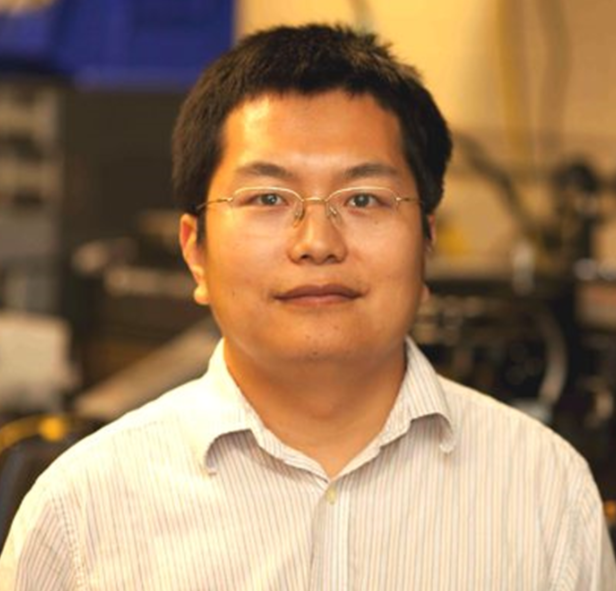 Xiaodong Xu合作论文数Department of Physics, University of Washington;Department of Materials Science and Engineering, University of Washington11GQ Zhou合作论文数10
 Qiang Tang (唐强)合作论文数School of Physics, Sun Yat-sen University10
 Qiuhong Yang (杨秋红)合作论文数School of Materials Science and Engineering, Shanghai University10
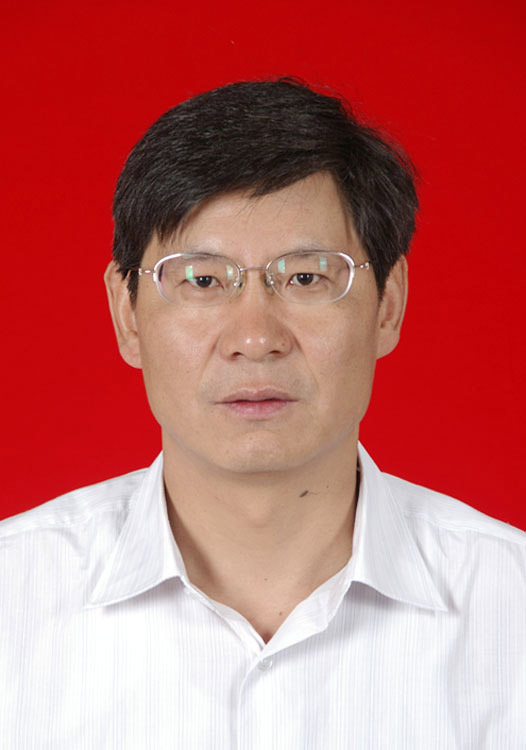 Jinhui Yang (杨金会)合作论文数School of Chemistry and Chemical Engineering, Ningxia University8
 Shengming Zhou (周圣明)合作论文数Shanghi Institute of Optics and Fine Mechanics, Chinese Academy of Sciences;University of Chinese Academy of Sciences8
 Xin Guo (郭鑫)合作论文数Dalian Institute of Chemical Physics, Chinese Academy of Sciences8
 Jiliang Si (司纪亮)合作论文数School of Public Health, Shandong University8
 Jun Xu (徐君)合作论文数Innovation Academy for Precision Measurement Science and Technology, Chinese Academy of Sciences;University of Chinese Academy of Sciences8Hengyu Zhao合作论文数8Wq Yang合作论文数7W. Ryba-Romanowski合作论文数7Dapeng Jiang (蒋大鹏)合作论文数7Radosław Lisiecki合作论文数7Keyan Hu合作论文数6
 Yin Hang (杭寅)合作论文数Shanghai Institute of Optics and Fine Mechanics, Chinese Academy of Sciences;University of Chinese Academy of Sciences6Fenglian Su合作论文数6Piotr Solarz合作论文数6
 Benxue Jiang (姜本学)合作论文数School of Physics Science and Engineering, Tongji University5
 Xionghui Zeng (曾雄辉)合作论文数Suzhou Institute of Nano-Tech and Nano-Bionics, Chinese Academy of Sciences5Jun Yu (喻军)合作论文数5Zou Yu-Qi (邹宇琦)合作论文数4Sz Li合作论文数4
 Peng Zhou (周鹏)合作论文数Key Lab Anim Parasitol, Shanghai Vet Res Inst4Z. W. Zhao合作论文数4WenQi Ge (葛文琦)合作论文数4Lei Wen (闻雷)合作论文数Institute of Metal Research, Chinese Academy of Sciences4Chen Weichao合作论文数4
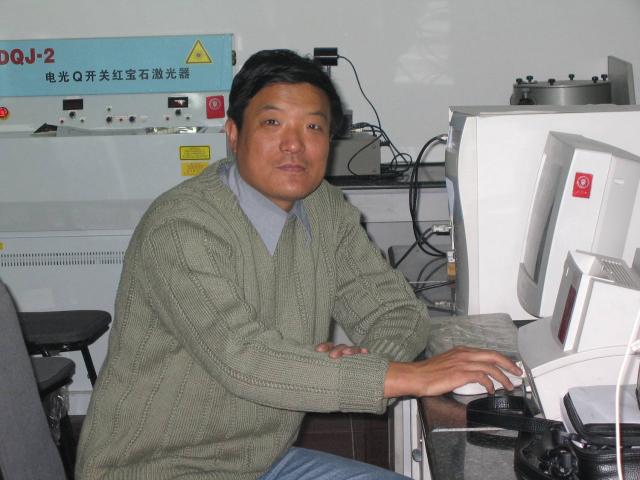 Lu Chai (柴路)合作论文数School of Precision Instrument and Optoelectronics Engineering, Tianjin University4
 Minglie Hu (胡明列)合作论文数Ultrafast Laser Laboratory,, School of Precision Instruments and Opto-electronics Engineering, Tianjin University4
 Yan Yang合作论文数Shanghai Institute of Ceramics, Chinese Academy of Sciences4Pingsheng Yu合作论文数4Peizhen Deng合作论文数4
 Xiantao Jiang (蒋先涛)合作论文数School of Science, Sun Yat-Sen University3




