An efficient protocol for the synthesis of [4.6] spirocarbocycles has been developed. This process is realized through the sequential K2CO3-promoted C-C sigma-bond cleavage of cyclic ketoesters and an I-2-mediated selective 5-exo spirocyclization reaction at room temperature. Atom economy, C-C sigma bond cleavage, regioselective spirocyclization, and mild and transition-metal-free reaction conditions are the advantages of this procedure.
The synthesis of α-hydroxy of carbonyl compounds through the electron donor-acceptor (EDA) complex system in an aqueous phase has not been reported previously. This report presents a novel and efficient...
A dppb and TfOH promoted cascade reaction of o-nitrophenylpropiolamides to access C2-spiro-pseudoindoxyls under mild conditions has been developed. The desired products were obtained in high to excellent yields. A mechanism involving the formation of the key intermediate 3-indolol-2-carboxamide, which originates from an indolyl dimer intermediate is proposed. The notable advantages of this process include good functional group tolerance, excellent yields, and operational simplicity.
A method for the two-step synthesis of dibenzyl cyanamide and dibenzyl urea via cyanamide is presented. This approach is both efficient and environmentally friendly. Various N,N-dibenzyl ureas could be obtained by reactions of N,N-dibenzyl cyanamides and N,N-dibenzyl cyanamides as intermediates formed from cyanamide. In the absence of metal, ligand and hydrogen peroxide as the oxidant, products with moderate yields have been obtained under mild conditions. Key features include the use of widely available and easily handled cyanamide sources as starting materials.
The practical application of lithium metal anodes is significantly impeded by poor interfacial stability and uncontrolled dendrite growth. Herein, we introduce methyl trifluoroacetate (MTFA), a low-melting-point small molecule, as an electrolyte additive in an ether-based electrolyte. This additive facilitates the formation of an in situ composite solid electrolyte interphase (SEI) layer that is rich in LiF and features an ester-based flexible matrix. The resulting composite layer exhibits high ionic conductivity and mechanical stability, effectively regulating the lithium deposition behavior over a broad temperature range and inhibiting dendrite formation. Based on MTFA, the Li||Li symmetrical cell achieves a lifespan exceeding 5000 h at room temperature and 800 h at -20 °C, both with ultralow overpotential and exceptional cycling stability. In Li||LiFePO4 full cells with a high-area loading (10.52 mg cm-2) and an N/P ratio of 1.68, an average capacity decay of merely 0.096% per cycle is observed over 200 cycles. Even at -20 °C, the Li||LiFePO4 cell shows a CE of over 99% and maintains stable cycling performance. This work provides an innovative approach for optimizing lithium metal anode interfaces and enhancing low-temperature operation capabilities through the use of electrolyte additives.
The incidence of antibiotic-related diarrhea (AAD) is high in older adults. To examine the gut microbiota changes in older adults who received antibiotics to identify the microbial signatures associated with antibiotic use and AAD. A nested prospective observational cohort study was conducted between December 2019 and June 2021 in patients ≥ 65 years old at Huashan Hospital affiliated with Fudan University. The patients were grouped as antibiotic-treated (HA group) and no antibiotics (HC group); the HA group was subdivided as with vs. without AAD. Fecal samples were collected at admission (i.e., before eventual antibiotics) and after 7 days. Thirty-eight and 19 participants were included in the HA and HC groups. There were significant differences in gut microbiota between the HA after antibiotics vs. HC groups, with a higher Firmicutes/Bacteroidetes ratio. Before antibiotics in the HA group, the relative abundances of Akkermansia and Alistipes were lower in the AAD subgroup than the no-AAD subgroup, while the relative abundance of Actinomyces was higher. After antibiotics in the HA group, specific bacterial species were decreased in the AAD subgroup compared with the no-AAD subgroup. Among HA participants without probiotics, the abundance of Akkermansia in the patients without AAD was higher than in the patients with AAD at baseline (P = 0.007). Patients with or without AAD have different gut microbiota compositions before antibiotics. Antibiotics can lead to dysbiosis, with a decrease in beneficial bacteria and an increase in Enterococcus.
A novel strategy for the synthesis of 3-methyleneisoindolin-1-ones through Sonogashira reactions using calcium carbide was reported. This is a green and sustainable development of synthesis method.
A KOH-promoted cascade C-Cl bond activation and amidation of trichloromethyl aromatic compounds with formamides using water as a solvent has been developed. This methodology suggested an alternative synthetic approach for the synthesis of aryl amide compounds in the absence of catalysts, additives and organic solvents. In addition, the yields of gram-scale reactions are good and provide a basis for synthetic application.
Nitrogen-containing compounds are widely found in many natural products and have a wide range of pharmacological and physiological activities.Furthermore, they have comprehensive applications in medicine and pesticide fields, industry and multi-functional materials.Great advances in the synthesis of these compounds have been sprung up, a diversity of synthetic methods of them via cyanamide (NH2-CN) as raw material were exploited in recent years.The research progress on the synthesis of nitrogen-containing compounds through cyanamide as a building block is introduced comprehensively.Moreover, their characteristics, rules, advantages and disadvantages are summarized and discussed for the development of new synthetic methodologies and reactions of nitrogen-containing compounds.
Thioamide-chelation-assisted direct Rh(III)-catalyzed C-H vinylation and Ir(III)-catalyzed C-H arylation of ferrocenes with vinyl- or aryltrimethoxysilane under mild and base-free conditions is described. With thioamide as directing group, various monovinyl and monoaryl substituted thioamideferrocenes were obtained by transition metal-catalyzed direct C-H functionalization of ferrocenes in 50%-84% yields with broad substrate range. Mechanistic experiments indicate that C-H bond activation may be the rate-determining step of the reaction.
We developed a Cp*Rh(III)-catalyzed C-H arylation of ferrocenethionamides with arylboronic acids for the synthesis of aryl-ferrocenes under mild and base-free conditions, using Ag2 CO3 as oxidant. The reaction results in high yields and excellent regioselectivity accommodating a broad scope of substrate range and functional group compatibility, and provides an alternative protocol for the generation of highly functionalized aryl-ferrocene compounds.
A visible‐light‐driven base‐promoted radical cascade difluoroalkylation/5‐exo‐dig cyclization/iodination of 1,6‐enynes with ethyl difluoroiodoacetate was developed under catalyst‐free and oxidant‐free conditions. The difluoroalkylated pyrrolidines and tetrahydrofuran derivatives were generated with good functional group tolerance and high Z/E stereoselectivity. This reaction provided an alternative and mild method for the preparation of highly functionalized and vinyl C−I bonds containing five‐membered heterocyclic products.
A base/B(2)pin(2)-mediated iodofluoroalkylation of alkynes and a part of alkenes, using ethyl difluoroiodoacetate (ICF2CO2Et) or ICnF2n+1 (n = 3, 4, 6) as difluoroacetylating or perfluoroalkylating reagent, is disclosed. The reaction proceeds under mild conditions, and iododifluoroalkylation, hydrodifluoroalkylation and several perfluoroalkylation products were generated from alkynes or alkenes. Notably, this methodology provides a simple access to difluoroalkylated and perfluoroalkylated organic compounds starting from simple alkynes or alkenes.
An efficient methodology to access various fluoroalkyl sulfoxides bearing ortho/para-functionalized amine scaffolds from arylhydroxylamines is described. The transformation was featured with new electrophilic trifluoromethylthiolated reagents, good functional group tolerance, and late-stage modification of complex bioactive scaffolds, providing a rapid access to prepare numerous trifluoromethyl- and difluoromethyl-substituted sulfoxides. Mechanism studies and density functional theory calculations suggest this reaction goes through a nucleophilic trifluoromethylthiolation of arylhydroxylamine and subsequent internal 2,3-sigmatropic rearrangement involving a sulfur and oxygen transfer process.
The first Ir(I)-catalyzed thioamide-assisted C-H arylation of ferrocenes with aryl boronic acids under base-free mild reaction conditions in the presence of Ag2CO3 as an oxidant with eco-friendly 2-MeTHF as a solvent was developed. This reaction has a wide range of substrates (37 examples) and functional group tolerance (18-94% yields), and provides promising access to aryl thioamide-ferrocene compounds with good yields and regioselectivity.
A metal-free, economical and effective method for intramolecular haloamination/cyclization of non-functionalized olefins was developed. In the presence of K2S2O8 and sodium halide, 2-allyl aniline can be converted into corresponding 2-iodo, bromo and chloromethyl indolines skeleton compounds in good to excellent yields. Mechanism research suggested that the reaction didn't involve radical addition pathway. Introduction
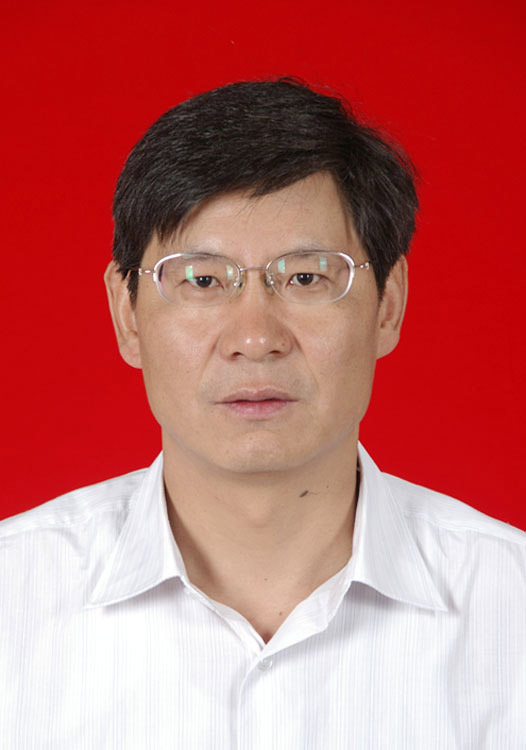 Jinhui Yang (杨金会)合作论文数School of Chemistry and Chemical Engineering, Ningxia University11
 Dianjun Li (李典军)合作论文数School of Chemistry and Chemical Engineering, Ningxia University10
 Jianglong Wu合作论文数8Luo Hui (罗辉)合作论文数6Chenyu Wang合作论文数5Zhongjie Wang合作论文数5Hao Li合作论文数5Yan Ban合作论文数3Yingxin Wang合作论文数3Ruyan Liu合作论文数3
 Fuqiang Wang (王富强)合作论文数School of Chemistry and Chemical Engineering, Ningxia University3Nana Fei合作论文数2Chengwei Gong合作论文数2Pengsheng Zhou合作论文数2Qiongwen Kang合作论文数2Zongkang Wang合作论文数2
 Peng He (何朋)合作论文数School of Biomedical Sciences, Hunan University2
 Yanzhong Li (李艳忠)合作论文数School of Chemistry and Molecular Engineering, East China Normal University2Hongjun Li (李红军)合作论文数2Zishuo Jiang合作论文数1Jiaoqi Ren合作论文数1Shuya Xing合作论文数1Wenshuang Li合作论文数1Shao-Fei Ni合作论文数1Zhouman Hu合作论文数1Jh Liu合作论文数1Bosen Wang合作论文数1Yuyi Zhu合作论文数School of Chemistry, University of Chinese Academy of Sciences1Xiwen Lu合作论文数1
 Abdul Hameed Pato合作论文数1Wang Fang合作论文数1Lanlan ZHAO (赵兰兰)合作论文数1
 Xinxin Shao合作论文数1
 Longtao Ren合作论文数State Key Lab Chem Resource Engn, Beijing Univ Chem Technol1Qiaoli Zhang合作论文数State Key Lab Chem Resource Engn
Beijing Univ Chem Technol1jing zhang合作论文数1Yu Zhang合作论文数1YueZhi Wang (王悦之)合作论文数1
Longtao Ren合作论文数State Key Lab Chem Resource Engn, Beijing Univ Chem Technol1Qiaoli Zhang合作论文数State Key Lab Chem Resource Engn
Beijing Univ Chem Technol1jing zhang合作论文数1Yu Zhang合作论文数1YueZhi Wang (王悦之)合作论文数1 Jun Liang (梁军)合作论文数School of Chemistry and Chemical Engineering, Ningxia University1Kong Lingkai合作论文数1Jian Zhao (赵坚)合作论文数1
 Wen Liu (刘文)合作论文数College of Chemistry, Beijing University of Chemical Technology1
 Hui Qiao合作论文数1Chengyu Wang合作论文数1Huarong Zhang合作论文数1




