Deep neural networks encode complex representations, but deconstructing this internal knowledge remains a challenge. Given the link between learning and compression, network compression offers a promising lens to analyze this knowledge. However, standard compression heuristics often suffer from scale symmetries and architectural biases. To resolve these, we introduce Hilbert Operator for Progressive Encoding (HOPE), a mathematical framework to gradually deconstruct the representations in trained network weights. HOPE shifts network compression from the discrete domain into a Hilbert space of continuous functions. By modeling individual neurons as rank-1 Hilbert-Schmidt operators, HOPE unifies pruning and neuron merging as low-rank subspace projection. Extending this formulation, HOPE introduces macro block eviction to encompass multi-layer structures like entire residual pathways under the same unified metric. This unified approach enables unbiased architectural decisions across layers with different types and sizes. HOPE is a data-free and hyperparameter-free framework. We present proof-of-concept experiments in model compression and fine-tuning to highlight the practical potential of our theory.
Transformers excel across domains, yet their quadratic attention complexity poses a barrier to scaling. Random-feature attention, as in Performers, can reduce this cost to linear in the sequence length by approximating the softmax kernel with positive random features drawn from an isotropic distribution. In pretrained models, however, queries and keys are typically anisotropic. This induces high Monte Carlo variance in isotropic sampling schemes unless one retrains the model or uses a large feature budget. Importance sampling can address this by adapting the sampling distribution to the input geometry, but complex data-dependent proposal distributions are often intractable. We show that by data aligning the softmax kernel, we obtain an attention mechanism which can both admit a tractable minimal-variance proposal distribution for importance sampling, and exhibits better training stability. Motivated by this finding, we introduce DARKFormer, a Data-Aware Random-feature Kernel transformer that features a data-aligned kernel geometry. DARKFormer learns the random-projection covariance, efficiently realizing an importance-sampled positive random-feature estimator for its data-aligned kernel. Empirically, DARKFormer narrows the performance gap with exact softmax attention, particularly in finetuning regimes where pretrained representations are anisotropic. By combining random-feature efficiency with data-aware kernels, DARKFormer advances kernel-based attention in resource-constrained settings.
Curvature regularization techniques like Sharpness Aware Minimization (SAM) have shown great promise in improving generalization on vision tasks. However, we find that SAM performs poorly in domains like natural language processing (NLP), often degrading performance --- even with twice the compute budget. We investigate the discrepancy across domains and find that in the NLP setting, SAM is dominated by regularization of the logit statistics --- instead of improving the geometry of the function itself. We use this observation to develop an alternative algorithm we call Functional SAM, which regularizes curvature only through modification of the statistics of the overall function implemented by the neural network, and avoids spurious minimization through logit manipulation. Furthermore, we argue that preconditioning the SAM perturbation also prevents spurious minimization, and when combined with Functional SAM, it gives further improvements. Our proposed algorithms show improved performance over AdamW and SAM baselines when trained for an equal number of steps, in both fixed-length and Chinchilla-style training settings, at various model scales (including billion-parameter scale). On the whole, our work highlights the importance of more precise characterizations of sharpness in broadening the applicability of curvature regularization to large language models (LLMs)
Deep-learning models can extract a rich assortment of features from data. Which features a model uses depends not only on predictivity-how reliably a feature indicates train-set labels-but also on availability-how easily the feature can be extracted, or leveraged, from inputs. The literature on shortcut learning has noted examples in which models privilege one feature over another, for example texture over shape and image backgrounds over foreground objects. Here, we test hypotheses about which input properties are more available to a model, and systematically study how predictivity and availability interact to shape models' feature use. We construct a minimal, explicit generative framework for synthesizing classification datasets with two latent features that vary in predictivity and in factors we hypothesize to relate to availability, and quantify a model's shortcut bias-its over-reliance on the shortcut (more available, less predictive) feature at the expense of the core (less available, more predictive) feature. We find that linear models are relatively unbiased, but introducing a single hidden layer with ReLU or Tanh units yields a bias. Our empirical findings are consistent with a theoretical account based on Neural Tangent Kernels. Finally, we study how models used in practice trade off predictivity and availability in naturalistic datasets, discovering availability manipulations which increase models' degree of shortcut bias. Taken together, these findings suggest that the propensity to learn shortcut features is a fundamental characteristic of deep nonlinear architectures warranting systematic study given its role in shaping how models solve tasks.
Recent work has shown that first order methods like SAM which implicitly penalize second order information can improve generalization in deep learning. Seemingly similar methods like weight noise and gradient penalties often fail to provide such benefits. We show that these differences can be explained by the structure of the Hessian of the loss. First, we show that a common decomposition of the Hessian can be quantitatively interpreted as separating the feature exploitation from feature exploration. The feature exploration, which can be described by the Nonlinear Modelling Error matrix (NME), is commonly neglected in the literature since it vanishes at interpolation. Our work shows that the NME is in fact important as it can explain why gradient penalties underperform for certain architectures. Furthermore, we provide evidence that challenges the long held equivalence of weight noise and gradient penalties. This equivalence relies on the assumption that the NME can be ignored, which we find does not hold for modern networks since they involve significant feature learning. Intriguingly, we find that regularizing feature exploitation but not feature exploration yields performance comparable to SAM. This suggests that properly controlling regularization on the two parts of the Hessian is important for the success of many second order methods.
Recent work has shown that methods like SAM which either explicitly or implicitly penalize second order information can improve generalization in deep learning. Seemingly similar methods like weight noise and gradient penalties often fail to provide such benefits. We show that these differences can be explained by the structure of the Hessian of the loss. First, we show that a common decomposition of the Hessian can be quantitatively interpreted as separating the feature exploitation from feature exploration. The feature exploration, which can be described by the Nonlinear Modeling Error matrix (NME), is commonly neglected in the literature since it vanishes at interpolation. Our work shows that the NME is in fact important as it can explain why gradient penalties are sensitive to the choice of activation function. Using this insight we design interventions to improve performance. We also provide evidence that challenges the long held equivalence of weight noise and gradient penalties. This equivalence relies on the assumption that the NME can be ignored, which we find does not hold for modern networks since they involve significant feature learning. We find that regularizing feature exploitation but not feature exploration yields performance similar to gradient penalties.
Sharpness-aware minimization (SAM) is a recently proposed method that minimizes the sharpness of the training loss of a neural network. While its generalization improvement is well-known and is the primary motivation, we uncover an additional intriguing effect of SAM: reduction of the feature rank which happens at different layers of a neural network. We show that this low-rank effect occurs very broadly: for different architectures such as fully-connected networks, convolutional networks, vision transformers and for different objectives such as regression, classification, language-image contrastive training. To better understand this phenomenon, we provide a mechanistic understanding of how low-rank features arise in a simple two-layer network. We observe that a significant number of activations gets entirely pruned by SAM which directly contributes to the rank reduction. We confirm this effect theoretically and check that it can also occur in deep networks, although the overall rank reduction mechanism can be more complex, especially for deep networks with pre-activation skip connections and self-attention layers. We make our code available at https://github.com/tml-epfl/sam-low-rank-features.
Knowledge distillation (KD) has been widely used to improve the test accuracy of a "student" network, by training it to mimic the soft probabilities of a trained "teacher" network. Yet, it has been shown in recent work that, despite being trained to fit the teacher's probabilities, the student may not only significantly deviate from the teacher probabilities, but may also outdo than the teacher in performance. Our work aims to reconcile this seemingly paradoxical observation. Specifically, we characterize the precise nature of the student-teacher deviations, and argue how they _can_ co-occur with better generalization. First, through experiments on image and language data, we identify that these probability deviations correspond to the student systematically _exaggerating_ the confidence levels of the teacher. Next, we theoretically and empirically establish another form of exaggeration in some simple settings: KD exaggerates the implicit bias of gradient descent in converging faster along the top eigendirections of the data. Finally, we tie these two observations together: we demonstrate that the exaggerated bias of KD can simultaneously result in both (a) the exaggeration of confidence and (b) the improved generalization of the student, thus offering a resolution to the apparent paradox. Our analysis brings existing theory and practice closer by considering the role of gradient descent in KD and by demonstrating the exaggerated bias effect in both theoretical and empirical settings.
The allure of superhuman-level capabilities has led to considerable interest in language models like GPT-3 and T5, wherein the research has, by and large, revolved around new model architectures, training tasks, and loss objectives, along with substantial engineering efforts to scale up model capacity and dataset size. Comparatively little work has been done to improve the generalization of these models through better optimization. In this work, we show that Sharpness-Aware Minimization (SAM), a recently proposed optimization procedure that encourages convergence to flatter minima, can substantially improve the generalization of language models without much computational overhead. We show that SAM is able to boost performance on SuperGLUE, GLUE, Web Questions, Natural Questions, Trivia QA, and TyDiQA, with particularly large gains when training data for these tasks is limited.
Generalizing to out-of-distribution (OOD) data -- that is, data from domains unseen during training -- is a key challenge in modern machine learning, which has only recently received much attention. Some existing approaches propose leveraging larger models and pre-training on larger datasets. In this paper, we provide new insights in applying these approaches. Concretely, we show that larger models and larger datasets need to be simultaneously leveraged to improve OOD performance. Moreover, we show that using smaller learning rates during fine-tuning is critical to achieving good results, contrary to popular intuition that larger learning rates generalize better when training from scratch. We show that strategies that improve in-distribution accuracy may, counter-intuitively, lead to poor OOD performance despite strong in-distribution performance. Our insights culminate to a method that achieves state-of-the-art results on a number of OOD generalization benchmark tasks, often by a significant margin.
Modern deep neural networks are highly over-parameterized compared to the data on which they are trained, yet they often generalize remarkably well. A flurry of recent work has asked: why do deep networks not overfit to their training data? In this work, we make a series of empirical observations that investigate and extend the hypothesis that deeper networks are inductively biased to find solutions with lower effective rank embeddings. We conjecture that this bias exists because the volume of functions that maps to low effective rank embedding increases with depth. We show empirically that our claim holds true on finite width linear and non-linear models on practical learning paradigms and show that on natural data, these are often the solutions that generalize well. We then show that the simplicity bias exists at both initialization and after training and is resilient to hyper-parameters and learning methods. We further demonstrate how linear over-parameterization of deep non-linear models can be used to induce low-rank bias, improving generalization performance on CIFAR and ImageNet without changing the modeling capacity.
We study the implicit bias of gradient flow (i.e., gradient descent with infinitesimal step size) on linear neural network training. We propose a tensor formulation of neural networks that includes fully-connected, diagonal, and convolutional networks as special cases, and investigate the linear version of the formulation called linear tensor networks. With this formulation, we can characterize the convergence direction of the network parameters as singular vectors of a tensor defined by the network. For $L$-layer linear tensor networks that are orthogonally decomposable, we show that gradient flow on separable classification finds a stationary point of the $\ell_{2/L}$ max-margin problem in a "transformed" input space defined by the network. For underdetermined regression, we prove that gradient flow finds a global minimum which minimizes a norm-like function that interpolates between weighted $\ell_1$ and $\ell_2$ norms in the transformed input space. Our theorems subsume existing results in the literature while removing standard convergence assumptions. We also provide experiments that corroborate our analysis.
In today's heavily overparameterized models, the value of the training loss provides few guarantees on model generalization ability. Indeed, optimizing only the training loss value, as is commonly done, can easily lead to suboptimal model quality. Motivated by the connection between geometry of the loss landscape and generalization---including a generalization bound that we prove here---we introduce a novel, effective procedure for instead simultaneously minimizing loss value and loss sharpness. In particular, our procedure, Sharpness-Aware Minimization (SAM), seeks parameters that lie in neighborhoods having uniformly low loss; this formulation results in a min-max optimization problem on which gradient descent can be performed efficiently. We present empirical results showing that SAM improves model generalization across a variety of benchmark datasets (e.g., CIFAR-{10, 100}, ImageNet, finetuning tasks) and models, yielding novel state-of-the-art performance for several. Additionally, we find that SAM natively provides robustness to label noise on par with that provided by state-of-the-art procedures that specifically target learning with noisy labels.
Generalization of deep networks has been of great interest in recent years, resulting in a number of theoretically and empirically motivated complexity measures. However, most papers proposing such measures study only a small set of models, leaving open the question of whether the conclusion drawn from those experiments would remain valid in other settings. We present the first large scale study of generalization in deep networks. We investigate more then 40 complexity measures taken from both theoretical bounds and empirical studies. We train over 10,000 convolutional networks by systematically varying commonly used hyperparameters. Hoping to uncover potentially causal relationships between each measure and generalization, we analyze carefully controlled experiments and show surprising failures of some measures as well as promising measures for further research.
Generalization of deep networks has lately been of great interest, resulting in a number of theoretically and empirically motivated complexity measures. However, most papers proposing such measures study only a small set of models, leaving open the question of whether the conclusion drawn from those experiments would remain valid in other settings. We present the first large scale study of generalization in deep networks. We investigate more then 40 complexity measures taken from both theoretical bounds and empirical studies. We train over 10,000 convolutional networks by systematically varying commonly used hyperparameters. Hoping to uncover potentially causal relationships between each measure and generalization, we analyze carefully controlled experiments and show surprising failures of some measures as well as promising measures for further research.
Data augmentation is a major component of many machine learning methods with state-of-the-art performance. Common augmentation strategies work by drawing random samples from a space of transformations. Unfortunately, such sampling approaches are limited in expressivity, as they are unable to scale to rich transformations that depend on numerous parameters due to the curse of dimensionality. Adversarial examples can be considered as an alternative scheme for data augmentation. By being trained on the most difficult modifications of the inputs, the resulting models are then hopefully able to handle other, presumably easier, modifications as well. The advantage of adversarial augmentation is that it replaces sampling with the use of a single, calculated perturbation that maximally increases the loss. The downside, however, is that these raw adversarial perturbations appear rather unstructured; applying them often does not produce a natural transformation, contrary to a desirable data augmentation technique. To address this, we propose a method to generate adversarial examples that maintain some desired natural structure. We first construct a subspace that only contains perturbations with the desired structure. We then project the raw adversarial gradient onto this space to select a structured transformation that would maximally increase the loss when applied. We demonstrate this approach through two types of image transformations: photometric and geometric. Furthermore, we show that training on such structured adversarial images improves generalization.
Understanding generalization in deep learning is arguably one of the most important questions in deep learning. Deep learning has been successfully adopted to a large number of problems ranging from pattern recognition to complex decision making, but many recent researchers have raised many concerns about deep learning, among which the most important is generalization. Despite numerous attempts, conventional statistical learning approaches have yet been able to provide a satisfactory explanation on why deep learning works. A recent line of works aims to address the problem by trying to predict the generalization performance through complexity measures. In this competition, we invite the community to propose complexity measures that can accurately predict generalization of models. A robust and general complexity measure would potentially lead to a better understanding of deep learning's underlying mechanism and behavior of deep models on unseen data, or shed light on better generalization bounds. All these outcomes will be important for making deep learning more robust and reliable.
Knowledge distillation introduced in the deep learning context is a method to transfer knowledge from one architecture to another. In particular, when the architectures are identical, this is called self-distillation. The idea is to feed in predictions of the trained model as new target values for retraining (and iterate this loop possibly a few times). It has been empirically observed that the self-distilled model often achieves higher accuracy on held out data. Why this happens, however, has been a mystery: the self-distillation dynamics does not receive any new information about the task and solely evolves by looping over training. To the best of our knowledge, there is no rigorous understanding of this phenomenon. This work provides the first theoretical analysis of self-distillation. We focus on fitting a nonlinear function to training data, where the model space is Hilbert space and fitting is subject to $\ell_2$ regularization in this function space. We show that self-distillation iterations modify regularization by progressively limiting the number of basis functions that can be used to represent the solution. This implies (as we also verify empirically) that while a few rounds of self-distillation may reduce over-fitting, further rounds may lead to under-fitting and thus worse performance.
Deep learning has been recently successfully applied to an ever larger number of problems, ranging from pattern recognition to complex decision making. However, several concerns have been raised, including guarantees of good generalization , which is of foremost importance. Despite numerous attempts, conventional statistical learning approaches fall short of providing a satisfactory explanation on why deep learning works. In a competition hosted at the Thirty-Fourth Conference on Neural Information Processing Systems (NeurIPS 2020)
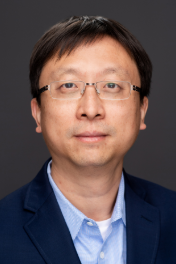 Yi Ma (马毅)合作论文数School of Computing and Data Science, The University of Hong Kong;Department of Electrical Engineering and Computer Sciences, University of California, Berkeley10
 Samy Bengio合作论文数Apple Inc10
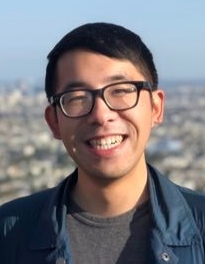 Yiding Jiang合作论文数Machine Learning Department, Carnegie Mellon University6
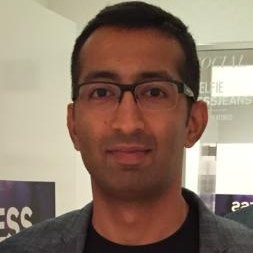 Dilip Krishnan合作论文数Google’s Cambridge office6
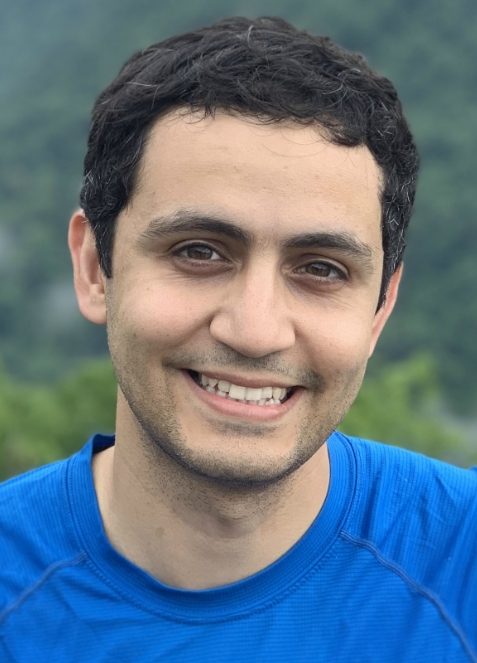 Behnam Neyshabur合作论文数Anthropic5
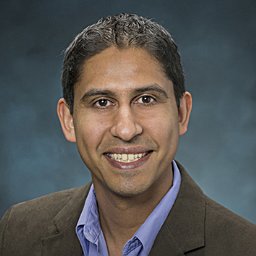 Shankar R. Rao合作论文数Coordinated Science Laboratory, University of Illinois at Urbana-Champaign4
 Pierre Foret合作论文数Citadel Securities3
 Dara Bahri合作论文数Google Research3
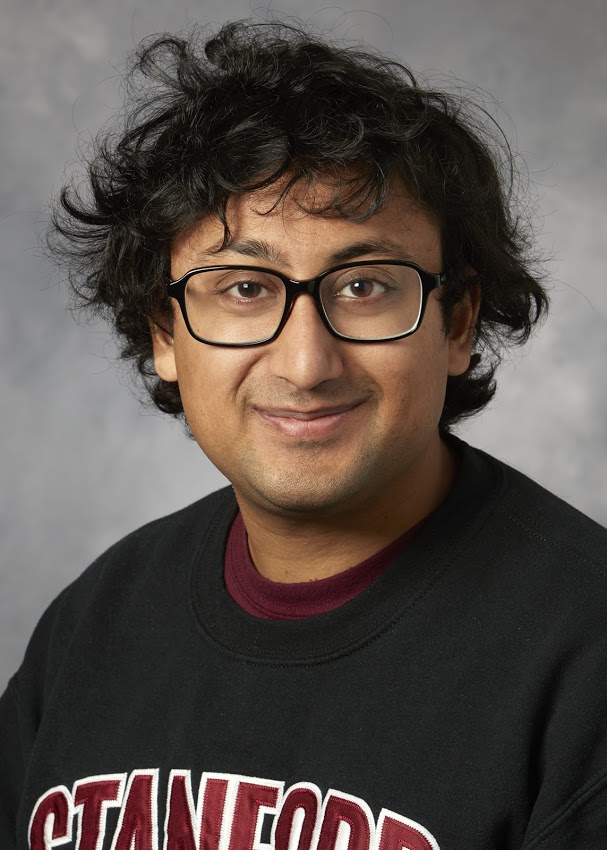 Atish Agarwala合作论文数Google Research3
 Babak N Araabi合作论文数University of Tehran3Majid Nili Ahmadabadi合作论文数Department of Electrical and Computer Engineering
University of Tehran3
Babak N Araabi合作论文数University of Tehran3Majid Nili Ahmadabadi合作论文数Department of Electrical and Computer Engineering
University of Tehran3 Yann N. Dauphin合作论文数Google Research3
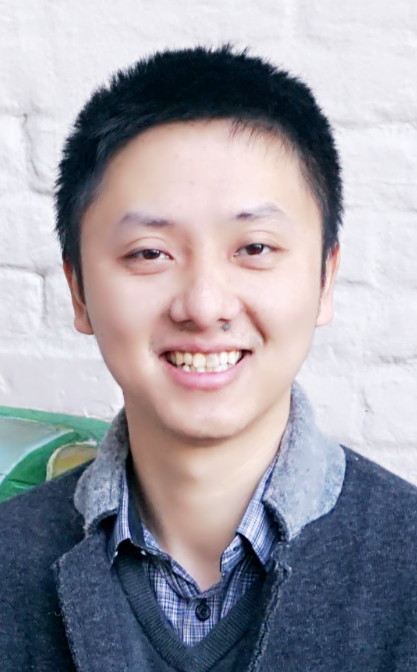 Zihan Zhou合作论文数Manycore Tech Inc.3Scott Yak合作论文数2
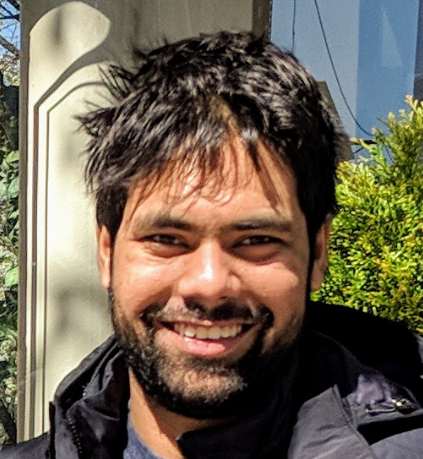 Vighnesh Birodkar合作论文数Luma AI2
 S. Shankar Sastry合作论文数Department of Electrical Engineering and Computer Sciences, University of California, Berkeley;C3 Digital Transformation Institute;FHL Vive Center for Enhanced Reality;Richard C. Blum Center for Developing Economies2
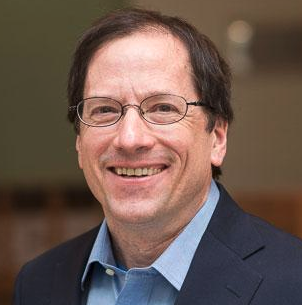 William T. Freeman合作论文数Department of Electrical Engineering and Computer Science, Massachusetts Institute of Technology;Computer Science & Artificial Intelligence Laboratory, Massachusetts Institute of Technology;Google Research2
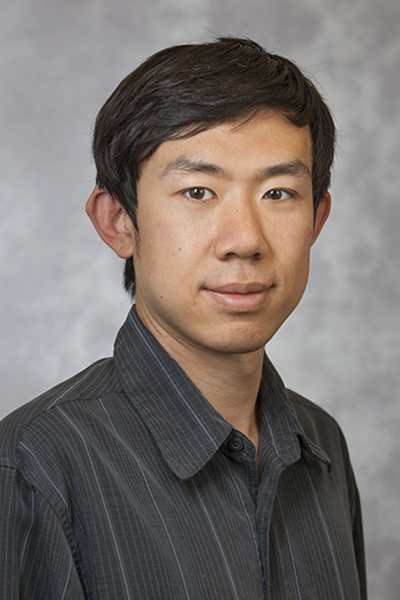 Rong Ge合作论文数Department of Computer Science, Trinity College of Arts & Sciences, Duke University;Department of Mathematics, Trinity College of Arts & Sciences, Duke University2
 Gintare Karolina Dziugaite合作论文数Google2
 Yuan Deng (邓原)合作论文数2
 John Wright合作论文数Department of Electrical Engineering, Columbia University;Department of Applied Physics and Applied Mathematics, Columbia University;Data Science Institute, Columbia University2
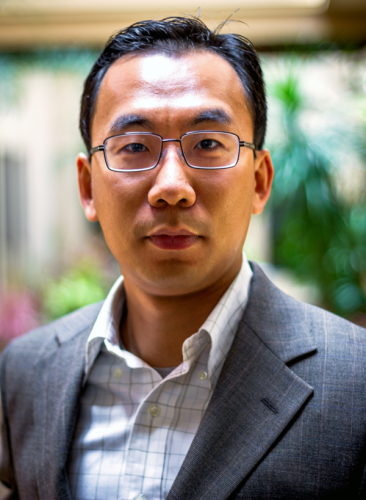 Allen Y. Yang合作论文数Department of Electrical Engineering and Computer Sciences, University of California, Berkeley;Center for Augmented Cognition, University of California, Berkeley;FHL Vive Center for Enhanced Reality;Grafty Inc.;SkyDeck Berkeley;Berkeley Virtual Reality Club2
 Isabelle Guyon合作论文数Universite Paris-Saclay;Google;ChaLearn2
 Anima Anandkumar合作论文数Anima AI + Science Lab, California Institute of Technology;Division of Engineering and Applied Science, California Institute of Technology;Department of Computing and Mathematical Sciences, California Institute of Technology2
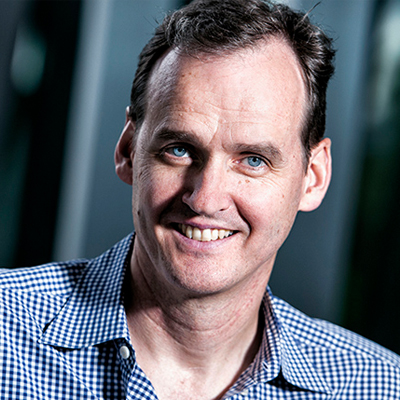 Peter L. Bartlett合作论文数Department of Statistics, University of California, Berkeley;Department of Electrical Engineering and Computer Sciences, University of California, Berkeley;Google;Google DeepMind2
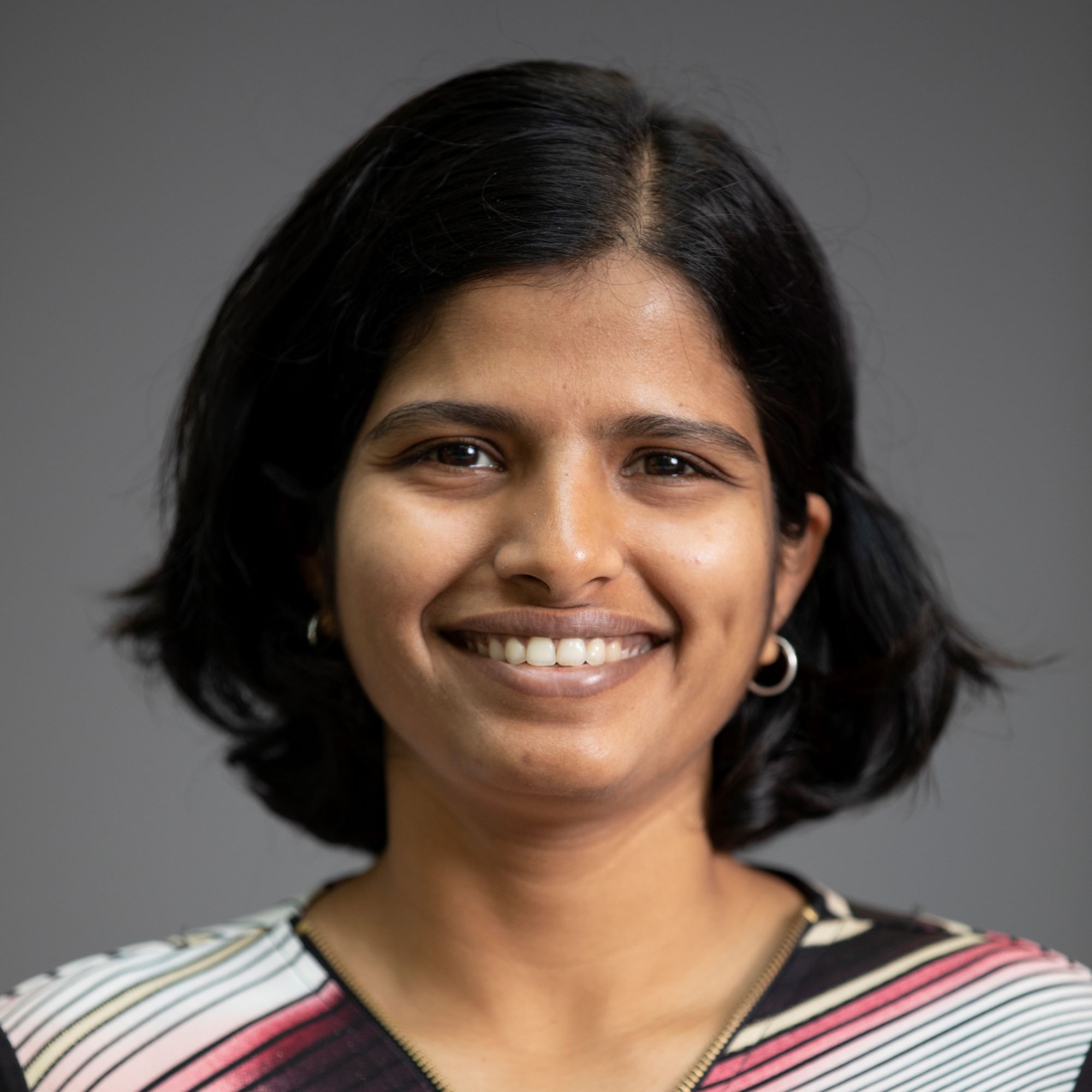 Suriya Gunasekar合作论文数Microsoft Research, Redmond2
 Andrew Wagner合作论文数2
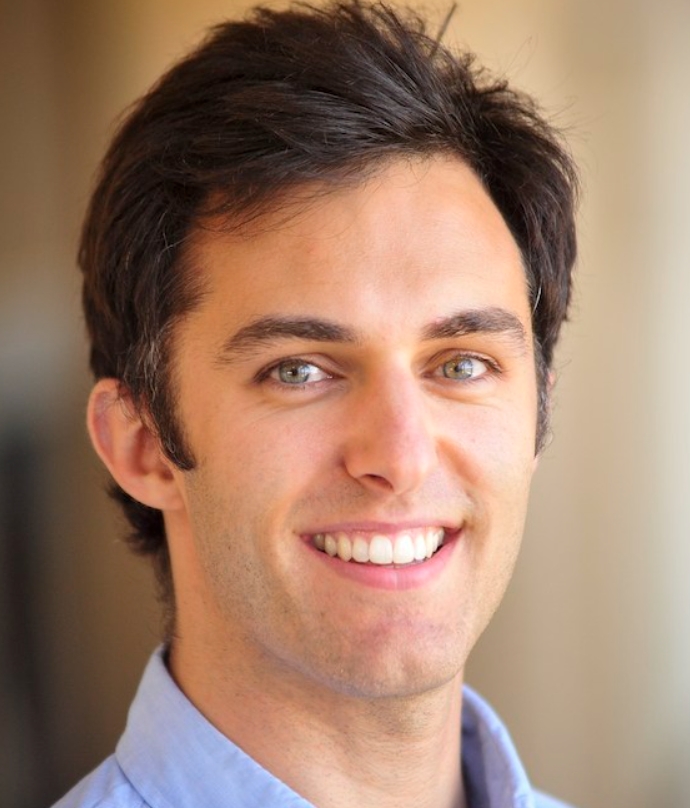 Dan Roy合作论文数Department of Statistical Sciences, Faculty of Arts and Science, University of Toronto;Department of Computer Science, University of Toronto;Department of Computer and Mathematical Sciences, University of Toronto Scarborough;Department of Electrical and Computer Engineering, University of Toronto;Vector Institute2C. Lawrence Zitnick合作论文数1Natarajan Subramanyam合作论文数1Zoran Dzunic合作论文数1
 Minyoung Huh (Jacob)合作论文数Computer Science and Artificial Intelligence Laboratory, Massachusetts Institute of Technology1
 Calvin Luo合作论文数Brown University1
 Thomas Fel合作论文数Harvard University;Goodfire AI1
 Yi Tay合作论文数Google DeepMind1
 Sumukh Aithal合作论文数Carnegie Mellon University1Dhruva Kashyap合作论文数1
 Manik Sharma合作论文数1
 Gamaleldin F. Elsayed合作论文数1
 Ariel Kleiner合作论文数Inductor1
 Parth Natekar合作论文数Dept Engn Design, Indian Inst Technol Madras1
 Richard Zhang (章睿嘉)合作论文数Adobe Research1
 Vaishnavh Nagarajan合作论文数Google1
 Pulkit Agrawal合作论文数Department of Electrical Engineering and Computer Science, School of Engineering, Massachusetts Institute of Technology1
 Sidak Pal Singh合作论文数Max Planck Institute for Intelligent Systems;Swiss Federal Institute of Technology Zurich;Google DeepMind1
 Heinrich Jiang合作论文数Google1
 Chen Justin G合作论文数1
 Katherine L. Hermann合作论文数Google DeepMind1
 Andreas Veit合作论文数Google1




