When operators and users face an unexpected problem regarding the process, it would be easier and less time-consuming for them to narrow down the possible causes that result in the final issue. In this study, a pilot modular plant with two Process Equipment Assemblies was considered as the use case. At first, a knowledge graph representing this process was developed in Protégé software, which semantically described not only the equipment type and connectivity but also the behavior of the process. Then, the knowledge graph was imported to Python, where the sensor data were placed in their particular position in the knowledge graph. Afterward, an algorithm was developed to query the knowledge graph and verify if the relevant equipment was functioning correctly or not. Our results indicate that this approach can reduce the cause-effect diagrams in almost all scenarios. Nonetheless, there are situations where further sensor data (e.g., the temperature in a tank) is required for the algorithm to decide.
One of the challenges of cyber-physical systems is the data acquisition in real- time through different communication protocols within the scope of the Industrial Internet of Things (IIoT). This IIoT data is mainly specified as big in amount, continuous in nature, unstructured, and ambiguous format. It is also enigmatic in terms of structure for an overview of the manufacturing plant and which data belongs to which sensor or machine. Presently, relational database technologies are inadequate to cater to such kinds of IIoT data due to their strict data structure and relations. For this reason, we presented the ontology-based data repository model implementation for the process industry using MongoDB, which is a cross- platform document-oriented, most sought-after ample data storage database system nowadays. Firstly, we have designed a JSON-based data-model schema for the IIoT data repository, which gathers the data with the help of one of the most commonly used communication protocols within the scope of IIoT, OPC UA. Secondly, our schema stores the meta-data and data using embedded referencing through the same data-model. Hence, the scalability, flexibility, and variety of the data storage system have increased. Lastly, with the execution of insertion and search queries, we show how fast to get the desired data element hierarchy or track any particular data, which becomes possible due to the proposed ontology. This effectiveness of the ontology-based data-model also minimize the overhead of the machine learning engineer job.
This paper proposes a novel game-theoretic decision-making algorithm for safe maneuver planning in highway driving. The problem is formulated as a two-player extensive-form game for safety between the ego vehicle and the environment (all the other vehicles around). In order to make a decision (i.e., plan maneuver), the ego vehicle builds a game tree in the current state. The tree is expanded for each possible maneuver of the ego vehicle and the observations from the environment. For evaluation, we quantify the safety value of a maneuver by computing and over-approximating its trajectory and checking for the worst-case spatiotemporal overlap with possible trajectories of other vehicles. The ego vehicle tries to maximize the safety value, assuming that others will act to minimize it. Among equally safe maneuvers, it chooses the one that travels the longest distance. The minimax solution of the game tree yields a sequence of maneuvers up to a predefined depth. The ego vehicle applies the first maneuver in a receding horizon fashion and repeats the process in constant planning cycles. For validation, we simulated highway driving scenarios and compared our minimax-based planning approach to a rule-based planner and an online look-ahead planner in terms of safety, traveled distance, and computation time. We have shown that our approach incorporates a higher safety level than the baseline planners at the cost of traveled distance and computation time.
With the boom of Industry 4.0 for industrial automation, the data exchange between the different industrial devices has tremendously increased through local (edge) and cloud computing. Nowadays, several communication protocols are available to realize data acquisition in the industry. As a result, understanding the practical capabilities of each communication protocol arises as an essential issue in optimizing the data acquisition and storage in industrial plants. This study aims to develop a software-based test environment to evaluate the performance of two widely used communication protocols within the scope of the Industrial Internet of Things (IIoT). These contemplated protocols are Open Platform Communications Unified Architecture (OPC UA) and Message Queuing Telemetry Transport (MQTT). With the help of the developed test environment, several performance metrics, like packet overhead, latency, packet loss ratio, and CPU utilization, are evaluated for different application scenarios where the varying number of clients and subscribers are considered. Derived results indicate the stronger parts of each protocol under varying communication configurations.
Son yıllarda, teknolojik gelişmelerin de katkısıyla, otonom araçlar önemli bir ilgi odağı haline gelmiştir. Bu tarz karmaşık sistemlerde istenen performansın elde edilebilmesi için birçok alt problemin etkili bir şekilde çözülmüş olması gerekmektedir. Bu alt problemler detaylı olarak incelendiğinde hareket ve yörünge planlamasının çok önemli ve kritik bir yer tutuğu görülebilir. Bu çalışma kapsamında, yörünge planlama problemi Frenet koordinat düzleminde ele alınmış ve otonom sürüş sistemleri için optimizasyon tabanlı ve etkili bir yörünge planlama yaklaşımı önerilmiştir. Önerilen yöntem temelde bir optimizasyon probleminin analitik çözümünün çevrim dışı aşamada elde edilmesine dayanmaktadır. Böylece, gerçek zamanlı uygulama sırasında ilgili yörünge katsayılarının belirlenmesi için bir doğrusal denklem takımını çözmek yeterli hale gelmektedir. Karşılaşılan pratik sorunlar ve çözüm önerileri de yine bu çalışma kapsamında ele alınmıştır. Önerilen yöntemin etkinliği “Automotive Data and Time-Triggered Framework (ADTF)” ortamında gerçekleştirilen gerçek zamanlı benzetimlerle gösterilmiştir.
Intelligent transportation systems that promise high level of automation, has gained significant attention during the last years. Movement planning of such vehicles is one of the most critical issues in order to realize autonomous driving. In this paper, a model-free trajectory planning concept that is based on the analytical solution of a given optimization problem is presented. In order to improve the longitudinal performance, an approach that is based on velocity profile partitioning is proposed. The proposed trajectory planning approach is implemented in a very modular way and tested in closed-loop software in the loop test environment. Effectiveness and capabilities of the proposed trajectory planning framework are validated over several case studies.
Mapping of performance specification into parameter space for LTI systems is discussed from the perspective of the Lyapunov equation. After setting the main results on stability, corresponding formulations for a variety of performance criteria (e.g. settling time, damping and frequency-based criteria) are discussed. Thereby, the original performance mapping problem is transformed to a stability problem with modified system matrices that include free control and/or design parameters. The proposed performance mapping approach is demonstrated on two benchmark case studies of practical interest.
Developments regarding driver assistant systems, in the scope of highly automated driving, has gained significant attention during the last years. As a result, planning the movement of the vehicle considering all road conditions and driver/passenger comfort became a crucial issue in that sense. In this paper, a trajectory planning concept that is based on the analytical solution of a given optimization problem is presented where the cost function includes jerk and acceleration of the longitudinal and lateral movements in order to increase the comfort of the passengers. The error of the output trajectory is evaluated over a reference curve that is determined using polynomial fitting approaches. Since the structure of the optimal trajectory is fixed, it is only required to determine the coefficient terms. Therefore, the presented approach is also beneficial from the computational complexity point of view. Real-time experiments have been carried out with our test vehicle on realistic scenarios. The experimental results demonstrated the capabilities and effectiveness of the proposed trajectory planning framework.
Guaranteeing the stability of dynamical systems is one of the core problems of control engineering. The complexity of the problem increases significantly when uncertain parameters take place. Most of the studies in the literature focus on the stability of a given uncertain polynomial family and omit the effect of free controller parameters. In this study, a combined approach is proposed in order to determine the robustly stabilizing controller parameter spaces of a given parametric uncertain system. The proposed approach is composed of two main steps. In the first step, currently existing theorems for robust stability (Kharitonov, Edge, 16-plants, etc.) are used to determine the polynomials that should be stable for robust stability. In the second step, a Lyapunov Equation based generic stability mapping approach is presented in order to determine the bounds of free parameters that guarantee the stability of predetermined polynomials. In this way, it is easily possible to determine the exact bounds of controller parameters that achieve robust stability. The presented stability mapping approach is independent of the controller type and the number of free controller parameters. Two benchmark case studies are included in order to verify the effectiveness and correctness of the derived theoretical results.
This paper analytically derives the bandwidth limitations of Disturbance Observer (DOB) when plants have Right Half Plane (RHP) zero(s) and pole(s). If the plant is non-minimum phase, then the bandwidth of DOB should be set at a lower value than its upper bound to improve the robust stability and performance. If the plant is unstable, then the bandwidth of DOB should be set at a higher value than its lower bound to achieve the robust stability. The upper and lower bounds are analytically derived by using Poisson integral formula. It is shown that the bandwidth limitation of DOB is directly related to the locations of the RHP zero(s) and pole(s) and becomes more severe as they get close each other. A minimum phase approximation of the non-minimum phase nominal plant model is proposed by using Genetic Algorithm (GA) to tackle the internal stability problem of the DOB-based robust control systems. Simulation results are given to verify the proposed robust controllers.
Guaranteeing the stability is one of the fundamental problems of control engineering. In most of the dynamical systems, parameter uncertainties can not be avoided. Thus, it is crucial from a practical point of view to propose generic methods for analyzing the stability of uncertain parameter systems. In this study, the extension of previously proposed Lyapunov Equation based stability mapping approach to the case of parameter uncertain systems is presented. Using the present method, it becomes possible to determine the explicit stability boundaries of the uncertain parameters along with the free controller parameters. Unlike most of the conventional approaches, the current method does not include any restrictions related with the number of the uncertain parameters and the way that the uncertain parameter(s) show themselves in the problem formulation. In order to demonstrate the efficiency of the proposed method, two benchmark case studies are discussed in detail. It is shown that the proposed approach is capable of increasing the accuracy of the previous results in specific cases while ensuring a flexible and easily applicable stability analysis environment for such systems.
In this paper, a robust control strategy of a railway traction system with induction motor is proposed. The control problem is divided into sub-loops such as, current loop, acceleration loop, speed loop and position loop. A conventional PI controller is designed for the current loop, which is a very fast loop in comparison to the other mechanical loops. A nonlinear PI controller is used to control the acceleration loop. The speed and position loops are controlled via robust PI-PD controllers. The robustness problem is considered both as disturbance rejection, which arise due to resistive forces, and as robustness against uncertainties such as, the mass of the railway vehicle and the wheel diameter. The practical applicability of the method is emphasized via verification and validation steps with realistic constraints on acceleration, jerk, torque and power on a case study. Simulation results reveal that the proposed controller structure is quite effective for a railway traction system.
The aim of this study is to introduce a novel approach for robust model predictive control (MPC) design based on stabilizing parameter spaces. In order to determine the stabilizing parameter regions, a Lyapunov equation based approach is proposed for nominal systems. In addition to the free controller parameters, it is also possible to determine boundaries of uncertain parameters in the present approach. The precomputed stability conditions on controller parameters are inserted to the MPC problem formulation as constraints. By this way, the stability of the closed-loop system is ensured. The proposed approach allows to design the nominal MPC, instead of the robust one. Using the predetermined constraints, the MPC is implemented to optimize the controller parameters over this stabilizing set. This paper introduces three particular control scenarios that tune the basic properties of the novel approach, e.g., runtime and computational effort. Two illustrative case studies are presented to demonstrate the efficiency of the proposed robust MPC strategy.
The present paper discusses the thermal data prediction performance of ANN for more than one biomass as well as the reliability of this ANN predicted data in the further steps. Lignocellulosic forest residue (LFR) and olive oil residue (OOR) were selected as biomass feedstocks. The thermal data prediction performance of ANN was performed based on two approaches by developing; i) two individual networks for each feedstock, and ii) one-network for both feedstocks. After fixing the main structure of the networks, optimization studies were carried out to determine the best network configuration. In this way, it was also aimed to discuss the effect of internal ANN parameters to the overall prediction capability for more complex problems. At the final step, the predicted data was applied to calculate the activation energies based on three conventional kinetic models and the results were compared with the ones calculated using experimental thermal data. In the end, it was concluded the experimental thermal data fitted quite well to the ANN predicted data (R2 > 0.99) but more complex network topology was required for combined network due to the complexity of the dataset. Most importantly, it is shown that the predicted data can be applicable for the further steps such as in the calculation of the activation energies using different models.
Dominant roots of the closed loop characteristic equation play a crucial role in terms of the performance of Linear Time Invariant (LTI) systems. Within the scope of this study, a dominant pole placement approach which has two main phases is proposed for PI/PID type controllers. In the first phase, characteristic equation is partitioned into its dominant and non-dominant polynomial pairs and dominant poles are placed to predetermined locations. In the second phase, it is required to determine how far the non-dominant poles can be placed. In the current study, this requirement is transformed into a stability problem and Lyapunov Equation-based stability mapping approach is used. This combined approach creates a more flexible design environment compared to the currently existing approaches in literature. In order to demonstrate this flexibility, two benchmark case studies are included with different definitions of dominant pole placement problem.
In this study, a new method is proposed in order to analytically determine the stability boundaries of discrete time linear systems. The stability conditions of discrete time systems are reformulated in this method to derive an equation that includes the products of all eigenvalues, that can be checked more easily than conditions on every single eigenvalue. Thus, the time for calculating the space of all stable parameters of a given system can be greatly reduced. By further analysis, redundant products in the proposed method are eliminated in order to reduce the computational complexity more. The new procedure avoids bilinear transformations, decoupling at singular frequencies and discretization of the parameter space and doesn’t include any conservatism. Further, interpretation of the proposed method in context of the Lyapunov stability is given. Different case studies are included in the paper to prove correctness of the results and to illustrate the advantages of the proposed approach.
Suspensions are systems produced to minimize the effect of road surface defects on the vehicle, and are divided into three as passive, semi-active and active suspensions. In this study, quarter car suspension model is examined with linear quadratic regulator (LQR) and model predictive controller (MPC), respectively. Quanser active suspension experiment set is used to obtain experimental results. First, LQR which minimizes the performance criteria related to state and input signals is used to control the system. Then, MPC which is very popular in the industry is used as a second control method. After obtaining nominal system responses for both control methods, comparison between LQR and MPC under different load characteristics and parameter variations is done. By changing the road characteristics and the plant, and by applying disturbance to the system, system responses with LQR and MPC are examined and compared.
In this study, firstly, the model of railway traction electric drive systems is derived analytically along with the indirect vector control approach. In such systems, there are several disturbance and uncertainty sources like varying total weight, weight distribution, environmental conditions, voltage irregularities etc. Furthermore, resistive forces that is based on curve and grade topology, tunnel effects, velocity and aerodynamics of trains directly affects the motion control problem. In order to overcome such difficulties, a new robust pole placement approach is proposed for the speed control of such systems considering the total resistive forces, the possible uncertainties that may occur. The proposed approach is based on affine linear polynomials and D-stability. A conversion is also possible from PID type controllers to PI-PD cascade controller structure in order to eliminate the effects of undesired open loop zeros. Using the proposed approach, it becomes possible to guarantee certain predetermined performance criteria corresponding to a robust performance with energy efficiency. Additionally, correctness and effectiveness of the derived theoretical results are verified via a case study.
This work focuses on a quadrocopter model, which was developed by QuanserTM and named as Qball X4. First, mathematical model of the Qball X4 is obtained. Then, a conventional PID control technique is presented. This PID control parameters come from Qball user manual. After the presentation of conventional PID control, as an extension of the conventional PID control theory, a different fuzzy controller structure is given. The proposed fuzzy controller structure is based on fuzzy logic and its name is PID type fuzzy controller. All of the simulations are done in MATLABTM environment.
 Mehmet Turan Soylemez合作论文数Department of Control Engineering, Istanbul Technical University20
 Frank Schrodel合作论文数11
 Khaled Alaa合作论文数Intelligent Driving Functions R&D Center, IAV GmbH (Volkswagen Group), Berlin, Germany5
 Rick Voßwinkel合作论文数Motion Planing, IAV GmbH4
 Leon Urbas合作论文数Dresden University of Technology4
 Dirk Abel合作论文数4f m rani合作论文数3Dinu Mihailescu-Stoica合作论文数3
 Ugur Yildirim合作论文数3
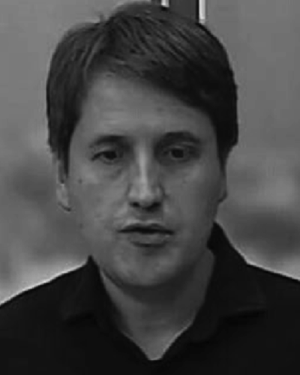 Naim Bajcinca合作论文数3
 Serdar Yaman合作论文数Istanbul Technical University3
 Hanzade Haykiri Acma合作论文数Chemical Engineering Department, Chemical and Metallurgical Engineering Faculty, Istanbul Technical University3
 Emre Dincel合作论文数3
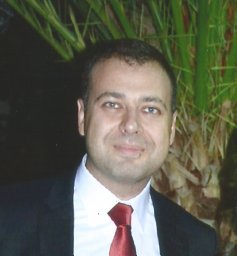 Tolga Ovatman合作论文数Department of Computer Engineering, Istanbul Technical University3
 Mustafa Saraoglu合作论文数Technische Universität Dresden2Lorenz Pyta合作论文数2
 Mustafa Seckin Durmus合作论文数Istanbul Tech. Univ.;c;Istanbul Tech. Univ.2
 Çepelioğullar Özge合作论文数Department of Chemical Engineering, Istanbul Technical University2
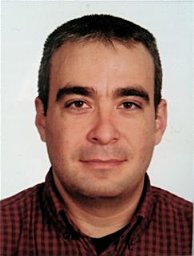 Ali Fuat Ergenc合作论文数Mechanical Engineering Department, University of Connecticut2Ufuk Sevim合作论文数1
 Lucas Vogt合作论文数1halil akcakaya合作论文数1Nazanin Hamedi合作论文数1
 Mohamed Elsheikh合作论文数1
 Lucas Drowatzky合作论文数1
 Tolga Bodrumlu合作论文数1Matthias Freese合作论文数1
 M. Ugur Yavas合作论文数Eatron Technol1Berkan Kacmaz合作论文数1
 Mehmet Canevi合作论文数1
 Anselm Klose合作论文数Proc To Order Lab, Tech Univ Dresden1
 Leyla Goren Sumer合作论文数1
 Sirin Akkaya合作论文数Control & Autom. Eng. Dept., Istanbul Tech. Univ.;c;Control & Autom. Eng. Dept., Istanbul Tech. Univ.1
 Baran Alikoc合作论文数1Handan Nak合作论文数1Makinist, S.合作论文数1Sumer, L.G.合作论文数1
 Monika Bakosova合作论文数Faculty of Chemical and Food Technology, Slovak University of Technology in Bratislava1
 Mohammad R. Movahhedy合作论文数Center of Excellence in Design, Robotics and Automation, Sharif University of Technology1
 Engin Yesil合作论文数Faculty of Electrical and Electronics Engineering, Istanbul Technical University1
 Emre Sariyildiz合作论文数Sch Mech Mat Mechatron & Biomed Engn, Univ Wollongong1
 Klaus Janschek合作论文数Institut fär Automatisierungstechnik, Technische Universität Dresden1
 Juraj Oravec合作论文数1
 Rahim Mutlu合作论文数1
 Tufan Kumbasar合作论文数Control & Automat Engn Dept, Istanbul Tech Univ1
 Oytun Eris合作论文数1
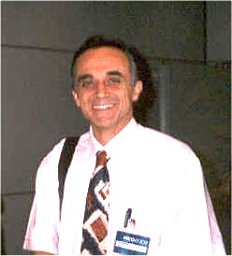 Ibrahim Eksin合作论文数Faculty of Electrical and Electronics Engineering, Istanbul Technical University1
 M. Furkan Dodurka合作论文数1
 Hamed Moradi合作论文数Department of Mechanical Engineering, Amirkabir University of Technology1




