Language models demonstrate both quantitative improvement and new qualitative capabilities with increasing scale. Despite their potentially transformative impact, these new capabilities are as yet poorly characterized. In order to inform future research, prepare for disruptive new model capabilities, and ameliorate socially harmful effects, it is vital that we understand the present and near-future capabilities and limitations of language models. To address this challenge, we introduce the Beyond the Imitation Game benchmark (BIG-bench). BIG-bench currently consists of 204 tasks, contributed by 450 authors across 132 institutions. Task topics are diverse, drawing problems from linguistics, childhood development, math, common-sense reasoning, biology, physics, social bias, software development, and beyond. BIG-bench focuses on tasks that are believed to be beyond the capabilities of current language models. We evaluate the behavior of OpenAI's GPT models, Google-internal dense transformer architectures, and Switch-style sparse transformers on BIG-bench, across model sizes spanning millions to hundreds of billions of parameters. In addition, a team of human expert raters performed all tasks in order to provide a strong baseline. Findings include: model performance and calibration both improve with scale, but are poor in absolute terms (and when compared with rater performance); performance is remarkably similar across model classes, though with benefits from sparsity; tasks that improve gradually and predictably commonly involve a large knowledge or memorization component, whereas tasks that exhibit "breakthrough" behavior at a critical scale often involve multiple steps or components, or brittle metrics; social bias typically increases with scale in settings with ambiguous context, but this can be improved with prompting.
Enabling LLMs to improve their outputs by using more test-time computation is a critical step towards building generally self-improving agents that can operate on open-ended natural language. In this paper, we study the scaling of inference-time computation in LLMs, with a focus on answering the question: if an LLM is allowed to use a fixed but non-trivial amount of inference-time compute, how much can it improve its performance on a challenging prompt? Answering this question has implications not only on the achievable performance of LLMs, but also on the future of LLM pretraining and how one should tradeoff inference-time and pre-training compute. Despite its importance, little research attempted to understand the scaling behaviors of various test-time inference methods. Moreover, current work largely provides negative results for a number of these strategies. In this work, we analyze two primary mechanisms to scale test-time computation: (1) searching against dense, process-based verifier reward models; and (2) updating the model's distribution over a response adaptively, given the prompt at test time. We find that in both cases, the effectiveness of different approaches to scaling test-time compute critically varies depending on the difficulty of the prompt. This observation motivates applying a "compute-optimal" scaling strategy, which acts to most effectively allocate test-time compute adaptively per prompt. Using this compute-optimal strategy, we can improve the efficiency of test-time compute scaling by more than 4x compared to a best-of-N baseline. Additionally, in a FLOPs-matched evaluation, we find that on problems where a smaller base model attains somewhat non-trivial success rates, test-time compute can be used to outperform a 14x larger model.
In this paper, we explore the idea of training large language models (LLMs) over highly compressed text. While standard subword tokenizers compress text by a small factor, neural text compressors can achieve much higher rates of compression. If it were possible to train LLMs directly over neurally compressed text, this would confer advantages in training and serving efficiency, as well as easier handling of long text spans. The main obstacle to this goal is that strong compression tends to produce opaque outputs that are not well-suited for learning. In particular, we find that text naïvely compressed via Arithmetic Coding is not readily learnable by LLMs. To overcome this, we propose Equal-Info Windows, a novel compression technique whereby text is segmented into blocks that each compress to the same bit length. Using this method, we demonstrate effective learning over neurally compressed text that improves with scale, and outperforms byte-level baselines by a wide margin on perplexity and inference speed benchmarks. While our method delivers worse perplexity than subword tokenizers for models trained with the same parameter count, it has the benefit of shorter sequence lengths. Shorter sequence lengths require fewer autoregressive generation steps, and reduce latency. Finally, we provide extensive analysis of the properties that contribute to learnability, and offer concrete suggestions for how to further improve the performance of high-compression tokenizers.
Fine-tuning language models~(LMs) on human-generated data remains a prevalent practice. However, the performance of such models is often limited by the quantity and diversity of high-quality human data. In this paper, we explore whether we can go beyond human data on tasks where we have access to scalar feedback, for example, on math problems where one can verify correctness. To do so, we investigate a simple self-training method based on expectation-maximization, which we call ReST$^{EM}$, where we (1) generate samples from the model and filter them using binary feedback, (2) fine-tune the model on these samples, and (3) repeat this process a few times. Testing on advanced MATH reasoning and APPS coding benchmarks using PaLM-2 models, we find that ReST$^{EM}$ scales favorably with model size and significantly surpasses fine-tuning only on human data. Overall, our findings suggest self-training with feedback can substantially reduce dependence on human-generated data.
The population loss of trained deep neural networks often follows precise power-law scaling relations with either the size of the training dataset or the number of parameters in the network. We propose a theory that explains the origins of and connects these scaling laws. We identify variance-limited and resolution-limited scaling behavior for both dataset and model size, for a total of four scaling regimes. The variance-limited scaling follows simply from the existence of a well-behaved infinite data or infinite width limit, while the resolution-limited regime can be explained by positing that models are effectively resolving a smooth data manifold. In the large width limit, this can be equivalently obtained from the spectrum of certain kernels, and we present evidence that large width and large dataset resolution-limited scaling exponents are related by a duality. We exhibit all four scaling regimes in the controlled setting of large random feature and pretrained models and test the predictions empirically on a range of standard architectures and datasets. We also observe several empirical relationships between datasets and scaling exponents under modifications of task and architecture aspect ratio. Our work provides a taxonomy for classifying different scaling regimes, underscores that there can be different mechanisms driving improvements in loss, and lends insight into the microscopic origin and relationships between scaling exponents.
While many capabilities of language models (LMs) improve with increased training budget, the influence of scale on hallucinations is not yet fully understood. Hallucinations come in many forms, and there is no universally accepted definition. We thus focus on studying only those hallucinations where a correct answer appears verbatim in the training set. To fully control the training data content, we construct a knowledge graph (KG)-based dataset, and use it to train a set of increasingly large LMs. We find that fora fixed dataset, larger and longer-trained LMs hallucinate less. However, hallucinating on≤5% of the training data requires an order of magnitude larger model, and thus an order of magnitude more compute, than Hoffmann et al. (2022) reported was optimal. Given this costliness, we study how hallucination detectors depend on scale. While we see detector size improves performance on fixed LM’s outputs, we find an inverse relationship between the scale of the LM and the detectability of its hallucinations.
Teams that have trained large Transformer-based models have reported training instabilities at large scale that did not appear when training with the same hyperparameters at smaller scales. Although the causes of such instabilities are of scientific interest, the amount of resources required to reproduce them has made investigation difficult. In this work, we seek ways to reproduce and study training stability and instability at smaller scales. First, we focus on two sources of training instability described in previous work: the growth of logits in attention layers (Dehghani et al., 2023) and divergence of the output logits from the log probabilities (Chowdhery et al., 2022). By measuring the relationship between learning rate and loss across scales, we show that these instabilities also appear in small models when training at high learning rates, and that mitigations previously employed at large scales are equally effective in this regime. This prompts us to investigate the extent to which other known optimizer and model interventions influence the sensitivity of the final loss to changes in the learning rate. To this end, we study methods such as warm-up, weight decay, and the $\mu$Param (Yang et al., 2022), and combine techniques to train small models that achieve similar losses across orders of magnitude of learning rate variation. Finally, to conclude our exploration we study two cases where instabilities can be predicted before they emerge by examining the scaling behavior of model activation and gradient norms.
In this report, we introduce the Gemini 1.5 family of models, representing the next generation of highly compute-efficient multimodal models capable of recalling and reasoning over fine-grained information from millions of tokens of context, including multiple long documents and hours of video and audio. The family includes two new models: (1) an updated Gemini 1.5 Pro, which exceeds the February version on the great majority of capabilities and benchmarks; (2) Gemini 1.5 Flash, a more lightweight variant designed for efficiency with minimal regression in quality. Gemini 1.5 models achieve near-perfect recall on long-context retrieval tasks across modalities, improve the state-of-the-art in long-document QA, long-video QA and long-context ASR, and match or surpass Gemini 1.0 Ultra's state-of-the-art performance across a broad set of benchmarks. Studying the limits of Gemini 1.5's long-context ability, we find continued improvement in next-token prediction and near-perfect retrieval (>99 as Claude 3.0 (200k) and GPT-4 Turbo (128k). Finally, we highlight real-world use cases, such as Gemini 1.5 collaborating with professionals on completing their tasks achieving 26 to 75 categories, as well as surprising new capabilities of large language models at the frontier; when given a grammar manual for Kalamang, a language with fewer than 200 speakers worldwide, the model learns to translate English to Kalamang at a similar level to a person who learned from the same content.
Strong gravitational lenses are a singular probe of the universe's small-scale structure $\unicode{x2013}$ they are sensitive to the gravitational effects of low-mass $(<10^{10} M_\odot)$ halos even without a luminous counterpart. Recent strong-lensing analyses of dark matter structure rely on simulation-based inference (SBI). Modern SBI methods, which leverage neural networks as density estimators, have shown promise in extracting the halo-population signal. However, it is unclear whether the constraining power of these models has been limited by the methodology or the information content of the data. In this study, we introduce an accelerator-optimized simulation pipeline that can generate lens images with realistic subhalo populations in a matter of milliseconds. Leveraging this simulator, we identify the main methodological limitation of our fiducial SBI analysis: training set size. We then adopt a sequential neural posterior estimation (SNPE) approach, allowing us to iteratively refine the distribution of simulated training images to better align with the observed data. Using only one-fifth as many mock Hubble Space Telescope (HST) images, SNPE matches the constraints on the low-mass halo population produced by our best non-sequential model. Our experiments suggest that an over three order-of-magnitude increase in training set size and GPU hours would be required to achieve an equivalent result without sequential methods. While the full potential of the existing strong lens sample remains to be explored, the notable improvement in constraining power enabled by our sequential approach highlights that the current constraints are limited primarily by methodology and not the data itself. Moreover, our results emphasize the need to treat training set generation and model optimization as interconnected stages of any cosmological analysis using simulation-based inference techniques.
Robust and effective scaling of models from small to large width typically requires the precise adjustment of many algorithmic and architectural details, such as parameterization and optimizer choices. In this work, we propose a new perspective on parameterization by investigating a key assumption in prior work about the alignment between parameters and data and derive new theoretical results under weaker assumptions and a broader set of optimizers. Our extensive empirical investigation includestens of thousandsof models trained withall combinations ofthree optimizers, four parameterizations, several alignment assumptions, more than a dozen learning rates, and fourteen model sizes up to 27B parameters. We find that the best learning rate scaling prescription would often have been excluded by the assumptions in prior work. Our results show that all parameterizations, not just maximal update parameterization (muP), can achieve hyperparameter transfer; moreover, our novel per-layer learning rate prescription for standard parameterization outperforms muP. Finally, we demonstrate that an overlooked aspect of parameterization, the epsilon parameter in Adam, must be scaled correctly to avoid gradient underflow and proposeAdam-atan2, a new numerically stable, scale-invariant version of Adam that eliminates the epsilon hyperparameter entirely.
Neural kernels have drastically increased performance on diverse and nonstandard data modalities but require significantly more compute, which previously limited their application to smaller datasets. In this work, we address this by massively parallelizing their computation across many GPUs. We combine this with a distributed, preconditioned conjugate gradients algorithm to enable kernel regression at a large scale (i.e. up to five million examples). Using this approach, we study scaling laws of several neural kernels across many orders of magnitude for the CIFAR-5m dataset. Using data augmentation to expand the original CIFAR-10 training dataset by a factor of 20, we obtain a test accuracy of 91.2\% (SotA for a pure kernel method). Moreover, we explore neural kernels on other data modalities, obtaining results on protein and small molecule prediction tasks that are competitive with SotA methods.
We introduce and study the problem of adversarial arithmetic, which provides a simple yet challenging testbed for language model alignment. This problem is comprised of arithmetic questions posed in natural language, with an arbitrary adversarial string inserted before the question is complete. Even in the simple setting of 1-digit addition problems, it is easy to find adversarial prompts that make all tested models (including PaLM2, GPT4, Claude2) misbehave, and even to steer models to a particular wrong answer. We additionally provide a simple algorithm for finding successful attacks by querying those same models, which we name "prompt inversion rejection sampling" (PIRS). We finally show that models can be partially hardened against these attacks via reinforcement learning and via agentic constitutional loops. However, we were not able to make a language model fully robust against adversarial arithmetic attacks.
While kernel regression remains an important practical method, its connection to neural networks as their width becomes large has initiated fresh research. These neural kernels have drastically increased performance on diverse and nonstandard data modalities but require significantly more compute, which previously limited their application to smaller datasets. We address this by massively parallelizing their computation across many GPUs. We combine this with a distributed, preconditioned conjugate gradients algorithm to enable kernel regression at a large scale (i.e. up to 5 million examples). Using this approach, we study scaling laws of several neural kernels across many orders of magnitude for the CIFAR-5m dataset. Using data augmentation to expand the original CIFAR-10 training dataset by a factor of 20, we obtain a test accuracy of 91.2\% (SotA for a pure kernel method). Finally, we explore other data modalities, obtaining results on protein and small molecule prediction tasks that are competitive with SotA methods.
Previous research observed accuracy degradation when replacing the attention softmax with a point-wise activation such as ReLU. In the context of vision transformers, we find that this degradation is mitigated when dividing by sequence length. Our experiments training small to large vision transformers on ImageNet-21k indicate that ReLU-attention can approach or match the performance of softmax-attention in terms of scaling behavior as a function of compute.
This paper introduces a real-time digital twin for ship operations in seaways. The concept of the digital twin is becoming popular, and it is adopted for ship operation systems in this study. In particular, this paper introduces a new and innovative concept of the digital twin to predict ocean waves and hydrodynamic performances, such as seakeeping and maneuvering, which enables the risk and optimum route to be forecast in real time. An essential element in the realization of such a real-time digital twin is the real-time prediction of ocean waves. Hence, a sophisticated algorithm for wave reconstruction using measured wave-radar images is developed, which is extended to predicting the future evolution of a three-dimensional wave field in front of a ship within a time window of the order of 10 min. As another essential element, an analysis program to solve the coupled seakeeping-maneuvering problem is developed. This analysis can also be used in real time. By combining this with wave prediction software, the future occurrence of ocean waves and ship responses can be predicted. By extending this approach, the risk and performance of ships in various ocean environments can be predicted. In this paper, concepts, approaches, and examples are introduced.
The test loss of well-trained neural networks often follows precise power-law scaling relations with either the size of the training dataset or the number of parameters in the network. We propose a theory that explains and connects these scaling laws. We identify variance-limited and resolution-limited scaling behavior for both dataset and model size, for a total of four scaling regimes. The variance-limited scaling follows simply from the existence of a well-behaved infinite data or infinite width limit, while the resolution-limited regime can be explained by positing that models are effectively resolving a smooth data manifold. In the large width limit, this can be equivalently obtained from the spectrum of certain kernels, and we present evidence that large width and large dataset resolution-limited scaling exponents are related by a duality. We exhibit all four scaling regimes in the controlled setting of large random feature and pretrained models and test the predictions empirically on a range of standard architectures and datasets. We also observe several empirical relationships between datasets and scaling exponents: super-classing image tasks does not change exponents, while changing input distribution (via changing datasets or adding noise) has a strong effect. We further explore the effect of architecture aspect ratio on scaling exponents.
Infinite width limit has shed light on generalization and optimization aspects of deep learning by establishing connections between neural networks and kernel methods. Despite their importance, the utility of these kernel methods was limited in large-scale learning settings due to their (super-)quadratic runtime and memory complexities. Moreover, most prior works on neural kernels have focused on the ReLU activation, mainly due to its popularity but also due to the difficulty of computing such kernels for general activations. In this work, we overcome such difficulties by providing methods to work with general activations. First, we compile and expand the list of activation functions admitting exact dual activation expressions to compute neural kernels. When the exact computation is unknown, we present methods to effectively approximate them. We propose a fast sketching method that approximates any multi-layered Neural Network Gaussian Process (NNGP) kernel and Neural Tangent Kernel (NTK) matrices for a wide range of activation functions, going beyond the commonly analyzed ReLU activation. This is done by showing how to approximate the neural kernels using the truncated Hermite expansion of any desired activation functions. While most prior works require data points on the unit sphere, our methods do not suffer from such limitations and are applicable to any dataset of points in $\mathbb{R}^d$. Furthermore, we provide a subspace embedding for NNGP and NTK matrices with near input-sparsity runtime and near-optimal target dimension which applies to any \emph{homogeneous} dual activation functions with rapidly convergent Taylor expansion. Empirically, with respect to exact convolutional NTK (CNTK) computation, our method achieves $106\times$ speedup for approximate CNTK of a 5-layer Myrtle network on CIFAR-10 dataset.
Neural Processes (NPs) are a class of stochastic processes parametrized by neural networks. Unlike traditional stochastic processes (e.g., Gaussian processes), which require specifying explicit kernel functions, NPs implicitly learn kernel functions appropriate for a given task through observed data. While this data-driven learning of stochastic processes has been shown to model various types of data, the current NPs' implicit treatment of the mean and the covariance of the output variables limits its full potential when the underlying distribution of the given data is highly complex. To address this, we introduce a new neural stochastic processes, Decoupled Kernel Neural Processes (DKNPs), which explicitly learn a separate mean and kernel function to directly model the covariance between output variables in a data-driven manner. By estimating kernel functions with self- and mixed attentive neural networks, DKNPs demonstrate improved uncertainty estimation in terms of conditional likelihood and diversity in generated samples in 1-D and 2-D regression tasks, compared to other concurrent NP variants. Also, maintaining explicit kernel functions, a key component of stochastic processes, allows the model to reveal a deeper understanding of underlying distributions.
Most sea trials of large merchant ships are carried out with the filling ballast water in cargo, and the trial environment may involve mild waves as well. It causes the ship to undergo a coupling effect between external wave excitation and internal sloshing motion, and an understanding of such coupling is important to analyze the components of the total resistance measured in sea trials. In this study, a blunt modified Wigley equipped with two inner tanks is selected to observe its hydrodynamic responses under head waves, using both experimental measurement and numerical computations. Ship is considered to have a forward motion at the Froude number of 0.2, and three filling conditions varying from low filling to high filling have been arranged for two inner tanks. For validation, numerical computation is performed based on the three-dimensional Rankine panel method with the linearized boundary value problems. Both seakeeping and internal sloshing flow are analyzed using the linear potential theory. The validation presents a sufficient agreement between experimental measurement and numerical results with or without the sloshing effect, and both two methods have shown that the sloshing coupling effect is generally insignificant for present ship model. However, when the wave encounter frequency becomes very close to the tank natural frequency, the medium filling tanks generate a strong coupling effect which can restrain ship motion responses as well as added resistance.
Modern deep learning models have achieved great success in predictive accuracy for many data modalities. However, their application to many real-world tasks is restricted by poor uncertainty estimates, such as overconfidence on out-of-distribution (OOD) data and ungraceful failing under distributional shift. Previous benchmarks have found that ensembles of neural networks (NNs) are typically the best calibrated models on OOD data. Inspired by this, we leverage recent theoretical advances that characterize the function-space prior of an ensemble of infinitely-wide NNs as a Gaussian process, termed the neural network Gaussian process (NNGP). We use the NNGP with a softmax link function to build a probabilistic model for multi-class classification and marginalize over the latent Gaussian outputs to sample from the posterior. This gives us a better understanding of the implicit prior NNs place on function space and allows a direct comparison of the calibration of the NNGP and its finite-width analogue. We also examine the calibration of previous approaches to classification with the NNGP, which treat classification problems as regression to the one-hot labels. In this case the Bayesian posterior is exact, and we compare several heuristics to generate a categorical distribution over classes. We find these methods are well calibrated under distributional shift. Finally, we consider an infinite-width final layer in conjunction with a pre-trained embedding. This replicates the important practical use case of transfer learning and allows scaling to significantly larger datasets. As well as achieving competitive predictive accuracy, this approach is better calibrated than its finite width analogue.
 Yonghwan Kim合作论文数Department of Naval Architecture and Ocean Engineering, Seoul National University29
 Min-Koo Han合作论文数Department of Electrical and Computer Engineering, Seoul National University;College of Engineering, Seoul National University18
 Jascha Sohl-Dickstein合作论文数Anthropic16
 Roman Novak合作论文数OpenAI15
 Lechao Xiao (萧乐超)合作论文数Google DeepMind13
 Jeffrey Pennington合作论文数Google Brain13
 Ethan S Dyer合作论文数Google Research9
 Ben Adlam合作论文数Google8
 Yasaman Bahri合作论文数Google DeepMind7
 Alexander A. Alemi合作论文数Anthropic7
 Samuel S. Schoenholz合作论文数Founding Team, Thinking Machines Lab7
 Kelvin Xu合作论文数Google DeepMind6
 Izzeddin Gür合作论文数Google Research5
 Shai M. Chester合作论文数Dept Particle Phys & Astrophys, Weizmann Inst Sci5
 Noah Fiedel合作论文数Google DeepMind5Min-Guk Seo合作论文数5
 Kyung-Kyu Yang合作论文数5
 Rosanne Liu合作论文数Google Brain5
 Jasper Snoek合作论文数Google5Ran Yacoby合作论文数Department of Particle Physics;Weizmann Institute of Science;Department of Particle Physics, Weizmann Institute of Science5
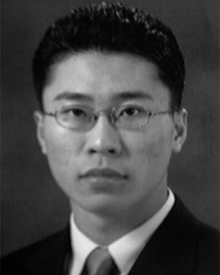 Sang-Myeon Han合作论文数5Hyun-Sang Park合作论文数5Azade Nova合作论文数4
 Simon Kornblith合作论文数Anthropic4
 Zack Nado合作论文数Google4
 Gamaleldin F. Elsayed合作论文数4
 Bernd Bohnet合作论文数Google4
 Peter X. Liu (刘小平)合作论文数Department of Systems and Computer Engineering, Carleton University4
 Jiri Hron合作论文数Google DeepMind4
 John D. Co-Reyes合作论文数Google DeepMind4Sang Hoon Jung合作论文数Natural Products Research Institute, Seoul National University4
 Igor Mordatch合作论文数Google DeepMind4
 Hanie Sedghi合作论文数Google DeepMind4
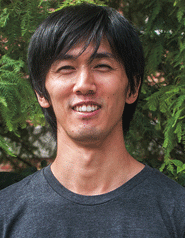 Sho Yaida (八井田翔)合作论文数Meta4
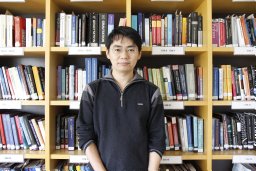 Dongmin Gang合作论文数Department of Physics and Astronomy;Seoul National University;Department of Physics and Astronomy, Seoul National University4
 Noah Constant合作论文数Google DeepMind4
 Kevin Swersky合作论文数Google DeepMind;Tread4Bo Woo Nam合作论文数3Piyush Patil合作论文数3Laura Culp合作论文数3Isabelle Simpson合作论文数3
 Maxwell Bileschi合作论文数Google3
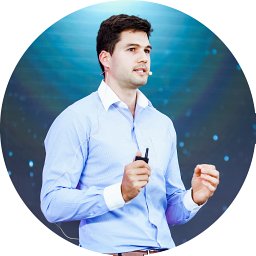 Christopher J. Shallue合作论文数Google Brain, 1600 Amphitheatre Pkwy, Mountain View, CA 94043 USA3woojin nam合作论文数3
 Gaurav Mishra合作论文数Google3
 Justin Gilmer合作论文数Google3
 Mitchell Wortsman合作论文数Anthropic3Hee-Sun Shin合作论文数Molecular Biology and Biochemistry, Simon Fraser University;Canada's Michael Smith Genome Sciences Centre, British Columbia Cancer Research Centre;Canada's Michael Smith Genome Sciences Centre, Simon Fraser University3
 Behnam Neyshabur合作论文数Anthropic3




