Planning is essential for artificial intelligence systems to look ahead and proactively determine a course of actions to reach objectives in the virtual and real world. Recent work on large language models (LLMs) sheds light on their planning capability in various tasks. However, it remains unclear what signals in the context influence the model performance. In this work, we explore how to improve the model planning capability through in-context learning (ICL), specifically, what signals can help select the exemplars. Through extensive experiments, we observe that commonly used problem similarity may result in false positives with drastically different plans, which can mislead the model. In response, we propose to sample and filter exemplars leveraging plan side action sequence similarity (AS). We propose GRASE-DC: a two-stage pipeline that first re-samples high AS exemplars and then curates the selected exemplars with dynamic clustering on AS to achieve a balance of relevance and diversity. Our experimental result confirms that GRASE-DC achieves significant performance improvement on various planning tasks (up to ~11-40 point absolute accuracy improvement with 27.3% fewer exemplars needed on average). With GRASE-DC* + VAL, where we iteratively apply GRASE-DC with a validator, we are able to even boost the performance by 18.9% more. Extensive analysis validates the consistent performance improvement of GRASE-DC with various backbone LLMs and on both classical planning and natural language planning benchmarks. GRASE-DC can further boost the planning accuracy by ~24 absolute points on harder problems using simpler problems as exemplars over a random baseline. This demonstrates its ability to generalize to out-of-distribution problems.
We demonstrate an approach for LLMs to critique their own answers with the goal of enhancing their performance that leads to significant improvements over established planning benchmarks. Despite the findings of earlier research that has cast doubt on the effectiveness of LLMs leveraging self critique methods, we show significant performance gains on planning datasets in the Blocksworld domain through intrinsic self-critique, without external source such as a verifier. We also demonstrate similar improvements on Logistics and Mini-grid datasets, exceeding strong baseline accuracies. We employ a few-shot learning technique and progressively extend it to a many-shot approach as our base method and demonstrate that it is possible to gain substantial improvement on top of this already competitive approach by employing an iterative process for correction and refinement. We illustrate how self-critique can significantly boost planning performance. Our empirical results present new state-of-the-art on the class of models considered, namely LLM model checkpoints from October 2024. Our primary focus lies on the method itself, demonstrating intrinsic self-improvement capabilities that are applicable regardless of the specific model version, and we believe that applying our method to more complex search techniques and more capable models will lead to even better performance.
Fine-tuning language models~(LMs) on human-generated data remains a prevalent practice. However, the performance of such models is often limited by the quantity and diversity of high-quality human data. In this paper, we explore whether we can go beyond human data on tasks where we have access to scalar feedback, for example, on math problems where one can verify correctness. To do so, we investigate a simple self-training method based on expectation-maximization, which we call ReST$^{EM}$, where we (1) generate samples from the model and filter them using binary feedback, (2) fine-tune the model on these samples, and (3) repeat this process a few times. Testing on advanced MATH reasoning and APPS coding benchmarks using PaLM-2 models, we find that ReST$^{EM}$ scales favorably with model size and significantly surpasses fine-tuning only on human data. Overall, our findings suggest self-training with feedback can substantially reduce dependence on human-generated data.
While many capabilities of language models (LMs) improve with increased training budget, the influence of scale on hallucinations is not yet fully understood. Hallucinations come in many forms, and there is no universally accepted definition. We thus focus on studying only those hallucinations where a correct answer appears verbatim in the training set. To fully control the training data content, we construct a knowledge graph (KG)-based dataset, and use it to train a set of increasingly large LMs. We find that fora fixed dataset, larger and longer-trained LMs hallucinate less. However, hallucinating on≤5% of the training data requires an order of magnitude larger model, and thus an order of magnitude more compute, than Hoffmann et al. (2022) reported was optimal. Given this costliness, we study how hallucination detectors depend on scale. While we see detector size improves performance on fixed LM’s outputs, we find an inverse relationship between the scale of the LM and the detectability of its hallucinations.
Classical and natural language planning tasks remain a difficult domain for modern large language models (LLMs). In this work, we lay the foundations for improving planning capabilities of LLMs. First, we construct a comprehensive benchmark suite encompassing both classical planning benchmarks and natural language scenarios. This suite includes algorithms to methodically generate instances of tasks with varying levels of difficulty, allowing for rigorous and systematic evaluation of LLM performance. Next, we investigate the use of many-shot in-context learning to enhance LLM planning, exploring the relationship between increased context length and improved planning performance. In addition, we demonstrate the positive impact of fine-tuning LLMs on optimal planning paths. We also probe the efficacy of chain-of-thought reasoning methods to improve LLM planning performance. Moreover, we probe the performance of the proposed methods in out-of-distribution scenarios, assessing the ability to generalize to novel and unseen planning challenges. Finally, we investigate model's failure modes and reveal insights that hold true across different benchmarks.
In this report, we introduce the Gemini 1.5 family of models, representing the next generation of highly compute-efficient multimodal models capable of recalling and reasoning over fine-grained information from millions of tokens of context, including multiple long documents and hours of video and audio. The family includes two new models: (1) an updated Gemini 1.5 Pro, which exceeds the February version on the great majority of capabilities and benchmarks; (2) Gemini 1.5 Flash, a more lightweight variant designed for efficiency with minimal regression in quality. Gemini 1.5 models achieve near-perfect recall on long-context retrieval tasks across modalities, improve the state-of-the-art in long-document QA, long-video QA and long-context ASR, and match or surpass Gemini 1.0 Ultra's state-of-the-art performance across a broad set of benchmarks. Studying the limits of Gemini 1.5's long-context ability, we find continued improvement in next-token prediction and near-perfect retrieval (>99 as Claude 3.0 (200k) and GPT-4 Turbo (128k). Finally, we highlight real-world use cases, such as Gemini 1.5 collaborating with professionals on completing their tasks achieving 26 to 75 categories, as well as surprising new capabilities of large language models at the frontier; when given a grammar manual for Kalamang, a language with fewer than 200 speakers worldwide, the model learns to translate English to Kalamang at a similar level to a person who learned from the same content.
We explore the use of long-context capabilities in large language models to create synthetic reading comprehension data from entire books. Previous efforts to construct such datasets relied on crowd-sourcing, but the emergence of transformers with a context size of 1 million or more tokens now enables entirely automatic approaches. Our objective is to test the capabilities of LLMs to analyze, understand, and reason over problems that require a detailed comprehension of long spans of text, such as questions involving character arcs, broader themes, or the consequences of early actions later in the story. We propose a holistic pipeline for automatic data generation including question generation, answering, and model scoring using an “Evaluator”. We find that a relative approach, comparing answers between models in a pairwise fashion and ranking with a Bradley-Terry model, provides a more consistent and differentiating scoring mechanism than an absolute scorer that rates answers individually. We also show that LLMs from different model families produce moderate agreement in their ratings. We ground our approach using the manually curated NarrativeQA dataset, where our evaluator shows excellent agreement with human judgement and even finds errors in the dataset. Using our automatic evaluation approach, we show that using an entire book as context produces superior reading comprehension performance compared to baseline no-context (parametric knowledge only) and retrieval-based approaches.
Deep neural networks may easily memorize noisy labels present in real-world data, which degrades their ability to generalize. It is therefore important to track and evaluate the robustness of models against noisy label memorization. We propose a metric, called susceptibility, to gauge such memorization for neural networks. Susceptibility is simple and easy to compute during training. Moreover, it does not require access to ground-truth labels and it only uses unlabeled data. We empirically show the effectiveness of our metric in tracking memorization on various architectures and datasets and provide theoretical insights into the design of the susceptibility metric. Finally, we show through extensive experiments on datasets with synthetic and real-world label noise that one can utilize susceptibility and the overall training accuracy to distinguish models that maintain a low memorization on the training set and generalize well to unseen clean data.
We introduce and study the problem of adversarial arithmetic, which provides a simple yet challenging testbed for language model alignment. This problem is comprised of arithmetic questions posed in natural language, with an arbitrary adversarial string inserted before the question is complete. Even in the simple setting of 1-digit addition problems, it is easy to find adversarial prompts that make all tested models (including PaLM2, GPT4, Claude2) misbehave, and even to steer models to a particular wrong answer. We additionally provide a simple algorithm for finding successful attacks by querying those same models, which we name "prompt inversion rejection sampling" (PIRS). We finally show that models can be partially hardened against these attacks via reinforcement learning and via agentic constitutional loops. However, we were not able to make a language model fully robust against adversarial arithmetic attacks.
The transfer learning paradigm of model pre-training and subsequent fine-tuning produces high-accuracy models. While most studies recommend scaling the pre-training size to benefit most from transfer learning, a question remains: what data and method should be used for pre-training? We investigate the impact of pre-training data distribution on the few-shot and full fine-tuning performance using 3 pre-training methods (supervised, contrastive language-image and image-image), 7 pre-training datasets, and 9 downstream datasets. Through extensive controlled experiments, we find that the choice of the pre-training data source is essential for the few-shot transfer, but its role decreases as more data is made available for fine-tuning. Additionally, we explore the role of data curation and examine the trade-offs between label noise and the size of the pre-training dataset. We find that using 2000X more pre-training data from LAION can match the performance of supervised ImageNet pre-training. Furthermore, we investigate the effect of pre-training methods, comparing language-image contrastive vs. image-image contrastive, and find that the latter leads to better downstream accuracy
In this paper we look into the conjecture of Entezari et al. (2021) which states that if the permutation invariance of neural networks is taken into account, then there is likely no loss barrier to the linear interpolation between SGD solutions. First, we observe that neuron alignment methods alone are insufficient to establish low-barrier linear connectivity between SGD solutions due to a phenomenon we call variance collapse: interpolated deep networks suffer a collapse in the variance of their activations, causing poor performance. Next, we propose REPAIR (REnormalizing Permuted Activations for Interpolation Repair) which mitigates variance collapse by rescaling the preactivations of such interpolated networks. We explore the interaction between our method and the choice of normalization layer, network width, and depth, and demonstrate that using REPAIR on top of neuron alignment methods leads to 60%-100% relative barrier reduction across a wide variety of architecture families and tasks. In particular, we report a 74% barrier reduction for ResNet50 on ImageNet and 90% barrier reduction for ResNet18 on CIFAR10.
Large language models (LLMs) have shown increasing in-context learning capabilities through scaling up model and data size. Despite this progress, LLMs are still unable to solve algorithmic reasoning problems. While providing a rationale with the final answer has led to further improvements in multi-step reasoning problems, Anil et al. 2022 showed that even simple algorithmic reasoning tasks such as parity are far from solved. In this work, we identify and study four key stages for successfully teaching algorithmic reasoning to LLMs: (1) formulating algorithms as skills, (2) teaching multiple skills simultaneously (skill accumulation), (3) teaching how to combine skills (skill composition) and (4) teaching how to use skills as tools. We show that it is possible to teach algorithmic reasoning to LLMs via in-context learning, which we refer to as algorithmic prompting. We evaluate our approach on a variety of arithmetic and quantitative reasoning tasks, and demonstrate significant boosts in performance over existing prompting techniques. In particular, for long parity, addition, multiplication and subtraction, we achieve an error reduction of approximately 10x, 9x, 5x and 2x respectively compared to the best available baselines.
Recent efforts at explaining the interplay of memorization and generalization in deep overparametrized networks have posited that neural networks $\textit{memorize}$ "hard" examples in the final few layers of the model. Memorization refers to the ability to correctly predict on $\textit{atypical}$ examples of the training set. In this work, we show that rather than being confined to individual layers, memorization is a phenomenon confined to a small set of neurons in various layers of the model. First, via three experimental sources of converging evidence, we find that most layers are redundant for the memorization of examples and the layers that contribute to example memorization are, in general, not the final layers. The three sources are $\textit{gradient accounting}$ (measuring the contribution to the gradient norms from memorized and clean examples), $\textit{layer rewinding}$ (replacing specific model weights of a converged model with previous training checkpoints), and $\textit{retraining}$ (training rewound layers only on clean examples). Second, we ask a more generic question: can memorization be localized $\textit{anywhere}$ in a model? We discover that memorization is often confined to a small number of neurons or channels (around 5) of the model. Based on these insights we propose a new form of dropout -- $\textit{example-tied dropout}$ that enables us to direct the memorization of examples to an apriori determined set of neurons. By dropping out these neurons, we are able to reduce the accuracy on memorized examples from $100\%\to3\%$, while also reducing the generalization gap.
In this paper we empirically investigate the conjecture from Entezari et al. (2021) which states that if permutation invariance is taken into account, then there should be no loss barrier to the linear interpolation between SGD solutions. We conduct our investigation using standard computer vision architectures trained on CIFAR-10 and ImageNet. First, we observe a general phenomenon in which interpolated deep networks suffer a collapse in the variance of their activations. We demonstrate that an appropriate rescaling of the pre-activations of the interpolated networks ameliorates this problem and significantly reduces the barrier. Second, by combining this with an algorithm for finding permutations based on maximizing correlations between the activations of matched neurons, we are able to reduce the interpolation barrier for a standard ResNet18 trained on CIFAR-10 to 1.5% absolute test error. We explore the interaction between our method and the choice of normalization layer, and demonstrate its robustness across a variety of architectures and training sets.
Real-world machine learning deployments are characterized by mismatches between the source (training) and target (test) distributions that may cause performance drops. In this work, we investigate methods for predicting the target domain accuracy using only labeled source data and unlabeled target data. We propose Average Thresholded Confidence (ATC), a practical method that learns a threshold on the model's confidence, predicting accuracy as the fraction of unlabeled examples for which model confidence exceeds that threshold. ATC outperforms previous methods across several model architectures, types of distribution shifts (e.g., due to synthetic corruptions, dataset reproduction, or novel subpopulations), and datasets (Wilds, ImageNet, Breeds, CIFAR, and MNIST). In our experiments, ATC estimates target performance $2$-$4\times$ more accurately than prior methods. We also explore the theoretical foundations of the problem, proving that, in general, identifying the accuracy is just as hard as identifying the optimal predictor and thus, the efficacy of any method rests upon (perhaps unstated) assumptions on the nature of the shift. Finally, analyzing our method on some toy distributions, we provide insights concerning when it works. Code is available at https://github.com/saurabhgarg1996/ATC_code/.
Recent developments in large-scale machine learning suggest that by scaling up data, model size and training time properly, one might observe that improvements in pre-training would transfer favorably to most downstream tasks. In this work, we systematically study this phenomena and establish that, as we increase the upstream accuracy, the performance of downstream tasks saturates. In particular, we investigate more than 4800 experiments on Vision Transformers, MLP-Mixers and ResNets with number of parameters ranging from ten million to ten billion, trained on the largest scale of available image data (JFT, ImageNet21K) and evaluated on more than 20 downstream image recognition tasks. We propose a model for downstream performance that reflects the saturation phenomena and captures the nonlinear relationship in performance of upstream and downstream tasks. Delving deeper to understand the reasons that give rise to these phenomena, we show that the saturation behavior we observe is closely related to the way that representations evolve through the layers of the models. We showcase an even more extreme scenario where performance on upstream and downstream are at odds with each other. That is, to have a better downstream performance, we need to hurt upstream accuracy.
This paper examines the impact of static sparsity on the robustness of a trained network to weight perturbations, data corruption, and adversarial examples. We show that, up to a certain sparsity achieved by increasing network width and depth while keeping the network capacity fixed, sparsified networks consistently match and often outperform their initially dense versions. Robustness and accuracy decline simultaneously for very high sparsity due to loose connectivity between network layers. Our findings show that a rapid robustness drop caused by network compression observed in the literature is due to a reduced network capacity rather than sparsity.
Real-world machine learning deployments are characterized by mismatches between the source (training) and target (test) distributions that may cause performance drops. In this work, we investigate methods for predicting the target domain accuracy using only labeled source data and unlabeled target data. We propose Average Thresholded Confidence (ATC), a practical method that learns a threshold on the model’s confidence, predicting accuracy as the fraction of unlabeled examples for which model confidence exceeds that threshold. ATC outperforms previous methods across several model architectures, types of distribution shifts (e.g., due to synthetic corruptions, dataset reproduction, or novel subpopulations), and datasets (WILDS, ImageNet, BREEDS, CIFAR, and MNIST). In our experiments, ATC estimates target performance 2–4ˆ more accurately than prior methods. We also explore the theoretical foundations of the problem, proving that, in general, identifying the accuracy is just as hard as identifying the optimal predictor and thus, the efficacy of any method rests upon (perhaps unstated) assumptions on the nature of the shift. Finally, analyzing our method on some toy distributions, we provide insights concerning when it works.
We focus on the problem of domain adaptation when the goal is shifting the model towards the target distribution, rather than learning domain invariant representations. It has been shown that under the following two assumptions: (a) access to samples from intermediate distributions, and (b) samples being annotated with the amount of change from the source distribution, self-training can be successfully applied on gradually shifted samples to adapt the model toward the target distribution. We hypothesize having (a) is enough to enable iterative self-training to slowly adapt the model to the target distribution, by making use of an implicit curriculum. In the case where (a) does not hold, we observe that iterative self-training falls short. We propose GIFT, a method that creates virtual samples from intermediate distributions by interpolating representations of examples from source and target domains. We evaluate an iterative-self-training method on datasets with natural distribution shifts, and show that when applied on top of other domain adaptation methods, it improves the performance of the model on the target dataset. We run an analysis on a synthetic dataset to show that in the presence of (a) iterative-self-training naturally forms a curriculum of samples. Furthermore, we show that when (a) does not hold, GIFT performs better than iterative self-training.
Recent works demonstrate that early layers in a neural network contain useful information for prediction. Inspired by this, we show that extending temperature scaling across all layers improves both calibration and accuracy. We call this procedure "layer-stack temperature scaling" (LATES). Informally, LATES grants each layer a weighted vote during inference. We evaluate it on five popular convolutional neural network architectures both in- and out-of-distribution and observe a consistent improvement over temperature scaling in terms of accuracy, calibration, and AUC. All conclusions are supported by comprehensive statistical analyses. Since LATES neither retrains the architecture nor introduces many more parameters, its advantages can be reaped without requiring additional data beyond what is used in temperature scaling. Finally, we show that combining LATES with Monte Carlo Dropout matches state-of-the-art results on CIFAR10/100.
 Behnam Neyshabur合作论文数Anthropic15
 Anima Anandkumar合作论文数Anima AI + Science Lab, California Institute of Technology;Division of Engineering and Applied Science, California Institute of Technology;Department of Computing and Mathematical Sciences, California Institute of Technology14
 Bernd Bohnet合作论文数Google8
 Majid Janzamin合作论文数University of California,Irvine Department of Electrical Engineering,Computer Science8
 Azade Nova合作论文数7
 Noah Fiedel合作论文数Google DeepMind7
 Kevin Swersky合作论文数Google DeepMind;Tread7
 Rosanne Liu合作论文数Google Brain6
 Rahim Entezari合作论文数Stability AI5
 Olga Saukh合作论文数Institute of Technical Informatics, Faculty of Electrical Engineering and Information Technology, Graz University of Technology;Complexity Science Hub Vienna, Graz University of Technology5
 Edmond A Jonckheere合作论文数School of Engineering, University of Southern California5Aaron T Parisi合作论文数4
 Gamaleldin F. Elsayed合作论文数4
 Kelvin Xu合作论文数Google DeepMind4
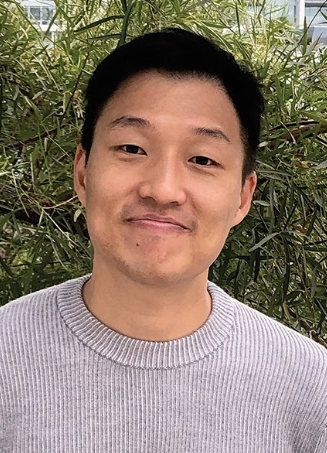 Jaehoon Lee合作论文数Anthropic4
 Igor Mordatch合作论文数Google DeepMind4Laura Culp合作论文数3Aaron Parisi合作论文数3Isabelle Simpson合作论文数3
 Maxwell Bileschi合作论文数Google3Izzeddin Gür合作论文数Google Research3
 Mostafa Dehghani合作论文数Google DeepMind3
 Alexander A. Alemi合作论文数Anthropic3
 Ben Adlam合作论文数Google3
 Lechao Xiao (萧乐超)合作论文数Google DeepMind3
 Roman Novak合作论文数OpenAI3
 Peter X. Liu (刘小平)合作论文数Department of Systems and Computer Engineering, Carleton University3
 John D. Co-Reyes合作论文数Google DeepMind3
 Jascha Sohl-Dickstein合作论文数Anthropic3
 Jeffrey Pennington合作论文数Google Brain3Tris Warkentin合作论文数2Piyush Patil合作论文数2
 Simon Kornblith合作论文数Anthropic2
 Keller Jordan合作论文数Complexity Science Hub Vienna2Kathleen Kenealy合作论文数Google DeepMind2
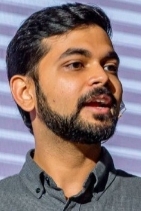 Gaurav Mishra合作论文数Google2
 Rishabh Agarwal合作论文数Meta;McGill University2
 Orhan Firat合作论文数Google DeepMind2
 Samira Abnar合作论文数Apple2
 Kshiteej Mahajan合作论文数2
 Zachary Lipton合作论文数Software and Societal Systems Department, School of Computer Science, Carnegie Mellon University;Abridge2
 Preetum Nakkiran合作论文数Apple Inc.2
 Saurabh Garg合作论文数Machine Learning Department, School of Computer Science, Carnegie Mellon University2
 Ankesh Anand合作论文数Google DeepMind2
 Chiyuan Zhang (张驰原)合作论文数Google Brain2
 Avi Singh合作论文数University of California Berkeley2
 Mohammad Reza Pakravan合作论文数Department of Electrical Engineering, Sharif University of Technology;Advanced Communication Research Institute, Sharif University of Technology2
 Jiri Hron合作论文数Google DeepMind2
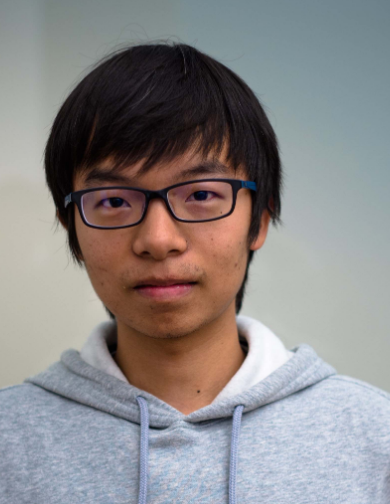 Hanjun Dai (戴涵俊)合作论文数Google DeepMind2




