Multimodal large language models (MLLMs) should generate consistent responses given semantically equivalent inputs across modalities. However, we observe a systematic discrepancy in model predictions under such cross-modal variations. Specifically, we define the modality gap as the difference in model performance under semantically equivalent textual and multimodal inputs. We introduce TokenSwap, a method that constructs such inputs by replacing textual concepts with semantically aligned images, resulting in sequences where visual tokens are interleaved with text tokens. Based on TokenSwap, we transform existing text-based benchmarks such as MMLU into image-interleaved counterparts, resulting in TokenSwap-Bench. Across 42 MLLMs, we observe a pervasive modality gap, with performance decreasing by 4.2
Foundation models trained on web-scale data have revolutionized robotics, but their application to low-level control remains largely limited to behavioral cloning. Drawing inspiration from the success of the reinforcement learning stage in fine-tuning large language models, we propose a two-stage post-training approach for robotics. The first stage, Supervised Fine-Tuning (SFT), fine-tunes pretrained foundation models using both: a) behavioral cloning, and b) steps-to-go prediction objectives. In the second stage, Self-Improvement, steps-to-go prediction enables the extraction of a well-shaped reward function and a robust success detector, enabling a fleet of robots to autonomously practice downstream tasks with minimal human supervision. Through extensive experiments on real-world and simulated robot embodiments, our novel post-training recipe unveils significant results on Embodied Foundation Models. First, we demonstrate that the combination of SFT and Self-Improvement is significantly more sample-efficient than scaling imitation data collection for supervised learning, and that it leads to policies with significantly higher success rates. Further ablations highlight that the combination of web-scale pretraining and Self-Improvement is the key to this sample-efficiency. Next, we demonstrate that our proposed combination uniquely unlocks a capability that current methods cannot achieve: autonomously practicing and acquiring novel skills that generalize far beyond the behaviors observed in the imitation learning datasets used during training. These findings highlight the transformative potential of combining pretrained foundation models with online Self-Improvement to enable autonomous skill acquisition in robotics.
Large language models (LLMs) have achieved remarkable performance in recent years but are fundamentally limited by the underlying training data. To improve models beyond the training data, recent works have explored how LLMs can be used to generate synthetic data for autonomous self-improvement. However, successive steps of self-improvement can reach a point of diminishing returns. In this work, we propose a complementary approach towards self-improvement where finetuning is applied to a multiagent society of language models. A group of language models, all starting from the same base model, are independently specialized by updating each one using data generated through multiagent interactions among the models. By training each model on independent sets of data, we illustrate how this approach enables specialization across models and diversification over the set of models. As a result, our overall system is able to preserve diverse reasoning chains and autonomously improve over many more rounds of fine-tuning than single-agent self-improvement methods. We quantitatively illustrate the efficacy of the approach across a wide suite of reasoning tasks.
We introduce a machine learning approach to determine the transition dynamics of silicon atoms on a single layer of carbon atoms, when stimulated by the electron beam of a scanning transmission electron microscope (STEM). Our method is data-centric, leveraging data collected on a STEM. The data samples are processed and filtered to produce symbolic representations, which we use to train a neural network to predict transition probabilities. These learned transition dynamics are then leveraged to guide a single silicon atom throughout the lattice to pre-determined target destinations. We present empirical analyses that demonstrate the efficacy and generality of our approach.
Generative models trained on internet-scale data are capable of generating novel and realistic texts, images, and videos. A natural next question is whether these models can advance science, for example by generating novel stable materials. Traditionally, models with explicit structures (e.g., graphs) have been used in modeling structural relationships in scientific data (e.g., atoms and bonds in crystals), but generating structures can be difficult to scale to large and complex systems. Another challenge in generating materials is the mismatch between standard generative modeling metrics and downstream applications. For instance, common metrics such as the reconstruction error do not correlate well with the downstream goal of discovering stable materials. In this work, we tackle the scalability challenge by developing a unified crystal representation that can represent any crystal structure (UniMat), followed by training a diffusion probabilistic model on these UniMat representations. Our empirical results suggest that despite the lack of explicit structure modeling, UniMat can generate high fidelity crystal structures from larger and more complex chemical systems, outperforming previous graph-based approaches under various generative modeling metrics. To better connect the generation quality of materials to downstream applications, such as discovering novel stable materials, we propose additional metrics for evaluating generative models of materials, including per-composition formation energy and stability with respect to convex hulls through decomposition energy from Density Function Theory (DFT). Lastly, we show that conditional generation with UniMat can scale to previously established crystal datasets with up to millions of crystals structures, outperforming random structure search (the current leading method for structure discovery) in discovering new stable materials.
Fine-tuning language models~(LMs) on human-generated data remains a prevalent practice. However, the performance of such models is often limited by the quantity and diversity of high-quality human data. In this paper, we explore whether we can go beyond human data on tasks where we have access to scalar feedback, for example, on math problems where one can verify correctness. To do so, we investigate a simple self-training method based on expectation-maximization, which we call ReST$^{EM}$, where we (1) generate samples from the model and filter them using binary feedback, (2) fine-tune the model on these samples, and (3) repeat this process a few times. Testing on advanced MATH reasoning and APPS coding benchmarks using PaLM-2 models, we find that ReST$^{EM}$ scales favorably with model size and significantly surpasses fine-tuning only on human data. Overall, our findings suggest self-training with feedback can substantially reduce dependence on human-generated data.
While many capabilities of language models (LMs) improve with increased training budget, the influence of scale on hallucinations is not yet fully understood. Hallucinations come in many forms, and there is no universally accepted definition. We thus focus on studying only those hallucinations where a correct answer appears verbatim in the training set. To fully control the training data content, we construct a knowledge graph (KG)-based dataset, and use it to train a set of increasingly large LMs. We find that fora fixed dataset, larger and longer-trained LMs hallucinate less. However, hallucinating on≤5% of the training data requires an order of magnitude larger model, and thus an order of magnitude more compute, than Hoffmann et al. (2022) reported was optimal. Given this costliness, we study how hallucination detectors depend on scale. While we see detector size improves performance on fixed LM’s outputs, we find an inverse relationship between the scale of the LM and the detectability of its hallucinations.
In this report, we introduce the Gemini 1.5 family of models, representing the next generation of highly compute-efficient multimodal models capable of recalling and reasoning over fine-grained information from millions of tokens of context, including multiple long documents and hours of video and audio. The family includes two new models: (1) an updated Gemini 1.5 Pro, which exceeds the February version on the great majority of capabilities and benchmarks; (2) Gemini 1.5 Flash, a more lightweight variant designed for efficiency with minimal regression in quality. Gemini 1.5 models achieve near-perfect recall on long-context retrieval tasks across modalities, improve the state-of-the-art in long-document QA, long-video QA and long-context ASR, and match or surpass Gemini 1.0 Ultra's state-of-the-art performance across a broad set of benchmarks. Studying the limits of Gemini 1.5's long-context ability, we find continued improvement in next-token prediction and near-perfect retrieval (>99 as Claude 3.0 (200k) and GPT-4 Turbo (128k). Finally, we highlight real-world use cases, such as Gemini 1.5 collaborating with professionals on completing their tasks achieving 26 to 75 categories, as well as surprising new capabilities of large language models at the frontier; when given a grammar manual for Kalamang, a language with fewer than 200 speakers worldwide, the model learns to translate English to Kalamang at a similar level to a person who learned from the same content.
Large language models (LLMs) have demonstrated remarkable capabilities in language generation, understanding, and few-shot learning in recent years. An extensive body of work has explored how their performance may be further improved through the tools of prompting, ranging from verification, self-consistency, or intermediate scratchpads. In this paper, we present a complementary approach to improve language responses where multiple language model instances propose and debate their individual responses and reasoning processes over multiple rounds to arrive at a common final answer. Our findings indicate that this approach significantly enhances mathematical and strategic reasoning across a number of tasks. We also demonstrate that our approach improves the factual validity of generated content, reducing fallacious answers and hallucinations that contemporary models are prone to. Our approach may be directly applied to existing black-box models and uses identical procedure and prompts for all tasks we investigate. Overall, our findings suggest that such "society of minds" approach has the potential to significantly advance the capabilities of LLMs and pave the way for further breakthroughs in language generation and understanding.
Generative models trained at scale can now produce novel text, video, and more recently, scientific data such as crystal structures. The ultimate goal for materials discovery, however, goes beyond generation: we desire a fully automated system that proposes, generates, and verifies crystal structures given a high-level user instruction. In this work, we formulate end-to-end language-to-structure generation as a multi-objective optimization problem, and propose Generative Hierarchical Materials Search (GenMS) for controllable generation of crystal structures. GenMS consists of (1) a language model that takes high-level natural language as input and generates intermediate textual information about a crystal (e.g., chemical formulae), and (2) a diffusion model that takes intermediate information as input and generates low-level continuous value crystal structures. GenMS additionally uses a graph neural network to predict properties (e.g., formation energy) from the generated crystal structures. During inference, GenMS leverages all three components to conduct a forward tree search over the space of possible structures. Experiments show that GenMS outperforms other alternatives both in satisfying user request and in generating low-energy structures. GenMS is able to generate complex structures such as double perovskites (or elpasolites), layered structures, and spinels, solely from natural language input.
Large, high-capacity models trained on diverse datasets have shown remarkable successes on efficiently tackling downstream applications. In domains from NLP to Computer Vision, this has led to a consolidation of pretrained models, with general pretrained backbones serving as a starting point for many applications. Can such a consolidation happen in robotics? Conventionally, robotic learning methods train a separate model for every application, every robot, and even every environment. Can we instead train "generalist" X-robot policy that can be adapted efficiently to new robots, tasks, and environments? In this paper, we provide datasets in standardized data formats and models to make it possible to explore this possibility in the context of robotic manipulation, alongside experimental results that provide an example of effective X-robot policies. We assemble a dataset from 22 different robots collected through a collaboration between 21 institutions, demonstrating 527 skills ( 160266 tasks). We show that a high-capacity model trained on this data, which we call RT-X, exhibits positive transfer and improves the capabilities of multiple robots by leveraging experience from other platforms. The project website is robotics-transformer-x.github.io.
One-shot Imitation Learning~(OSIL) aims to imbue AI agents with the ability to learn a new task from a single demonstration. To supervise the learning, OSIL typically requires a prohibitively large number of paired expert demonstrations -- i.e. trajectories corresponding to different variations of the same semantic task. To overcome this limitation, we introduce the semi-supervised OSIL problem setting, where the learning agent is presented with a large dataset of trajectories with no task labels (i.e. an unpaired dataset), along with a small dataset of multiple demonstrations per semantic task (i.e. a paired dataset). This presents a more realistic and practical embodiment of few-shot learning and requires the agent to effectively leverage weak supervision from a large dataset of trajectories. Subsequently, we develop an algorithm specifically applicable to this semi-supervised OSIL setting. Our approach first learns an embedding space where different tasks cluster uniquely. We utilize this embedding space and the clustering it supports to self-generate pairings between trajectories in the large unpaired dataset. Through empirical results on simulated control tasks, we demonstrate that OSIL models trained on such self-generated pairings are competitive with OSIL models trained with ground-truth labels, presenting a major advancement in the label-efficiency of OSIL.
Large, high-capacity models trained on diverse datasets have shown remarkable successes on efficiently tackling downstream applications. In domains from NLP to Computer Vision, this has led to a consolidation of pretrained models, with general pretrained backbones serving as a starting point for many applications. Can such a consolidation happen in robotics? Conventionally, robotic learning methods train a separate model for every application, every robot, and even every environment. Can we instead train "generalist" X-robot policy that can be adapted efficiently to new robots, tasks, and environments? In this paper, we provide datasets in standardized data formats and models to make it possible to explore this possibility in the context of robotic manipulation, alongside experimental results that provide an example of effective X-robot policies. We assemble a dataset from 22 different robots collected through a collaboration between 21 institutions, demonstrating 527 skills (160266 tasks). We show that a high-capacity model trained on this data, which we call RT-X, exhibits positive transfer and improves the capabilities of multiple robots by leveraging experience from other platforms. The project website is robotics-transformer-x.github.io.
Large language models excel at a wide range of complex tasks. However, enabling general inference in the real world, e.g., for robotics problems, raises the challenge of grounding. We propose embodied language models to directly incorporate real-world continuous sensor modalities into language models and thereby establish the link between words and percepts. Input to our embodied language model are multi-modal sentences that interleave visual, continuous state estimation, and textual input encodings. We train these encodings end-to-end, in conjunction with a pre-trained large language model, for multiple embodied tasks including sequential robotic manipulation planning, visual question answering, and captioning. Our evaluations show that PaLM-E, a single large embodied multimodal model, can address a variety of embodied reasoning tasks, from a variety of observation modalities, on multiple embodiments, and further, exhibits positive transfer: the model benefits from diverse joint training across internet-scale language, vision, and visual-language domains. Our largest model, PaLM-E-562B with 562B parameters, in addition to being trained on robotics tasks, is a visual-language generalist with state-of-the-art performance on OK-VQA, and retains generalist language capabilities with increasing scale.
Most successes in robotic manipulation have been restricted to single-arm gripper robots, whose low dexterity limits the range of solvable tasks to pick-and-place, inser-tion, and object rearrangement. More complex tasks such as assembly require dual and multi-arm platforms, but entail a suite of unique challenges such as bi-arm coordination and collision avoidance, robust grasping, and long-horizon planning. In this work we investigate the feasibility of training deep reinforcement learning (RL) policies in simulation and transferring them to the real world (Sim2Real) as a generic methodology for obtaining performant controllers for real-world bi-manual robotic manipulation tasks. As a testbed for bi-manual manipulation, we develop the U-Shape Magnetic BlockAssembly Task, wherein two robots with parallel grippers must connect 3 magnetic blocks to form a U-shape. Without manually-designed controller nor human demonstrations, we demonstrate that with careful Sim2Real considerations, our policies trained with RL in simulation enable two xArm6 robots to solve the U-shape assembly task with a success rate of above90% in simulation, and 50% on real hardware without any additional real-world fine-tuning. Through careful ablations,we highlight how each component of the system is critical for such simple and successful policy learning and transfer,including task specification, learning algorithm, direct joint-space control, behavior constraints, perception and actuation noises, action delays and action interpolation. Our results present a significant step forward for bi-arm capability on real hardware, and we hope our system can inspire future research on deep RL and Sim2Real transfer of bi-manualpolicies, drastically scaling up the capability of real-world robot manipulators.
We introduce and study the problem of adversarial arithmetic, which provides a simple yet challenging testbed for language model alignment. This problem is comprised of arithmetic questions posed in natural language, with an arbitrary adversarial string inserted before the question is complete. Even in the simple setting of 1-digit addition problems, it is easy to find adversarial prompts that make all tested models (including PaLM2, GPT4, Claude2) misbehave, and even to steer models to a particular wrong answer. We additionally provide a simple algorithm for finding successful attacks by querying those same models, which we name "prompt inversion rejection sampling" (PIRS). We finally show that models can be partially hardened against these attacks via reinforcement learning and via agentic constitutional loops. However, we were not able to make a language model fully robust against adversarial arithmetic attacks.
We introduce Masked Trajectory Models (MTM) as a generic abstraction for sequential decision making. MTM takes a trajectory, such as a state-action sequence, and aims to reconstruct the trajectory conditioned on random subsets of the same trajectory. By training with a highly randomized masking pattern, MTM learns versatile networks that can take on different roles or capabilities, by simply choosing appropriate masks at inference time. For example, the same MTM network can be used as a forward dynamics model, inverse dynamics model, or even an offline RL agent. Through extensive experiments in several continuous control tasks, we show that the same MTM network -- i.e. same weights -- can match or outperform specialized networks trained for the aforementioned capabilities. Additionally, we find that state representations learned by MTM can significantly accelerate the learning speed of traditional RL algorithms. Finally, in offline RL benchmarks, we find that MTM is competitive with specialized offline RL algorithms, despite MTM being a generic self-supervised learning method without any explicit RL components. Code is available at https://github.com/facebookresearch/mtm
Recently, there has been great progress in the self-supervised pre-training of multimodal representation models that understand image and language jointly. One particularly popular application of such models is text-to-image generation, which is typically obtained via a two-stage process: in the first stage, a representation model is trained via self-supervised objectives; then in the second stage, a conditional generative decoder is trained on top of the representation to generate natural images. In this work, we aim at bringing representation learning and conditional generation together by unifying the two stages into a single model and training objective. We present UPGen, a unified pre-trained model for both representation learning and generation. UPGen is trained with a simple masked token prediction objective on a flexible mixture of image and language data. We use a pre-trained VQGAN image tokenizer to convert images into discrete tokens, then train a masked token prediction model on both paired image-text datasets and unpaired language datasets, using randomly sampled mask ratios. We show that this masked token prediction model can be directly used to generate images and language by iteratively re-masking and predicting the masked tokens. We demonstrate empirically that UPGen serves as both a good representation learning model and a generative model for both image and language.
By transferring knowledge from large, diverse, task-agnostic datasets, modern machine learning models can solve specific downstream tasks either zero-shot or with small task-specific datasets to a high level of performance. While this capability has been demonstrated in other fields such as computer vision, natural language processing or speech recognition, it remains to be shown in robotics, where the generalization capabilities of the models are particularly critical due to the difficulty of collecting real-world robotic data. We argue that one of the keys to the success of such general robotic models lies with open-ended task-agnostic training, combined with high-capacity architectures that can absorb all of the diverse, robotic data. In this paper, we present a model class, dubbed Robotics Transformer, that exhibits promising scalable model properties. We verify our conclusions in a study of different model classes and their ability to generalize as a function of the data size, model size, and data diversity based on a large-scale data collection on real robots performing real-world tasks. The project's website and videos can be found at robotics-transformer1.github.io
 Pieter Abbeel合作论文数Department of Electrical Engineering and Computer Sciences, University of California, Berkeley;Amazon26
 Yilun Du合作论文数Kempner Institute, Harvard University;Harvard John A. Paulson School of Engineering and Applied Sciences, Harvard University19
 Sergey Levine合作论文数Department of Electrical Engineering and Computer Sciences, University of California, Berkeley13
 Shuang Li合作论文数Google DeepMind;University of Toronto;The Canadian Institute for Advanced Research12
 Deepak Pathak合作论文数The Robotics Institute, School of Computer Science, Carnegie Mellon University10
 Brian Ichter合作论文数Google9
 Lisa Lee合作论文数Google DeepMind8
 Ayzaan Wahid合作论文数Google DeepMind8
 Aravind Rajeswaran合作论文数Fundamental AI Research Division, Meta AI8
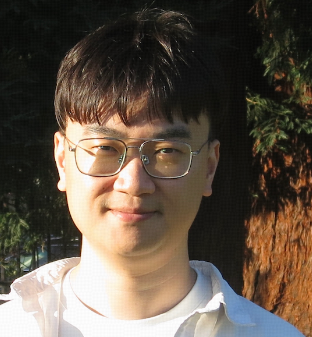 Wenlong Huang合作论文数Stanford Vision and Learning Lab, Stanford University8
 Azam Khan合作论文数Autodesk Research8
 Fei Xia (夏斐)合作论文数Google DeepMind8
 Karol Hausman合作论文数Physical Intelligence8
 pannag raghunath sanketi合作论文数Robotics at Google7
 Jonathan Tompson合作论文数Google7
 Tianhe (Kevin) Yu合作论文数Meta7
 Antonio Torralba合作论文数Computer Science and Artificial Intelligence Laboratory, Department of Electrical Engineering and Computer Science, School of Engineering, Massachusetts Institute of Technology7
 Danny Driess合作论文数Physical Intelligence7
 Yevgen Chebotar合作论文数NVIDIA7
 Anthony Brohan合作论文数Google Deepmind6
 Quan Vuong合作论文数University of California San Diego6
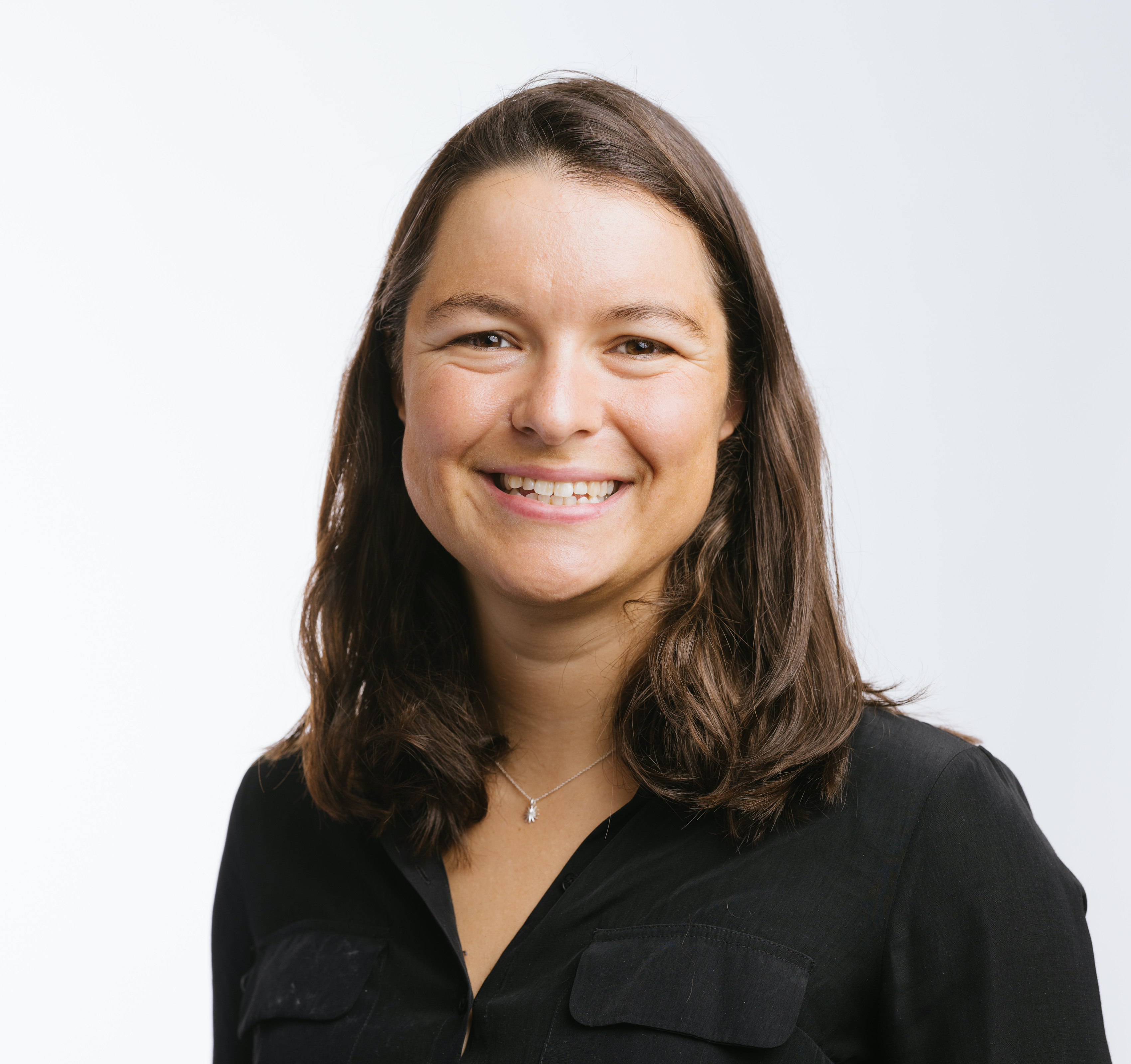 Chelsea Finn合作论文数Department of Computer Science and Electrical Engineering, Stanford University;Physical Intelligence6
 Yao Lu合作论文数Physical Intelligence6
 Josh Tenenbaum合作论文数Department of Brain and Cognitive Sciences, Massachusetts Institute of Technology;Computer Science & Artificial Intelligence Laboratory, Schwarzman College of Computing, Massachusetts Institute of Technology6
 Alexander Herzog合作论文数Google DeepMind6
 Dmitry Kalashnikov合作论文数Google DeepMind6
 Pierre Sermanet合作论文数Google DeepMind6
 George Fitzmaurice合作论文数Human Computer Interaction and Visualization Research Group, Autodesk Inc.6
 Justin Matejka合作论文数Autodesk Research6
 Ted Xiao合作论文数Google DeepMind6
 Vincent Vanhoucke合作论文数Waymo6
 Sichun Xu合作论文数5
 Peng Xu合作论文数Google DeepMind5
 Anikait Singh合作论文数Google DeepMind;Stanford University5
 Chuyuan Fu合作论文数Google DeepMind5
 Rishabh Agarwal合作论文数Meta;McGill University5
 Xinyang Geng合作论文数Google DeepMind5
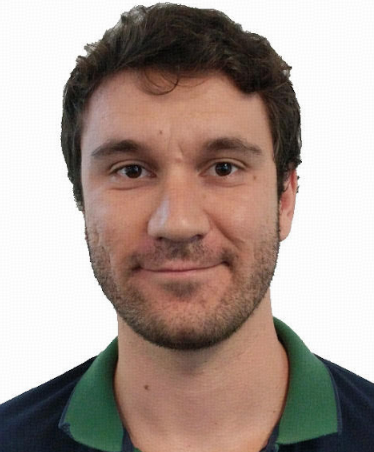 Ekin Dogus Cubuk合作论文数Periodic Labs5
 Kanishka Rao合作论文数Google DeepMind5
 Karl Pertsch合作论文数University of California, Berkeley;Stanford University;Physical Intelligence5
 Alexander Irpan合作论文数Google5
 Nikhil Joshi合作论文数5
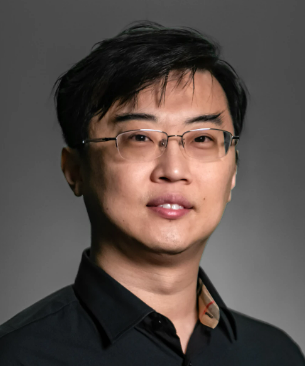 Hao Su (苏昊)合作论文数College of Intelligent Robotics and Advanced Manufacturing, Fudan University5
 Dhruv Shah合作论文数Department of Electrical Engineering and Computer Sciences, University of California, Berkeley5
 Gord Kurtenbach合作论文数Applied Research Group
Autodesk5
Gord Kurtenbach合作论文数Applied Research Group
Autodesk5 Ryan Julian合作论文数NVIDIA5
 Jasmine Hsu合作论文数Google5
 Pete Florence合作论文数Generalist5
 Kevin Lu合作论文数OpenAI5