Pulsed power loads (PPLs) in DC microgrids (DCMGs) impose fast and high-power transients that challenge the stability and performance of energy storage systems (ESS). Supercapacitor-based ESSs offer a promising solution due to their exceptional power density and fast charge-discharge capability, yet their effective utilization under severe pulsed conditions remains a key challenge. This paper proposes a fast integral terminal super-twisting sliding mode controller (FITSTSMC) to enhance the dynamic performance and energy management of a supercapacitor-based ESS in pulsed power applications. The controller directly governs energy exchange between the supercapacitor bank and the DC bus, enabling the storage system to deliver instantaneous power surges and maintain voltage stability during repetitive load pulses. A fast integral terminal sliding surface is introduced to accelerate response convergence, while a super-twisting sliding mode observer (STSMO) minimizes sensing requirements and reduces implementation cost. Lyapunov-based stability analysis confirms large-signal stability of the controlled ESS. Both simulation and experimental results verify that the proposed FITSTSMC-STSMO strategy significantly improves the ESS's performance, limiting voltage overshoot to below 4%, achieving settling time below 0.5 ms, and enhancing transient response by over 60% compared with SMC methods reported in the literature. These findings demonstrate that advanced control of supercapacitor-based ESS is essential for reliable and efficient pulsed power operation in DCMGs.
Wireless power transfer (WPT) systems for electric vehicle (EV) charging face significant challenges from nonlinear dynamics and load disturbances, which compromise voltage stability and efficiency. For the first time, this paper proposes a neural network-based Model Reference Adaptive Control (NN-MRAC) framework tailored for series-series inductive WPT, integrating a Nonlinear Autoregressive with Exogenous Inputs (NARX) network for online system identification and a customized feedforward neural network (FFNN) for adaptive phase-shift modulation. The NARX model approximates the plant dynamics with time-delayed inputs, while the FFNN embeds these via weight transfer and Jacobian-derived gradients to minimize tracking error, addressing vanishing gradient issues through explicit backpropagation rules. A reduced-order reference model is derived using dipole cancellation, simplifying the open-loop transfer function to a first-order form while preserving transient and steady-state fidelity. Simulations in MATLAB/Simulink demonstrate the NN-MRAC's superiority over proportional-integral (PI) control, exhibiting markedly reduced overshoot and shortened settling times under reference voltage steps and load variations, thereby enhancing voltage stability, improving charging efficiency, and reducing current fluctuations in the EV battery for a smoother, safer charging process and extended battery lifespan.
A smart neighborhood (SN) comprising multiple home microgrids (HMGs) can provide cost-efficient electricity to end-users while supporting the main grid through ancillary services. The integration of renewable energy sources (RESs), energy storage systems (ESSs), and electric vehicles (EVs) introduces dynamic challenges, particularly under varying EV charging behaviors. To address these challenges, this study develops a hierarchical energy management system (HEMS) formulated as an optimization problem and solved using the Aquila optimizer (AO). The proposed HEMS enables the SN to operate as a cloud-based energy storage system (cloud-based ESS), minimizing energy imports from the main grid while maximizing local self-consumption and revenue. The performance of AO is benchmarked against the Particle Swarm Optimization (PSO) algorithm under two control architectures: (i) individual operation, where each local EMS (LEMS) optimizes its own HMG, and (ii) coordinated operation, where a central EMS (CEMS) synchronizes all HMGs, enabling the SN to function collectively as a cloud-based ESS. Simulation results highlight the superior performance of AO under the coordinated CEMS framework. For standard operation, AO reduces main grid imports to 30.62 kWh compared to 61.66 kWh, maintains higher SOC levels across ESSs and EVs (up to 90%), delivers greater total revenue (44.662 pound vs. 22.907) pound, and minimizes cumulative error (10.2% vs. 18.7%). Under different EV charging behaviors, AO demonstrates robust adaptability, achieving lower grid imports (40.43 kWh vs. 49.97 kWh), maintaining higher SOC across ESSs and EVs (up to 88.5%), delivering greater total revenue (15.311 pound vs. 12.101 pound, +26.5%), and reducing cumulative error from 158.19 to 146.25 (7.6% improvement). These results confirm that the AO-based HEMS efficiently coordinates distributed energy resources, enabling the SN to function as a reliable cloud-based ESS. It improves energy efficiency, economic returns, and grid support while maintaining resilience under dynamic EV charging conditions, providing a scalable and adaptive framework for future SN energy management.
Parallel back-to-back converters are highly demanded in many high-power applications such as adjustable speed drive (ASD) systems, which reduce harmonics and improve the power factor and reliability compared to single two-level converters. It is evident that common-mode voltage (CMV) is the root cause of many challenges in ASD systems, such as shaft voltage and bearing damage, which may reduce equipment lifespan. On the other hand, Zero Sequence Circulating Current (ZSCC) leads to an additional current of switches which increases power loss and decreases the current capacity of converters. Simultaneous reduction of these two critical issues has to be considered in any switching strategy. In this regard, this paper presents a switching strategy based on a modified three-level space vector modulation scheme, which completely eliminates the common-mode voltage (CMV = 0 V). Moreover, the proposed switching sequence keeps the ZSCC within a low-amplitude and fully symmetric ripple, ensuring controlled circulating-current behavior without requiring any additional hardware. The method also generates a three-level line voltage and achieves an input-current THD of 3.92%. The simulation and experimental results confirm the effectiveness of the proposed approach.
Parallel inverters play an essential role in today’s energy systems, especially in renewable energy conversion and motor drive applications. However, they still face practical challenges such as circulating currents and common-mode voltage (CMV), which can reduce efficiency and create unwanted electromagnetic interference. Although numerous solutions have been developed, many introduce new drawbacks: some increase system complexity, others lead to higher power losses during switching, and some degrade the quality of the output waveform. In this work, an improved approach to Three-Level Space Vector Modulation (3L-SVM) is proposed, focusing on the reduction of CMV through the elimination of zero-sequence vectors. The proposed method achieves a significant reduction in common-mode voltage without degrading system performance. Simulation results demonstrate lower THD, improved power efficiency, and enhanced reliability. Therefore, the proposed technique can serve as a practical solution to enhance the performance of parallel inverters in both industrial and renewable energy systems.
Abstract- Interconnected home microgrids (HMGs) can operate collaboratively as a unified cluster, where coordinated control of distributed renewable generation, energy storage systems (ESS), and electric vehicles (EVs) enhances energy management and strengthens grid support. This study addresses the challenge of coordinating multi-HMG systems as a cloud energy storage (CES) framework to reduce dependence on the main grid, optimize renewable utilization, and provide ancillary services while ensuring operational reliability. A hierarchical energy management system (HEMS) is developed and evaluated through case studies involving both a two-HMG system and an extended four-HMG system integrated with conventional buildings (CBs) in a grid-connected environment. The Aquila optimizer (AO) is compared with particle swarm optimization (PSO) at both local (LEMS) and coordinated (CEMS) levels. For the two-HMG case, AO outperforms PSO under coordinated operation, achieving higher revenue ( 34.37 vs. 25.18), lower grid imports (26.98 kWh vs. 35.69 kWh), improved SOC for ESS and EV units, and reduced cumulative error (17.22 vs. 18.67). These results confirm that coordinated control enhances energy balancing and enables HMGs to operate as a CES. For the four-HMG system, AO demonstrates strong scalability under both standard and dynamic EV behaviors. Under standard operation, AO reduces grid imports to 30.62 kWh compared to 61.66 kWh, increases revenue to 44.662 versus 22.907, maintains higher SOC levels (up to 90%), and reduces cumulative error (10.2 vs. 18.7). Under varying EV conditions, AO remains robust, reducing grid imports to 40.43 kWh, increasing revenue ( 15.311 vs. 12.101, +26.5%), improving SOC performance (up to 88.5%), and lowering cumulative error (14.6 vs. 15.8). In conclusion, the coordinated operation of multi-HMGs as a CES, optimized using AO, significantly improves energy efficiency, economic performance, and grid support capability. The proposed HEMS provides a scalable and robust solution for smart grid energy management under both small- and large-scale configurations.
The research presents an innovative control method that adapts its nonlinear control approach to solve the instability problems that occur in DC-DC boost converters (DBCs) that deliver constant power loads (CPLs) to DC microgrids (DCMGs). The proposed method combines backstepping control (BSC) with a super-twisting sliding mode controller (STSMC), which uses a finite-time disturbance observer (FTDO) to create a single system that delivers better transient performance and stronger system resilience than traditional methods. The FTDO provides accurate and fast disturbance estimation, which enables finite-time compensation and results in approximately a 0.4 ms reduction of settling time. The STSMC reduces high-frequency chattering, which occurs in standard sliding mode control, through its design, while the improved sliding surface design enables faster system recovery and lower overshoot, which reaches approximately 0.5% during sudden load or parameter changes. The researchers used Lyapunov theory to create mathematical conditions which demonstrate sufficient stability for their system. The controller demonstrates its effectiveness through multiple simulation tests and real-world experiments which show that it maintains voltage stability while delivering fast dynamic response and stable operation during major disturbances.
In this study, a rapid and resilient control strategy, referred to as parameter estimation-based super twisting sliding mode control (PEB-STSMC), is introduced. The PEB-STSMC comprises two key components: a reduced-order extended state observer (ROESO) for estimation and a chattering-free super twisting sliding mode controller (STSMC). The ROESO is designed to estimate one of the system's states, thereby minimizing the need for additional sensors and reducing the overall system cost. The bidirectional dual-input single-output (BDISO) converter featured in this work includes multiple ports, such as a DC power source port, an energy storage port, and an output port. A key focus in designing the PEB-STSMC controller is to ensure that the controlled states closely follow their reference values with the quickest possible dynamics while minimizing over/undershoot across different operational modes, such as buck and boost modes. The proposed control strategy's effectiveness is evaluated through simulation studies, where its performance is benchmarked against conventional methods, such as a finely tuned proportional-integral (PI) controller, a fixed-frequency sliding mode controller (FSMC), and a super twisting controller (STC). These comparisons are carried out using MATLAB/SIMULINK software to highlight the superior performance and benefits of the proposed approach.
In this paper, a fast dynamic and chattering-free control strategy called super-twisting controller (STC) is introduced. The STC controller generates a proper input signal to the bidirectional dual input single output (BDISO) DC-DC converter by means of pulse width modulation (PWM) technique. There are several ports in this BDISO converter, including, a DC power source port, an energy storage port, and an output port. The particular consideration about the design of the STC controller is to force the controlled states to seek their desired values with the fastest dynamic possible along with the lowest over/undershoot in various modes, including buck, boost, and bidirectional mode. Through simulation outputs, the effectiveness of the introduced control methodology is evaluated, and its performance is compared to that of a conventionally well-tuned proportional-integral (PI) and a fixed-frequency sliding mode (FSMC) controller by means of MATLAB/SIMULINK software.
This paper addresses the challenge of common-mode voltage (CMV) generation in three- phase two-level back-to-back converters, which are a significant source of electromagnetic interference (EMI) in variable-speed drive (VSD) applications. The rapid switching in these converters often produces high CMV, inducing damaging shaft voltages in motor bearings and requiring costly EMI filtering to meet electromagnetic compatibility (EMC) standards. A novel pulse-width modulation (PWM) strategies are proposed in two steps and evaluated to reduce CMV amplitudes without compromising inverter performance. These strategies operate by controlling the switching sequences of both rectifier and inverter, effectively limiting CMV to two distinct levels: +/- 2/3 V dc, +/- 1/3 V dc. Simulation results demonstrate significant CMV reductions for each method, validating their effectiveness and practical feasibility. This work provides a promising approach to improving the EMI profile of back-to-back converters used in industrial drives, high-voltage DC transmission, and renewable energy systems, with applications in electric vehicles and microgrids.
This paper presents a control strategy for parallel four-leg converters using three dimensional space vector modulation (3D-SVM) to reduce circulating currents and common mode voltage. The proposed method uses a simple computational algorithm to simultaneously control two converters, providing high reliability and power transmission without requiring additional hardware. The approach also minimizes common mode voltage by selecting optimal vectors, which is crucial in drive applications. MATLAB simulations confirm the effectiveness of the proposed modulation technique, demonstrating significant reductions in circulating currents and common mode voltage without compromising waveform quality. This solution offers a practical method for improving power electronic systems in HVDC, high-power, electrical machines, and microgrid applications.
This paper presents a adaptable multilevel inverter design utilizing the Packed E-Cell (PEC) configuration. This topology is well-suited for converting energy generated by photovoltaic systems to power AC loads and for use in uninterruptible power supplies (UPS). Key benefits of this inverter include a reduced requirement for power switches and gate drivers compared with traditional inverters, as well as a simplified control system. By positioning the shunt capacitors horizontally, both can be charged and discharged simultaneously to one-fourth of the input source. Consequently, with two isolated input sources, the inverter achieves the output voltage with 17 levels. A simple level-shifted pulse width modulation (LS-PWM) technique is employed to regulate the operation of the inverter. The performance and use of the multilevel inverter are verified through MATLAB-based simulations.
Wireless power transfer (WPT) systems provide a promising solution for efficient charging of electric vehicles (EVs); however, their performance is often challenged by nonlinear dynamics arising from variations in mutual coupling and load fluctuations. This paper introduces a novel control framework based on the Nonlinear Auto Regressive Moving Average model with exogenous inputs (NARMA-L2) to achieve robust output voltage regulation in Series-Series(SS) compensated WPT systems tailored for EV applications. The proposed methodology involves identifying the NARMA-L2 model using a multilayer perceptron neural network trained via the Levenberg–Marquardt optimization algorithm, followed by the design of an inverse feedforward controller derived from the identified model. To validate the proposed control approach, extensive simulations in MATLAB were conducted and benchmarked against the conventional proportional–integral (PI) controller. The results demonstrate that the NARMA-L2 controller achieves superior performance, with negligible overshoot (<3%) and shorter settling times in both reference tracking and load disturbance scenarios. These improvements are particularly advantageous for EV charging, where fast dynamic response and minimal overshoot are essential to ensure stable power flow and prevent potential battery degradation.
To achieve the goals of sustainable zero-carbon cities, the replacement of fossil fuel power plants with clean alternatives has long been seen as a challenge. Home microgrids (HMGs), integrated with renewable energy sources (RESs), energy storage system (ESS), and electric vehicle (EV), offer a cost-effective pathway but are constrained by individual capacities. In order to solve this, a smart neighborhood (SN) is made up of interconnected HMGs that can function as a cloud ESS for the main grid. The energy transition depends on these interrelated HMGs being managed effectively. However, traditional control approaches are insufficient in SNs due to the complexity of managing various resources, variables, and restrictions. This study addresses the complexity of managing interconnected HMGs by proposing an artificial intelligence-based energy management system (AI-EMS) using a deep reinforcement learning (DRL) framework based on the deep deterministic policy gradient (DDPG) algorithm. The AI-EMS ensures optimal utilization of HMGs local sources, minimizes energy costs, and supports the main grid by providing ancillary services. By treating the SN as a unified cloud ESS, the proposed approach reduces reliance on fossil fuels, enables efficient bi-directional energy exchange with the main grid, and enhances energy flexibility and resilience. The proposed AI-EMS approach is validated through MATLAB/Simulink simulations under various case studies (CSs). According to simulation results, compared to the baseline scenario (CS1), energy imported from the main grid decreased by 21% (from 533.4 kWh to 421.2 kWh) under CS2 and increased by 7.2% (from 533.4 kWh to 571.7 kWh) under CS3. Significant economic savings were also demonstrated by the 21% reduction in SN energy costs in CS2. These results highlight how the AI-EMS may support the global shift to zero-carbon cities by coordinating HMGs within an SN, acting as a cloud-based ESS for the main grid, promoting energy system sustainability, resilience, and flexibility.
Axial Flux Permanent Magnet (AFPM) machines, recognized for their high power density and compact structure, have recently gained significant attention for use in electric vehicles. In electric bicycles, where efficiency and a lightweight design are crucial, electric motors play a key role in overall system performance. In this paper, the design of a Yokeless and Segmented Armature (YASA) AFPM motor specifically developed for electric bicycles is presented. The YASA topology was chosen due to its compact structure and superior power density. To optimize performance, the design was refined using the Taguchi method in combination with finite element method (FEM) analysis. The results indicate that the optimized design achieves a higher average torque while significantly reducing cogging torque and torque ripple. These enhancements nominate the proposed motor as a promising candidate for lightweight, high-efficiency electric bicycle applications.
Axial flux motors are desirable for automotive applications due to their higher power and torque density, compact structure, and superior efficiency. Moreover, motor topology plays a critical role in determining not only the electrical and mechanical performance but also efficiency, torque density, thermal management, cooling capability, manufacturing feasibility, and overall system reliability. Therefore, in this paper, various topologies of axial flux permanent magnet (AFPM) motors are investigated for low-power electric vehicle applications, with a particular focus on electric bicycles. The four considered configurations include: (i) single-sided AFPM, (ii) double-sided yokeless and segmented armature (YASA), (iii) double-sided outer rotor TORUS-NS, and (iv) double-sided outer rotor TORUS-NN. These topologies are compared in terms of weight, cogging torque, total harmonic distortion (THD) of the back-EMF, and power density. The results indicate that, overall, the YASA structure provides the most suitable performance for application in electric bicycles.
A novel application of Backstepping Control with Nonlinear Disturbance Observer to the bidirectional DC-DC converter (BDISO) is presented in this paper. By exploiting the inherent characteristics of the BDISO topology, distinct advantages are offered by the proposed control strategy over conventional approaches. The converter has a port for DC source input, a port for battery input, and an output port. The backstepping control is designed to quickly adjust the output voltage while minimizing overshoot and undershoot in different modes, such as boost, buck, and bidirectional modes. The simulation results confirm the effectiveness of the proposed control strategy with a nonlinear disturbance observer (NDO). Its performance is compared with that of the backstepping control with a disturbance observer (DO), and a traditionally well-tuned proportional-integral (PI) controller in the MATLAB/SIMULINK environment.
This paper represents a fast and robust control methodology that utilizes a Fixed-Frequency sliding mode-based control strategy (FSMC) which generate a proper input signal to the DISO DC-DC converter by means of pulse width modulation (PWM) technique. The converter consists of a DC power input port, a battery input port, and an output port. The sliding mode control is specifically designed to regulate the output voltage as quickly as possible with the lowest over/undershoot in various modes, including buck, boost, and bidirectional mode. Through simulation results, the effectiveness of the proposed control strategy is validated, and its performance is compared to that of a conventionally well-tuned proportional-integral (PI) controller in MATLAB/SIMULINK environment.
In this article, an asymmetrical multilevel inverter (MLI) for employment in PV systems is introduced. Using a unidirectional isolated dc-dc converter at the input of the system, in addition to increasing the PV voltage level, prevents reverse power flow and can be used in high-power applications. This converter also isolates the PV source from the grid through a high-frequency transformer. The dc link of the system is connected to the grid by the proposed 25-level inverter, which significantly reduces the size of the grid inductor. Most switches of the proposed inverter operate at the fundamental and low frequencies, and the capacitors comprise the ability of self-balancing voltage. Also, the isolation between the sources of the proposed inverter can be done through a low-power isolated dc-dc converter. In addition to reducing the number of isolated sources, this converter always maintains the ratio between the inverter sources and stabilizes the quality of the output voltage. The injection of active power into the grid is managed by the proportional-resonant controller. Also, it is possible to exchange reactive power with the grid by the bidirectional proposed inverter. The proposed inverter is simulated in MATLAB software for verification and then implemented experimentally.
 Mohammad Rezanejad合作论文数Fac. of Electr. &Comput. Eng., Noshirvani Univ. of Technol.;c;Fac. of Electr. & Comput. Eng., Noshirvani Univ. of Technol.24
 Edris Pouresmaeil合作论文数Dept Elect Engn & Automat, Aalto Univ21
 Firuz Zare合作论文数School of Information Technology and Electrical Engineering, Faculty of Engineering, Architecture and Information Technology, The University of Queensland20
 Abdolreza Sheikholeslami合作论文数Nushirvani Technical, Faculty of Electrical and Computer Engineering;University of Babol;Faculty of Electrical and Computer Engineering Nushirvani Technical, University of Babol12
 Ebrahim Adabi合作论文数Center of Excellence for Power Syst. Autom. & Oper., Iran Univ. of Sci. & Technol.;c;Center of Excellence for Power Syst. Autom. & Oper., Iran Univ. of Sci. & Technol.10
 Sayyed Asghar Gholamian合作论文数9
 Amir Taghvaie合作论文数Deakin Univ, Sch Engn, Geelong, Vic 3216, Australia7
 Majid Mehrasa合作论文数Dept Comp & Elect Engn, Babol Noshirvani Univ7
 João P. S. Catalão合作论文数Department of Electrical and Computer Engineering, Faculty of Engineering, University of Porto;Centro de Sistemas e Tecnologias, Faculdade de Engenharia da Universidade do Porto, University of Porto6
 Aryoraad Khodaparast合作论文数Faculty of Electrical and Computer Engineering, Babol Noshirvani University of Technology6
 Mousa Marzband合作论文数King Abdulaziz University6
 Arindam Ghosh合作论文数Department of Electrical and Computer Engineering, Curtin University6
 Saeed Hosseinnataj合作论文数5
 Fatemeh Shahnazian合作论文数Dept Elect & Comp Engn, Babol Noshirvani Univ Technol5
 Seyyed Yousef Mousazadeh Mousavi合作论文数5
 Erfan Azimi合作论文数Dept Elect & Comp Engn, Noshirvani Univ Technol5
 Seyyed Mehdi Mirimani合作论文数Centre of Excellence for Power Systems Automation and Operation, Iran University of Science & Technology;c;Centre of Excellence for Power Systems Automation and Operation, Iran University of Science & Technology5
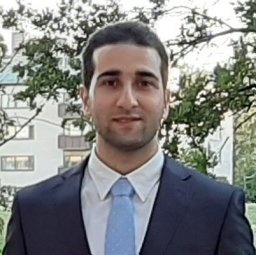 Mehdi Tavakkoli合作论文数Aalto Univ, Dept Elect Engn & Automat, Espoo 02150, Finland4
 Seyyed Mehdi Hosseini合作论文数Department of Electrical and Computer Engineering, Babol Noshirvani University of Technology, Babol, Iran4
 Meysam Saeedian合作论文数Department of Electrical Engineering and Automation, Aalto-yliopisto4
 Emad Samadaei合作论文数Volvo Group, Gothunburg, Sweden4
 Mohammad Yazdani Asrami合作论文数James Watt School of Engineering, University of Glasgow4
 Hamid Reza Gholinejad合作论文数Facultyof Electrical and Computer Engineering, Babol Noshirvani University of Technology3
 Seyed Ehsan Abdollahi合作论文数3
 Hoda Ghoreishy合作论文数Dept. of Comput. & Electr. Eng., Babol Noushirvany Univ. of Technol.;c;Dept. of Comput. & Electr. Eng., Babol Noushirvany Univ. of Technol.3
 Seyed Kazem Hoseini合作论文数3
 Sasan Zabihi合作论文数School of Electrical Engineering;Queensland University of Technology;Kumamoto University;Queensland University of Technology, Kumamoto University3Alireza Nami合作论文数2
 Shayan Pourfarrokh合作论文数2
 Hadi A Porkia合作论文数2
 Ahmad Alijani合作论文数2Ali Azimi合作论文数2
 Mohammadjavad Hassani合作论文数Babol Noshirvani University of Technology2
 Mohammad Khenar合作论文数Dept Comp Sci & Engn, Univ Quebec Outaouais2
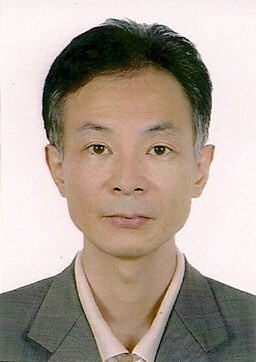 Huafang Guo (郭华芳)合作论文数中国科学院广州能源研究所2
 Hamid Soltani合作论文数2
 Kumars Rouzbehi合作论文数University of Technology Sydney/Universidad de Sevilla2
 Eduardo Mg Rodrigues合作论文数Univ Beira Interior2
 Ananthamoorthy N P合作论文数2
 Radu Godina合作论文数UNIDEMI, Univ Nova Lisboa2
 Rasoul Shalchi Alishah合作论文数2
 Robert D. Lorenz合作论文数Wisconsin Electric Machines and Power Electronics Consortium, University of Wisconsin-Madison2
 Mehran Sabahi合作论文数Faculty of Electrical & Computer Engineering, University of Tabriz2
 Seyed Hossein Hosseini合作论文数Department of Electrical Engineering, Faculty of Electrical & Computer Engineering, University of Tabriz;Near East University2
 Gerard F. Ledwich合作论文数School of Electrical Engineering & Robotics, Faculty of Engineering, Queensland University of Technology2
 Ebrahim Babaei合作论文数Department of Electrical and Electronic Engineering, Faculty of Engineering, Near East University;Department of Power Engineering, Faculty of Electrical and Computer Engineering, University of Tabriz2A. Nami合作论文数1Aliakbar Tavasoli合作论文数1
 Morteza Shekari合作论文数1




