Long-tailed macaques ( Macaca fascicularis ) show remarkable adaptability in their patterns of habitat-use. Some populations have adapted to ecological niches with a high magnitude of anthropogenic impact. Along with adjusting to the presence of humans, long-tailed macaques must also share space with a wide range of other species which humans have domesticated. These domesticates vary in their form and function in anthropogenic habitats, and therefore may interface with long-tailed macaques across a range of ecological and social contexts. In this paper we present observations of long-tailed macaques at the Padangtegal and Uluwatu temples in Bali, Indonesia interacting with domestic dogs, cats, and cattle. While anecdotal, these observations reveal a spectrum of interactions between long-tailed macaques and these domesticates, beyond simply bidirectional aggression. These observations may indicate that long-tailed macaques are able to read and respond to human domesticates within their shared physical and social environments, as they have been demonstrated to do with humans. Such a capacity would represent another dimension of the long-tailed macaque’s adaptability.
We present the first open-access, island-wide isotopic database (IsoMad) for modern biologically relevant materials collected on Madagascar within the past 150 years from both terrestrial and nearshore marine environments. Isotopic research on the island has increasingly helped with biological studies of endemic organisms, including evaluating foraging niches and investigating factors that affect the spatial distribution and abundance of species. The IsoMad database should facilitate future work by making it easy for researchers to access existing data (even for those who are relatively unfamiliar with the literature) and identify both research gaps and opportunities for using various isotope systems to answer research questions. We also hope that this database will encourage full data reporting in future publications.
Wildlife that inhabit urban landscapes face the dual challenge of negotiating their positions in their group while navigating obstacles of anthropogenically modified landscapes. The dynamics of urban environments can result in novel injuries and mortalities for these animals. However, these negative impacts can be mitigated through planning, and onsite veterinary care like that provided by the Ubud Monkey Forest in Bali, Indonesia. We examined 275 recorded injuries and mortalities among six social groups of long-tailed macaques (Macaca fascicularis) brought to the veterinary clinic from 2015–2018. We fit the probabilities of injury vs. death among macaques brought to the clinic using a multilevel logistic regression model to infer the relationship between injury vs. death and associated demographic parameters. Males were more likely to sustain injuries and females were more likely to die. The frequency of injuries and mortalities changed over the four-year study period, which was reflected in our model. The odds of mortality were highest among young macaques and the odds of injury vs. mortality varied across the six social groups. We categorized injuries and mortalities as “natural” or “anthropogenic”. Most injuries and mortalities were naturally occurring, but powerlines, motorized vehicles, and plastic present ongoing anthropogenic threats to macaque health. Most wounds and injuries were successfully treated, with healthy animals released back to their group. We suggest other sites with high levels of human–alloprimate interplays consider the Ubud Monkey Forest veterinary office as a model of care and potentially adopt their approaches.
Few studies have addressed the nutritional ecology of galagos. Observations of galagos in the wild reveal that they rely on fruits and invertebrates to varying degrees depending on their availability. We conducted a 6-week comparative dietary analysis of a colony of captive-housed northern greater galagos (Otolemur garnettii), which included five females and six males with known life histories. We compared two experimental diets. The first was fruit dominated and the second was invertebrate dominated. For each diet, we examined dietary intake and apparent dry matter digestibility over the course of 6 weeks. We found significant differences between the apparent digestibility of the diets, with the "invertebrate" diet being more digestible than the "frugivorous" diet. The lower apparent digestibility of the "frugivorous" diet was driven by the higher fiber contents of the fruits provided to the colony. However, variation in apparent digestibility of both diets was found among individual galagos. The experimental design used in this study may provide useful dietary data for the management of captive colonies of galagos and other strepsirrhine primates. This study may also be helpful for understanding the nutritional challenges faced by free-ranging galagos through time and across geographic space.
The interface between humans and nonhuman primates (NHP) is expanding and intensifying. The Ubud Monkey Forest in Bali, Indonesia is a working example of a multi-use, multi-species interface. This forest is an active religious space, top tourist attraction, critical regional economic contributor, core habitat for long-tailed macaques (Macaca fascicularis), and an important research and training location. This chapter explores two decades of successes, challenges, and ethnoprimatological research at this site. Successes in the forest include developing a durable management system to effectively address the affairs of the forest and surrounding villages, strong educational and outreach programs for the local community, initiatives to reduce plastic pollution and erosion, the establishment of extensive veterinary care, and the development of a provisioning program suited to the nutritional requirements of the macaques. Challenges to the forest include rapid macaque population growth, need for interventions for aggressive behavior, and expansion of macaque ranging patterns outside of the forest. Research at the site is the result of robust collaborations with Balinese, Canadian, European, and US universities, Indonesian and regional Balinese governments, and local stakeholders working together to understand the dynamics of primate tourism, ethnoprimatology, and human-NHP interconnections. In addition, the forest has been a critical space for field schools, scientific training for developing STEM professionals, and collaborative research. This research and training relies on support from local communities, and cultural competency that includes strong communication, an appreciation of historical context, and an understanding of religious and cultural institutions. Today, the Ubud Monkey Forest acts as an excellent example of how to use tourist revenues to stabilize and improve the health of NHP, conserve forest fragments considered sacred or important to local people, and incorporate monies into local economies to improve the lives and livelihoods of the primates who share these landscapes.
Primatologists use ecological models for understanding nonhuman primate (NHP) behavior and biology. Yet few studies have focused on the impacts of naturally occurring and anthropogenically derived toxicants in NHP habitats. For humans and NHPs, toxic levels of heavy metals frequently result in poor health outcomes including improper neurological development, immune system depression, and endocrine disruption. We analyzed the concentrations of lead (Pb), arsenic (As), and cadmium (Cd) in 48 vervet monkey (Chlorocebus pygerythrus) hair samples collected from eight South African groups living in environments with varying degrees of anthropogenic disturbance. We used two systems to categorize anthropogenic disturbance. The first was based on behavioral observations, home range overlap with human modified environments, and interviews with local people. The second system used stable isotope analysis (mean δ13C and δ15N hair values) from each group to estimate the consumption of C4 resources and the utilization of anthropogenically disturbed habitats. Preliminary analyses revealed differences in the Pb and As hair concentrations across the field sites (p < 0.05). Comparisons between anthropogenic disturbance using observations and interviews revealed differences in As (p < 0.01). In contrast, comparisons between categories using δ13C hair values revealed differences in Pb (p < 0.05). The results from this study suggest that multiple approaches using both qualitative and quantitative data should be employed to estimate the relationship between anthropogenic disturbance and environmental toxicants. Since many NHP populations share their habitats with humans, efforts to improve these landscapes would likely be beneficial for NHP and human health.
OBJECTIVES:We compared the physical activity of nine students participating in an anthropological field school to their activity expenditures in traditional classrooms. We predicted that the students would exhibit higher physical activity during the field school due to the substantial physical requirements associated with the program compared to traditional classroom environments which are frequently more sedentary.METHODS:Participants (n = 9) wore wrist accelerometers for ~23 h each day for 6 days during an anthropological field school and also in a traditional classroom environment. Accelerometers were programed with participant height, weight, age, and sex. Each accelerometer recorded total energy expenditure in kilocalories (kcal), step counts, and time in four physical activity levels (vigorous, moderate, easy, and very easy) between the field school and traditional classroom settings.RESULTS:During the field school portion of the study, participants burned more calories (p < .01), took more steps (p < .0001), and engaged in more moderate and easy exercise (p < .0001).CONCLUSIONS:This study provides insights into the physical benefits of study abroad programs and field schools. Our multi-day accelerometer data revealed significant differences in even relatively low intensities of physical activity. This is particularly pertinent in the United States where sedentary lifestyles are increasing among college students. Taken together, the results underscore the importance of study abroad programs, field schools, and other applied learning opportunities beyond the educational, professional, and social benefits.
A summary is not available for this content so a preview has been provided. Please use the Get access link above for information on how to access this content.
There is a large body of research describing the evolutionary importance of plumage coloration among avian species. However , similar datasets are lacking for mammalian pelage. Furthermore , very little research has examined the variations of nonhuman primate (NHP) pelage coloration and patterning. Primatologists have noted conspicuous differences in coloration and patterning among NHPs , including neo-natal coats and sexual dichromatism. Sexual dichromatism refers to the differences in pelage coloration between the sexes of a single species. Sexual dichromatism is rare , but found among some species of lemurs , New World monkeys , and lesser apes. To illuminate the genetic mechanism of NHP sexual dichromatism , I examined published amino acid sequences for the MC1R and OCA2 genes of nine NHP species across multiple genera. This dataset incorporated sexually dichromatic NHPs including white-cheeked gibbons (Nomascus leucogenys) , lar gibbons (Hylobates lar) , and black howler monkeys (Alouatta caraya). I also examined closely allied monochromatic NHPs including brown lemurs (Eulemur fulvus) , long-tailed macaques (Macaca fascicularis) , black snub-nosed monkeys (Rhinopithecus bieti) , Mueller's gibbon (Hylobates muelleri) , mantled howler monkeys (Alouatta palliata) , and chimpanzees (Pan troglodytes). Comparisons across these species suggest the MC1R gene does not play an important role in pelage coloration. In contrast , the OCA2 sequence of N. leucogenys differed , on average , ~16% from the three monochromatic species. Furthermore , the OCA2 sequences exhibit a low phylogenetic signal , suggesting that this gene may regulate dichromatic pelage. To expand these genetic datasets , I analyzed socioecological variables among these species and found that smaller home-range sizes and dispersal of both sexes may have played a role in the evolution of dichromatic pelage in NHPs.
Evolutionary Anthropology: Issues, News, and ReviewsVolume 28, Issue 5 p. 283-284 BOOK REVIEW A tour of primate tourism James E. Loudon, Corresponding Author James E. Loudon loudonj@ecu.edu orcid.org/0000-0002-3978-2527 Department of Anthropology, East Carolina University, Greenville, North Carolina Email: loudonj@ecu.eduSearch for more papers by this author James E. Loudon, Corresponding Author James E. Loudon loudonj@ecu.edu orcid.org/0000-0002-3978-2527 Department of Anthropology, East Carolina University, Greenville, North Carolina Email: loudonj@ecu.eduSearch for more papers by this author First published: 10 September 2019 https://doi.org/10.1002/evan.21797Read the full textAboutPDF ToolsRequest permissionExport citationAdd to favoritesTrack citation ShareShare Give accessShare full text accessShare full-text accessPlease review our Terms and Conditions of Use and check box below to share full-text version of article.I have read and accept the Wiley Online Library Terms and Conditions of UseShareable LinkUse the link below to share a full-text version of this article with your friends and colleagues. Learn more.Copy URL Share a linkShare onFacebookTwitterLinkedInRedditWechat No abstract is available for this article. Volume28, Issue5September/October 2019Pages 283-284 RelatedInformation
 Matt Sponheimer合作论文数Department of Anthropology, College of Arts and Sciences, University of Colorado Boulder;Centre for the Exploration of the Deep Human Journey, University of the Witwatersrand30
 Michaela Howells合作论文数13
 Oliver C. C. Paine合作论文数9Sauther Michelle L合作论文数Dept Anthropol, Univ Colorado9
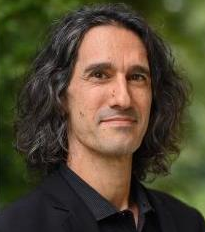 Agustín Fuentes合作论文数Department of Anthropology, Princeton University8Cuozzo Frank P合作论文数Dept Anthropol, Univ N Dakota8
 Trudy R. Turner合作论文数Department of Anthropology, College of Letters & Science, University of Wisconsin-Milwaukee7
 J. Paul Grobler合作论文数Department of Fisheries and Wildlife Sciences, Virginia Polytechnic Institute and State University6Daryl Codron合作论文数Vetsuisse Faculty, University of Zurich6B. Katherine Smith合作论文数5Ml Sauther合作论文数5
 Jennifer Leichliter合作论文数Emmy Noether Grp Hominin Meat Consumt, Max Planck Inst Chem5Antje Hutschenreuther合作论文数4Sydnie Bianchi合作论文数4
 Gomez Andres合作论文数Institute for Genomic Biology, University of Illinois at Urbana Champaign;Department of Animal Sciences, University of Illinois at Urbana Champaign;University of Illinois at Urbana Champaign, University of Illinois at Urbana Champaign4Moyer Kimberly合作论文数4
 Amanda Henry合作论文数School of Women's and Children's Health, Faculty of Medicine, The University of New South Wales4Jacqui Codron合作论文数Department of Archaeology, University of Cape Town4
 I. Nengah Wandia合作论文数Fakultas Kedokteran Hewan, Udayana University4Mead A. Krowka合作论文数3DC Whitelaw合作论文数3
 IGst Agung Arta Putra合作论文数3
 Michel T. Waller合作论文数Dept Anthropol, Cent Oregon Commun Coll3Monica L. Wakefield合作论文数Dept Sociol Anthropol & Philosophy, Northern Kentucky Univ3
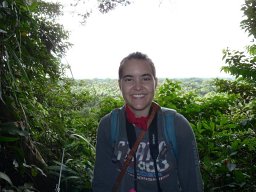 Alexana J. Hickmott合作论文数Publ Hlth, Texas Biomed Res Inst3
 Sandberg Paul A合作论文数Department of Anthropology, University of Colorado at Boulder3
 Ryan Schacht合作论文数3
 Frances J. White合作论文数Department of Ecology and Evolution, State University of New York3Babette Fahey合作论文数2Alycia E. Lewis合作论文数2Jack E. Pender合作论文数2Robert B Adams合作论文数2
 Stephanie Adolph合作论文数2
 Christopher A Wolfe合作论文数University of Nevada Reno2
 Richard W. Wrangham合作论文数Department of Human Evolutionary Biology, Harvard University2Mandala Hunter-Ishikawa合作论文数2
 Joseph Gerard Lorenz合作论文数2M.E. Howells合作论文数2Krista Fish合作论文数2Richard Rasolofonirina合作论文数1ja leethorp合作论文数1dj de ruiter合作论文数1Delaid C. Rasamisoa合作论文数1Andres M. Gomez Zapata合作论文数1Valerie J McKenzie合作论文数1Dean Gibson合作论文数1Emily Jacobson合作论文数1
 Kerry Dore合作论文数1
 Elizabeth A Kelley合作论文数1




