It has been previously shown that the polycomb protein BMI1 and E4F1 interact physically and genetically in the hematopoietic system. Here, we report that E4f1 is essential for hematopoietic cell function and survival. E4f1 deletion induces acute bone marrow failure characterized by apoptosis of progenitors while stem cells are preserved. E4f1-deficient cells accumulate DNA damage and show defects in progression through S phase and mitosis, revealing a role for E4F1 in cell-cycle progression and genome integrity. Importantly, we showed that E4F1 interacts with and protects the checkpoint kinase 1 (CHK1) protein from degradation. Finally, defects observed in E4f1-deficient cells were fully reversed by ectopic expression of Chek1. Altogether, our results classify E4F1 as a master regulator of CHK1 activity that ensures high fidelity of DNA replication, thus safeguarding genome stability.
Individuals with Fanconi anemia (FA) are susceptible to bone marrow failure, congenital abnormalities, cancer predisposition and exhibit defective DNA crosslink repair. The relationship of this repair defect to disease traits remains unclear, given that crosslink sensitivity is recapitulated in FA mouse models without most of the other disease-related features. Mice deficient in Mus81 are also defective in crosslink repair, yet MUS81 mutations have not been linked to FA. Using mice deficient in both Mus81 and the FA pathway protein FancC, we show both proteins cooperate in parallel pathways, as concomitant loss of FancC and Mus81 triggered cell-type-specific proliferation arrest, apoptosis and DNA damage accumulation in utero. Mice deficient in both FancC and Mus81 that survived to birth exhibited growth defects and an increased incidence of congenital abnormalities. This cooperativity of FancC and Mus81 in developmental outcome was also mirrored in response to crosslink damage and chromosomal integrity. Thus, our findings reveal that both pathways safeguard against DNA damage from exceeding a critical threshold that triggers proliferation arrest and apoptosis, leading to compromised in utero development.
Topoisomerases are crucial for solving DNA topological problems, but they have not been linked to RNA metabolism. Here we show that human topoisomerase 3β (Top3β) is an RNA topoisomerase that biochemically and genetically interacts with FMRP, a protein that is deficient in fragile X syndrome and is known to regulate the translation of mRNAs that are important for neuronal function, abnormalities of which are linked to autism. Notably, the FMRP-Top3β interaction is abolished by a disease-associated mutation of FMRP, suggesting that Top3β may contribute to the pathogenesis of mental disorders. Top3β binds multiple mRNAs encoded by genes with neuronal functions linked to schizophrenia and autism. Expression of one such gene, that encoding protein tyrosine kinase 2 (ptk2, also known as focal adhesion kinase or FAK), is reduced in the neuromuscular junctions of Top3β mutant flies. Synapse formation is defective in Top3β mutant flies and mice, as well as in FMRP mutant flies and mice. Our findings suggest that Top3β acts as an RNA topoisomerase and works with FMRP to promote the expression of mRNAs that are crucial for neurodevelopment and mental health.
RMI1 is a member of an evolutionarily conserved complex composed of BLM and topoisomerase IIIα (TopoIIIα). This complex exhibits strand passage activity in vitro, which is likely important for DNA repair and DNA replication in vivo. The inactivation of RMI1 causes genome instability, including elevated levels of sister chromatid exchange and accelerated tumorigenesis. Using molecular combing to analyze DNA replication at the single-molecule level, we show that RMI1 is required to promote normal replication fork progression. The fork progression defect in RMI1-depleted cells is alleviated in cells lacking BLM, indicating that RMI1 functions downstream of BLM in promoting replication elongation. RMI1 localizes to subnuclear foci with BLM and TopoIIIα in response to replication stress. The proper localization of the complex requires a BLM-TopoIIIα-RMI1 interaction and is essential for RMI1 to promote recovery from replication stress. These findings reveal direct roles of RMI1 in DNA replication and the replication stress response, which could explain the molecular basis for its involvement in suppressing sister chromatid exchange and tumorigenesis.
RPA is a single-stranded DNA binding protein that physically associates with the BLM complex. RPA stimulates BLM helicase activity as well as the double Holliday junction dissolution activity of the BLM-topoisomerase IIIα complex. We investigated the effect of RPA on the ssDNA decatenase activity of topoisomerase IIIα. We found that RPA and other ssDNA binding proteins inhibit decatenation by topoisomerase IIIα. Complex formation between BLM, TopoIIIα, and RMI1 ablates inhibition of decatenation by ssDNA binding proteins. Together, these data indicate that inhibition by RPA does not involve species-specific interactions between RPA and BLM-TopoIIIα-RMI1, which contrasts with RPA modulation of double Holliday junction dissolution. We propose that topoisomerase IIIα and RPA compete to bind to single-stranded regions of catenanes. Interactions with BLM and RMI1 enhance toposiomerase IIIα activity, promoting decatenation in the presence of RPA.
Human topoisomerase III alpha is a type IA DNA topoisomerase that functions with BLM and RMI1 to resolve DNA replication and recombination intermediates. BLM, human topoisomerase III alpha, and RMI1 catalyze the dissolution of double Holliday junctions into noncrossover products via a strand-passage mechanism. We generated single-stranded catenanes that resemble the proposed dissolution intermediate recognized by human topoisomerase III alpha. We demonstrate that human topoisomerase III alpha is a single-stranded DNA decatenase that is specifically stimulated by the BLM-RMI1 pair. In addition, RMI1 interacts with human topoisomerase III alpha, and the interaction is required for the stimulatory effect of RMI1 on decatenase activity. Our data provide direct evidence that human topoisomerase III alpha functions as a decatenase with the assistance of BLM and RMI1 to facilitate the processing of homologous recombination intermediates without crossing over as a mechanism to preserve genome integrity.
BLM, the helicase mutated in Bloom syndrome, associates with topoisomerase 3alpha, RMI1 (RecQ-mediated genome instability), and RPA, to form a complex essential for the maintenance of genome stability. Here we report a novel component of the BLM complex, RMI2, which interacts with RMI1 through two oligonucleotide-binding (OB)-fold domains similar to those in RPA. The resulting complex, named RMI, differs from RPA in that it lacks obvious DNA-binding activity. Nevertheless, RMI stimulates the dissolution of a homologous recombination intermediate in vitro and is essential for the stability, localization, and function of the BLM complex in vivo. Notably, inactivation of RMI2 in chicken DT40 cells results in an increased level of sister chromatid exchange (SCE)--the hallmark feature of Bloom syndrome cells. Epistasis analysis revealed that RMI2 and BLM suppress SCE within the same pathway. A point mutation in the OB domain of RMI2 disrupts the association between BLM and the rest of the complex, and abrogates the ability of RMI2 to suppress elevated SCE. Our data suggest that multi-OB-fold complexes mediate two modes of BLM action: via RPA-mediated protein-DNA interaction, and via RMI-mediated protein-protein interactions.
Replication forks can stall spontaneously at specific sites in the genome, and upon encountering DNA lesions resulting from chemical or radiation damage. In Saccharomyces cerevisiae proteins implicated in processing of stalled replication forks include those encoded by the SGS1, TOP3, MUS81, MMS4, SLX1, SLX4, SLX5/HEX3, and SLX8 genes. We tested the roles of these genes in suppressing gross chromosomal rearrangements (GCRs), which include translocations, large interstitial deletions, and loss of a chromosome arm with de novo telomere addition. We found that mus81, mms4, slx1, slx4, slx5, and slx8 mutants all have elevated levels of spontaneous GCRs, and that SLX5 and SLX8 are particularly critical suppressors of GCRs during normal cell cycle progression. In addition to increased GCRs, deletion of SLX5 or SLX8 resulted in increased relocalization of the DNA damage checkpoint protein Ddc2 and activation of the checkpoint kinase Rad53, indicating the accumulation of spontaneous DNA damage. Surprisingly, mutants in slx5 or slx8 were not sensitive to transient replication fork stalling induced by hydroxyurea, nor were they sensitive to replication dependent double-strand breaks induced by camptothecin. This suggested that Slx8 and Slx8 played limited roles in stabilizing, restarting, or resolving transiently stalled replication forks, but were critical for preventing the accumulation of DNA damage during normal cell cycle progression.
 Grant W. Brown合作论文数Department of Biochemistry, University of Toronto10
 Csanad Z. Bachrati合作论文数Weatherall Institute of Molecular Medicine, University of Oxford3
 Ian David Hickson合作论文数Institut for Cellulær Og Molekylær Medicin, University of Copenhagen;Zhejiang University3
 david grote合作论文数2
 Daniel Durocher合作论文数Lunenfeld-Tanenbaum Research Institute, Mount Sinai Hospital;Repare Therapeutics;Department of Molecular Genetics, Temerty Faculty of Medicine, University of Toronto2Wang Weidong合作论文数2
 Dongyi Xu (徐冬一)合作论文数School of Life Sciences, Peking University2
 Rong Guo (郭荣)合作论文数School of Life Sciences, Peking University2
 Guy Sauvageau合作论文数Institut de Recherche en Immunologie et en Cancérologie, Universite de Montreal;RejuvenRx2
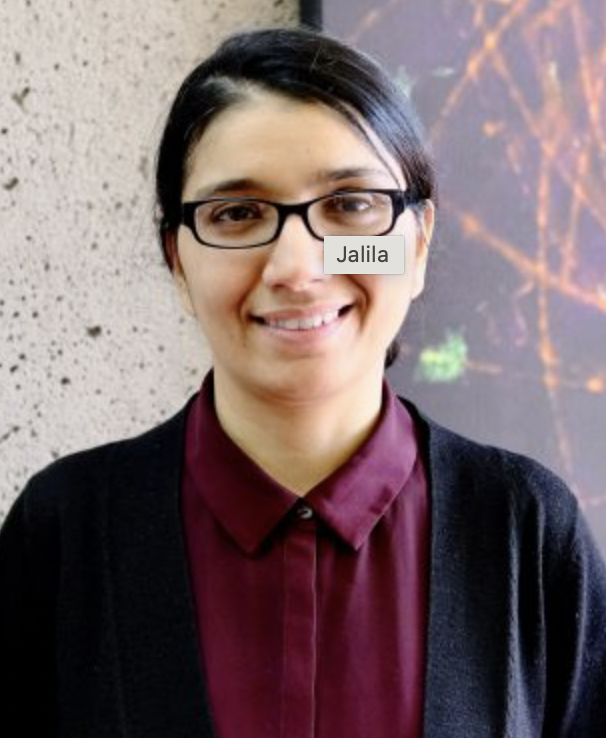 Jalila Chagraoui合作论文数2
 Lara O'Donnell合作论文数2
 Simon L Girard合作论文数CHUM Research Center, Université de Montréal2
 Nadine Mayotte合作论文数2Tara McRae合作论文数1
 James Machamer合作论文数1Jennifer L Martindale合作论文数1Nestor Sabat合作论文数1
 Jean-Yves Masson合作论文数CHU Quebec Res Ctr, Genome Stabil Lab, Quebec City, PQ, Canada1
 David Fox合作论文数Center for Global Infectious Disease Research, Seattle Children’s Research Institute1
 Stephanie Duhamel合作论文数1Meghan Larin合作论文数1
 J. Peter McPherson合作论文数Department of Pharmacology and Toxicology, Temerty Faculty of Medicine, University of Toronto1
 Albert Shaw合作论文数Infectious Diseases, Internal Medicine, Yale School of Medicine, Yale University1
 Subhasis Mohanty合作论文数Infectious Diseases, Internal Medicine, Yale School of Medicine, Yale University1
 Samit Joshi合作论文数Infectious Diseases, Internal Medicine, Yale School of Medicine, Yale University1
 Tania Roberts合作论文数Bioprocess Laboratory, Department of Biosystems Science and Engineering, Eidgenossische Technische Hochschule Zurich1
 Srikantan Subramanya合作论文数Lab Mol Biol & Immunol, NIH1Ou Jiongwen合作论文数1Moison Céline合作论文数1
 Minoru S. H. Ko (洪実)合作论文数School of Medicine, Keio University1Sima Jian合作论文数National Institute on Aging, National Institutes of Health1Liao Hudson合作论文数1David Gallo合作论文数Terrence Donnelly Center for Cellular and Biomolecular Research, University of Toronto1Meloche Sylvain合作论文数1Yang Jiandong合作论文数1Peng Wei合作论文数1Takemi Enomoto合作论文数1
 Myriam Gorospe合作论文数Laboratory of Genetics and Genomics, National Institute on Aging, National Institutes of Health1Chaoying Zhang合作论文数1Yong Qian合作论文数1
 Alexei Sharov合作论文数National Institute on Aging1Weiping Shen (沈卫平)合作论文数Tianjin College, University of Science & Technology Beijing1Laura Tamblyn合作论文数1Yutong Xue合作论文数1
 Sige Zou合作论文数1
 Thomas E. Lloyd合作论文数Department of Molecular and Cellular Biology, Baylor College of Medicine1Yan Coulombe合作论文数1
 Maureen Hoatlin合作论文数Oregon Health & Science University1Yulan Piao合作论文数1




