A new dimeric C-glycoside polyketide chrysomycin F (1), along with four new monomeric compounds, chrysomycins G (2), H (3), I (4), J (5), as well as three known analogues, chrysomycins A (6), B (7), and C (8), were isolated and characterised from a strain of Streptomyces sp. obtained from a sediment sample collected from the South China Sea. Their structures were determined by detailed spectroscopic analysis. Chrysomycin F contains two diastereomers, whose structures were further elucidated by a biomimetic [2 + 2] photodimerisation of chrysomycin A. Chrysomycins B and C showed potent anti-tuberculosis activity against both wild-type Mycobacterium tuberculosis and a number of clinically isolated MDR M. tuberculosis strains.
Porphyrins and their derivatives find extensive applications in medicine, food, energy and materials. In this study, we produced porphyrin compounds by combining Rhodobacter sphaeroides as an efficient cell factory with enzymatic catalysis. Genome-wide CRISPRi-based screening in R. sphaeroides identifies hemN as a target for improved coproporphyrin III (CPIII) production, and exploiting phosphorylation of PrrA further improves the production of bioactive CPIII to 16.5 g L-1 by fed-batch fermentation. Subsequent screening and engineering high-activity metal chelatases and coproheme decarboxylase results in the synthesis of various metalloporphyrins, including heme and the anti-tumor agent zincphyrin. After pilot-scale fermentation (200 L) and setting up the purification process for CPIII (purity >95%), we scaled up the production of heme and zincphyrin through enzymatic catalysis in a 5-L bioreactor, with CPIII achieving respective enzyme conversion rates of 63% and 98% and yielding 10.8 g L-1 and 21.3 g L-1, respectively. Our strategy offers a solution for high-yield bioproduction of heme and other valuable porphyrins with substantial industrial and medical applications.
Four new N-acylated aminoalkanoic acids, namely clonoroseins E−H (1−4), together with three previously identified analogs, clonoroseins A, B, and D (5−7), were identified from the endophytic fungus Clonostachys rosea strain 15020 (CR15020), using Feature-based Molecular Networking (FBMN). The elucidation of their chemical structures, including their absolute configurations, was achieved through spectroscopic analysis combined with quantum chemical calculations. Bioinformatics analyses suggested that an iterative type I HR-PKS (CrsE) generates the polyketide side chain of these clonoroseins. Furthermore, a downstream adenylate-forming enzyme of the PKS (CrsD) was suspected to function as an amide synthetase. CrsD potentially facilitates the transformation of the polyketide moiety into an acyl-AMP intermediate, followed by nucleophilic substitution with either β-alanine or γ-aminobutyric acid to produce amide derivatives. These findings significantly expand our understanding of PKS-related products originating from C. rosea and also underscore the powerful application of FBMN analytical methods in characterization of new compounds.
The global market demand for natural astaxanthin is rapidly increasing owing to its safety, the potential health benefits, and the diverse applications in food and pharmaceutical industries. The major native producers of natural astaxanthin on industrial scale are the alga Haematococcus pluvialis and the yeast Xanthopyllomyces dendrorhous. However, the natural production via these native producers is facing challenges of limited yield and high cost of cultivation and extraction. Alternatively, astaxanthin production via metabolically engineered non-native microbial cell factories such as Escherichia coli, Saccharomyces cerevisiae and Yarrowia lipolytica is another promising strategy to overcome these limitations. In this review we summarize the recent scientific and biotechnological progresses on astaxanthin biosynthetic pathways, transcriptional regulations, the interrelation with lipid metabolism, engineering strategies as well as fermentation process control in major native and non-native astaxanthin producers. These progresses illuminate the prospects of producing astaxanthin by microbial cell factories on industrial scale.
Industrial biosynthesis is a very complex process which depends on a range of different factors, from intracellular genes and metabolites, to extracellular culturing conditions and bioreactor engineering. The identification of species that improve the titer of some reaction is akin to the task of finding a needle in a haystack. This review aims to summarize state-of-the-art biosynthesis titer improvement on different scales separately, particularly regarding the advancement of metabolic pathway rewiring and data-driven process optimization and control. By integrating multi-scale data and establishing a mathematical replica of a real biosynthesis, more refined quantitative insights can be gained for achieving a higher titer than ever.
Besides genome editing, CRISPR-Cas12a has recently been used for DNA detection applications with attomolar sensitivity but, to our knowledge, it has not been used for the detection of small molecules. Bacterial allosteric transcription factors (aTFs) have evolved to sense and respond sensitively to a variety of small molecules to benefit bacterial survival. By combining the single-stranded DNA cleavage ability of CRISPR-Cas12a and the competitive binding activities of aTFs for small molecules and double-stranded DNA, here we develop a simple, supersensitive, fast and high-throughput platform for the detection of small molecules, designated CaT-SMelor (CRISPR-Cas12a- and aTF-mediated small molecule detector). CaT-SMelor is successfully evaluated by detecting nanomolar levels of various small molecules, including uric acid and p-hydroxybenzoic acid among their structurally similar analogues. We also demonstrate that our CaT-SMelor directly measured the uric acid concentration in clinical human blood samples, indicating a great potential of CaT-SMelor in the detection of small molecules.
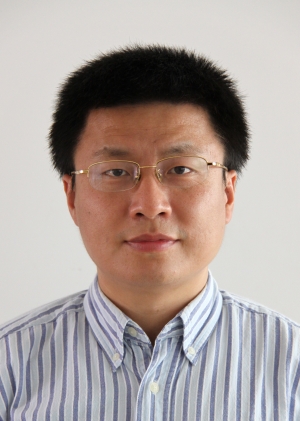 Lixin Zhang (张立新)合作论文数School of Bioengineering, East China University of Science and Technology;State Key Laboratory of Bioreactor Engineering, East China University of Science and Technology9
 Guoliang Zhu合作论文数East China Univ Sci & Technol, State Key Lab Bioreactor Engn, Shanghai 200237, Peoples R China5
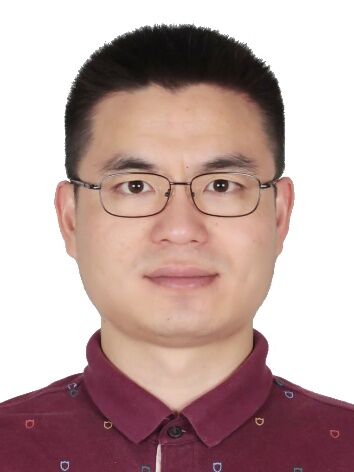 Xuekui Xia (夏雪奎)合作论文数Biology Institute of Shandong Academy of Sciences;School of Bioengineering, Qilu University of Technology4
 Xueting Liu (刘雪婷)合作论文数School of Bioengineering, East China University of Science and Technology4
 Weishan Wang (王为善)合作论文数State Key Laboratory of Microbial Resources, Institute of Microbiology, Chinese Academy of Sciences;University of Chinese Academy of Sciences4
 Lu Zhang合作论文数3Dongyuan Lv合作论文数3Mindong Liang合作论文数East China Univ Sci & Technol, State Key Lab Bioreactor Engn, Shanghai 200237, Peoples R China3Xinye Wang合作论文数3Tong Shi合作论文数3
 Yaojun Tong (童垚俊)合作论文数School of Life Sciences and Biotechnology, Shanghai Jiao Tong University3Li Zilong合作论文数3
 Jingyu Zhang (张敬宇)合作论文数School of Bioengineering, East China University of Science and Technology3
 Gaoyi Tan (谭高翼)合作论文数School of Bioengineering, East China University of Science and Technology3
 Yangliming Ou (欧阳立明)合作论文数School of Bioengineering, East China University of Science and Technology3Zexu Lin合作论文数2Huangwei Wang合作论文数2Zhengduo Wang合作论文数2Yongtao Xie合作论文数2Haihong Chen合作论文数2XiuLiang Yang (杨修亮)合作论文数2Liming Zhou合作论文数2
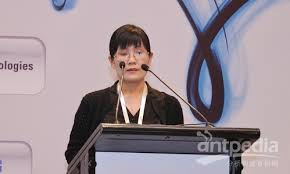 Huanqin Dai (代焕琴)合作论文数中国科学院微生物研究所2
 Min Liu (刘敏)合作论文数School of Bioengineering, East China University of Science and Technology2
 Bei Gao (高蓓)合作论文数School of Bioengineering, East China University of Science and Technology2
 Yuan Li (李玉安)合作论文数School of Chemical Engineering, East China University of Science and Technology2Mostafa Basiony合作论文数1Yue Zhang合作论文数1jiansen hu (胡建森)合作论文数1Wang, Kun合作论文数1Jing Yu合作论文数1Yuting Shuai合作论文数1
 Xiangyin Chen合作论文数State Key Laboratory of Bioreactor Engineering, and School of Biotechnology, East China University of Science and Technology1Xuyuan Wang合作论文数1Leshi Liu合作论文数East China Univ Sci & Technol, State Key Lab Bioreactor Engn, Shanghai 200237, Peoples R China1Guang Liu合作论文数1Man Wang合作论文数1Dan-Ni Wang合作论文数1Zhiheng Yang合作论文数East China Univ Sci & Technol, State Key Lab Bioreactor Engn, Shanghai 200237, Peoples R China1Weize Yuan合作论文数1
 Hui Xu合作论文数1LianQun Bao (暴连群)合作论文数1Chuan Li合作论文数1Ke-Feng Wang合作论文数1
 Karthik Loganathan合作论文数School of Bio Sciences and Technology, VIT University1Liu Jia-Kun合作论文数Shanghai Institutes for Biological Sciences, Chinese Academy of Sciences1Feng Jie合作论文数1He Hongtao合作论文数1Jing Dai合作论文数1




