The New World army ants (Hymenoptera: Formicidae) comprise the 5 genera of the Eciton species group, and together they are important keystone predators in tropical and subtropical environments. Generic boundaries in the group have been considered solid and stable for nearly 100 years. Workers of the widespread and diverse genus Neivamyrmex are readily separable from the other 4 genera by lacking a subapical tooth on the tarsal claw, while males can be separated with genitalic characters. The genus Labidus is also widespread and is often abundant, with several species that are conspicuous surface foragers. The least known species of Labidus is L. mars, the workers of which have the tarsal tooth but otherwise share many traits with some Neivamyrmex, being completely eyeless and subterranean. This led us to question its generic placement. Here, we used ultraconserved element (UCE) phylogenomics to show that Labidus mars belongs to the genus Neivamyrmex. All phylogenies, inferred using multiple partitioning schemes and a species tree analysis, recovered the same topology, placing Labidus mars workers within Neivamyrmex. Sequenced males of L. mars were found to be within Labidus and thus incorrectly associated with L. mars. Based on these results and review of key specimens, including types, the following taxonomic changes are made: Neivamyrmex mars (Forel 1912) is a new combination; Labidus nero (Santschi 1930) (rev. stat.) is a male-based taxon revived from synonymy under L. mars; and L. denticulatus (Borgmeier 1955) (new stat.), a male-based taxon and former subspecies of L. mars, is raised to species.
Although tropical rainforest ants are abundant and have high species richness, with their community structure well known at the canopy and ground levels, the understory is frequently neglected. To fill this gap, we looked for ants nesting in this stratum in an Amazonian rainforest and noted the occurrence of colonies in the debris accumulated between the fronds of the palm tree Astrocaryum sciophilum or associated with eight myrmecophytes (i.e., plants that shelter ant colonies in hollow structures called domatia). We analysed these plant–ant relationships by conducting a network approach looking for the degree of specialisation between partners (specialisation index), the differences in intensity between links (weighted nestedness) and the proportion of realised interactions relative to the number of potential interactions (connectance), including ground‐ and canopy‐nesting ants. This results in a highly modular pattern of interactions with one module per plant species based on the 98 ant species recorded. We showed the importance of ground‐nesting species for Astrocaryum , although 40.5% of them sheltered a colony of the arboreal Odontomachus hastatus . Among myrmecophytes, a strong specificity was noted for Hirtella physophora (Chrysobalanaceae) and Maieta guianensis (Melastomataceae) that sheltered at more than 90% Allomerus decemarticulatus and Pheidole minutula , respectively. Cordia nodosa (Boraginaceae) has an intermediary value (45.3% associated with Allomerus octoarticulatus ), whereas Cecropia obtusa (Urticaceae), Duroia longiflora (Rubiaceae), Tachigali paniculata (Fabaceae) and Tococa guianensis (Melastomataceae) can shelter several ant species belonging mostly to a single genus. Tachia guianensis , considered a ‘non‐specialised’ myrmecophyte, shelters species from different genera.
Temperate zone ants overwinter using a variety of mechanisms. The genus Formica overwinters entirely as adults. In at least one species it has been demonstrated that winter workers are more corpulent than summer foragers, storing resources in their bodies and mobilizing them for early brood production in spring. Here we examine overwintering by the common western thatch ant, F. obscuripes. Excavation of a winter nest revealed only workers, distributed in multiple chambers in a roughly spherical region from 0.5 to 1.05 m deep. Worker size, as measured by head width, was weakly bimodal, with fewer workers in the small vs. large size class. We measured dry weights of workers from the winter nest and workers collected the previous summer from the surfaces of multiple nests in the vicinity, including our excavated nest. Controlling for size, there was no evidence of bimodality in winter worker weight, and winter workers were 59.7% heavier than summer foragers. These results suggest that F. obscuripes workers are at their maximum corpulence going into their first winter, expend their stored fat during spring, and mostly die before overwintering a second time. It remains uncertain whether workers can regain corpulence.
Disentangling the drivers of global biodiversity patterns is a cornerstone of biogeography that remains elusive for many diverse biological groups. Here we present a complete species-level phylogeny of the ant subfamily Ponerinae based on new genomic sequencing and taxonomic grafting. We combine results with a large-scale geographic database to explore the contribution of three main mechanisms in shaping global ponerine biodiversity patterns: time for accumulation, differences in diversification rate, and asymmetric dispersal. We show that extant ponerine ants originated in Gondwana, spread eastward across tropical bioregions, and more recently colonized temperate areas. The relative timing of colonization events was identified as the prominent driver of present-day biodiversity patterns, supporting the time for accumulation hypothesis. Conversely, differences in diversification rates and asymmetrical dispersal histories mitigated the heterogeneity in biodiversity by fueling accumulation of lineages in the least diverse bioregions. These findings suggest that tropical niche conservatism played a major role in shaping the biogeographic and evolutionary history of Ponerinae. Overall, we emphasize the importance of considering the relative timing of past dispersal events and variations in diversification rates over evolutionary time to gain a deeper understanding of Earth's biodiversity patterns.
Obligatory ant-plant symbioses often appear to be single evolutionary shifts within particular ant lineages; however, convergence can be revealed once natural history observations are complemented with molecular phylogenetics. Here, we describe a remarkable example of convergent evolution in an ant-plant symbiotic system. Exclusively arboreal, Myrmelachista species can be generalized opportunists nesting in several plant species or obligately symbiotic, live-stem nesters of a narrow set of plant species. Instances of specialization within Myrmelachista are known from northern South America and throughout Middle America. In Middle America, a diverse radiation of specialists occupies understory treelets of lowland rainforests. The morphological and behavioural uniformity of specialists suggests that they form a monophyletic assemblage, diversifying after a single origin of specialization. Using ultraconserved element phylogenomics and ancestral state reconstructions, we show that shifts from opportunistic to obligately symbiotic evolved independently in South and Middle America. Furthermore, our analyses support a remarkable case of convergence within the Middle American radiation, with two independently evolved specialist clades, arising nearly simultaneously from putative opportunistic ancestors during the late Pliocene. This repeated evolution of a complex phenotype suggests similar mechanisms behind trait shifts from opportunists to specialists, generating further questions about the selective forces driving specialization.
Army ants are keystone predators in the tropics and subtropics. During reproduction, males fly between colonies to mate with unmated, wingless queens. The males of most species are attracted to lights, and thus their presence and the timing of reproduction can be monitored using light traps. Previous studies examined the seasonality of army ant male reproduction and its relationship to climate factors at individual sites, but less is known about variation among sites. We examined army ant male flight seasonality at three sites: (1) La Selva Biological Station in Costa Rica, a site with weak temperature seasonality and moderate rainfall and day length seasonality, (2) Yasuní National Park, Ecuador, a site with no temperature or day length seasonality and very weak rainfall seasonality, and (3) the state of Paraná in southern Brazil, a site with very strong temperature, rainfall, and day length seasonality. Army ants showed strong seasonality at the La Selva and Paraná sites, and very weak to no seasonality at the Yasuní site. At La Selva and Paraná, flight times varied among species, but were very predictable from year to year, which suggests day length or temperature as predictable cues rather than rainfall. Lack of seasonal cues near the equator may be a challenge for army ant species that need to synchronize colony reproduction, and thus may have conservation implications for minimum population sizes needed to ensure stable populations.
The monotypic ant genus Igaponera gen. nov. is proposed to include its type species I. curiosa (Mackay & Mackay, 2010). Igaponera gen. nov. is described and phylogenetically compared with other ponerine genera based on external morphology. The type species is known from a single gyne originally described in the genus Pachycondyla Smith, 1858. Igaponera curiosa is easily diagnosed by: costate sculpture on head, mesosoma, and petiole; short, robust, triangular mandibles with blunt apex; relatively large eyes set at mid-length on sides of head; lack of stridulitrum; and presence of distinct but relatively small arolia. Putative apomorphies of the new genus are: cuticular flange concealing metapleural gland opening; vertically standing hypostomal tooth with recessed base; stout mandibular shape with blunt apex; absence of stout spine-like setae on meso- and metatibial apices. Our phylogenetic results based on morphology suggest that Neoponera Emery, 1901 and Pachycondyla are the closest lineages to Igaponera, which shows intermediate characteristics as compared to those genera. The genus is apparently arboreal, known only from a seasonally flooded Igapó forest near Manaus, Brazil. Despite the collection site being frequented by researchers, no other specimens of this genus have been collected in over 40 years prior to this study.
The genus Cryptopone Emery contains 25 species of litter and soil ants, 5 of which occur in the Americas. Cryptopone gilva (Roger) occurs in the southeastern United States and cloud forests of Mesoamerica, exhibiting an uncommon biogeographic disjunction observed most often in plants. We used phylogenomic data from ultraconserved elements (UCEs), as well as mitogenomes and legacy markers, to investigate phylogenetic relationships, species boundaries, and divergence dates among New World Cryptopone. Species delimitation was conducted using a standard approach and then tested using model-based molecular methods (SNAPP, BPP, SODA, and bPTP). We found that Cryptopone as currently constituted is polyphyletic, and that all the South American species belong to Wadeura Weber, a separate genus unrelated to Cryptopone. A single clade of true Cryptopone occurs in the Americas, restricted to North and Central America. This clade is composed of four species that originated ~4.2 million years ago. One species from the mountains of Guatemala is sister to the other three, favoring a vicariance hypothesis of diversification. The taxonomy of the New World Cryptopone and Wadeura is revised. Taxonomic changes are as follows: Wadeura Weber is resurrected, with new combinations W. guianensis Weber, W. holmgreni (Wheeler), and W. pauli (Fernandes & Delabie); C. guatemalensis (Forel) (rev. stat.) is raised to species and includes C. obsoleta (Menozzi) (syn. nov.). The following new species are described: Cryptopone gilvagrande, C. gilvatumida, and Wadeura holmgrenita. Cryptopone hartwigi Arnold is transferred to Fisheropone Schmidt and Shattuck (n. comb.). Cryptopone mirabilis (Mackay & Mackay 2010) is a junior synonym of Centromyrmex brachycola (Roger) (syn. nov.).
The standard latitudinal diversity gradient (LDG), in which species richness decreases from equator to pole, is a pervasive pattern observed in most organisms. Some lineages, however, exhibit inverse LDGs. Seemingly problematic, documenting and studying contrarian groups can advance understanding of LDGs generally. Here, we identify one such contrarian clade and use a historical approach to evaluate alternative hypotheses that might explain the group's atypical diversity pattern. We focus on the biogeographical conservatism hypothesis (BCH) and the diversification rate hypothesis (DRH).
Ant-plant symbioses are ubiquitous and diverse in nature. Obligatory interactions are generally assumed to be single evolutionary shifts within ant lineages; however, convergence can be revealed once careful natural history observations are complemented with molecular phylogenetic reconstruction. Here we describe another remarkable example of convergent evolution in an ant-plan symbiosis involving the ant genus Myrmelachista. Exclusively arboreal, Myrmelachista species can be generalized opportunists nesting in several plant species or obligately symbiotic, nesting in live stems of a narrow set of species within a plant genus. Instances of specialization within the genus are known from northern South America and throughout Middle America. In Middle America, a diverse radiation of specialists occupies understory treelets of lowland rainforests. The strong morphological and behavioral uniformity of specialist species supports the hypothesis that they form a monophyletic assemblage, diversifying after a single origin of specialization. Using phylogenomic data from ultraconserved elements, we show that shifts from opportunistic to obligately symbiotic interactions evolved independently in South and Middle America. Furthermore, our analysis revealed a remarkable example of convergent evolution within the Middle American radiation, with two independently evolved specialist clades, arising nearly simultaneously from putative opportunistic ancestors during the late Pliocene. This unexpected convergence of a complex phenotype suggests similar mechanisms behind trait shifts from opportunists to specialists. Our results generate further questions about the selective forces driving specialization and maintaining these symbiotic interactions.
Abstract Uncovering the evolutionary history of the subfamilies Ectatomminae and Heteroponerinae, or ectaheteromorphs, is key to understanding a major branch of the ant tree of life. Despite their diversity and ecological importance, phylogenetic relationships in the group have not been well explored. One particularly suitable tool for resolving phylogeny is the use of ultraconserved elements (UCEs), which have been shown to be ideal markers at a variety of evolutionary time scales. In the present study, we enriched and sequenced 2,127 UCEs from 135 specimens of ectaheteromorph ants and investigated phylogeny using a variety of model-based phylogenomic methods.Trees recovered from partitioned maximum-likelihood and species-tree analyses were well resolved and largely congruent.The results are consistent with an expanded concept of Ectatomminae that now includes the subfamily Heteroponerinae new synonym and its single tribe Heteroponerini new combination. Eleven monophyletic groups are recognized as genera: Acanthoponera, Alfaria status revived, Boltonia Camacho and Feitosa new genus, Ectatomma, Gnamptogenys, Heteroponera, Holcoponera status revived, Poneracantha status revived, Rhytidoponera, Stictoponera status revived, and Typhlomyrmex.The new phylogenetic framework and classification proposed here will shed light on the study of Ectatomminae taxonomy and systematics, as well as on the morphological evolution of the groups that it comprises.
Invertebrates constitute the majority of animal species and are critical for ecosystem functioning and services. Nonetheless, global invertebrate biodiversity patterns and their congruences with vertebrates remain largely unknown. We resolve the first high-resolution (~20-km) global diversity map for a major invertebrate clade, ants, using biodiversity informatics, range modeling, and machine learning to synthesize existing knowledge and predict the distribution of undiscovered diversity. We find that ants and different vertebrate groups have distinct features in their patterns of richness and rarity, underscoring the need to consider a diversity of taxa in conservation. However, despite their phylogenetic and physiological divergence, ant distributions are not highly anomalous relative to variation among vertebrate clades. Furthermore, our models predict that rarity centers largely overlap (78%), suggesting that general forces shape endemism patterns across taxa. This raises confidence that conservation of areas important for small-ranged vertebrates will benefit invertebrates while providing a “treasure map” to guide future discovery.
Daniel Kronauer sits on a folding stool in the dawn rainforest of La Selva Biological Station in Costa Rica. He is watching a pulsing mass of army ants, a ‘bivouac’, as the first rays of sunlight strike its surface. As he describes it, a shiver of activity spreads through the bivouac: the beast is about to rise, and a new swarm raid is imminent. This passage is in his new book, Army Ants: Nature’s Ultimate Social Hunters, and it transported me immediately to the sights and sounds of the La Selva forest. Kronauer not only brings us up to date on one of the all-time greatest hits of biological exuberance and adaptation, he does so in a spellbinding way that keeps us turning the pages. Anyone who has spent time in tropical forests is familiar with army ants. Massive sheets of ants ooze through the forest, the slowly advancing edge creating a pandemonium of fleeing arthropods. It is one of the true spectacles of tropical life, routine for indigenous peoples but definitely not an accustomed sight during Europeans’ first tropical encounters. Maria Sibylla Merian, a naturalist and artist who traveled to the Dutch colony of Suriname in the early 1700s, was probably the first to introduce army ants to the European world, and since then they have figured prominently in both the popular imagination and scientific inquiry. The scientific study of army ants took a great leap forward with the work of T.C. Schneirla, who spent decades following army ants in the rainforest of Panama, unlocking the secrets of their foraging and reproductive rhythms. His work culminated in the 1971 book, Army Ants: A Study in Social Organization. Subsequent major reviews and updates include the chapter on army ants in Hölldobler and Wilson’s 1990 book, The Ants, and Gotwald’s 1995 book, Army Ants: The Biology of Social Predation. With the emergence of new field observations and advances in molecular techniques, in particular, it is well past time for the next installment. Kronauer’s book begins with a prologue that sets the stage, emphasizing how the terror of an army ant raid has inspired cultural fascination. I knew about the famous short story Leiningen Versus the Ants but was delighted to be reminded that the last Aureliano Buendía in García Márquez’s One Hundred Years of Solitude was devoured by army ants. In the prologue, Kronauer explains that the book has two main protagonists that are prominent and iconic Neotropical army ant species, and that the stage for his protagonists is predominantly La Selva Biological Station, where Kronauer and colleagues have conducted much of their research. Chapter One delves into the early history of discovery and naming, including the first observations of the large wingless queens of army ants, and the long-delayed identification of peculiar flying insects as the males. Chapter Two covers army ant ancestry, a topic that has perhaps changed the most since Gotwald’s book. The latest molecular phylogeny is integrated with a comparative look at the hallmarks of the army ant lifestyle: mass raiding, nomadism, and colony fission. Chapter Three is all about mass raiding: how raids are organized, what the ants feed on, raid followers (birds, butterflies, and parasitic flies), and the ecological impact on prey communities. This chapter showcases some of Kronauer’s own studies of raid organization in Ooceraea biroi, a “proto-army ant” that he has developed as a model organism that can be reared and studied in the lab. It also highlights the recent work of Philipp Hönle and colleagues, who used DNA barcoding to provide the first real measurements of army ant prey specialization. Chapter Four concerns nomadism, the army ant habit of regularly moving camp. The iconic and best studied species exhibit ‘phasic behavior’, in which colonies alternate between nomadic and statary phases (the latter being a non-nomadic phase), and reproductive cycles are synchronized and coordinated with phases in a neatly adaptive manner. Chapter Five focuses on colony fission, which covers the intricate and unusual sex lives of army ants and their mode of reproduction. Chapter Six, aptly named ‘The Traveling Circus’, jumps to a fulsome treatment of myrmecophiles, the many arthropod species that have become specialized associates of army ants, insinuating themselves into army ant society. They are a true rogues’ gallery of beetles, flies, mites, and myriad other creatures, ranging from commensals to parasites of the traveling ecosystem that is an army ant colony. An epilogue wraps it up, followed by a glossary, a list of the literature cited, and an index. By design, the book is engagingly written and short, yet it will also be a valuable addition to the specialist’s library. The text is jargon-free, with frequent expositions of relevant general concepts, such as phylogeny, levels of selection, and inclusive fitness. The book can be easily read and enjoyed by a non-specialist, but at the same time it provides a guide to the technical literature, with in-text citations to over 600 references. Gems of writing are sprinkled throughout, such as alliterative “pot-hole plugs” (single workers spanning gaps) and “attraction to action” (worker response to moving prey). Workers schlep prey, stop at roadside restaurants, and exhibit road rage. A particularly flashy myrmecophile becomes a “glitter bullet” and is likened to a human cannonball in a sparkly sequined costume. A new concept is introduced with this passage: “Who determines that the conditions are right for a colony to divide? Is it the queen who decides to lay an extraordinary batch of eggs, or is it the workers who decide to raise an extraordinary cohort of larvae?” Such an elegant and simple way to state a basic question. When pondering the impact of myrmecophiles on army ants, Kronauer contrasts the number of ant workers per myrmecophile (5,000) with the number of humans per rat in New York City (4), citing a study titled ‘Does New York City really have as many rats as people?’ Brilliant. The text swings easily between general ideas and natural history details, and between existing knowledge and the author’s own field observations. We can learn about the general distinction of migratory versus nomadic behavior, and also that army ants carry their larvae slung beneath them, head forward, and mouth up (who knew!?). The illustrations, making up nearly half of the book, are mostly large color photos taken by Kronauer, and as I read the book I found myself eagerly seeking out the images that accompanied textual explanations. I know he must have been particularly proud of the single photo that captured interspecific interactions, age polyethism, and myrmecophily all in one go. Now for my Rodney Dangerfield moment (taxonomists don’t get no respect). Something missing from this book, and from any of the previous syntheses of army ant biology, is a section on the species-level taxonomy of army ants. I had hopes when I read Chapter One, which has a lovely mystery story involving the arcane rules of zoological nomenclature and taxonomic priority. But there it ended, with a mention of Max Winston’s studies of species boundaries in Eciton burchellii (the main protagonist) appearing only late in the book. Admittedly, taxonomy is not in Kronauer’s wheelhouse. But a fascinating feature of the army ant story is how parallel taxonomies have arisen for workers and males because they are so rarely found together. Males come to light, sporting a morphological candy box of elaborate genitalia, which have been used as the basis for many species names. Workers gathered from foraging columns form their own morphological clusters, resulting in a separate set of species names. Matching of males and workers has come slowly, yet we now have the molecular tools to readily do so. It is remarkable and somewhat mysterious to me that, with DNA barcoding, we now know more about the species boundaries of myrmecophiles than the army ants themselves! Let us hope that army ants will continue to course through tropical forests and that naturalists will continue to follow them, learning their ways. Kronauer, for whom critical instrumentation includes both PCR machines and folding stools, is an inspiration. His book is not a culmination but rather a progress report. Like the irresistible urge to follow an army ant column through the dense underbrush of a tropical rainforest, I will continue to follow Kronauer’s work as he weaves back and forth between field observations and controlled laboratory experiments. I eagerly await the next installment.
AbstractThe ant genus Syscia Roger, 1861 is part of the cryptic ant fauna inhabiting leaf litter and rotten wood in the Asian and American tropics. It is a distinct clade within the Dorylinae, the subfamily from which army ants arose. Prior to this work, the genus comprised seven species, each known from a single or very few collections. Extensive collecting in Middle America revealed an unexpected and challenging diversity of morphological forms. Locally distinct forms could be identified at many sites, but assignment of specimens to species spanning multiple sites was problematic. To improve species delimitation, Ultra-Conserved Element (UCE) phylogenomic data were sequenced for all forms, both within and among sites, and a phylogeny was inferred. Informed by phylogeny, species delimitation was based on monophyly, absence of within-clade sympatry, and a subjective degree of morphological uniformity. UCE phylogenomic results for 130 specimens were complemented by analysis of mitochondrial COI (DNA barcode) data for an expanded taxon set. The resulting taxonomy augments the number of known species in the New World from 3 to 57. We describe and name 31 new species, and 23 species are assigned morphospecies codes pending improved specimen coverage. Queens may be fully alate or brachypterous, and there is a wide variety of intercaste female forms. Identification based on morphology alone is very difficult due to continuous character variation and high similarity of phylogenetically distant species. An identification aid is provided in the form of a set of distribution maps and standard views, with species ordered by size.
Evolutionary innovations underlie the rise of diversity and complexity-the 2 long-term trends in the history of life. How does natural selection redesign multiple interacting parts to achieve a new emergent function? We investigated the evolution of a biomechanical innovation, the latch-spring mechanism of trap-jaw ants, to address 2 outstanding evolutionary problems: how form and function change in a system during the evolution of new complex traits, and whether such innovations and the diversity they beget are repeatable in time and space. Using a new phylogenetic reconstruction of 470 species, and X-ray microtomography and high-speed videography of representative taxa, we found the trap-jaw mechanism evolved independently 7 to 10 times in a single ant genus (Strumigenys), resulting in the repeated evolution of diverse forms on different continents. The trap mechanism facilitates a 6 to 7 order of magnitude greater mandible acceleration relative to simpler ancestors, currently the fastest recorded acceleration of a resettable animal movement. We found that most morphological diversification occurred after evolution of latch-spring mechanisms, which evolved via minor realignments of mouthpart structures. This finding, whereby incremental changes in form lead to a change of function, followed by large morphological reorganization around the new function, provides a model for understanding the evolution of complex biomechanical traits, as well as insights into why such innovations often happen repeatedly.
 Branstetter Michael G合作论文数18
 Robert K. Colwell合作论文数Department of Ecology and Evolutionary Biology, University of Connecticut;University of Colorado Boulder;Universidade Federal de Goiás12
 Nate Sanders合作论文数Department of Ecology and Evolutionary Biology, College of Literature, Science, and the Arts, University of Michigan8
 Brian L. Fisher合作论文数Department of Entomology, California Academy of Sciences;San Francisco State University;Madagascar Biodiversity Center8
 Rob Dunn合作论文数Department of Applied Ecology, College of Agriculture and Life Sciences, North Carolina State University8
 Nicholas J. Gotelli合作论文数Department of Biology, College of Arts and Sciences, University of Vermont;Gund Institute for Environment, University of Vermont7
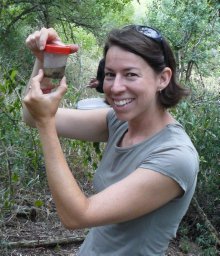 Catherine L Parr合作论文数Department of Zoology;University of Pretoria;Department of Zoology, University of Pretoria7
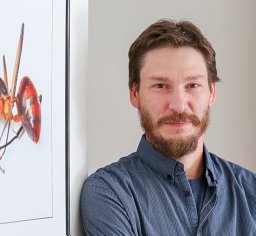 Milan Janda合作论文数Ctr Biol, Acad Sci Czech Republ7
 Heloise Gibb合作论文数School of Biological Sciences, The University of Sydney7
 Heraldo L. Vasconcelos合作论文数Instituto de Biologia, Universidade Federal de Uberlandia7
 Michael E. Kaspari合作论文数Department of Biology, School of Biological Sciences, Dodge Family College of Arts and Sciences, The University of Oklahoma6
 Alan Andersen合作论文数Research Institute for the Environment and Livelihoods, Charles Darwin University6
 Andrew Suarez合作论文数Center for Latin American & Caribbean Studies, Illinois Global Institute, College of Liberal Arts and Sciences, University of Illinois at Urbana-Champaign;Department of Entomology, University of Illinois at Urbana-Champaign6
 Stacy Philpott合作论文数Department of Environmental Studies, University of California, Santa Cruz6
 Matthew C Fitzpatrick合作论文数Department of Ecology;and Evolutionary Biology;University of Te;Department of Ecology|and Evolutionary Biology, University of Te6
 Sean Menke合作论文数Department of Entomology, North Carolina State University6
 Terrence P. McGlynn合作论文数5
 Agosti Donat合作论文数Plazi;Division of Inverterbrate Zoology, American Museum of Natural History;Institute for Environmental Analysis and Development, Los Angeles;Naturhistorisches Museum der Burgergemeinde Bern;Center for Tropical Studies, University of California, Los Angeles5
 Jonathan Majer合作论文数Faculty of Science and Engineering, Curtin University5
 Javier Retana合作论文数Centre de Recerca Ecologica i Aplicacions Forestals;Facultat de Ciencies;Universitat Autonoma de Barcelona;Centre de Recerca Ecologica i Aplicacions Forestals, Universitat Autonoma de Barcelona5
 Aaron Ellison合作论文数Sound Solutions for Sustainable Science;Harvard Forest, Faculty of Arts & Sciences, Harvard University5
 Aaron D Gove合作论文数Centre for Ecosystem Diversity and Dynamics, Curtin University of Technology5
 Michael D. Weiser合作论文数Department of Ecology;Biosciences West;University of Arizona;Department of Ecology, University of Arizona5
 Jean-Philippe Lessard合作论文数Rutgers University, VU University Amsterdam5
 Carsten A. Bruhl合作论文数Institute for Environmental Sciences, University Koblenz-Landau5
 Martin Pfeiffer合作论文数5
 John Lattke合作论文数Museo del Instituto de Zoología Agrícola;Universidad Central de Venezuela;Museo del Instituto de Zoología Agrícola, Universidad Central de Venezuela5
 Benoit Guenard合作论文数Research Division for Ecology & Biodiversity, Faculty of Science, The University of Hong Kong4
 Philip S. Ward合作论文数Department of Entomology and Nematology, University of California, Davis4
 David A. Donoso合作论文数Department of Zoology, The University of Oklahoma4
 Xim Cerda合作论文数Departamento de Biologia Evolutiva, CSIC4
 Nalini M. Nadkarni (Nalini Nadkarni)合作论文数School Of Biological Sciences, University of Utah4
 Luko Hilje合作论文数4
 Benoit Guénard合作论文数School of Biological Sciences, The University of Hong Kong3Brian Kendall合作论文数Providence Newberg Medical Center3Veijalainen Anu合作论文数3
 Konrad Fiedler合作论文数Department fur Botanik und Biodiversitatsforschung, Fakultat fur Lebenswissenschaften, Universitat Wien3
 Ilari Sääksjärvi合作论文数Biodiversity Unit, University of Turku3
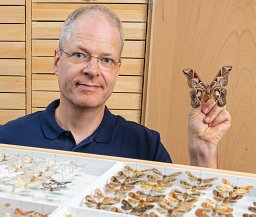 Gunnar Brehm合作论文数Institute of Systematic Zoology and Evolutionary Biology with Phyletic Museum, University of Jena3Marc Roger Couturier合作论文数3
 Sarah Groc合作论文数3
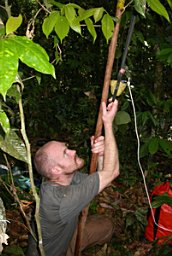 Tom M. Fayle合作论文数Insect Ecology Group;Museum of Zoology, University;Insect Ecology Group, University Museum of Zoology3
 Xavier Arnan合作论文数Facultat de Biociències, Universitat Autònoma de Barcelona3
 Vasyl Tkach合作论文数Department of Biology, University of North Dakota3
 Evan P. Economo合作论文数Okinawa Inst Sci & Technol, Grad Univ3
 Ted Schultz合作论文数Department of Entomology, National Museum of Natural History, Smithsonian Institution3
 Maurice Leponce合作论文数Conservation Biology Section, Royal Belgian Institute of Natural Sciences3R.R. Snelling合作论文数3
 Alain Dejean合作论文数2




