The high energy density of green synthetic liquid chemicals and fuels makes them ideal for sustainable energy storage and transportation applications. Electroreduction of carbon dioxide (CO2) directly into such high value-added chemicals can help us achieve a renewable carbon cycle. Such electrochemical reduction typically suffers from low faradaic efficiencies (FEs) and generates a mixture of products due to the complexity of controlling the reaction selectivity. This perspective summarizes recent advances in the mechanistic understanding of CO2 reduction reaction pathways toward liquid products and the state-of-the-art catalytic materials for conversion of CO2 to liquid C1 (e.g., formic acid, methanol) and C2+ products (e.g., acetic acid, ethanol, n-propanol). Many liquid fuels are being produced with FEs between 80% to 100%. We discuss the use of structure-binding energy relationships, computational screening, and machine learning to identify promising candidates for experimental validation. Finally, we classify strategies for controlling catalyst selectivity and summarize breakthroughs, prospects, and challenges in electrocatalytic CO2 reduction to guide future developments.
After the synthesis of two-dimensional (2D) graphene through mechanical exfoliation in 2004, 2D nanomaterials have emerged as efficient catalysts for many types of reactions, including heterogeneous catalysis, due to their distinct physicochemical and electronic properties. This review highlights recent progress in the application of 2D materials for selected heterogeneous thermo-catalytic reactions, with an emphasis on their role as active catalysts or catalyst supports. The catalytic behavior of 2D materials, either as a catalyst or support, in various heterogeneous catalytic reactions, such as Knoevenagel condensation, Suzuki coupling, oxidative dehydrogenation, hydrogenation of nitroarenes, and oxidative desulfurization, is discussed. Particular attention is given to catalyst design strategies involving 2D materials functionalized with metal-free active sites, as well as hybrid systems incorporating noble and non-noble metals, although our primary focus is on metal-free and structurally tunable 2D catalytic platforms. We conclude our discussion with a perspective on present challenges and future recommendations in this fast-evolving field based on recent state-of-the-art developments. In addition, we provide a critical perspective on current challenges and suggest future directions for the development of cost-effective, selective, and durable 2D-based catalysts.
The need to secure environmentally sustainable sources of clean fuel has led to intensive research into the catalytic conversion of CO 2 into valuable compounds. However, the intrinsically sluggish reduction kinetics and competing reaction pathways present challenges in achieving high product selectivity and efficiency. Herein, we focus on the transformation of CO 2 into products, particularly emphasizing advances in non‐copper‐based catalytic systems, which have emerged as promising alternatives that present unique electronic structures and adsorption properties. Unlike conventional copper catalysts, these systems offer distinct advantages in selectivity and stability, particularly through the modulation of surface defect engineering. We systematically analyze the main reaction pathways leading to products, including ethylene formation and higher hydrocarbon (C 2–4 ) alcohols and oxygenates, while critically assessing the mechanistic insights that differentiate non‐copper catalysts from their Cu‐based counterparts. By summarizing recent developments, the key challenges, and optimization strategies, we provide a comprehensive overview of how non‐copper catalysts can enable efficient and scalable CO 2 reduction reactions, with an aim of assisting researchers in their design of novel catalysts that may reach industrial applications.
The breadth and importance of polymerized ionic liquids (PILs) are steadily expanding, and this review updates advances and trends in syntheses, properties, and applications over the past five to six years. We begin with an historical overview of the genesis and growth of the PIL field as a subset of materials science. The genesis of ionic liquids (ILs) over nano to meso length-scales exhibiting 0D, 1D, 2D, and 3D topologies defines colloidal ionic liquids, CILs, which compose a subclass of PILs and provide a synthetic bridge between IL monomers (ILMs) and micro to macro-scale PIL materials. The second focus of this review addresses design and syntheses of ILMs and their polymerization reactions to yield PILs and PIL-based materials. A burgeoning diversity of ILMs reflects increasing use of nonimidazolium nuclei and an expanding use of step-growth chemistries in synthesizing PIL materials. Radical chain polymerization remains a primary method of making PILs and reflects an increasing use of controlled polymerization methods. Step-growth chemistries used in creating some CILs utilize extensive cross-linking. This cross-linking is enabled by incorporating reactive functionalities in CILs and PILs, and some of these CILs and PILs may be viewed as exotic cross-linking agents. The third part of this update focuses upon some advances in key properties, including molecular weight, thermal properties, rheology, ion transport, self-healing, and stimuli-responsiveness. Glass transitions, critical solution temperatures, and liquidity are key thermal properties that tie to PIL rheology and viscoelasticity. These properties in turn modulate mechanical properties and ion transport, which are foundational in increasing applications of PILs. Cross-linking in gelation and ionogels and reversible step-growth chemistries are essential for self-healing PILs. Stimuli-responsiveness distinguishes PILs from many other classes of polymers, and it emphasizes the importance of segmentally controlling and tuning solvation in CILs and PILs. The fourth part of this review addresses development of applications, and the diverse scope of such applications supports the increasing importance of PILs in materials science. Adhesion applications are supported by ionogel properties, especially cross-linking and solvation tunable interactions with adjacent phases. Antimicrobial and antifouling applications are consequences of the cationic nature of PILs. Similarly, emulsion and dispersion applications rely on tunable solvation of functional groups and on how such groups interact with continuous phases and substrates. Catalysis is another significant application, and this is an historical tie between ILs and PILs. This component also provides a connection to diverse and porous carbon phases templated by PILs that are catalysts or serve as supports for catalysts. Devices, including sensors and actuators, also rely on solvation tuning and stimuli-responsiveness that include photo and electrochemical stimuli. We conclude our view of applications with 3D printing. The largest components of these applications are energy related and include developments for supercapacitors, batteries, fuel cells, and solar cells. We conclude with our vision of how PIL development will evolve over the next decade.
Electrospinning of nanocarbons such as graphene and carbon nanotubes typically produces mats composed of one-dimensional fibers where the carrier polymer encapsulates the nanocarbons. Recently it was found that decreasing the amount of carrier polymer in approaching the electrospinning-electrospray boundary for graphene suspensions resulted in retention of the graphene two-dimensional anisotropy with one-dimensional carrier polymer fibers connecting flakes. We explored a similar decrease in carrier polymer in MWCNT suspensions to investigate the network topology that might ensue. Unexpectedly, two-dimensional leaflet meso-networks were obtained wherein the leaflets comprise laterally aligned MWCNTs one to several nanotubes thick. A mechanism based on capillary force-driven MWCNT self-assembly activated by menisci formed during drying of electrospun fibers is presented. Such materials offer new approaches to producing high surface-area coatings for catalytic and energy applications and suggest ways of formulating two-dimensional MWCNT assemblies in metal foams and other open-cell porous materials.
Inorganic, organic, and hybrid two-dimensional (2D) materials are being developed for ever-expanding numbers of applications, though energy and catalysis remain the main drivers of their development. We present overviews of bottom-up and top-down synthetic strategies of such materials and examine manufacturing scalability issues. Mechanical, electrical, and thermal properties and their modulation are highlighted because they are fundamental to the above-mentioned drivers. The burgeoning importance of heterostructures in such materials, particularly for catalysis and electrode design and function is stressed. Detailed attention is given to applications of 2D materials to the electrocatalysis reactions: oxygen reduction, oxygen evolution, hydrogen evolution, carbon dioxide reduction, and nitrogen reduction. Water splitting, carbon dioxide reduction, and nitrogen reduction by photocatalysis are also examined. A perspective of expected advances in the expansion of applications and types of 2D materials, with a focus on heterostructure development, is presented in the conclusion.
Lithium batteries have received a lot of attention in recent years. This comment reviewed the application of ionic liquid and poly(ionic liquid)-based electrolytes in lithium batteries.
Supported liquid membranes (SLM) offer promise of improved molecular and ionic transport in polyelec-trolyte membranes (PEM), key components in batteries and fuel cells. Incorporation of ionic liquids (IL) into PEM has demonstrated increased molecular and ionic transport, and it is probable that liquid poly-merized ionic liquids (LPIL) also will benefit such PEM properties. Herein we demonstrate preparation of LPIL copolymers that have suitable functionality for tethering such LPIL to SLM. We uncover a design principle for producing LPIL, wherein liquid homopolymers that are precursors for PIL are partially mod-ified and converted into LPIL. We show that the homopolymer poly(bromoundecyl acrylate), poly (AcOC11H22Br), is such a liquid precursor. We explore conversion of this homopolymer into LPIL by using it to alkylate 1-methyl imidazole.(c) 2023 Published by Elsevier B.V.
Metal-nitrogen-carbon (M-C/N) electrocatalysts have been shown to have satisfactory catalytic activity and long-term durability for the oxygen reduction reaction (ORR). Here, a strategy to prepare a new electrocatalyst (Fe&Pd-C/N) using a unique metal-containing ionic liquid (IL) is exploited, in which Fe & Pd ions are positively charged species atomically dispersed by coordination to the N of the N-doped C substrate, C/N. X-ray absorption fine structure, XPS and aberration-corrected transmission electron microscopy results verified a well-defined dual-atom configuration comprising Fe+2.x -N4 coupled Pd2+ -N4 sites and well-defined spatial distribution. Electronic control of a coupled Fe-Pd structure produces an electrocatalyst that exhibits superior performance with enhanced activity and durability for the ORR compared to that of commercial Pt/C (20%, Johnson Matthey) in both alkaline and acid media. Density functional theory calculations indicate that Pd atom can enhance the catalytic activity of the Fe active sites adjacent to Pd sites by changing the electronic orbital structure and Bader charge of the Fe centers. The excellent catalytic performance of the Fe&Pd-C/N electrocatalyst is demonstrated in zinc-air batteries and hydrogen-air fuel cells.
Polymerized ionic liquids (PIL) are being used in many advanced materials applications. An interesting subclass of PILs is composed of liquid PIL, LPIL. Such materials exhibit classical liquid properties and offer insight into the physics and physical chemistry of liquids and particles. We present an overview of LPIL and a classification scheme to usefully compartmentalize such materials for further design, optimization, and application. Several members of this class of LPIL are described in detail along with multiple applications. One member consists of organosiloxanes condensed on themselves to produce a novel type of solvent-free nanofluid. These materials are the first to experimentally illustrate polydispersity frustration of crystallization and to show that both freezing and glass transitions are lambda transitions. Another member comprises a functional core decorated with ionic liquid salts. Such materials can be used to mitigate embrittlement accompanying using nanofillers and to incorporate such nanofluids in diverse new materials and functional coatings. Linear LPIL offer similar advantages to those provided by molecular IL and promise to overcome leaching limitations in liquid supported membranes and polyeletrolyte membranes in batteries and fuel cells. Lastly, extension of PILs to polyurethanes and polyureas (PUs) and to polyesters (PEs) has resulted in the first known self-dispersing polyurethane and polyester dispersions (PUDs and PEDs, respectively). Several of their applications in stimuli responsive coatings and graphene dispersions are illustrated.
Thermodynamically stable dispersions of carbon nanotubes and graphene in water are prepared at high concentrations (6-17 % by weight) by scalable liquid phase exfoliation processing using polymerized ionic liquid (PIL) stabilizers (nanolatexes, nanoparticles). This stability emanates from stabilizers that are based on imidazolium moieties that provide strong binding to the sp2 surfaces of nanocarbons while exhibiting high solvation by water. These dispersions provide means to make advanced materials and coatings exhibiting ultra-high thermal conductivity, shear switchable rheo-optical fluids, and heterostructured and high specific surface area coatings. Such advanced coatings provide a platform for catalytic membranes and electrocatalytic electrodes derived by electrospinning and further extend the utility and potential of 2D materials. We demonstrate how nonwoven mats made by electrospinning can dimensionally grow beyond the inherent 1D fibers, intrinsic to electrospinning, to provide 2D- heterostructured networks. These networks are obtained by operating close to an instability boundary, the Rayleigh instability, where fluid (electrospinning) streams decompose into droplets. Two classes of such networks are demonstrated and discussed, wherein the carrier fluid is an aqueous solution of poly(vinyl alcohol), PVA: (i) The first is derived from aqueous graphene (2D) dispersions stabilized by 0D PIL nanolatexes (NLs) 20-30 nm in diameter. As the Plateau-Rayleigh instability is approached, the usual 1D fiber morphology transforms to (preserve) reveal the intrinsic 2D morphology of individual nanoplatelets that are connected by nanofibers. (ii) The second is derived from aqueous MWCNT (1D) dispersions stabilized by 0D NLs. As the Plateau-Rayleigh instability is approached, on drying a heterostructured 2D network is formed, where 0D (NL) + 1D (MWCNT) yields 2D networks. These 2D “microfilms” form from collapse of multiphase fluid menisci comprising aqueous PVA solution and NLs shed from MWCNT surfaces and are supported by mini-networks of MWCNTs. Morphology tuning, modulation of ionic and electrical conductivities, and directions for future applications are discussed. These examples provide bases for increasing network dimensionality using colloidal re-equilibration, rather than by diffusion-limited aggregation.
Initial attempts to perform nearly bulk polymerization of bromoundecyl acrylate unexpectedly produced cross-linked gels, GelCH2Cl2 and GelDMF, exhibiting some interesting chemical features. Monomer concentrations were 50% by weight using methylene chloride (CH2Cl2) and dimethylformamide (DMF) as solvents. Thermal initiation was done with AIBN (azobis[isobutyronitrile]), and analysis of GelCH2Cl2 and GelDMF suggests the isobutyronitrile radical participates in both hydrogen and bromine atomic abstraction reactions. A higher cross-linking density was obtained in DMF, 2 mmol cm−3, than in CH2Cl2, 0.6 mmol cm−3, by measuring swelling in toluene and xylene. Differential scanning calorimetry analysis of these gels reveal melting and freezing transitions over − 30 to − 50 °C, similar to non-cross-linked poly(bromoundecyl acrylate), a room-temperature liquid. Thermally driven apparent evolution of bromine from GelDMF was quantified as corresponding to about 27% of the molar-available bromine by using Ag+ potentiometry. These gel materials represent a new class of telechelic gels that can easily be reacted with diverse reagents to make them interfacially compatible with other phases.
The origin of Pickering (emulsion) stabilization, stabilization of interfaces by particles, is revisited, with emphasis on the earliest papers and patents and their significance. A de facto case of graphite stabilization can be identified in the mid-nineteenth century. A very slow growth of Pickering emulsification through the twentieth century is detailed, including a renaissance of Pickering emulsification at the millennial. This renaissance may be correlated with an important growth stage of colloidal physics that has been followed by an explosion of materials science and engineering. A brief summary of extensive applications since the 1980s and prospects of future developments are also provided.
We report 3D colloidal self-assembly (crystallization) of poly(ionic liquid) latexes to produce crystals that exhibit reversible melting and recrystallization in water, due to "classical" interparticle interactions, typical of multifunctional polymers. These new materials are derived from an ionic liquid monomer that is polymerized at room temperature by redox-initiated polymerization. Particle synthesis, self-assembly, thermal properties, and introductory light diffraction effects are reported with a focus on melting. These crystals are distinguishable from classical colloidal crystalline arrays, and are the first such crystals to exhibit thermal melting. This new hydrogel offers promise for engineering large volume production of photonic crystals active in the visible and proximal spectral regions, by crystallization from suspension (solution), characteristic of most useful chemical compounds.
Two-dimensional (2D) materials with varied structured features are showing promise for diverse processes. We focus on their energy applications in electrocatalysis of the oxygen reduction reaction, the oxygen evolution reaction, the hydrogen evolution reaction, CO2 reduction reactions, photocatalytic water splitting and CO2 reduction, electrical double layer capacitors, pseudocapacitors, and batteries. Effects of synthesis parameters and surface modification are examined as a means to tune conductivity, catalytic activity, and other performance-related properties. Activity parameters of leading 2D materials and their hybrids are discussed and compared with more classical benchmark materials to provide an evolutionary perspective of performance progress. Doped graphenes are currently producing about half their theoretical electrostatic maximum energy storage in electrical double layer capacitors at about 260 F g−1. Nanosheet pseudocapacitors have yielded significant early advances in hybrids of graphene with layered double hydroxides and with metal oxide nanosheets to store energy at about 3000 F g−1. These pseudocapacitor results also have enabled promising early developments in using similar electrodes in batteries. Nanosheet hybrid structures are also yielding improved electrodes for lithium and sodium ion batteries. High electrical conductivity, robustly porous nanosheet assemblies, and facile ionic and molecular diffusion pathways are design criteria important for nanosheet-based energy conversion and storage materials. Development opportunities and challenges are summarized.
Realization of the full potential of 2D nanosheet materials in energy storage and conversion devices requires heterogeneously structured electrodes having good electrical conductivity and large mean free paths for ion diffusion. Electrospinning of anisotropic objects usually obscures this anisotropy because of a large amount of carrier polymer typically required to form fibers. We demonstrate electrospinning of graphene with nearly quantitative retention of flake anisotropy to provide low to moderate density coatings of randomly oriented flakes having very large inter-flake mean free paths for ionic diffusion. Polyvinyl alcohol (PVA) is used as a carrier polymer and yields graphene anisotropy retention over an instability domain wherein electrospinning transitions to electrospraying. Graphene is deposited in polymer-encapsulated films at weight concentrations up to 50%, almost an order of magnitude higher than previously reported. Electrode applications will require at least partial replacement of PVA by electrically conducting polymers, and such polyelectrolytes should also suppress this electrospraying instability. We believe that large-scale electrospinning of graphene nanosheets will accelerate development of 2D materials in the fields of energy storage and conversion, catalysis, and tissue engineering.
Polyurea resins derived from tolyldiisocyante (TDI) and a reactive solvent-free nanofluid (NF-NH_2) surface-decorated with propylamines can be tuned over three to five orders of magnitude in storage modulus (10 MPa to 10 GPa) and hardness modulus (6 kPa to 4 GPa) by varying weight fractions of components. The thermal properties of this NF-NH_2 are similar to several other nanofluids reported using the same bulky anionic counterion that also imparts liquidity in the absence of any solvent. This tuning suggests applications ranging from opaque protective coatings to clearcoats to sealants to adhesives.
Imidazolium bromide, an ionic liquid surfactant acrylate, as well as its homopolymer and various copolymers are demonstrated to be superior dispersing aids for preparing aqueous multiwall carbon nanotube (MWCNT) dispersions. We demonstrate apparent complete exfoliation in water with extinction coefficients at 500 nm of about 60 cm(2) mg(-1) of MWCNT dispersed, a new lower bound and the highest reported extinction to date. The efficacy or efficiency of dispersion (activated by ultrasonication) is examined in terms of a quotient of extinction and weight ratio of the active monomer and MWCNT. A rank ordering of the results obtained for seven stabilizers based on the same imidazolium bromide monomer provides insights into roles of pi-overlap adsorption onto MWCNT surfaces and how hydrogel properties of some of these polymers provide stability in water at higher concentrations than previously considered feasible for surfactant-stabilized and polymer-stabilized MWCNT dispersions. Simple nanocomposite film formation is demonstrated by casting and thermal diffusivity and electrical conductivity properties are examined.
Chapter 10 Solvent-Free Nanofluids and Reactive Nanofluids John Texter, John Texter Coating Research Institute, School of Engineering Technology, Eastern Michigan University, Ypsilanti, MI, 48197 USASearch for more papers by this author John Texter, John Texter Coating Research Institute, School of Engineering Technology, Eastern Michigan University, Ypsilanti, MI, 48197 USASearch for more papers by this author Book Editor(s):Takashi Nakanishi, Takashi Nakanishi National Institute for Materials Science, MANA, 1-2-1 Sengen, 305-0047 Tsukuba, JapanSearch for more papers by this author First published: 25 March 2019 https://doi.org/10.1002/9783527804948.ch10Citations: 2 AboutPDFPDF ToolsRequest permissionExport citationAdd to favoritesTrack citation ShareShareShare a linkShare onFacebookTwitterLinked InRedditWechat Summary This chapter briefly and broadly reviews solvent-free nanofluids. Solvent-free nanofluids reported to date include zero-, one-, two-, and three-dimensional examples. The solvent-free nanofluids described and discussed in the chapter exhibit self-diffusion, conductivity, viscosity, and thermal properties that vary with morphology, size, and core-corona relative volume fractions. These interesting materials have promising applications as heat transfer liquids, CO2 absorbing and storage matrices, lubricants, interfacial stabilizers, advanced thin films and coatings, and novel 3D materials. Syntheses of selected examples are provided to demonstrate representative approaches in the preparation of solvent-free nanofluids. The chapter shows a couple of approaches to making such air-cured coatings using reactive nanofluids in combination with polyurethane prepolymers and with a popular aliphatic diisocyanate monomer, isophorone diisocyanate. The use of reactive nanofluids in composites appears to offer one the ability to increase modulus or to maintain modulus while increasing toughness. Citing Literature Functional Organic Liquids RelatedInformation
 Rene Crombez合作论文数22
 Feng Yan (严锋)合作论文数College of Materials Science and Engineering, Donghua University17Thomas Mourey合作论文数11
 Zhenyu Sun (孙振宇)合作论文数Two -Dimensional Materials & Catalysis Laboratory, The College of Chemical Engineering, Beijing University of Chemical Technology10
 Brian Antalek合作论文数Analytical Technology Division, Eastman Kodak Company10Xiumin Ma合作论文数9
 Hengcong Tao (陶亨聪)合作论文数College of Chemical and Biological Engineering, Zhejiang University8Slater Lisa合作论文数8
 Markus Antonietti合作论文数Max Planck Institute for Colloids and Interfaces;Potsdam University8Dustin England合作论文数8
 Zhiming Qiu (邱志明)合作论文数Department of Polymer Materials Science and Engineering, School of Materials Science and Engineering, South China University of Technology8Antony J. Williams合作论文数8Jared B. Mooberry合作论文数8David T. Southby合作论文数7david s bailey合作论文数6Edwin Garcia合作论文数6
 Harshit Gupta合作论文数Global Innovat Ctr, Axalta Coating Syst6
 Vivek Arjunan Vasantha合作论文数Institute of Chemical and Engineering Sciences (ICES), Agency for Science, Technology and Research (A*STAR), 1 Pesek Road, Jurong Island, Singapore 627833. vivek_vasantha@ices.a-star.edu.sg aparthiban@ices.a-star.edu.sg.6
 Syed Qutubuddin合作论文数Chemical Engineering Department, Case Western Reserve University6E Dayalan合作论文数5roland george willis合作论文数5Kejian Bian合作论文数5Hong Gu合作论文数5Maniglia Rafael合作论文数5Richard Kellerman合作论文数5Qi Li合作论文数5Paul Ziemer合作论文数5
 Fernando Perez-Caballero合作论文数Escuela Superior de Ingenieros, Universidad de Sevilla5Thomas Gonsiorowski合作论文数5thomas r welter合作论文数4ronald henry white合作论文数4Lh Ge合作论文数4Weidian Shen合作论文数4Nikhil Tambe合作论文数4
 Li Zhao (赵丽)合作论文数University of Chinese Academy of Sciences4Joe Byrom合作论文数4
 Klaus Tauer合作论文数Department of Colloid Chemistry, Max Planck Institute of Colloids and Interfaces4
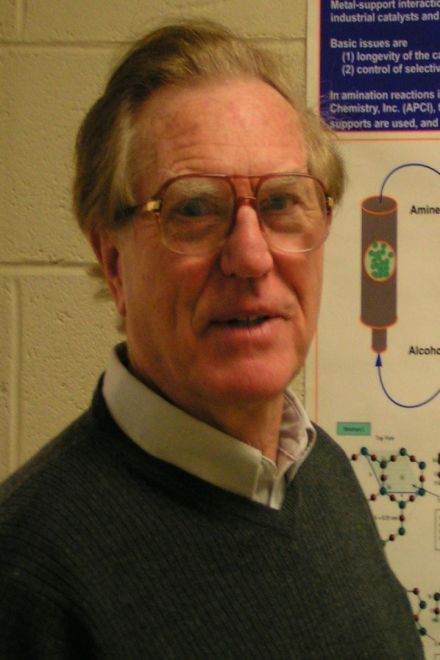 Kamil Klier合作论文数Department of Chemistry, College of Arts and Sciences, Lehigh University4Yishay Feldman合作论文数4Eugene S. Stevens合作论文数4
 Neetu Talreja合作论文数Center for Environmental Science and Engineering, Indian Institute of Technology Kanpur4Nancy Weber合作论文数4glenn t pearce合作论文数3wayne a bowman合作论文数3Harriet Lindsay合作论文数3Daniel Clemans合作论文数3Shihua Song合作论文数3Daniel Chojnowski合作论文数3Yunnan Gao合作论文数3




