The SMC condensin complex is essential for normal mitotic chromosome structure in eukaryotes. Here, we analyze how ATP binding and hydrolysis, SMC hinge stability, and condensin subunit phosphorylation influence condensin chromatin association in budding yeast. We show that mutations predicted to destabilize ATP binding and head-to-head engagement impair condensin chromatin association as assayed by ChIP. In contrast, mutations that inactivate the complex by destabilizing the hinge domain interaction, enhance chromatin association at known condensin loading sites. We find that condensin phosphorylation is enriched in enzymatic states associated with elevated chromatin binding. Moreover, phosphorylation and Aurora/Ipl1 kinase activity—but not Cdc5—are required to maintain condensin association with mitotic chromatin in early metaphase. ### Competing Interest Statement The authors have declared no competing interest. Biotechnology and Biological Sciences Research Council United Kingdom, (BBSRC UK), Grant ref BB/J018554/1
The fork protection complex (FPC), composed ofMrc1, Tof1, and Csm3, supports rapid and stable DNA replication. Here, we show that FPC activity also introduces DNA damage by increasing DNA topological stress during replication. Mrc1 action increases DNA topological stress during plasmid replication, while Mrc1 or Tof1 activity causes replication stress and DNA damage within topologically constrained regions. We show that the recruitment of Top1 to the fork by Tof1 suppresses the DNA damage generated in these loci. While FPC activity introduces some DNA damage due to increased topological stress, the FPC is also necessary to prevent DNA damage in long replicons across the genome, indicating that the FPC is required for complete and faithful genome duplication. We conclude that FPC regulation must balance ensuring full genome duplication through rapid replication with minimizing the consequential DNA topological stress-induced DNA damage caused by rapid replication through constrained regions.
Newly copied sister chromatids are tethered together by the cohesin complex, but how sister chromatid cohesion coordinates with DNA replication is poorly understood. Prevailing models suggest that cohesin complexes, bound to DNA before replication, remain behind the advancing replication fork to keep sister chromatids together. By visualizing single replication forks colliding with preloaded cohesin complexes, we find that the replisome instead pushes cohesin to where a converging replisome is met. Whereas the converging replisomes are removed during DNA replication termination, cohesin remains on nascent DNA and provides cohesion. Additionally, we show that CMG (CDC45–MCM2-7–GINS) helicase disassembly during replication termination is vital for proper cohesion in budding yeast. Together, our results support a model wherein sister chromatid cohesion is established during DNA replication termination.
The DNA topological challenges generated by cellular manipulation of extremely long DNA fibers remain poorly understood. In this issue of Molecular Cell, Hildebrand et al.1 describe how mitotic chromosomes are self entangled and that disentanglement requires TOP2 activity in late mitosis.
SUMMARY Tof1/Timeless protects eukaryotic cells from DNA replication stress as part of the Fork Protection Complex (FPC). Tof1 supports rapid DNA replication, fork pausing, and resolution of DNA topological stress. Here, we show that disruption of FPC function through loss of either Tof1 or Mrc1 results in DNA damage in long replicons. Despite increasing DNA damage in long replicons, loss of either Tof1 or Mrc1 concurrently reduces DNA damage in regions prone to damage caused by DNA topological stress, indicating that the rapid replication promoted by the FPC fosters completing DNA replication at the cost of increased vulnerability to DNA topological stress. Supporting this we find that a tof1 mutation that selectively inhibits DNA topological stress resolution increases DNA damage in contexts prone to DNA topological stress. Our data indicates that the FPC balances rapid replication with recruitment of topoisomerase I to resolve the topological stress generated by increased DNA unwinding.
The Smc5/6 complex plays an essential role in the resolution of recombination intermediates formed during mitosis or meiosis, or as a result of the cellular response to replication stress. It also functions as a restriction factor preventing viral replication. Here, we report the cryogenic EM (cryo-EM) structure of the six-subunit budding yeast Smc5/6 holo-complex, reconstituted from recombinant proteins expressed in insect cells - providing both an architectural overview of the entire complex and an understanding of how the Nse1/3/4 subcomplex binds to the hetero-dimeric SMC protein core. In addition, we demonstrate that a region within the head domain of Smc5, equivalent to the 'W-loop' of Smc4 or 'F-loop' of Smc1, mediates an important interaction with Nse1. Notably, mutations that alter the surface-charge profile of the region of Nse1 which accepts the Smc5-loop, lead to a slow-growth phenotype and a global reduction in the chromatin-associated fraction of the Smc5/6 complex, as judged by single molecule localisation microscopy experiments in live yeast. Moreover, when taken together, our data indicates functional equivalence between the structurally unrelated KITE and HAWK accessory subunits associated with SMC complexes.
An amendment to this paper has been published and can be accessed via the original article.
The highly conserved Tof1/Timeless proteins min-imise replication stress and promote normal DNA replication. They are required to mediate the DNA replication checkpoint (DRC), the stable pausing of forks at protein fork blocks, the coupling of DNA helicase and polymerase functions during replication stress (RS) and the preferential resolution of DNA topological stress ahead of the fork. Here we demonstrate that the roles of the Saccharomyces cerevisiae Timeless protein Tof1 in DRC signalling and resolution of DNA topological stress require distinct N and C terminal regions of the protein, whereas the other functions of Tof 1 are closely linked to the stable interaction between Tof1 and its constitutive binding partner Csm3/Tipin. By separating the role of Tof1 in DRC from fork stabilisation and coupling, we show that Tof1 has distinct activities in checkpoint activation and replisome stability to ensure the viable completion of DNA replication following replication stress.
The three-dimensional architecture of the genome governs its maintenance, expression and transmission. The cohesin protein complex organizes the genome by topologically linking distant loci, and is highly enriched in specialized chromosomal domains surrounding centromeres, called pericentromeres 1 – 6 . Here we report the three-dimensional structure of pericentromeres in budding yeast ( Saccharomyces cerevisiae ) and establish the relationship between genome organization and function. We find that convergent genes mark pericentromere borders and, together with core centromeres, define their structure and function by positioning cohesin. Centromeres load cohesin, and convergent genes at pericentromere borders trap it. Each side of the pericentromere is organized into a looped conformation, with border convergent genes at the base. Microtubule attachment extends a single pericentromere loop, size-limited by convergent genes at its borders. Reorienting genes at borders into a tandem configuration repositions cohesin, enlarges the pericentromere and impairs chromosome biorientation during mitosis. Thus, the linear arrangement of transcriptional units together with targeted cohesin loading shapes pericentromeres into a structure that is competent for chromosome segregation. Our results reveal the architecture of the chromosomal region within which kinetochores are embedded, as well as the restructuring caused by microtubule attachment. Furthermore, we establish a direct, causal relationship between the three-dimensional genome organization of a specific chromosomal domain and cellular function.
DNA topological stress inhibits DNA replication fork (RF) progression and contributes to DNA replication stress. In Saccharomyces cerevisiae, we demonstrate that centromeric DNA and the rDNA array are especially vulnerable to DNA topological stress during replication. The activity of the SMC complexes cohesin and condensin are linked to both the generation and repair of DNA topological-stress-linked damage in these regions. At cohesin-enriched centromeres, cohesin activity causes the accumulation of DNA damage, RF rotation, and pre-catenation, confirming that cohesin-dependent DNA topological stress impacts on normal replication progression. In contrast, at the rDNA, cohesin and condensin activity inhibit the repair of damage caused by DNA topological stress. We propose that, as well as generally acting to ensure faithful genetic inheritance, SMCs can disrupt genome stability by trapping DNA topological stress.
The chromosome organization activities of SMC complexes are crucial for correct gene expression and genetic inheritance in cells. Hi-C assays have revealed previously unsuspected levels of chromosome structure, with different types of chromosome structure facilitating function at different stages of the cell cycle. Elucidating how SMC complexes regulate these distinct types of organization is currently a key question in molecular biology. The range of genetic tools and the small genome size of the budding yeast Saccharomyces cerevisiae make it an ideal tool for studying how SMC complexes control chromosome structure in eukaryotic cells. A crucial advantage of S. cerevisiae over other systems is that large populations of cells can be easily arrested at distinct stages of the cell cycle and SMC gene function specifically ablated in the synchronized cells. Here we describe methods to prepare synchronously cell cycle-arrested populations of genetically modified S. cerevisiae cells for Hi-C analysis.
The convergence of two DNA replication forks creates unique problems during DNA replication termination. In E. coli and SV40, the release of torsional strain by type II topoisomerases is critical for converging replisomes to complete DNA synthesis, but the pathways that mediate fork convergence in eukaryotes are unknown. We studied the convergence of reconstituted yeast replication forks that include all core replisome components and both type I and type II topoisomerases. We found that most converging forks stall at a very late stage, indicating a role for additional factors. We showed that the Pif1 and Rrm3 DNA helicases promote efficient fork convergence and completion of DNA synthesis, even in the absence of type II topoisomerase. Furthermore, Rrm3 and Pif1 are also important for termination of plasmid DNA replication in vivo. These findings identify a eukaryotic pathway for DNA replication termination that is distinct from previously characterized prokaryotic mechanisms.
A universal feature of DNA damage and replication stress in eukaryotes is the activation of a checkpoint-kinase response. In S-phase, the checkpoint inhibits replication initiation, yet the function of this global block to origin firing remains unknown. To establish the physiological roles of this arm of the checkpoint, we analyzed separation of function mutants in the budding yeast Saccharomyces cerevisiae that allow global origin firing upon replication stress, despite an otherwise normal checkpoint response. Using genetic screens, we show that lack of the checkpoint-block to origin firing results in a dependence on pathways required for the resolution of topological problems. Failure to inhibit replication initiation indeed causes increased DNA catenation, resulting in DNA damage and chromosome loss. We further show that such topological stress is not only a consequence of a failed checkpoint response but also occurs in an unperturbed S-phase when too many origins fire simultaneously. Together we reveal that the role of limiting the number of replication initiation events is to prevent DNA topological problems, which may be relevant for the treatment of cancer with both topoisomerase and checkpoint inhibitors.
During meiotic prophase, chromosomes organise into a series of chromatin loops emanating from a proteinaceous axis, but the mechanisms of assembly remain unclear. Here we use Saccharomyces cerevisiae to explore how this elaborate three-dimensional chromosome organisation is linked to genomic sequence. As cells enter meiosis, we observe that strong cohesin-dependent grid-like Hi-C interaction patterns emerge, reminiscent of mammalian interphase organisation, but with distinct regulation. Meiotic patterns agree with simulations of loop extrusion with growth limited by barriers, in which a heterogeneous population of expanding loops develop along the chromosome. Importantly, CTCF, the factor that imposes similar features in mammalian interphase, is absent in S. cerevisiae , suggesting alternative mechanisms of barrier formation. While grid-like interactions emerge independently of meiotic chromosome synapsis, synapsis itself generates additional compaction that matures differentially according to telomere proximity and chromosome size. Collectively, our results elucidate fundamental principles of chromosome assembly and demonstrate the essential role of cohesin within this evolutionarily conserved process.
DNA topological stress inhibits DNA replication fork (RF) progression and contributes to DNA replication stress. Using Saccharomyces cerevisiae as a model, we identify centromeric DNA and the rDNA array as genomic regions that are especially vulnerable to the accumulation of DNA topological stress. We find that the DNA topological stress linked damage in these regions is dependent on the SMC (structural maintenance of chromosomes) complexes cohesin and condensin. Furthermore, we find that on transcriptionally active plasmids, SMC activity results in RF rotation, confirming that SMC dependent DNA topological stress impacts on normal replication progression. We propose that topological stress cannot passively disperse in SMC-rich genomic contexts due to SMC trapping of topological stress, such that SMC and topoisomerase action must be closely coordinated to avoid chromosome instability.
The extreme length of chromosomal DNA requires organizing mechanisms to both promote functional genetic interactions and ensure faithful chromosome segregation when cells divide. Microscopy and genome-wide contact frequency analyses indicate that intra-chromosomal looping of DNA is a primary pathway of chromosomal organization during all stages of the cell cycle. DNA loop extrusion has emerged as a unifying model for how chromosome loops are formed in cis in different genomic contexts and cell cycle stages. The highly conserved family of SMC complexes have been found to be required for DNA cis-looping and have been suggested to be the enzymatic core of loop extruding machines. Here, the current body of evidence available for the in vivo and in vitro action of SMC complexes is discussed and compared to the predictions made by the loop extrusion model. How SMC complexes may differentially act on chromatin to generate DNA loops and how they could work to generate the dynamic and functionally appropriate organization of DNA in cells is explored.
During meiotic prophase, chromosomes organise into a series of chromatin loops emanating from a proteinaceous axis, but the mechanisms of assembly remain unclear. Here we elucidate how this elaborate three-dimensional chromosome organisation is underpinned by genomic sequence in Saccharomyces cerevisiae . Entering meiosis, strong cohesin-dependent grid-like Hi-C interaction patterns emerge, reminiscent of mammalian interphase organisation, but with distinct regulation. Meiotic patterns agree with simulations of loop extrusion limited by barriers, yet are patterned by convergent transcription rather than binding of the mammalian interphase factor, CTCF, which is absent in S. cerevisiae —thereby both challenging and extending current paradigms of local chromosome organisation. While grid-like interactions emerge independently of meiotic chromosome synapsis, synapsis itself generates additional compaction that matures differentially according to telomere proximity and chromosome size. Collectively, our results elucidate fundamental principles of chromosome assembly and demonstrate the essential role of cohesin within this evolutionarily conserved process.
Structural maintenance of chromosomes (SMC) protein complexes are key determinants of chromosome conformation. Using Hi-C and polymer modelling, we study how cohesin and condensin, two deeply conserved SMC complexes, organize chromosomes in the budding yeast Saccharomyces cerevisiae. The canonical role of cohesin is to co-align sister chromatids, while condensin generally compacts mitotic chromosomes. We find strikingly different roles for the two complexes in budding yeast mitosis. First, cohesin is responsible for compacting mitotic chromosome arms, independently of sister chromatid cohesion. Polymer simulations demonstrate that this role can be fully accounted for through cis-looping of chromatin. Second, condensin is generally dispensable for compaction along chromosome arms. Instead, it plays a targeted role compacting the rDNA proximal regions and promoting resolution of peri-centromeric regions. Our results argue that the conserved mechanism of SMC complexes is to form chromatin loops and that distinct SMC-dependent looping activities are selectively deployed to appropriately compact chromosomes.
The faithful replication of sister chromatids is essential for genomic integrity in every cell division. The replication machinery must overcome numerous difficulties in every round of replication, including DNA topological stress. Topological stress arises due to the double-stranded helical nature of DNA. When the strands are pulled apart for replication to occur, the intertwining of the double helix must also be resolved or topological stress will arise. This intrinsic problem is exacerbated by specific chromosomal contexts encountered during DNA replication. The convergence of two replicons during termination, the presence of stable protein-DNA complexes and active transcription can all lead to topological stresses being imposed upon DNA replication. Here we describe how replication forks respond to topological stress by replication fork rotation and fork reversal. We also discuss the genomic contexts where topological stress is likely to occur in eukaryotes, focusing on the contribution of transcription. Finally, we describe how topological stress, and the ways forks respond to it, may contribute to genomic instability in cells.
The absolute necessity to resolve every intertwine between the two strands of the DNA double helix provides a massive challenge to the cellular processes that duplicate and segregate chromosomes. Although the overwhelming majority of intertwines between the parental DNA strands are resolved during DNA replication, there are numerous chromosomal contexts where some intertwining is maintained into mitosis. These mitotic sister chromatid intertwines (SCIs) can be found as; short regions of unreplicated DNA, fully replicated and intertwined sister chromatids—commonly referred to as DNA catenation—and as sister chromatid linkages generated by homologous recombination-associated processes. Several overlapping mechanisms, including intra-chromosomal compaction, topoisomerase action and Holliday junction resolvases, ensure that all SCIs are removed before they can prevent normal chromosome segregation. Here, I discuss why some DNA intertwines persist into mitosis and review our current knowledge of the SCI resolution mechanisms that are employed in both prokaryotes and eukaryotes, including how deregulating SCI formation during DNA replication or disrupting the resolution processes may contribute to aneuploidy in cancer.
 Stephanie Schalbetter合作论文数8
 Andrea Keszthelyi合作论文数6
 Nicola Minchell合作论文数5
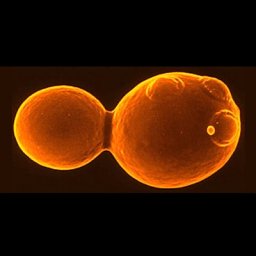 Matthew J. Neale合作论文数MRC Genome Damage and Stability Centre, University of Sussex4
 Antony Oliver合作论文数3
 Luis Aragon Alcaide合作论文数Institute of Clinical Sciences, Faculty of Medicine, Imperial College London3
 Geoffrey Fudenberg合作论文数Department of Quantitative and Computational Biology, University of Southern California3
 Katherine S. Pollard合作论文数2
 Alex Whale合作论文数2
 Sahar Mansoubi合作论文数School of Life Sciences, University of Sussex2
 John Diffley合作论文数The Francis Crick Institute2David A. Kelly合作论文数1Mark C. Johnson合作论文数1Isabella Campbell Harry合作论文数1
 Tom Deegan合作论文数1Stephen T Hallett合作论文数1Catrina Miles合作论文数1Jessica A Downs合作论文数1Theresa Zacheja合作论文数1Karim Labib合作论文数1Pascale Schellenberger合作论文数1Theresa U Zeisner合作论文数1María Ángeles Ortiz-Bazán合作论文数1Madhusudhan Srinivasan合作论文数Department of Biochemistry, University of Oxford, South Parks Road, Oxford OX1 3QU, UK1Flora Paldi合作论文数Wellcome Trust Centre for Cell Biology, University of Edinburgh, King’s Buildings, Max Born Crescent, Edinburgh EH9 3BF, UK1Bonnie Alver合作论文数1George Cameron合作论文数1Sherry Xie合作论文数1Nora B Cronin合作论文数1Mona Hajikazemi合作论文数Clinic of Internal Medicine III, Oncology, Hematology, Rheumatology and Clinical Immunology, University Hospital Bonn, Bonn, Germany.1Miao Yu合作论文数1Lihong Zhou合作论文数1Andreas Hofmann合作论文数Griffith Univ, Griffith Inst Drug Discovery, Nathan, Qld 4111, Australia1Dominika T. Gruszka合作论文数1Joseph T. P. Yeeles合作论文数1
 Kerr Alastair Rw合作论文数Wellcome Trust Centre for Cell Biology;University of Edinburgh;Edinburgh;Wellcome Trust Centre for Cell Biology, University of Edinburgh1
 Daniel Jordan Robertson合作论文数Department of Mechanical Engineering, New York University-Abu Dhabi1
 Philip Zegerman合作论文数Department of Biochemistry, University of Cambridge/The Gurdon Institute, University of Cambridge1
 Leonid A. Mirny合作论文数Department of Physics, Massachusetts Institute of Technology1M. E. Monturus De Carandini合作论文数1N. Sen合作论文数Imperial College London, Hammersmith Hospital1Etheridge Thomas J合作论文数Genome Damage and Stability Centre, University of Sussex1
 Esther Cabanas Morafraile合作论文数1
 George Allen合作论文数Dept Geol Sci, Univ North Carolina Chapel Hill1
 Virginia Lopez Martinez合作论文数1
 Pandey Satyaprakash合作论文数Institute of Genomics and Integrative Biology, CSIR1Hänni Christine合作论文数1Belton Jon-Matthew合作论文数1




