Analog single-event transient (SET) results are analyzed for two different applications within one system architecture. Application-specific analyses are presented on the MAX4595 commercial device using single-event effects criticality and goal structuring notation (GSN).
Based on the need to develop and adopt timely and up-to-date guidance to ensure that natural space radiation environment threats do not compromise mission success, the NASA Engineering and Safety Center (NESC) was solicited to develop and publish guidance for deriving radiation hardness assurance (RHA) requirements and for evaluating avionics hardware elements with respect to total ionizing dose, total non-ionizing dose, and single event effects. This document contains the outcome of the NESC assessment.
Single-event upsets are observed in a 72-layer 3-D NAND flash memory operated in a single-level cell mode after low-energy proton (500 keV-1.2 MeV) and heavy-ion irradiation. The layer-by-layer error count is analyzed to visualize the stopping of low-energy protons within the memory stack, and Monte Carlo simulations are correlated with the experimental data. Direct ionization by low-energy protons is identified by 3-D data analysis and the energy dependence of device-sensitive cross section. Heavy-ion data is also presented for comparison.
We are presenting single-event effect testing results on a 22-nm fully depleted silicon-on-insulator test chip from GlobalFoundries. The 128-Mb static random access memory (SRAMs) were irradiated with heavy ions, and the results are compared to previous partially depleted technology generations (32 and 45 nm). The per-bit cross section is approximately an order of magnitude lower than the previous generations with a higher onset linear energy transfer (LET). No dependence on roll angle or input pattern was found. Tilt angle data follow the cosine law. Increasing the SRAM array supply voltage from the minimum tested 0.73 V to the maximum 1.08 V decreases SEE sensitivity by as much as 8%. Decreasing the p-well voltage from the nominal 0 V to the maximum -2 V increases the SEE cross section by as much as 2x. The n-well voltage has little effect on the SEE sensitivity due to the specifics of the transistor layout in the SRAM. Changing both the n- and p-well voltages simultaneously results in identical results as when only the p-well voltage was changed.
Total ionizing dose, displacement damage dose, and single event effects testing were performed to characterize and determine the suitability of candidate electronics for NASA space utilization. Devices tested include optoelectronics, digital, analog, and bipolar devices.
This work describes one step towards automating the development of assurance cases for systems in radiation environments. The Systems Engineering Assurance and Modeling Platform (SEAM) developed by Vanderbilt and NASA is extended to automatically cross-reference faults, fault paths, and mitigation functions in the system description with assurance arguments in the Goal Structuring Notation (GSN) format. This automatic coverage check considerably enhances the capability of the platform to facilitate systematic radiation hardness evaluations of complex spacecraft systems.
This is an update to the ongoing series of presentations tracking the state of domestic proton facility access for the purpose of single event effects (SEE) testing of microelectronics devices and systems. This includes proton research facilities and oncology therapy centers.
This presentation gives an overview pulsed laser testing methods and practical examples for radiation hardness assurance in space system electronics.
ISO-26262, the road vehicle functional safety standard, underwent a major overhaul that was released in December 2018. Radiation effects, and single-event effect (SEE) hazards in particular, play an important role in autonomous vehicle safety. This connection will only increase as the level of driving automation goes from hands off, to eyes off, to mind off. This translates to increased coupling with space climate and weather in addition to other traditional terrestrial radiation sources like thorium and uranium contamination in process and packaging materials. We will focus on autonomous vehicle radiation effects and present both benefits and challenges to the space weather and radiation engineering communities.
Digital micromirror devices (DMDs) are well suited for highly multiplexed spectroscopy applications. In astronomy, DMDs can be used as a programmable slit mask in a multi-object spectrometer (MOS). There is strong interest in utilizing DMDs for space-based MOS instruments. Over the past several years, we have carried out a program to evaluate the viability of XGA DMDs for operation in space, including their ability to survive the launch environment. The DMDs we tested did not show any failures or adverse effects after mechanical vibration and shock testing. Using heavy ion irradiation, we found that DMDs are susceptible to single event upsets (SEUs), though all SEUs are non-destructive and can be cleared by loading a new pattern. The estimated SEU rate for ”worst week” conditions in interplanetary space was 5.6 upset micromirrors (out of 786,432) per 24 hours. Using high energy protons, we found that DMDs started to show failures at a total ionizing dose of 30 krad(Si) (which is well above the estimated total-dose for a 4 year mission). In this work, we present the total ionizing dose testing performed using gamma rays from a Co-60 source at NASA GSFC. We tested 14 XGA devices and found that individual micromirrors began failing after the devices accumulated a total dose of 16-19 krad(Si). Devices recovered after annealing at room temperature in as little as 24 hours. Devices subjected to the most severe radiation testing conditions were completely recovered after 18 weeks of annealing at room temperature. We also tested unbiased (powered off) devices, which showed no effects up to a dose of 76 krad(Si) (which is the highest TID we achieved during our testing). This work concludes our efforts to space-qualify XGA DMDs, and shows that these devices are well-suited for deployment in space, except in the harshest radiation environments.
During the past decade, government agencies, private companies and academic institutions, have launched hundreds of small satellites into space, with dramatically expanded dependence on advanced commercial-off-the-shelf (COTS) technologies and systems required for mission success. While the radiation effects vulnerabilities of components within small satellites are the same as those of their larger, traditional relatives, revised approaches are needed for risk management because of differences in technical requirements and programmatic resources. While moving to COTS components and systems may reduce direct costs and procurement lead times, it undermines many cost-reduction strategies used for conventional radiation hardness assurance (RHA). Limited resources are accompanied by a lack of radiation testing and analysis, which can pose significant risks. Small satellites have benefited from short mission durations in low Earth orbits with respect to their radiation response, but as mission objectives grow and become reliant on advanced technologies operating for longer and in harsher environments, requirements need to reflect the changing scope without hindering developers that provide new capabilities. In this course we suggest RHA strategies that engineers and scientists can apply to a wide range of aerospace systems, including constellations, with a focus on how to manage aggressive system scaling for smaller platforms.
The goal of this study was to perform an independent investigation of single event destructive and transient susceptibility of the Microsemi RTG4 device. The devices under test were the Microsemi RTG4 field programmable gate array (FPGA) Rev C. The devices under test will be referenced as the DUT or RTG4 Rev C throughout this document. The DUT was configured to have various test structures that are geared to measure specific potential susceptibilities of the device. DesignDevice susceptibility was determined by monitoring the DUT for Single Event Transient (SET) and Single Event Upset (SEU) induced faults by exposing the DUT to a heavy ion beam. Potential Single Event Latch-up (SEL) was checked throughout heavy-ion testing by monitoring device current.
We will present the first ever single-event effects testing results on a 22 nm fully-depleted silicon-on-insulator test chip. The 128 MB SRAMs were irradiated with heavy ions and the results are compared to previous technology generations.
This presentation gives an overview of the natural space radiation environment, the ground-level radiation environment, and single-event effects (SEEs). We then discuss the impact of SEEs for road vehicle functional safety and issues with commercial electronic components in these high-reliability systems. Finally, we introduce some forward-looking concepts that the radiation effects and automotive electronics communities will have to address as aggressive technology insertion continues.
We present the results of single event effects (SEE) testing and analysis investigating the effects of radiation on electronics. This paper is a summary of test results.
This presentation will cover NASA Electrical, Electronic, and Electromechanical (EEE) Parts Landscape and 2018 Activities.
This presentation covers the basis and challenges for radiation effects in electronic systems. The three main types of radiation effects in electronics are: 1) total ionizing dose (TID), 2) total non-ionizing dose (TNID) / displacement damage dose (DDD), and 3) single-event effect (SEE). Some content on relevant examples of effects, current concerns, and possible environmental model-driven solutions are also included.
A confidence level based approach to total dose radiation hardness assurance is presented for spacecraft electronics. It is applicable to both ionizing and displacement damage dose. Results are compared to the traditional approach that uses radiation design margin and advantages of the new approach are discussed.
Variability of the space radiation environment is investigated with regard to parts categorization for total dose hardness assurance methods. It is shown that it can have a significant impact. A modified approach is developed that uses current environment models more consistently and replaces the radiation design margin concept with one of failure probability during a mission.
The astronomical community continues to be interested in suitable programmable slit masks for use in multi-object spectrometers (MOSs) on space missions. There have been ground-based MOS utilizing digital micromirror devices (DMDs) and they have proven to be highly accurate and reliable instruments. This paper summarizes the results of a continuing study to investigate the performance of DMDs under conditions associated with space deployment. This includes the response of DMDs to radiation, to the vibration and mechanical shock loads associated with launch, and the operability of DMD under cryogenic temperatures. The optical contrast ratio and a study of the long-term reflectance of a bare device have also been investigated. The results of the radiation testing demonstrate that DMDs in orbit would experience negligible heavy-ion induced single event upset (SEU) rate burden, we predict SEU rate of 5.6 micromirrors per 24 hours. Vibration and mechanical shock testing was performed according to the NASA General Environmental Verification Standard (GEVS), no mirrors failed in the devices tested. The results of low temperature testing suggest that DMDs are not affected by the thermal load and operate smoothly at temperatures at least as low as 78 K. The reflectivity of a bare DMD did not measurably change even after being exposed to ambient conditions over a period of 13 months. The measured contrast ratio (on state vs off state of the DMD micromirrors) was greater than 6000/:1 when illuminated with an f/4 optical beam. Overall, DMDs are extremely robust and promise to provide a reliable alternative to micro shutter arrays (MSA) to be used in space as remotely programmable slit masks for MOS design.
 Kenneth Label合作论文数53
 Robert Reed合作论文数Department of Electrical and Computer Engineering, Vanderbilt University50
 Melanie D. Berg合作论文数34
 Robert A. Weller合作论文数Woods Hole Oceanographic Institution27
 John D. Cressler合作论文数School of Electrical and Computer Engineering, College of Engineering, Georgia Institute of Technology22
 Michael Joseph Campola合作论文数20P. E. Dodd合作论文数Sandia National Laboratories18
 Marcus H. Mendenhall合作论文数Vanderbilt University18Hak Kim合作论文数17
 Kenneth P Rodbell合作论文数Quantum Coherence Materials Group, IBM Thomas J. Watson Research Center;Thin Film Metallurgy and Soft Error Rate Research Department, IBM Thomas J. Watson Research Center16
 Akil Sutton合作论文数School of Electrical and Computer Engineering, Georgia Institute of Technology15
 Brian Sierawski合作论文数Institute for Space and Defense Electronics, Vanderbilt University;School of Engineering, Vanderbilt University14
 Marty R. Shaneyfelt合作论文数Sandia National Laboratories14Mark R. Friendlich合作论文数14Nathaniel A. Dodds合作论文数13
 Gy Vizkelethy合作论文数13Michael A. Xapsos合作论文数13Anthony M. Phan合作论文数13
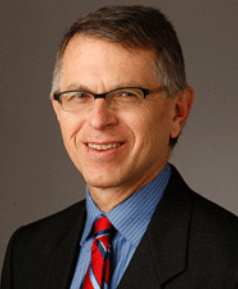 Ronald D. Schrimpf合作论文数Electrical and Computer Engineering, School of Engineering, Vanderbilt University12
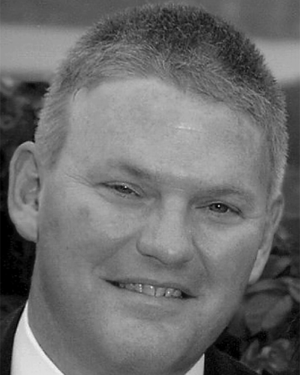 Michael L. Alles合作论文数Institute for Space and Defense Electronics (ISDE),, Vanderbilt University11
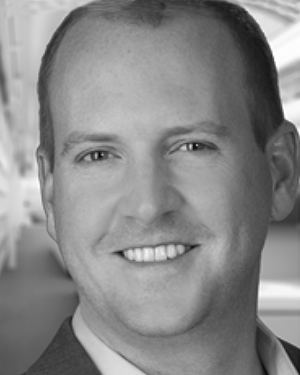 Ryan M. Diestelhorst合作论文数11Edward P Wilcox合作论文数10
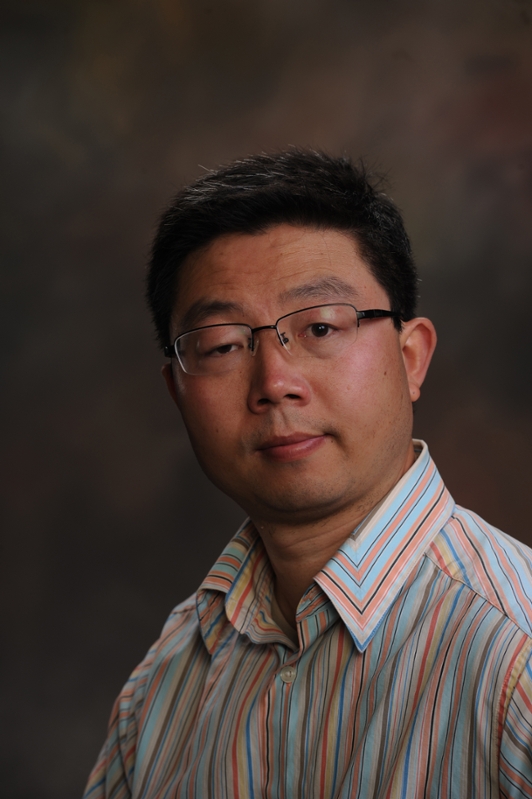 Guofu Niu合作论文数Department of Electrical and Computer Engineering, Samuel Ginn College of Engineering, Auburn University10
 Alan D. Tipton合作论文数10Kevin M. Warren合作论文数Institute for Space and Defense Electronics, Vanderbilt University10Christina M. Seidleck合作论文数10David F. Heidel合作论文数10
 Dale P. McMorrow合作论文数Naval Research Laboratory9
 Lloyd Massengill合作论文数Department of Electrical and Computer Engineering, Vanderbilt University9Schwank, J.R.合作论文数8Jim Schwank合作论文数8Paul W. Marshall合作论文数8
 Megan C. Casey合作论文数8C. M. Seidleck合作论文数8
 Jeffrey D. Black合作论文数Institute for Space and Defense Electronics (ISDE),, Vanderbilt University8Martin A. Carts合作论文数8Raymond L. Ladbury合作论文数7Scot E. Swanson合作论文数7
 Stan Phillips合作论文数7Ray L. Ladbury合作论文数6Veronique Ferlet-Cavrois合作论文数European Space Agency6Gustavo Espinel合作论文数6Marino Martinez合作论文数5alvin j boutte合作论文数5
 Ntabakirabose Gaspard合作论文数5Dakai Chen (陈大凯)合作论文数5K. Label合作论文数5




