Simulations of the punch-through in hadronic showers will be presented. This includes a detailed analysis of the beam fragmentation in hadron-nucleus interactions. The results shown have been obtained with the GHEISHA and GEANT Monte Carlo programs. Comparisons with experimental data in the range of 2–300 GeV beam energy will be performed. The use of a fast Monte Carlo version, based on simplifications of the general GHEISHA shower simulation program, will be described and the limits of applicability will be investigated. Alternative solutions of punch-through calculations by use of the Boltzmann transport equation will be demonstrated. Muon identification in past and future collider experiments is reviewed and the performance will be compared with predictions of Monte Carlo calculations.
The mechanical design and the readout electronics of a cylindrical drift chamber for the H1 experiment at the HERA electron-proton collider is described. The chamber meets the special requirements of the ep-physics (thin endwalls, momentum resolution of σp⊥p⊥2 ∼ 3×10 −3GeV−1 and double track resolution of ≈ 2.5 mm) and has a high bunch repetition rate (96 ns).
A new drift chamber concept with a special charge-sampling geometry, pulse shaping electronics and a 100 MHz flash ADC readout was for the first time operated in a colliding e+ e− beam environment. The detector formed part of the MARK J experiment at PETRA (DESY) during the last year before its final shutdown in November 1986. Operated with a CO2/i-C4H10 gas mixture at 1.9 bar, an intrinsic resolution of 40 μm for Bhabha events has been achieved.
A high-resolution drift chamber based on the time expansion principle has been built as a vertex detector for the Mark J experiment at DESY. The chamber design and the associated control and readout system are described. Results on chamber performance obtained from test beam measurements and first results from running at PETRA are reported.
The Mark J Collaboration at the DESY e+e− collider PETRA presents results on the electroweak reactions e+e−→μ+μ−τ+τ−,μ+μ−γ, and e+e−μ+μ−. The c.m. energy range is 12 to 46.78 GeV. In the μ+μ− and τ+τ− channels the total cross sections and the forward-backward asymmetries are reported and compared with other experiments. The results are in excellent agreement with the standard model. The weak-neutral-current vector and axial-vector coupling constants are determined. The values for muons and τ's are compatible with universality and with the predictions of the standard model. In the μ+μ−γ channel, all measured distributions, including the forward-backward muon asymmetry, are in excellent agreement with the electroweak theory. Our data on the two-photon process, e+e−μ+μ−, agrees with QED to order α4 over the entire energy range and the Q2 range from 0.7 to 166 GeV2.Received 29 April 1988DOI:https://doi.org/10.1103/PhysRevD.38.2665©1988 American Physical Society
The design and results from a beam test for a small vertex detector, now installed in the DESY MARK J experiment, are presented. The concept of this drift chamber is based on the time expansion principle with readout planes inclined to solve the left-right ambiguity. A spatial resolution of 35 μm, varying weakly as a function of drift length and azimuthal angle, has been achieved.
A study of τ-lepton production in the CMS energy region from 14 to 46.8 GeV at PETRA is reported. The cross section, the decay branching ratio into μνν, and the electroweak parameters are determined with a total integrated luminosity of 115 pb−1.
We use the reaction e+e−→μ+μ−, in the Mark J detector at the DESY high-energy e+e− collider PETRA, to test the standard electroweak theory and find good agreement. We also set limits on the parameters of several extended gauge theories.Received 30 May 1985DOI:https://doi.org/10.1103/PhysRevLett.55.665©1985 American Physical Society
 Mm Ilyas合作论文数6D. Fong合作论文数6Sm Ting合作论文数6
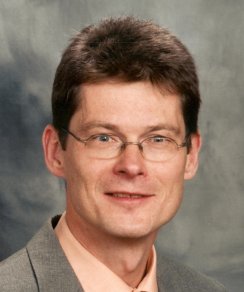 Martin Karl Wilhelm Pohl合作论文数Deutsches Elektronen-Synchrotron DESY;Institut für Physik und Astronomie, University of Potsdam6
 Xiaoshan Wu (吴小山)合作论文数School of Physics, Nanjing University;National Laboratory of Solid State Microstructures, Nanjing University6Robert Leiste合作论文数6Q. Z. Li合作论文数6R.R. Rau合作论文数6M.F. Wyne合作论文数5M. Dhina合作论文数5M. Nusbaumer合作论文数5Mingshui Chen (陈明水)合作论文数5S. Ansari合作论文数5M. Rohde合作论文数5h g wu合作论文数4K HANGARTER合作论文数4J. Fehlmann合作论文数4K. Deiters合作论文数4D. Linnhoefer合作论文数4H. Anderhub合作论文数4
 Maura Tonutti合作论文数4Ma Marquina合作论文数4b x yang合作论文数4J Burger合作论文数4W.-D. Nowak合作论文数4S. Rodriguez合作论文数4Maurice H. Bourquin合作论文数4
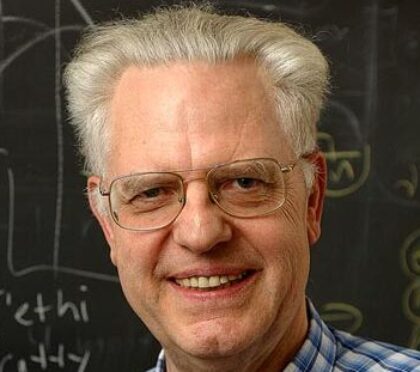 Ulrich Becker合作论文数Laboratory for Nuclear Science, Massachusetts Institute of Technology;Department of Physics, Massachusetts Institute of Technology4V. Commichau合作论文数4W. Krenz合作论文数4C. Mana合作论文数4Hans Hofer合作论文数4R. Becker-Szendy合作论文数4
 Gert Viertel合作论文数4A. Boehm合作论文数4Luis Garrido合作论文数Departament de Tecnologia
Passeig Circumval·lacio 84H. Nierobisch合作论文数4E. Deffur合作论文数4H Jurgen Schreiber合作论文数4
Gert Viertel合作论文数4A. Boehm合作论文数4Luis Garrido合作论文数Departament de Tecnologia
Passeig Circumval·lacio 84H. Nierobisch合作论文数4E. Deffur合作论文数4H Jurgen Schreiber合作论文数4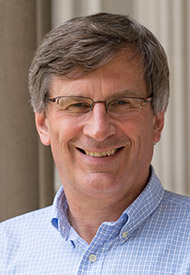 Boleslaw Wyslouch合作论文数MIT Department of Physics4R. Hausammann合作论文数4Ren Danyang合作论文数4G. Herten合作论文数3X. Lue合作论文数3U. Schroeder合作论文数3U. Herten合作论文数3D. Hueser合作论文数3Hs Fesefeldt合作论文数3Jd Burger合作论文数3




