Recent theoretical investigations treat quantum computations as functions, quantum processes which operate on other quantum processes, rather than circuits. Much attention has been given to the $N$-switch function which takes $N$ black-box quantum operators as input, coherently permutes their ordering, and applies the result to a target quantum state. This is something which cannot be equivalently done using a quantum circuit. Here, we propose an all-optical system design which implements coherent operator permutation for an arbitrary number of input operators.
We report on high-visibility quantum interference of independently generated telecom O-band (1310 nm) single photons using standard single-mode fibers. The experimental data are shown to agree well with the results of simulations using a comprehensive quantum multimode theory without the need for any fitting parameter.
Quantum-mechanically indistinguishable photons produced by independent (or equivalently, mutually phase incoherent) light sources are essential for distributed quantum information processing applications. We demonstrate heralded generation of such photons in two spatially separate telecom-fiber spools, each driven by pulsed pump waves that are measured to have no mutual phase coherence. Through Hong-Ou-Mandel experiments, we measure the quantum interference visibility of those photons to be 76.4 +/- 4.2%. Our experimental results are well predicted by a quantum multimode theory we developed for such systems without the need for any fitting parameter.
Photon pairs sources based on nonlinear optical techniques are essential components in modern quantum optical systems. We present here a naturally occurring biological source of photon pairs—Green Fluorescent Protein (GFP)—obtained by a non-degenerate four-wave mixing (FWM).
We present a source of entangled photons that violates a Bell inequality free of the "fair-sampling" assumption, by over 7 standard deviations. This violation is the first reported experiment with photons to close the detection loophole, and we demonstrate enough "efficiency" overhead to eventually perform a fully loophole-free test of local realism. The entanglement quality is verified by maximally violating additional Bell tests, testing the upper limit of quantum correlations. Finally, we use the source to generate "device-independent" private quantum random numbers at rates over 4 orders of magnitude beyond previous experiments.
We report on a system for the generation and measurement of polarization entangled photons. High speed quantum state tomographies with a raw fidelity of >91% with respect to an ideal entangled state are recorded in <2seconds, with longer-term accidental-count subtracted fidelities exceeding 99%. Two-photon interference measurements are recorded using an automated alignment and measurement procedure with the signal distributed over 20 km of fiber. These high speed measurement methods are useful for high rate monitoring of entangled states.
We present the measurement of chi((3)) nonlinearity of Green Fluorescent Protein. The nonlinear index is n(2) = 10(-19)m(2)/W, opening the possibility of using genetically engineerable and naturally occuring proteins in cells as a source of four wave mixing experiments. (C) 2013 Optical Society of America
Quantum functions have been proposed as a potentially more intuitive design methodology for quantum computations. We present a proposed experimental architecture for implementing a proof-of-principle functional algorithm using photonic qubits and quantum switching technology.
Using a high-quality source of non-maximal polarization entanglement, optimized filters and collection optics, and ultra-high efficiency photon counters, we have performed what we believe is the first truly detection-loophole-free test of nonlocality with photons.
Erasing quantum-mechanical distinguishability is of fundamental interest and also of practical importance, particularly in subject areas related to quantum information processing. We demonstrate a method applicable to optical systems in which single-mode filtering is used with only linear optical instruments to achieve quantum indistinguishability. Through "heralded" Hong-Ou-Mandel interference experiments we measure and quantify the improvement of indistinguishability between single photons generated via spontaneous four-wave mixing in optical fibers. The experimental results are in excellent agreement with predictions of a quantum-multimode theory we develop for such systems, without the need for any fitting parameter.
We present recent progress in all-optical routing of entangled single photons at high speeds, with minimal loss and added in-band noise, and-most importantly-without disturbing the photons' quantum state.
Received 14 December 2012DOI:https://doi.org/10.1103/PhysRevA.86.069903©2012 American Physical Society
We generate time-bin entangled photons and measure the resulting quantum state with a tomography system that uses asymmetric interferometers having 3 x 3 output couplers. This configuration allows for measurements to be made simultaneously in all bases that are required for tomographic reconstruction. By eliminating the burden of tuning interferometer phases and by measuring all the spatial and temporal modes, substantial improvements in measurement speed are observed. Raw fidelities of 84% with respect to an ideal entangled state are measured in about 2 s using a 12-MHz entangled state generator, with corresponding accidental count subtracted fidelities exceeding 90%.
The full text is available in the PDF provided.
Embedding a χ(2) crystal in a Fabry-Perot cavity, we propose and demonstrate an all-optical switch via quantum Zeno blockade that is implemented without any physical coupling between the signal and pump waves.
Future quantum optical networks will require the ability to route entangled photons at high speeds, with minimal loss and added in-band noise, and—most importantly—without disturbing the photons' quantum state. Here we present an all-optical switch that fulfills these requirements and characterize its performance at the single-photon level. It exhibits a 200 ps switching window, 120 : 1 contrast, 1.5 dB loss, and induces no measurable degradation in the switched photons' entangled-state fidelity (<0.002). As a proof-of-principle demonstration of its capability, we use the switch to demultiplex a single quantum channel from a dual-channel, time-division-multiplexed entangled photon stream. Furthermore, because this type of switch couples the temporal and spatial degrees of freedom, it provides an important new tool with which to encode multiple-qubit quantum states on a single photon.
We present a dual-in, dual-out, optical-fiber-based entangled photon switch, capable of 30-ps operation. It improves upon a slower, three-port design and exhibits low-loss, low signal-band noise, and maintains the transmitted photons’ quantum state.
 Prem Kumar合作论文数Department of Electrical and Computer Engineering, Robert R. McCormick School of Engineering and Applied Science, Northwestern University;Center for Photonic Communication and Computing, Robert R. McCormick School of Engineering and Applied Science, Northwestern University39
 Paul G Kwiat合作论文数Department of Physics, The Grainger College of Engineering, University of Illinois Urbana-Champaign34
 Matthew A. Hall合作论文数19Monika Patel合作论文数15Milja Medic合作论文数14
 Nicholas Peters合作论文数13
 Tzu-Chieh Wei合作论文数Department of Physics and Astronomy, College of Arts and Sciences, Stony Brook University;C.N. Yang Institute for Theoretical Physics, Stony Brook University12Yu-Ping Huang合作论文数11
 Evan R. Jeffrey合作论文数11Evan Jeffrey合作论文数10
 Neal N. Oza合作论文数EECS Dept., Northwestern Univ.;c;EECS Dept., Northwestern Univ.8David Branning合作论文数8Paul M. Goldbart合作论文数8
 Sae Woo Nam合作论文数University of Colorado Boulder;National Institute of Standards and Technology6Jun Chen合作论文数5Radhika Rangarajan合作论文数4Kim Fook Lee合作论文数4Julio T. Barreiro合作论文数Department of Physics;University of Illinois at Urbana-Champaign;Department of Physics, University of Illinois at Urbana-Champaign4burc gokden合作论文数4timothy m rambo合作论文数3Brice Calkins合作论文数3Bradley G Christensen合作论文数Dept. of Phys., Univ. of Illinois at Urbana-Champaign;c3
 Robert Hadfield合作论文数James Watt School of Engineering, University of Glasgow;Centre for Quantum Technology, University of Glasgow;Mazumdar-Shaw Advanced Research Centre, University of Glasgow3
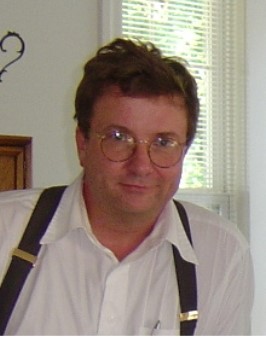 Daniel F.V. James合作论文数Department of Physics, University of Toronto3
 Nicolas Brunner合作论文数Department of Applied Physics, University of Geneva3
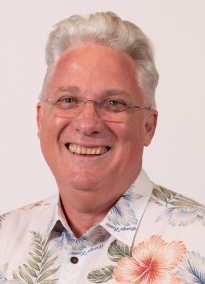 Bill Munro合作论文数Center for Quantum Technologies, Okinawa Institute of Science and Technology3Aaron P. Vandevender合作论文数3
 Kevin T. Mccusker合作论文数University of Illinois at Urbana-Champaign3
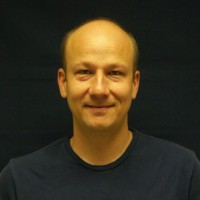 Thomas Gerrits合作论文数National Institute of Standards and Technology3
 Onur Hosten合作论文数Department of Physics;University of Illinois at Urbana Champaign;Department of Physics, University of Illinois at Urbana Champaign3
 Krister Shalm合作论文数National Institute of Standards and Technology3NA Peters合作论文数2Abu Thomas合作论文数2Siyuan Shi合作论文数2
 Andrew White合作论文数Department of Physics, School of Mathematics and Physics, The University of Queensland;Centre for Engineered Quantum Systems2Moraw, P.合作论文数2Reilly, D.R.合作论文数2Goggin M E合作论文数2
 Aaron J. Miller合作论文数Stanford Univ2
 Giacomo Mauro D'Ariano合作论文数QUIT Group;Dipartimento di Fisica;QUIT Group|Dipartimento di Fisica2
 Gregory S. Kanter合作论文数2
 Shawn Wang合作论文数2
 Andrew J. Berglund合作论文数Center for Nanoscale Science and Technology;National Institute of Standards and Technology;Center for Nanoscale Science and Technology, National Institute of Standards and Technology2
 Nicolas Gisin合作论文数Department of Applied Physics, University of Geneva2MA Nielsen合作论文数1Sae-Woo Nam合作论文数1A. E. Lita合作论文数1Dfv James合作论文数1




