Deep learning has achieved great success in numerous application areas at the cost of high computational complexity. To meet the ever-increasing computational demand, commodity hardware platforms (e.g., CPUs and GPUs) offer abundant computing resources including scalar, vector, and tensor units for deep learning that could execute in parallel. However, existing top-down tiling-based deep learning compilers often generate a homogeneous mapping from the given tensor computation task to hardware arithmetic instructions, failing to utilize different computing units simultaneously to achieve higher performance. In this paper, we propose Mosaic, a bottom-up tessellation-based deep learning compiler that directly tessellates the given tensor computation task with varying instructions, forming a heterogeneous instruction-to-task mapping to exploit instruction-level parallelism (ILP) across different computing units. The key that enables such tessellation is the iTex abstraction, which models the relationship between the instruction operations and its semantics with formalized affine functions. Based on the iTex, we propose a heuristic approach to efficiently generate various tessellation plans. Further, we propose the iTex scheduling technique to orchestrate the execution of instructions, reducing potential structural hazards and maximizing the exploitable ILP. Our extensive evaluation shows that Mosaic achieves an average speedup ranging from 1.08x to 1.28x across multiple hardware platforms compared to highly optimized vendor libraries. Mosaic also achieves an average speedup of 1.34x over the best existing baselines on real-world operators extracted from LLMs. More importantly, Mosaic reaches up to 106% of the GPU Tensor Core theoretical peak throughput, demonstrating its effective exploitation of ILP.
Optimizing deep learning inference, particularly reducing the execution latency of tensor computations at small batch sizes, is crucial for the successful and widespread adoption of deep neural network (DNN) models. However, current deep learning compilers and hand-tuned libraries often fail to achieve high hardware efficiency when executing small-batch workloads. The primary reason is the inherently sequential nature of reductions (e.g., along the hidden dimension in the flattened GEMM for LLM decoding), which is difficult to parallelize and therefore fails to fully utilize available hardware resources. In this article, we propose Swift, a novel search-based approach for efficiently generating high-performance programs for GPUs by maximizing hardware utilization. The key insight is that reduction parallelization can be incorporated into a unified representation alongside the existing tile structure, significantly expanding the search space for high-performance programs. Concretely, by enumerating all possible parallel mappings of loops, we first generate a large search space that contains high-performance programs. Then, to efficiently explore the extended search space, we employ subspace shifting exploration to identify promising regions, effectively prune large portions of the less-promising search space. We conduct experiments on three distinct GPU architectures using a diverse set of benchmarks representative of typical application scenarios. Experimental results demonstrate that Swift achieves an average speedup of 1.19x over the state-of-the-art compiler-based approaches. Moreover, compared with vendor-provided hand-tuned libraries, Swift achieves an average speedup of 2.40x.
The widespread adoption of deep learning accelerators (DLAs) underscores their pivotal role in improving the performance and energy efficiency of neural networks. To fully leverage the capabilities of these accelerators, exploration-based library generation approaches have been widely used to substantially reduce software development overhead. However, these approaches have been challenged by issues related to sub-optimal optimization results and excessive optimization overheads. In this paper, we propose Heron to generate high-performance libraries of DLAs in an efficient and fast way. The key is automatically enforcing massive constraints through the entire program generation process and guiding the exploration with an accurate pre-trained cost model. Heron represents the search space as a constrained satisfaction problem (CSP) and explores the space via evolving the CSPs. Thus, the sophisticated constraints of the search space are strictly preserved during the entire exploration process. The exploration algorithm has the flexibility to engage in space exploration using either online-trained models or pre-trained models. Experimental results demonstrate that Heron averagely achieves 2.71$\times$x speedup over three state-of-the-art automatic generation approaches. Also, compared to vendor-provided hand-tuned libraries, Heron achieves a 2.00$\times$x speedup on average. When employing a pre-trained model, Heron achieves 11.6$\times$x compilation time speedup, incurring a minor impact on execution time.
Tensor program optimization (TPO) based on pre-trained models can effectively reduce the computing time of deep neural networks. However, training of such models is prohibitively expensive, which highly depends on a large-scale dataset and thus requires tremendous time-consuming performance measurements (more than 1 million) on target platforms. In this paper, we propose BALTO, a fast TPO approach with biased-diversity-based active learning, aiming at reducing much lower training costs under similar optimization accuracy.The key insight is that random sampling of existing approaches suffers from a heavy redundancy of low-performance programs, which incurs tremendous duplicated time-consuming measurements. Inspired by this, BALTO removes such redundancy by introducing active learning (AL) to TPO for a much lower training cost. However, applying AL with a brute-force way in BALTO can lead to an overestimation problem. To address this, we further propose a biased-diversity-based diversity scheme specially designed for BALTO. We compare BALTO against TenSet on $6$ typical hardware platforms over $2$ learning models. Experimental results show that, on average, BALTO only requires 5% of the total performance measurements of TenSet to achieve the same or higher model accuracy. Moreover, the optimized tensor programs even outperform that of TenSet by 1.06% due to higher model accuracy.
Deep Learning Accelerators (DLAs) are effective to improve both performance and energy efficiency of compute-intensive deep learning algorithms. A flexible and portable mean to exploit DLAs is using high-performance software libraries with well-established APIs, which are typically either manually implemented or automatically generated by exploration-based compilation approaches. Though exploration-based approaches significantly reduce programming efforts, they fail to find optimal or near-optimal programs from a large but low-quality search space because the massive inherent constraints of DLAs cannot be accurately characterized. In this paper, we propose Heron, a novel exploration-based approach, to efficiently generate high-performance libraries of DLAs. The key is to automatically (rather than manually) enforce massive sophisticated while accurate constraints through the entire program generation including constrained space generation and constrained space exploration. By conducting static analysis on compute, sophisticated constraints are automatically generated to properly characterize inherent constraints of DLAs, and thus greatly prune invalid program candidates to produce a high-quality constrained search space. To efficiently explore the resultant search space, we further propose a novel constraint-based genetic algorithm, which features that the evolutionary process is conducted on formulated constraint satisfactory problems instead of concrete solutions. Thus, the sophisticated constraints of the search space are strictly preserved during the entire exploration process. We conduct extensive experiments on 3 representative DLAs, i.e., NVIDIA TensorCore, Intel DL Boost Acceleration, and TVM Versatile Tensor Accelerator. Experimental results demonstrate that Heron averagely achieves 2.71x speedup over four state-of-the-art automatic generation approaches. Also, compared to vendor-provided hand-tuned libraries, Heron achieves 2.00x speedup on average.
 Zidong Du (杜子东)合作论文数State Key Laboratory of Processors, Institute of Computing Technology, Chinese Academy of Sciences5
 Yuanbo Wen合作论文数University of Chinese Academy of Sciences5
 Qi Guo (郭崎)合作论文数Institute of Computing Technology, Chinese Academy of Sciences;University of Chinese Academy of Sciences5
 Xing Hu (胡杏)合作论文数Institute of Computing Technology, Chinese Academy of Sciences4
 XiaQing Li合作论文数Institute of Computing Technology, Chinese Academy of Science3
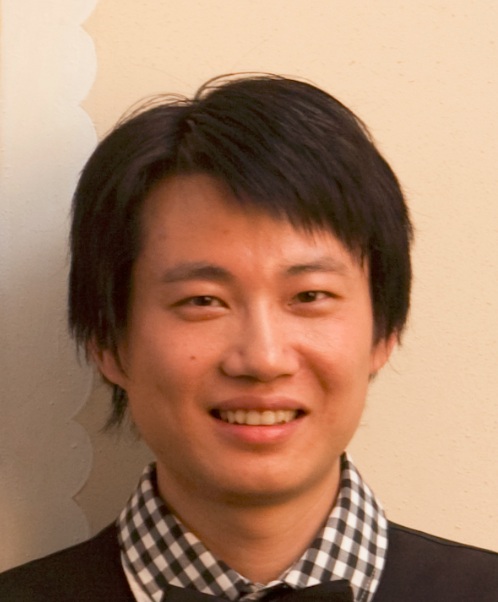 Tianshi Chen (陈天石)合作论文数Institute of Computing Technology, Chinese Academy of Sciences;Cambricon Technologies Corporation Limited3Yuxuan Guo合作论文数2Enshuai Zhou合作论文数University of Science and Technology of China2
 Yifan Hao (郝一帆)合作论文数Institute of Computing Technology, Chinese Academy of Sciences2
 Xinkai Song合作论文数School of Computer Science and Technology, University of Chinese Academy of Sciences2jianxing xu合作论文数School of Computer Science and Technology, University of Science and Technology of China2
 Yongwei Zhao (赵永威)合作论文数Institute of Computing Technology, Chinese Academy of Sciences;University of Chinese Academy of Sciences2Di Huang合作论文数2
 Huaping Chen (陈华平)合作论文数School of Management, University of Science and Technology of China;School of Software Engineering, University of Science and Technology of China2
 Ling Li (李玲)合作论文数Institute of Software, Chinese Academy of Sciences;University of Chinese Academy of Sciences2
 Rui Zhang (张蕊)合作论文数Institute of Computing Technology, Chinese Academy of Sciences2Jiang Jie合作论文数1Chongqing Zhao合作论文数1Tingfeng Ruan合作论文数1Ruibai Xu合作论文数1Zikang Liu合作论文数1
 Wei Li (李威)合作论文数Institute of Computing Technology, Chinese Academy of Sciences;University of Chinese Academy of Sciences1
 Yunji Chen (陈云霁)合作论文数Intelligent Processor Research Center, Institute of Computing Technology, Chinese Academy of Sciences;University of Chinese Academy of Sciences1Jiaming Guo合作论文数1




