When performing fault diagnosis tasks on bearings, the change of any bearing’s rotation speed will cause the frequency spectrum of bearing fault characteristics to be blurred. This makes it difficult to extract stable fault features based on manual or intelligent methods, resulting in a decrease in diagnostic accuracy. In this paper, a two-stage, intelligent fault diagnosis method (order-tracking one-dimensional convolutional neural network, OT-1DCNN) is proposed to deal with the problem of fault diagnosis under variable speed conditions. Firstly, the order tracking algorithm is used to resample the monitoring data obtained under different rotation speeds. Then, the one-dimensional convolutional neural network is adopted to extract features of the fault data. Finally, the fault type of collected data can be obtained by fully connected networks based on the features extracted. In the time domain, while the proposed algorithm only relies on the fault data collected under one speed as the training dataset, it is capable of doing fault diagnosis under different speed conditions. In the condition with the largest difference in speed with each dataset, the accuracy of the proposed method is higher than the baseline methods by 0.54% and 11.00%—on CWRU dataset and our own dataset respectively. The results show that the proposed method performs well in dealing with the fault diagnosis under the condition of variable speeds.
Wax deposition on walls of oil pipes is a common occurrence in crude oil extraction and is one of the major impediments to oilfield production. The most common method of paraffin removal is superconducting car thermal washing. This study proposes a heat flow coupling model that can analyze the temperature of the tubing-casing annular space to solve the low efficiency problem caused by adjusting initial parameters empirically. Using the superconducting car thermal washing process at the test oil well in city of Daqing, Chine as research object, the real-time temperature of annulus under various initial conditions is acquired by the fully-distributed Raman optical fiber temperature monitoring system. Compared with the real time data, theoretical data has a maximum deviation of 5?C, this result verifies the accuracy of the model. Based on the model, the study investigates the optimal initial parameters of superconducting car thermal washing by taking effective depth as an optimization goal. The optimal parameters for oil wells with different working conditions are obtained to improve the effectiveness of paraffin removal and increase thermal efficiency. This study provides theoretical support and an inspection method to promote superconducting car thermal washing and paraffin removal as well as to improve productive efficiency.
机电系统控制基础是机械仪表类、电子信息类、动力工程类专业的基础课程,对整个理工科专业知识学习起到了十分重要的作用.文章对当前机电系统控制基础教学中存在的问题进行了分析,并结合学科实际,提出了机电系统控制基础教学的优化策略.
机电系统控制基础是一门以实践性为主的基础课程,通过课程改革来实现课程教学的实践和应用,能够使学生充分认识到机电系统控制基础课程的内在含义.基于此,文章对《机电系统控制基础》课程教学的应用与实践进行了详细分析,有利于教学质量的改善.
作为电气信息专业的必修课程,机电系统控制基础课程主要学习的是在无人操作的情况下,利用控制设备,使机器等被控对象的任务能够如其展开.它以自动调节理论和反馈理论为基础,具有数字仿真和实验结果多样性等特点,以便学生能够拥有完善的自动控制实验环境并按参数进行实验.但传统的教学模式已不能适应信息化时代的发展,学生在填鸭式教学理念下的学习热情有所下降,本文就机电系统控制基础课程H型教学模式改革进行简要分析.
本文以机电系统控制基础教学实践性的现状为出发点,提出相关的改革方案。通过实际控制系统的数据与曲线,使学生有针对性地分析和调试系统,此外,还能更准确对机电系统控制所涵盖的工程概念和分析方法进行准确的把握,在很大程度上提高了学生能动性、改善了机电系统控制基础教学质量。
With the constantly increasing scale of the Internet and the users, the Internet applications have higher demands on the front-end web pages. Some web pages have single lattice structure and a relatively fixed HTML code template, which can be automatically generated. There have been research abroad using the deep learning on the task of automatically generating the web pages. However due to the basic encoder-decoder model adopted, the generalization ability of the model is not very robust. In this paper, we propose a novel method based on object detection and attention mechanism to automatically generate a web page with CSS style information. We use object detection to extend the original problem, which makes the model possible to detect the CSS style contents in the web page. Meanwhile we use attention mechanism to strengthen the model. Finally we propose our own dataset, based on which the experiment results show that method we proposed outperforms other existing methods.
In this work, Raman optical time domain reflectometer (ROTDR) is used to eliminate the fiber Bragg grating (FBG) sensor’s central wavelength shift caused by the temperature. Compared with traditional method, this method takes advantages of the cost and the reliability specially under the condition of the multi-spot FBG strain monitoring. A FBG sensor array has been set up to monitor the pressure and density of water sample, while the ROTDR is used for temperature compensation. The FBG sensor array will be amounted along the casing annulus of the whole well in the future. The indoor experiment has been carried out to demonstrate the proposed method efficient.
Based on two simplified demagnetization criteria-critical load Fc at the onset of plastic yield inception and Curie temperature Tc in the magnetic recording medium, a two dimensional finite element model of a rigid cylinder lightly sliding over an elastic-perfectly plastic multilayered medium under coupled thermo-mechanical surface loading is developed in order to understand the thermo-mechanical behavior of the magnetic recording medium corresponding to demagnetization. Finally, some recommendations for anti-demagnetization are discussed.
In the process of petroleum exploitation, liquid level is a significant parameter to determine reasonable production of oil wells. In this paper a novel optical fiber based method is presented to monitor working liquid level of oil well which contains foam section. This method utilizes the principle of heat transfer variation in different medium and Raman optical scattering. A distributed temperature sensor composed of optical fiber and heating cable is proposed and can be placed in the casing-tubing annulus. According to the sudden variations of measured temperature, the interface of gas-foam, foam-liquid can be identified accurately. (C) 2014 Elsevier Ltd. All rights reserved.
Deposition of paraffin is one of the major problems that restrict the stable and high production of an oil well. The method of circulating warm liquid is an effective way to remove paraffin in oil fields. The current difficulty lies in presetting parameters for the process of circulating warm liquid and the efficiency. To solve this problem, a model coupling heat and fluid during the process of circulating warm liquid is developed in this work. Liquid temperatures along the well depth are obtained according to the model. In comparison, the liquid temperature of a test well in Daqing Oilfield was monitored online using the Raman optical fiber monitoring system developed by the authors. The monitored temperatures are well suited to the values calculated using the developed model. The maximum deviation of the temperature is 3 °C. The parameters of circulating warm liquid can be optimized in the future according to the coupling model.
研制出一种分程式双灵敏度的光纤光栅压力/温度一体化监测装置。利用分程式的封装结构,在没有改变光纤光栅其他监测指标前提下,增大了压力测量范围。通过设定封装结构尺寸及材料使该装置实现压力/温度双灵敏度一体化监测。进行了压力/温度监测性能实验,实验结果表明,该监测装置的压力监测范围为0~30 MPa,温度监测范围0℃~150℃。在0~15 MPa、15~30 MPa监测范围内压力灵敏度分别为352.5pm/MPa和223.3pm/MPa,线性拟合度分别为99.42%和99.33%;温度灵敏度分别为33.5pm/℃和22.5pm/℃,线性拟合度分别为99.69%和99.61%。该传感器结构简单、性能指标优越,具有较高的应用价值。
The temperature compensation method of BOTDR strain monitoring system is proposed, which is based on Raman Optical Time Domain Reflectometer (ROTDR), aiming at temperature strain coupling effects of Brillouin Optical Time Domain Reflectometer (BOTDR) strain monitoring technology. Then the effectiveness of this method is proved on theoretical and experimental studies, which provides an effective means of improving the accuracy of BOTDR strain monitoring.
This paper performs a theoretical and experimental analysis of the pressure sensitivity of Brillouin frequency shift (PSoBFS) in silica optical fibers with double-layer polymer coatings. It is predicted numerically that the coated fibers have enhanced (ideally over 20 times) PSoBFS as compared with a bare fiber. In addition, the enhancement becomes obvious while the outer coating has a lower Young's modulus and Poisson's ratio, as well as larger thickness. Three fibers with different outer coatings are experimented via the Brillouin optical time domain analysis technique. The experimental results agree with the theoretical prediction. This quantitative evaluation can be guidable for designing BFS-based pressure sensors with coated fibers.
Based on equal theory of heat and arc,a heat model called theoretical calculation projection figure was designed.The designed projection figure model has a big heat functioned area,and energy distributes uniformly in scanning area.In order to create a figure that electron beam equipment can distinguish,the designed projection figure model was discret and simulated by least square method.Silicide coatings were fabricated by electron beam irradiation with designed projection scanning figure and other typical scanning figure.Then the effect of scanning figure on energy input uniformity was studied by optical microscopy and scanning electron microscopy.The result showed that designed projection scanning figure was suitable for EB cladding process,and better and flatter silicide coating surface was obtained compared with other typical scanning figure.
The effect of hydrostatic pressure (up to 28 MPa) on Brillouin frequency shift (BFS) within two types of bare, single-mode fibers is studied via Brillouin optical time domain analysis technique. Experimental results show a negative linear relation between pressure and BFS, with almost the same sensitivity in both types of fibers. The average value of experimental slopes is -0.742 MHz/MPa. This value is found to be well suited to theoretical analysis on the basis of data on bulk silica glass in previous reports. This preliminary evaluation may result in a new method for distributed pressure sensing along silica optical fiber.
In order to realizethe pressure measurement with wide range in narrow sapce of annulus of rod pumping wells,a cascaded fiber grating pressure sensor has been developed.First,according to the actual working condition,a packaging structure of optical fiber grating pressure sensor is designed based on the combination of flat diaphragm and equal-strength beam.Using the method of cascading,the measuring range is expanded without changing the performance index of optical fiber grating,and the contradiction between pressure measurement range and sensitivity is solved.Then the rationality and feasibility of this structure are verified through mechanical analysis,and the temperature compensation method of cascaded pressure sensor is expounded.Finally,the experimental results show that the pressure measuring range is from 0 to 30 MPa,sensitivity is 329 pm/MPa,and linear degree is above 98%.The sensor is simple and small in structure,easy to realize,and the actual thickness is only 17 mm after assembling to the tube,which can satisfy requirements of pressure monitoring in annulus of rod pumping wells.
Silicide coatings were prepared on Nb-based alloy Nb-10W by a fused slurry method. Such sintered silicide coatings have defects such as pores, cracks, and uneven top surfaces, which have negative influence on the high temperature oxidation resistance of the coatings. Electron beam remelting is considered one of the most convenient processes to reduce these disadvantages and improve coating oxidation resistance. The effect of high frequency electron beam irradiation on surface remelting and microstructural modification of silicide coatings was investigated in this study. Scanning electron microscopy, X-ray diffraction, and atomic force microscopy were used to characterize phase and morphology before and after EB surface treatment. The surface roughness of the silicide coatings was reduced by two orders of magnitude and the average grain size was reduced by about one order of magnitude after treatment. This resulted in improvement of the high-temperature oxidation resistance of the EB treated silicide coatings, which offered about 50h protection under isothermal oxidation in air at 1700°C.
Electron beam surface cladding silicide coating on niobium alloy experiment has been investigated in this paper.Optical microscope and scanning electron microscope were applied to characterize the surface morphologies of silicide coatings.Through the analysis of cracking rate and maximum width of cracks on the surface cladding layer,the quality of cladding coating is characterized.The results of single variable tests reveal that different processing parameters have different influence on the cracks.By means of orthogonal tests,optimized electron beam cladding process parameters were developed.The optimized parameters were as follows:electron beam current=17 mA,beam focus current=1 885 mA,beam scanning speed=540 mm/min-1.The silicide coating which was treated by electron beam surface cladding treatment with optimized processing parameters,performed good quality.There is no cracks on silicide coating surface,and the grains of coating were homogeneous and compacted.
A novel fiber Bragg grating vortex flowmeter was designed in this work, where the Bragg grating was enfolded in a cylinder eddy generator. Bragg grating subject to force and the corresponding strain were analyzed. Subsequently, the relationships between grating’s axial strain and flow were developed. In order to improve the flowmeter's resolution, the system was simplified by a mass-spring-damper model, which was used to analyze resonance and choose acrylic glass as cylinder's material. In terms of the resolution of FBG sensor demodulation device and factors of vortex's formation, the measuring range of flowmeter is 1200L/h~5000L/h. The resolution is less than 40L/h with flow exceeding 2000L/h. The damping ratio is not sensitive to the flow when it is less than 2000L/h.
 Huijuan Dong (董惠娟)合作论文数School of Mechatronics Engineering, Harbin Institute of Technology15
 Guangyu Zhang (张广玉)合作论文数School of Mechatronics Engineering, Harbin Institute of Technology13
 Hongliang Pan合作论文数5
 Haidong Gu (顾海栋)合作论文数5
 Zhi Zhou (周智)合作论文数School of Civil Engineering and Architecture, Hainan University5
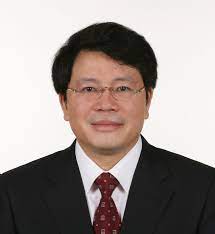 Jinping Ou (欧进萍)合作论文数School of Civil Engineering, Harbin Institute of Technology4Guojuan Cheng合作论文数3
 Guoqing Chen (陈国庆)合作论文数School of Materials Science and Engineering, Harbin Institute of Technology3Kun Zheng (郑坤)合作论文数3
 Binggang Zhang (张秉刚)合作论文数School of Materials Science and Engineering, Harbin Institute of Technology3yong cai合作论文数2ren bing liu合作论文数2ning xu (徐宁)合作论文数2shaopeng yang合作论文数2Kan Yang合作论文数2
 Gaoliang Peng (彭高亮)合作论文数School of Mechatronics Engineering, Harbin Institute of Technology2Yi Han合作论文数1Zhao Chen合作论文数1
 Sijue Li合作论文数1Bingkun Qin合作论文数1
 Mengyu Ji合作论文数1
 Shouwang Sun (孙守旺)合作论文数1Jia Lou (娄佳)合作论文数Faculty of Mechanical Engineering & Mechanics, Ningbo University1
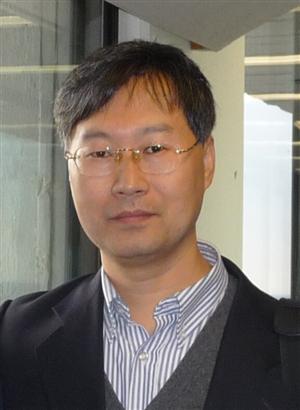 Yuliang Liu (刘育梁)合作论文数中国科学院半导体研究所1Yang Xing合作论文数1
 Genda Chen合作论文数Department of Civil, Architectural, and Environmental Engineering, Missouri University of Science and Technology1
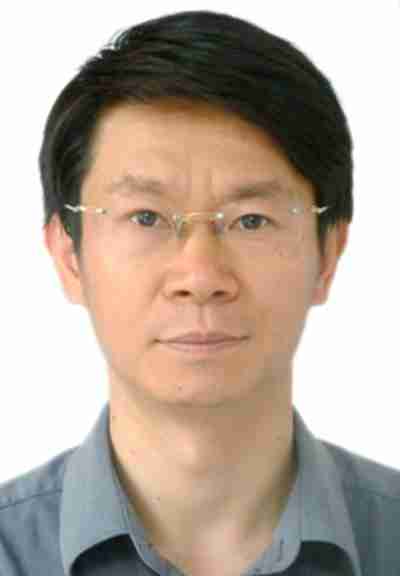 Hongjie Xu (徐宏杰)合作论文数School of Instrumentation and Optoelectronic Engineering, Beihang University1
 Jianping He (何建平)合作论文数Department of Civil Engineering, Dalian University of Technology1
 Lingtao Yu (于凌涛)合作论文数College of Mechanical and Electrical Engineering, Harbin Engineering University1
 Yongkang Dong (董永康)合作论文数School of Astronautics, Harbin Institute of Technology1
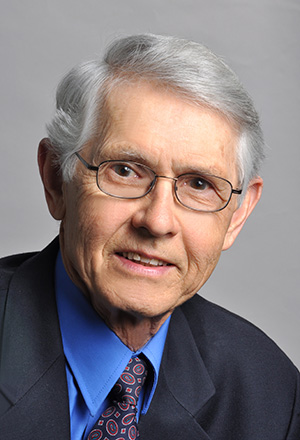 David B. Bogy合作论文数Department of Mechanical Engineering, University of California, Berkeley1Minghua Huang合作论文数1
 Jicai Feng (冯吉才)合作论文数State Key Laboratory of Precision Welding & Joining of Materials and Structures, Harbin Institute of Technology1
 Shaohui Liu (刘绍辉)合作论文数School of Computer Science and Technology, Faculty of Computing, Harbin Institute of Technology1Huijuan Donga合作论文数1
 Longqiu Li (李隆球)合作论文数Institute of Mechanical and Electrical Engineering, Harbin Institute of Technology1Chunguang Lan合作论文数1
 Qiwen Dong (董启文)合作论文数School of Data Science & Engineering, East China Normal University1




