Pruning-based unlearning has recently emerged as a fast, training-free, and data-independent approach to remove undesired concepts from diffusion models. It promises high efficiency and robustness, offering an attractive alternative to traditional fine-tuning or editing-based unlearning. However, in this paper we uncover a hidden danger behind this promising paradigm. We find that the locations of pruned weights, typically set to zero during unlearning, can act as side-channel signals that leak critical information about the erased concepts.To verify this vulnerability, we design a novel attack framework capable of reviving erased concepts from pruned diffusion models in a fully data-free and training-free manner. Our experiments confirm that pruning-based unlearning is not inherently secure, as erased concepts can be effectively revived without any additional data or retraining.Finally, we explore potential defense strategies and advocate safer pruning mechanisms that conceal pruning locations while preserving unlearning effectiveness, providing practical insights for designing more secure pruning-based unlearning frameworks.
Embodied robotic systems increasingly rely on large language model (LLM)-based agents to support high-level reasoning, planning, and decision-making during interactions with the environment. However, invoking LLM reasoning introduces substantial computational latency and resource overhead, which can interrupt action execution and reduce system reliability. Excessive reasoning may delay actions, while insufficient reasoning often leads to incorrect decisions and task failures. This raises a fundamental question for embodied agents: when should the agent reason, and when should it act? In this work, we propose RARRL (Resource-Aware Reasoning via Reinforcement Learning), a hierarchical framework for resource-aware orchestration of embodied agents. Rather than learning low-level control policies, RARRL learns a high-level orchestration policy that operates at the agent's decision-making layer. This policy enables the agent to adaptively determine whether to invoke reasoning, which reasoning role to employ, and how much computational budget to allocate based on current observations, execution history, and remaining resources. Extensive experiments, including evaluations with empirical latency profiles derived from the ALFRED benchmark, show that RARRL consistently improves task success rates while reducing execution latency and enhancing robustness compared with fixed or heuristic reasoning strategies. These results demonstrate that adaptive reasoning control is essential for building reliable and efficient embodied robotic agents.
Large language models (LLMs) exhibit strong capabilities as decision-making agents by interleaving reasoning and actions, as seen in ReAct-style frameworks. Yet, their practical deployment is constrained by high inference costs and large model sizes. We propose Structured Agent Distillation, a framework that compresses large LLM-based agents into smaller student models while preserving both reasoning fidelity and action consistency. Unlike standard token-level distillation, our method segments trajectories into [REASON] and [ACT] spans, applying segment-specific losses to align each component with the teacher's behavior. This structure-aware supervision enables compact agents to better replicate the teacher's decision process. Experiments on ALFWorld, HotPotQA-ReAct, and WebShop show that our approach consistently outperforms token-level and imitation learning baselines, achieving significant compression with minimal performance drop. Scaling and ablation results further highlight the importance of span-level alignment for efficient and deployable agents.
Zeroth-order (ZO) optimization is an emerging deep neural network (DNN) training paradigm that offers computational simplicity and memory savings. However, this seemingly promising approach faces a significant and long-ignored challenge. ZO requires generating a substantial number of Gaussian random numbers, which poses significant difficulties and even makes it infeasible for hardware platforms, such as FPGAs and ASICs. In this paper, we identify this critical issue, which arises from the mismatch between algorithm and hardware designers. To address this issue, we proposed PeZO, a perturbation-efficient ZO framework. Specifically, we design random number reuse strategies to significantly reduce the demand for random number generation and introduce a hardware-friendly adaptive scaling method to replace the costly Gaussian distribution with a uniform distribution. Our experiments show that PeZO reduces the required LUTs and FFs for random number generation by 48.6% and 12.7%, and saves at maximum 86% power consumption, all without compromising training performance, making ZO optimization feasible for on-device training. To the best of our knowledge, we are the first to explore the potential of on-device ZO optimization, providing valuable insights for future research.
Under increasing regulatory demands for data privacy, machine unlearning has emerged as a critical and effective technique for removing the influence of specific data points from a trained model. Although retraining from scratch typically yields the most ideal unlearning effect, it incurs prohibitive computational cost and resource waste. As a result, gradient ascent (GA)-based MU methods have become popular due to their efficiency. However, the reliance of GA on backpropagation leads to substantial memory overhead, rendering such methods impractical on memory-constrained devices such as mobile or edge platforms. In this paper, we propose a zeroth-order (ZO) alternative to conventional first-order-based backpropagation for performing GA-based unlearning. By eliminating the need for gradient computation, our approach significantly reduces memory consumption while maintaining the effectiveness of unlearning. Experiments demonstrate that ZO-GA achieves competitive MU performance, and notably exhibits greater training stability compared to conventional GA methods after unlearning is complete. Additionally, several intriguing observations are discussed, which may provide valuable insights for future research.
Self-supervised learning (SSL) offers a compelling solution to the challenge of extensive labeled data requirements in traditional supervised learning.With the proven success of Vision Transformers (ViTs) in supervised tasks, there is increasing interest in adapting them for SSL frameworks. However, the high computational demands of SSL pose substantial challenges, particularly on resource-limited platforms like edge devices, despite its ability to achieve high accuracy without labeled data.Recent studies in supervised learning have shown that token pruning can reduce training costs by removing less informative tokens without compromising accuracy. However, SSL’s dual-branch encoders make traditional single-branch pruning strategies less effective, as they fail to account for the critical cross-branch similarity information, leading to reduced accuracy in SSL.To this end, we introduce SimPrune, a novel token pruning strategy designed for ViTs in SSL. SimPrune leverages cross-branch similarity information to efficiently prune tokens, retaining essential semantic information across dual branches. Additionally, we incorporate a difficulty-aware pruning strategy to further enhance SimPrune's effectiveness.Experimental results show that our proposed approach effectively reduces training computation while maintaining accuracy. Specifically, our approach offers 24\% savings in training costs compared to SSL baseline, without sacrificing accuracy.
It is challenging to deploy 3D Convolutional Neural Networks (3D CNNs) on mobile devices, specifically if both real-time execution and high inference accuracy are in demand, because the increasingly large model size and complex model structure of 3D CNNs usually require tremendous computation and memory resources. Weight pruning is proposed to mitigate this challenge. However, existing pruning is either not compatible with modern parallel architectures, resulting in long inference latency or subject to significant accuracy degradation. This paper proposes an end-to-end 3D CNN acceleration framework based on pruning/compilation co-design called Mobile-3DCNN that consists of two parts: a novel, fine-grained structured pruning enhanced by a prune/Winograd adaptive selection (that is mobile-hardware-friendly and can achieve high pruning accuracy), and a set of compiler optimization and code generation techniques enabled by our pruning (to fully transform the pruning benefit to real performance gains). The evaluation demonstrates that Mobile-3DCNN outperforms state-of-the-art end-to-end DNN acceleration frameworks that support 3D CNN execution on mobile devices, Alibaba Mobile Neural Networks and Pytorch-Mobile with speedup up to 34 × with minor accuracy degradation, proving it is possible to execute high-accuracy large 3D CNNs on mobile devices in real-time (or even ultra-real-time).
Real‐world datasets usually contain multiple attributes, making it essential to ensure fairness across all of them simultaneously. However, different attributes may vary in difficulty, and no existing approaches have effectively addressed this issue. Consequently, an attribute‐adaptive strategy is needed to achieve fairness for all attributes. Multi‐task Learning (MTL) leverages shared information to optimize multiple tasks concurrently, while Sparsely‐Gated Mixture‐of‐Experts (SMoE) can dynamically allocate computational resources to the most needed tasks. In this work, we formulate multi‐attribute fairness issue as an MTL problem and employ SMoE to achieve desirable performance across all attributes simultaneously. We first analyze the feasibility and find the potentiality by formalizing multi-attribute fairness problem into a MTL problem and mitigating it by using SMoE. However, vanilla SMoE could lead to over-utilization problem which causes sub-optimal performance. We then proposed an innovative SMoE framework for multi-attribute fair image classification, which further improves multi-attribute fairness by redesigning the MoE layer and routing policy with fairness consideration. Extensive experiments demonstrated the effectiveness. Taking a DeiT-Small as the backbone, we achieve 77.25% and 86.01% accuracy on the ISIC2019 and CelebA dataset respectively with Multi-attribute Predictive Quality Disparity (PQD) score of 0.801 and 0.787, beating current state-of-the-art methods Muffin, InfoFair and MultiFair.
In Computer Vision (CV), the deployment of Convolutional Neural Networks (CNNs) is often hindered by their substantial computational requirements and large labeled datasets. Self-supervised learning (SSL) serves as an effective approach to reducing the reliance on labeled data with the option of augmentation methods to infer and train CNNs. Excluding irrelevant features accelerates learning and improves optimization. We propose a Field-Programmable Gate Array (FPGA)-based hardware accelerator architecture tailored for SSL framework, leveraging its parallelism and reconfigurability to expedite block matching, optimize sparse convolutions, and manage data reuse, significantly improving resource and energy efficiency. The implementation and evaluation of our work on Xilinx ZCU102 FPGA working at 200 MHz confirm that the similarity finding part's FPGA accelerations with a low hardware overhead generates a latency of 0.0106 seconds, surpassing GPU and CPU, and in the sparse CNN's FPGA acceleration part, with the processing of VGG16 and ResNet50, compared with the related FPGA-based works, our design claims a maximum of 3.08x throughput improvement and 1.5x in energy efficiency.
Autonomous driving platforms encounter diverse driving scenarios, each with varying hardware resources and precision requirements. Given the computational limitations of embedded devices, it is crucial to consider computing costs when deploying on target platforms like the DRIVE PX 2. Our objective is to customize the semantic segmentation network according to the computing power and specific scenarios of autonomous driving hardware. We implement dynamic adaptability through a three-tier control mechanism-width multiplier, classifier depth, and classifier kernel-allowing fine-grained control over model components based on hardware constraints and task requirements. This adaptability facilitates broad model scaling, targeted refinement of the final layers, and scenario-specific optimization of kernel sizes, leading to improved resource allocation and performance. Additionally, we leverage Bayesian Optimization with surrogate modeling to efficiently explore hyperparameter spaces under tight computational budgets. Our approach addresses scenario-specific and task-specific requirements through automatic parameter search, accommodating the unique computational complexity and accuracy needs of autonomous driving. It scales its multiply-accumulate operations (MACs) for task-specific learning adaptation (TSLA), resulting in alternative configurations tailored to diverse self-driving tasks. These TSLA customizations maximize computational capacity and model accuracy, optimizing hardware utilization.
Multi-agent large language model (LLM) systems have shown strong potential in complex reasoning and collaborative decision-making tasks. However, most existing coordination schemes rely on static or full-context routing strategies, which lead to excessive token consumption, redundant memory exposure, and limited adaptability across interaction rounds. We introduce RCR-Router, a modular and role-aware context routing framework designed to enable efficient, adaptive collaboration in multi-agent LLMs. To our knowledge, this is the first routing approach that dynamically selects semantically relevant memory subsets for each agent based on its role and task stage, while adhering to a strict token budget. A lightweight scoring policy guides memory selection, and agent outputs are iteratively integrated into a shared memory store to facilitate progressive context refinement. To better evaluate model behavior, we further propose an Answer Quality Score metric that captures LLM-generated explanations beyond standard QA accuracy. Experiments on three multi-hop QA benchmarks – HotPotQA, MuSiQue, and 2WikiMultihop – demonstrate that RCR-Router reduces token usage (up to 30
Large language models (LLMs) excel across various tasks, but standard first-order (FO) fine-tuning demands considerable memory, significantly limiting real-world deployment. Recently, zeroth-order (ZO) optimization stood out as a promising memory-efficient training paradigm, avoiding backward passes and relying solely on forward passes for gradient estimation, making it attractive for resource-constrained scenarios. However, ZO method lags far behind FO method in both convergence speed and accuracy. To bridge the gap, we introduce a novel layer-wise divergence analysis that uncovers the distinct update pattern of FO and ZO optimization. Aiming to resemble the learning capacity of FO method from the findings, we propose \textbf{Di}vergence-driven \textbf{Z}eroth-\textbf{O}rder (\textbf{DiZO}) optimization. DiZO conducts divergence-driven layer adaptation by incorporating projections to ZO updates, generating diverse-magnitude updates precisely scaled to layer-wise individual optimization needs. Our results demonstrate that DiZO significantly reduces the needed iterations for convergence without sacrificing throughput, cutting training GPU hours by up to 48\% on various datasets. Moreover, DiZO consistently outperforms the representative ZO baselines in fine-tuning RoBERTa-large, OPT-series, and Llama-series on downstream tasks and, in some cases, even surpasses memory-intensive FO fine-tuning. Our code is released at \url{https://github.com/Skilteee/DiZO}.
Fine-tuning helps large language models (LLM) recover degraded information and enhance task performance. Although Low-Rank Adaptation (LoRA) is widely used and effective for fine-tuning, we have observed that its scaling factor can limit or even reduce performance as the rank size increases. To address this issue, we propose RoRA (Rank-adaptive Reliability Optimization), a simple yet effective method for optimizing LoRA's scaling factor. By replacing alpha/r with alpha/root r, RoRA ensures improved performance as rank size increases. Moreover, RoRA enhances low-rank adaptation in fine-tuning uncompressed models and excels in the more challenging task of accuracy recovery when fine-tuning pruned models. Extensive experiments demonstrate the effectiveness of RoRA in finetuning both uncompressed and pruned models. RoRA surpasses the state-of-the-art (SOTA) in average accuracy and robustness on LLaMA-7B/13B, LLaMA-2-7B, and LLaMA-3-8B, specifically outperforming LoRA and DoRA by 6.5% and 2.9% on LLaMA-7B, respectively. In pruned model fine-tuning, RoRA shows significant advantages; for SHEARED-LLAMA-1.3, a LLaMA-7B with 81.4% pruning, RoRA achieves 5.7% higher average accuracy than LoRA and 3.9% higher than DoRA.
Quantization is an effective technique to reduce the deployment cost of large language models (LLMs), and post-training quantization (PTQ) has been widely studied due to its efficiency. However, existing PTQ methods are limited by their inability to fine-tune model parameters and often suffer significant accuracy loss in low-bit scenarios. Quantization-aware training (QAT) provides a more principled solution, but its reliance on backpropagation incurs prohibitive memory costs, limiting its practicality for LLM deployment. To address these challenges, we propose ZeroQAT, a zeroth-order optimization-based QAT framework that supports both weight and activation quantization. ZeroQAT leverages forward-only gradient estimation to eliminate backpropagation, substantially reducing computational and memory overhead while retaining the benefits of end-to-end optimization. We further introduce a lightweight variant of ZeroQAT for quantized fine-tuning, which freezes and pre-quantizes most parameters to further cut memory usage. Experiments show that ZeroQAT consistently outperforms representative PTQ and QAT baselines while requiring significantly less memory. For example, ZeroQAT enables fine-tuning of a 13B model at extremely low bit-widths (e.g., 2-4 bits) on a single 8GB GPU, and even allows fine-tuning a 6.7B model on a OnePlus 12 smartphone, demonstrating its practicality for end-to-end QAT on resource-limited edge devices.
Recent advances in image editing have been driven by the development of denoising diffusion models, marking a significant leap forward in this field. Despite these advances, the generalization capabilities of recent image editing approaches remain constrained. In response to this challenge, our study introduces a novel image editing framework with enhanced generalization robustness by boosting in-context learning capability and unifying language instruction. This framework incorporates a module specifically optimized for image editing tasks, leveraging the VMamba Block and an editing-shift matching strategy to augment in-context learning. Furthermore, we unveil a selective area-matching technique specifically engineered to address and rectify corrupted details in generated images, such as human facial features, to further improve the quality. Another key innovation of our approach is the integration of a language unification technique, which aligns language embeddings with editing semantics to elevate the quality of image editing. Moreover, we compile the first dataset for image editing with visual prompts and editing instructions that could be used to enhance in-context capability. Trained on this dataset, our methodology not only achieves superior synthesis quality for trained tasks, but also demonstrates robust generalization capability across unseen vision tasks through tailored prompts.
Virtual try-on system that transfers clothes onto the target person has attracted rapidly. Previous works use the affine or Thin Plate Spline (TPS) transformation for clothes warping and directly learn a composition mask to fuse the warped clothes and the person image, which usually causes rough shape and blurry details due to the poor warping mechanism and lack of human structure. In this paper, we propose a novel Dense Flow guided Virtual Try-On Network (DF-VTON), which contains a progressive warping network for clothes deformation, and a personalized fitting network for the fusion of the clothes and the person image. Specifically, given a target clothes image and a reference person image, the progressive warping network generates the dense flow in a progressive way and multi-scale views. The personalized fitting network aims to fuse warped clothes and person image seemly by using multi-scale composition masks. Extensive experiments on two challenging benchmarks demonstrate the superiority of our proposed DF-VTON over existing strong baselines with realistic high-resolution try-on results.
From monocular RGB images captured in the wild, detecting multi-body 3D meshes in physical sizes and locations is notoriously difficult due to the diverse visual ambiguity and lack of explicit depth measurement. Modern DNN approaches made numerous advances based on either two-stage Region-of-Interests(RoI)-Align or single-stage fixed Field-of-View (FoV) detector frameworks for two main subtasks: local pelvis-centered mesh regression and global body-to-camera translation regression. However, sub-meter-level physical-space monocular mesh detection is still out of reach by existing solutions. In this paper, we recognize two common drawbacks: (1) The local meshes are usually estimated without explicitly aligning body features under image-space scaling, occlusion, and truncation; (2) The global translations are estimated based on a weak-perspective assumption, which tricks the network into prioritizing image-space (front-view) mesh alignment and leads to inaccurate mesh depth. We introduce Physical-space Multi-body Mesh Detection (PMMD), in which (1) Locally, we preserve the body aspect ratio, align the body-to-RoI layout, and densely refine the person-wise RoI features for robustness; (2) Globally, we learn dense-depth-guided features to amend the body-wise local feature for physical depth estimation. With the cleaned local features and explicit local-global associations, PMMD achieves the best centimeter-level local mesh metrics and the first sub-meter-level global mesh metrics from monocular images in 3DPW and AGORA datasets.
This report details the development and key achievements of our latest language model designed for custom large language models. The advancements introduced include a novel Online Data Scheduler that supports flexible training data adjustments and curriculum learning. The model's architecture is fortified with state-of-the-art techniques such as Rotary Positional Embeddings, QK-LayerNorm, and a specially crafted multilingual tokenizer to enhance stability and performance. Moreover, our robust training framework incorporates advanced monitoring and rapid recovery features to ensure optimal efficiency. Our Wonton 7B model has demonstrated competitive performance on a range of multilingual and English benchmarks. Future developments will prioritize narrowing the performance gap with more extensively trained models, thereby enhancing the model's real-world efficacy and adaptability.GitHub:
 Geng Yuan (袁赓)合作论文数Electrical and Computer Engineering Department, Northeastern University21
 Yanzhi Wang合作论文数Department of Electrical & Computer Engineering, College of Engineering, Northeastern University;Physical AI Research Center, Northeastern University;EmbodyX17
 Xue (Shelley) Lin合作论文数11
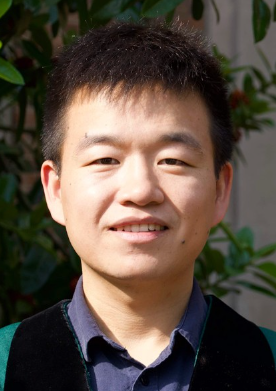 Wei Niu (牛威)合作论文数Division of Physical & Mathematical Sciences, School of Computing, Franklin College of Arts & Sciences, University of Georgia11
 Dong Huang合作论文数Robotics Institute, School of Computer Science, Carnegie Mellon University9
 Hao Tang (唐浩)合作论文数Institute for Visual Technology, School of Computer Science, Peking University9
 Zhenglun Kong合作论文数Harvard University8
 Pu Zhao合作论文数Northeastern University8
 Wenbin Zhang (张雯斌)合作论文数Knight Foundation School of Computing and Information Sciences, Florida International University7
 Peiyan Dong合作论文数Northeastern University6
 Changdi Yang合作论文数5
 Xuan Shen (沈轩)合作论文数College of Computer Science and Technology, Zhejiang University5
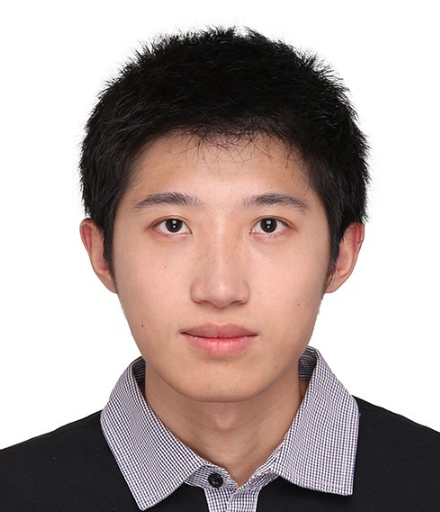 Zheng Zhan合作论文数Microsoft4
 Xulong Tang合作论文数Department of Computer Science, School of Computing and Information, University of Pittsburgh4
 Zhengang Li合作论文数High Energy-Efficiency & Performance System Lab, Northeastern University3Feng Deng合作论文数3
 Mengshu Sun (孙梦姝)合作论文数School of Information Science and Technology, Beijing University of Technology3Ao Li合作论文数3
 Liang Luo (罗亮)合作论文数School of Computer Science and Engineering, University of Electronic Science and Technology of China3
 Bin Ren合作论文数Computer Science Department, College of William & Mary3
 Haoye Dong (董浩业)合作论文数National University of Singapore3
 Houbing Herbert Song合作论文数Department of Information Systems, College of Engineering and Information Technology, University of Maryland, Baltimore County3Qingqin Fu合作论文数2
 Yuxuan Cai合作论文数Foundation Model Group, Megvii Technology2
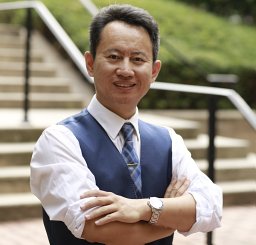 Xiaoming Zhai合作论文数Univ Georgia, Dept Math & Sci Educ, Athens, GA 30602 USA2
 Caiwen Ding合作论文数Laboratory of Intelligent & Efficient Systems, School of Computing, University of Connecticut;Laboratory of Machine Learning in Drug Discovery & Development, School of Computing, University of Connecticut2
 Chao Wu (吴超)合作论文数School of Public Affairs, Zhejiang University2
 Weiwen Jiang合作论文数Volgenau School of Engineering, George Mason University;College of Engineering and Computing, George Mason University;Electrical and Computer Engineering Department, George Mason University2
 Shaoyi Huang合作论文数University of Connecticut;ByteDance2
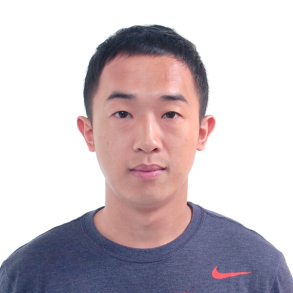 Xiaolong Ma合作论文数Department of Electrical and Computer Engineering in Northeastern University2
 Gaowen Liu合作论文数Cisco Systems, Inc.2
 Sheng Li合作论文数Department of Computer Science, University of Pittsburgh2
 Ci Zhang合作论文数University of Georgia1Jin Lu合作论文数1Jaewoo Lee合作论文数1Tianyu Wang合作论文数1Yue Dai合作论文数1Qitao Tan合作论文数1Zichong Meng合作论文数1Yize Li合作论文数1
 Weihao Zeng (曾伟豪)合作论文数Department of Computer Science and Engineering, The Hong Kong University of Science and Technology1
 Yifan (Evelyn) Gong合作论文数Adobe Research1Yue Cao合作论文数1Zhuo Zou合作论文数1




