Irreversible swelling of strongly acidic cation exchange resins (SAC) had been observed when ground water in a volcanic zone was used as raw water for ion-exchange pure water production facilities. Vanadium has been presumed to act as an oxidative substance to the SAC resin, with the analysis of the ground water. It was confirmed that hydroxyl radicals were generated when the metavanadate anions were present in strong a sulfuric acidic solution, and the amount of generated radicals changed with the molar ratio of metavanadate to sulfuric acid. When an ammonium vanadate solution was passed through a resin layer of normal cross-linked type SAC, eluted polystyrene sulfonic acids were detected in the treated water. However, highly cross-linked SAC resin is resistive to oxidative degradation in vanadate containing water.
本稿は,幼児教育における相互行為を分析する視点・枠組みを検討することを目的とする。 幼児教育は,家庭での初期的社会化の段階と学校教育段階の間に位置し,両者と密接に関連している。幼稚園での教育は,集団を媒介にした指導が軸となっており,学校における社会化に先行する雛形が観察される。 幼児をその相互行為の様式として観察─分析しようとするさい,注目されるのは種々の非対称ルールである。幼児─大人間でやりとりされる問いかけ─応答,人称─呼称のあり方など,いくつかの局面で非対称ルールは見出されるが,それらを介して大人と子どもの相互行為が構成され,社会化場面が立ち上がっていく。 遊びや指導場面では,子どもの集団においても非対称な関係があり,集団活動への参与資格にかかわる非対称ルールは,集団あるいは社会が成立し,存続するために不可欠の契機となる。幼児教育とはその意味で,非対称ルールを手がかりに対称ルールの習得を目指す,子どもへの働きかけといえる。 社会化は,集団を構成することと参与者が構成員となることを相即的に成就させる過程を示す。本稿では,具体的な相互行為場面をそうした過程が進行している場として観察し,分析する視点・枠組みを準備する。
We set a preliminary 95% C.L. exclusion on the oscillation frequency of B s − B 0 s mixing using a sample of 400,000 hadronic Z decays collected by the SLD experiment at the SLC during the 1996-98 run. Three analyses are presented in this paper. The first analysis partially reconstructs the B s by combining a fully reconstructed Ds with the remaining charged B decay tracks. The second analysis selects a sample of events with a partially reconstructed charm vertex and a lepton track. The third analysis reconstructs b-hadrons topologically and exploits the b → c cascade charge structure to determine the flavor of the b-hadron at decay. All three analyses take advantage of the large forward-backward asymmetry of the polarized Z → bb decays and information in the hemisphere opposite to the reconstructed B vertex to determine the b-hadron flavor at production. The results of the three analyses are combined to exclude the following values of the B s −B0 s oscillation frequency: ∆ms < 7.6 ps −1 and 11.8 < ∆ms < 14.8 ps −1 at the 95% confidence level. Contributed to the Proceedings of DPF2000: The Meeting of the Division of Particles and Fields of the American Physical Society, Columbus, Ohio, 9-12 Aug 2000. ∗Work supported in part by the Department of Energy contract DE–AC03–76SF00515.
The GLD is a detector for the experiment at the International Linear Collider (ILC). It consists of a large calorimeter and a gaseous central tracker placed in a moderate magnetic field, both electro-magnetic and hadron calorimeters being placed inside the magnetic coil to have enough hermeticity and good jet energy resolution. The outline of the GLD is presented.
We report the first observation of B-+/-->chi(c1)pi(+/-), a Cabibbo- and color-suppressed decay in a data sample of 386x10(6) B (B) over bar events collected at the Upsilon(4S) resonance with the Belle detector at the KEKB asymmetric-energy e(+)e(-) collider. We observe 55 +/- 10 signal events with a statistical significance of 6.3 sigma including systematic uncertainties. The measured branching fraction and charge-asymmetry is B(B-+/-->chi(c1)pi(+/-))=(2.2 +/- 0.4 +/- 0.3)x10(-5) and A(pi)=0.07 +/- 0.18 +/- 0.02, respectively. We also determine the ratio B(B-+/-->chi(c1)pi(+/-))/B(B-+/-->chi K-c1(+/-))=(4.3 +/- 0.8 +/- 0.3)%.
We examine possible J^PC quantum number assignments for the X(3872). Angular correlations between final state particles in X(3872) --> pi+pi- J/psi decays are used to rule out J^PC values of 0++ and 0-+. The shape of the pi+pi- mass distribution near its upper kinematic limit favors S-wave over P-wave as the relative orbital angular momentum between the final-state dipion and J/psi, which strongly disfavors 1-+ and 2-+ assignments. The accumulated evidence strongly favors a J^PC = 1++ assignment for the X(3872), although the 2++ possibility is not ruled out by tests reported here. The analysis is based on a sample of X(3872) mesons produced via the exclusive process B --> K X(3872) in a 256 fb-1 data sample collected at the Upsilon(4S) resonance in the Belle detector at the KEKB collider.
We report evidence for the decay modes X(3872) --> gamma J/psi and X(3872)--> pi+pi-pi0 J/psip. In the latter, the pi+pi-pi0 invariant mass distribution has a strong peak between 750 MeV and the kinematic limit of 775 MeV, suggesting that the process is dominated by the sub-threshold decay X --> omega J/psi. These results establish the charge-conjugation parity of the X(3872) as C=+1. The results are based on a study of X(3872) mesons produced via exclusive B --> K X(3872) decays in a 256 fb-1 data sample collected at the Upsilon(4S) resonance in the Belle detector at the KEKB collider. The X(3872) --> gamma J/psi signal and the pi+pi-pi0 J/psi signal each has a statistical significance that is greater than 4 sigma.
Exploiting the manipulation of the SLAC Linear Collider electron-beam polarization, we present precise direct measurements of the parity-violation parameters A(c) and A(b) in the Z-boson-c-quark and Z-boson-b-quark coupling. Quark-antiquark discrimination is accomplished via a unique algorithm that takes advantage of the precise SLAC Large Detector charge coupled device vertex detector, employing the net charge of displaced vertices as well as the charge of kaons that emanate from those vertices. From the 1996-1998 sample of 400 000 Z decays, produced with an average beam polarization of 73.4%, we find A(c)=0.673+/-0.029(stat)+/-0.023(syst) and A(b)=0.919+/-0.018(stat)+/-0.017(syst).
 Haruo Yuta合作论文数31T. Sumiyoshi合作论文数Tokyo Metropolitan University30
 Junji Haba合作论文数University of Florida28Dmitri Liventsev合作论文数Department of Physics and Astronomy, College of Liberal Arts and Sciences, Wayne State University27Y. Hoshi合作论文数27Hiromichi Kichimi合作论文数Institute of Particle and Nuclear Studies, High Energy Accelerator Research Organization27Js Lange合作论文数26
 Kai-Feng Chen (陳凱風)合作论文数Department of Physics, National Taiwan University26Osamu Nitoh (仁藤修)合作论文数Institute of Engineering, Division of Advanced Applied Physics, Tokyo University of Agriculture and Technology;Department of Applied Physics, Graduate School of Engineering, Faculty of Engineering, Tokyo University of Agriculture and Technology25
 Pavel Pakhlov合作论文数Department of Physics of Elemental Particles, Moscow Institute of Physics and Technology;Department of Experimental Nuclear Physics and Cosmophysics, MEPhI;Department of Discrete Mathematics, MIEM HSE;School of Electronic Engineering, HSE Tikhonov Moscow Institute of Electronics and Mathematics25
 Daniel R. Marlow合作论文数Department of Physics, Princeton University25
 Hisaki Hayashii合作论文数Department of Physics, Nara Women's University;Faculty of Science, Nara Women's University25Y. Yusa合作论文数24Stephen Lars Olsen合作论文数24
 Kenkichi Miyabayashi (宮林謙吉)合作论文数Faculty Division of Natural Sciences, Nara Women's University;Institute of Particle and Nuclear Studies, High Energy Accelerator Research Organization;Department of Physics, Nara Women's University24
 Klas Hultqvist合作论文数Department of Physics, Stockholm University24Kazuo Abe合作论文数24S. Okuno合作论文数24K. Trabelsi合作论文数23A. Sugiyama合作论文数23
 S. Stanic合作论文数Institute of Applied Physics, University of Tsukuba23
 Gobinda Majumder合作论文数Department of High Energy Physics, Tata Institute of Fundamental Research23M. Satapathy合作论文数23J. Dragic合作论文数22J. H. Kang合作论文数22B. Golob合作论文数22B. Yabsley合作论文数University of Sydney22Alexei Yu. Garmash合作论文数Budker Institute of Nuclear Physics22
 Ruslan Chistov合作论文数Department of High Energies Physics, Institute for Theoretical and Experimental Physics22
 Ilija Bizjak合作论文数Department of Physics and Astronomy, University College London22
 Liaoyuan Dong (董燎原)合作论文数University of Chinese Academy of Sciences22T. Ohshima合作论文数Department of Physics, Nagoya University22
 Thomas E. Browder合作论文数University of Hawaii22M. Rozanska合作论文数22D. A. Epifanov合作论文数Budker Institute of Nuclear Physics;Novosibirsk State University22Shingo Kataoka (寺岡伸悟)合作论文数Department of Gerontology, Faculty of Health Sciences, Akdeniz University;Institute of Yamato Area and Kii Peninsula, Nara Women's University;Nara Prefectural University22
 Leo Piilonen合作论文数Department of Physics, College of Science, Virginia Polytechnic Institute and State University22Antonio Limosani合作论文数School of Physics, The University of Sydney21T. Okabe合作论文数21
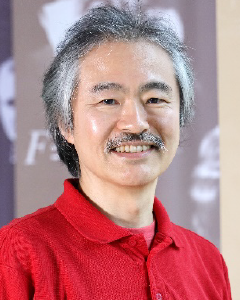 Masashi Hazumi (羽澄昌史)合作论文数Institute of Particle and Nuclear Studies, High Energy Accelerator Research Organization;Kavli Institute for the Physics and Mathematics of the Universe, The University of Tokyo;Institute of Space and Astronautical Science, Japan Aerospace Exploration Agency21
 Geoffrey Taylor合作论文数School of Physics, The University of Melbourne21
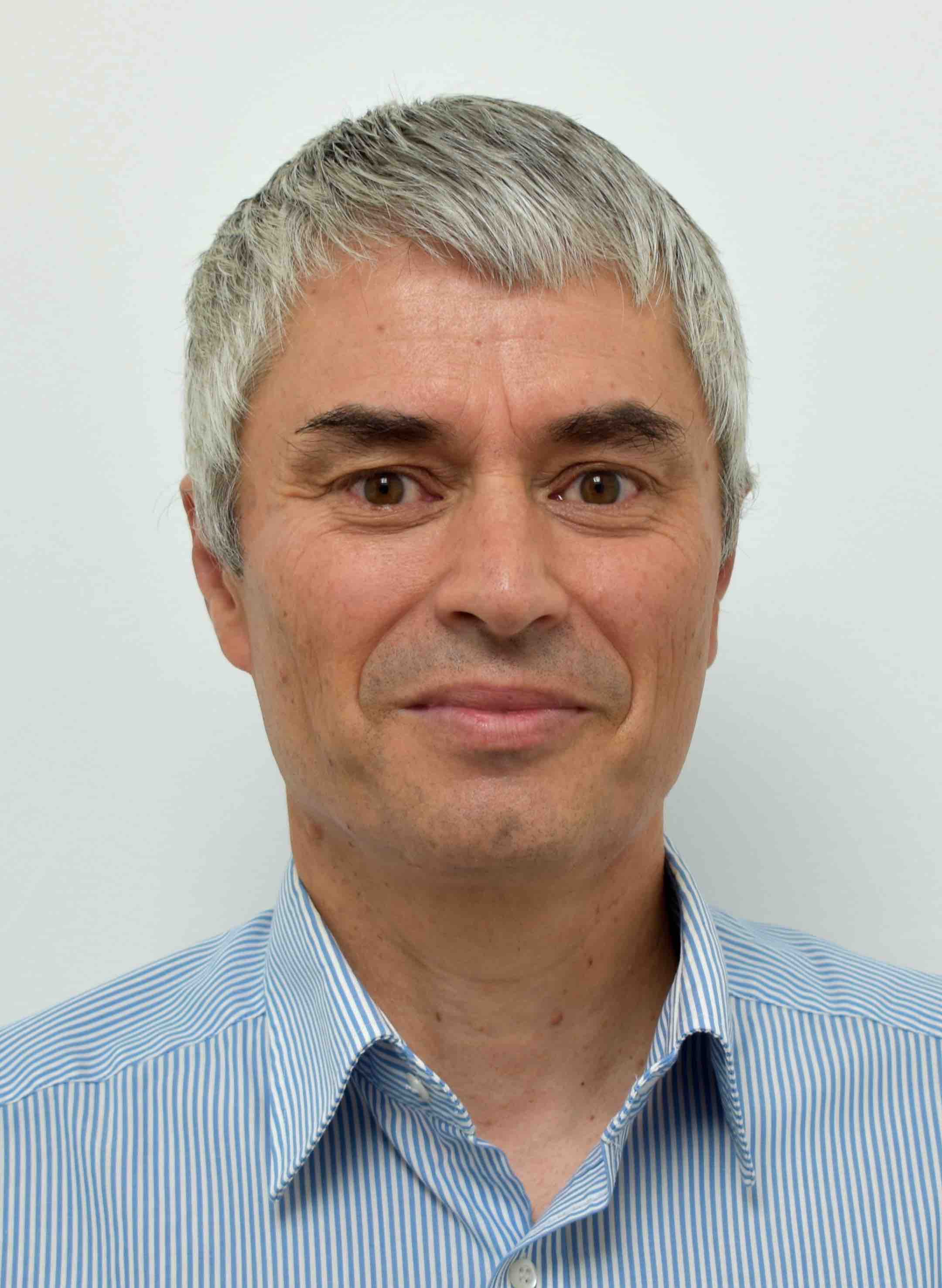 Olivier Schneider合作论文数High Energy Physics Laboratory, Institute of Physics, School of Basic Sciences, Ecole Polytechnique Fédérale De Lausanne21Victor Zhilich合作论文数Budker Institute of Nuclear Physics21
 Kenji Inami (居波賢二)合作论文数Department of Physics, Graduate School of Science, Nagoya University;High Energy Accelerator Research Organization21M. Grosse Perdekamp合作论文数Department of Physics, University of California21
 Ziping Zhang (张子平)合作论文数中国科学技术大学物理学院近代物理系21Nikolay I. Gabyshev合作论文数Budker Institute of Nuclear Physics21Timofey Uglov合作论文数National Research University Higher School of Economics21
 Piotr Kapusta合作论文数The Henryk Niewodniczański Institute of Nuclear Physics, Polish Academy of Sciences21




